





Marble Topped Tallboy
A marble topped tallboy brings imposing height and practical stone surfaces to a bedroom, combining deep storage with a cool, smooth top.
Marble Topped Tallboy
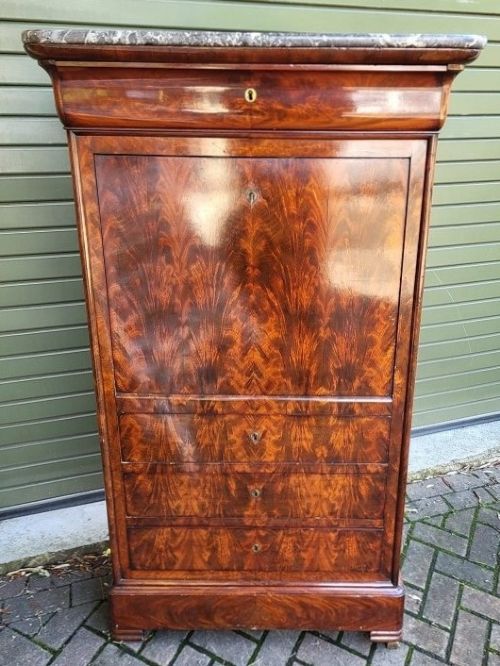
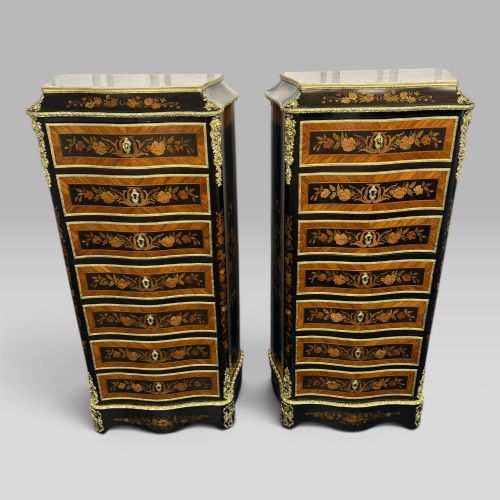
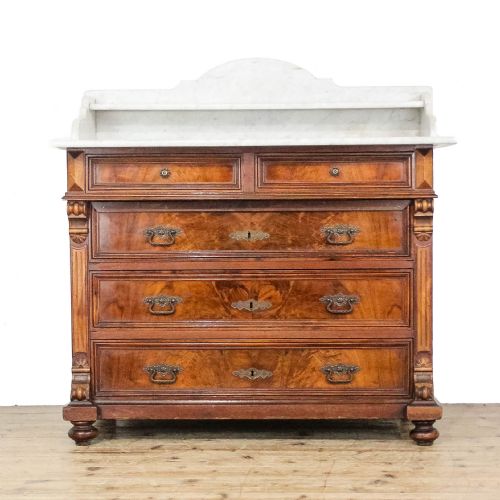
A marble topped tallboy comprises vertical chest forms such as semainiers, secretaire chests, and tall cabinets originating from the nineteenth and early twentieth centuries. These pieces typically stand tall with multiple drawers, topped with slabs of solid marble.
Continental workshops, particularly French makers of the French Empire, Napoleon III, and Louis Philippe styles, produced the majority of these tall forms. Buyers will encounter flame mahogany, rosewood, and various marquetry veneers frequently on this page.
The tall proportions offer substantial drawer capacity while occupying a compact floor footprint. The stone surfaces provide a resilient, decorative finish designed for daily use.
What varies in quality
The distinction between tiers rests upon the precision of the veneer matching and the complexity of the parquetry or marquetry patterns. Superior examples display continuous grain alignment and intricate floral or geometric wood mosaics.
The choice of marble dictates the visual weight, with select pieces featuring distinctive natural veining that complements the timber tones below. Solid brass or fire-gilt ormolu mounts that fit flush without gaps denote superior cabinetmaking.
Marble Topped Tallboy Retail Price Guide 2026
Typical asking prices for marble topped tallboy among the pieces listed under this phrase on Sellingantiques today, from the lower quarter to the upper quarter. They describe what is for sale here now, not the wider market.
Listings feature tall chests spanning the nineteenth and early twentieth centuries, constructed from rosewood, mahogany, and walnut veneer.
Leonard Boudin
The Marble Topped Tallboy Glossary
- Semainier
- A tall seven-drawer chest traditionally designed to hold a week of clothing. This form maximises vertical storage while maintaining a narrow floor plan.
- Secretaire à Abattant
- A tall cabinet featuring a fall-front writing flap that conceals a fitted interior of small drawers and pigeonholes. It merges a writing desk with a tall chest of drawers.
- Parquetry
- Geometric wood inlay work arranged in patterns such as cubes or chequers. Craftsmen applied these veneers to large surfaces to create dynamic visual textures.
- Ormolu
- Gilded bronze mounts applied to furniture edges, feet, and key escutcheons. This decorative technique originated in French workshops to accent fine hardwoods.
- Serpentine
- A gently undulating curved line shaping the front of a chest or its marble top. This contour requires skilled carpentry to match the timber and stone accurately.
Marble Topped Tallboy: Frequently Asked Questions
What is a semainier?
A semainier is a specific type of tall chest traditionally built with seven drawers, one for each day of the week. These pieces offer an exceptionally slender profile compared to standard wide chests.
Cabinetmakers favoured this tall format for smaller bedrooms where floor space was limited. The heavy stone slab on top provides a durable surface distinct from wooden dresser tops.
How do I care for the marble top?
Marble requires gentle cleaning with warm water and a soft cloth to avoid scratching the polished surface. Acidic liquids like citrus juice or vinegar should be wiped away immediately to prevent etching.
Applying a specialist stone wax helps protect the natural finish from moisture and staining over time. Handle heavy decorative objects placed on the stone with care to avoid chipping the edges.
Are these tall chests heavy?
These pieces possess significant weight due to the combination of dense hardwood carcasses and thick stone tops. Moving them typically requires two people to prevent structural strain on the legs and joints.
Many examples allow the marble slab to lift off independently, which reduces the overall weight during transport. Securing tall furniture to a wall prevents tipping in rooms with heavy traffic.
How do I identify French styles?
French styles like Louis Philippe and Napoleon III display distinct traits in their hardware, wood selection, and silhouette. Look for subtle curves, book-matched veneers, and refined brass or ormolu mounts.
Earlier nineteenth-century pieces often showcase rich flame mahogany, while later nineteenth-century examples lean towards intricate marquetry and parquetry. The presence of a fitted writing section inside a fall-front drawer also points to Continental secretaire forms.