
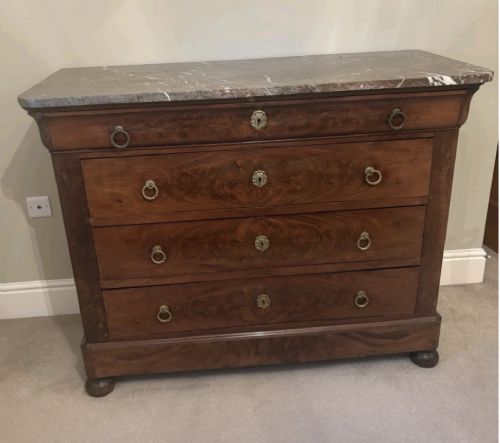
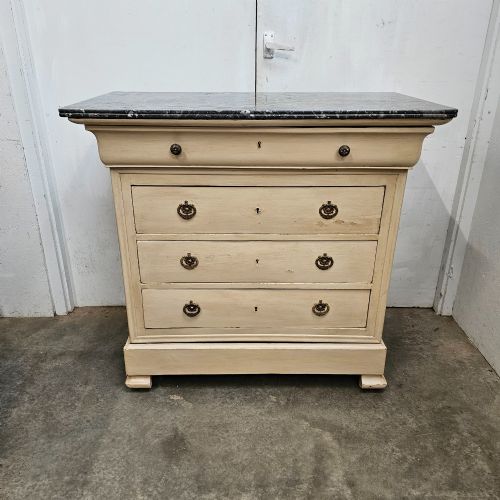
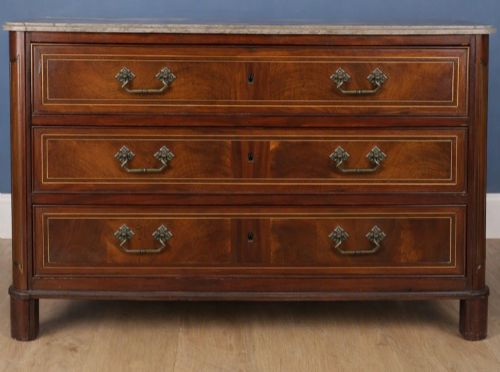
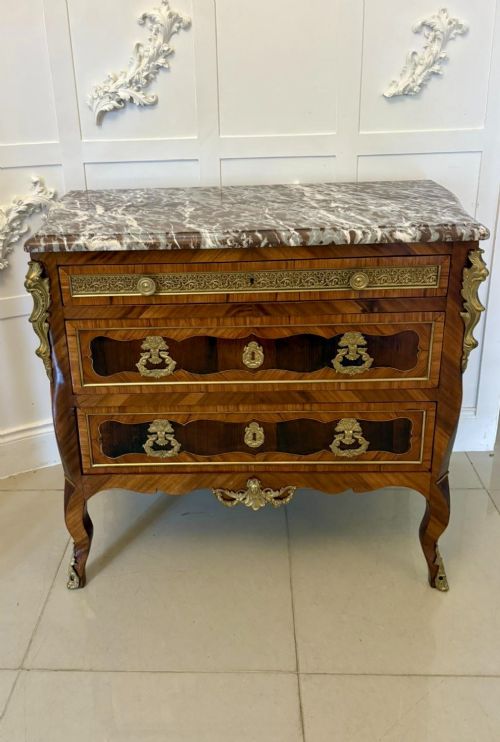
Marble Topped Chest
When you search for a marble topped chest, you find substantial timber drawer units finished with heavy stone slabs designed for daily use and formal display.

Marble Topped Chest
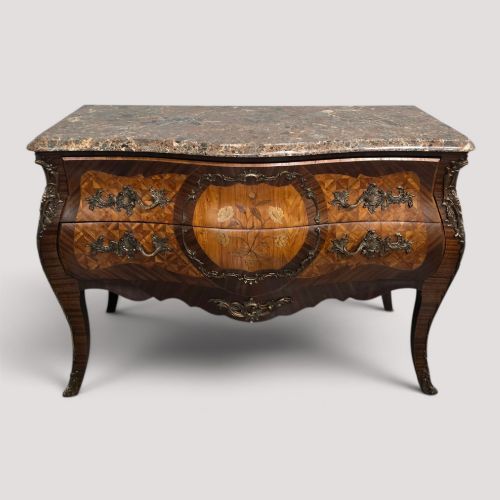
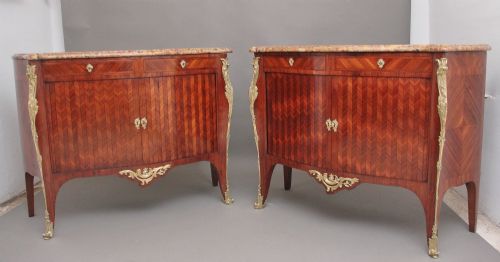
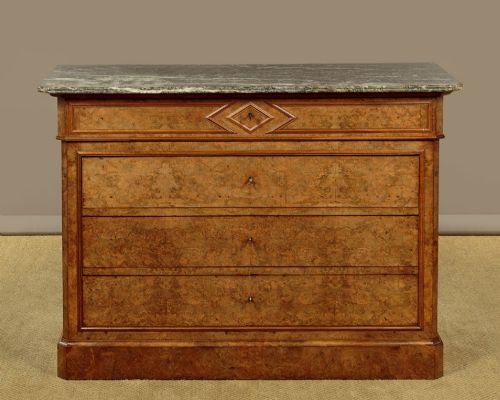
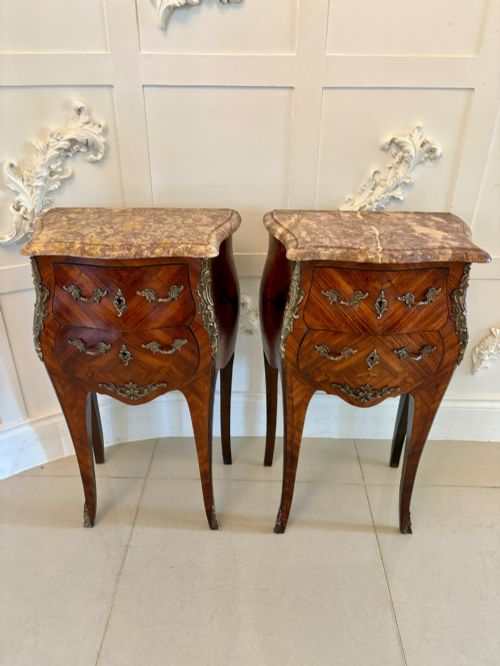
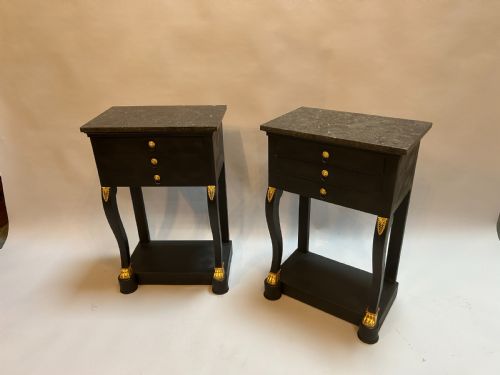
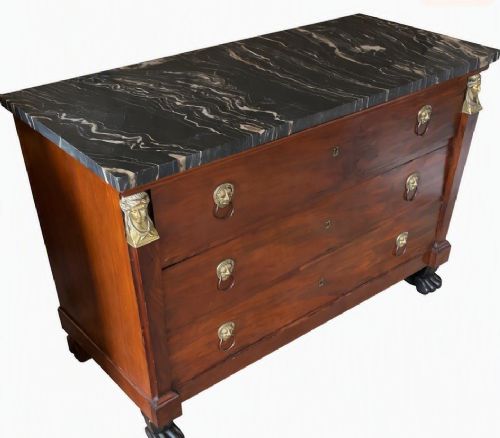
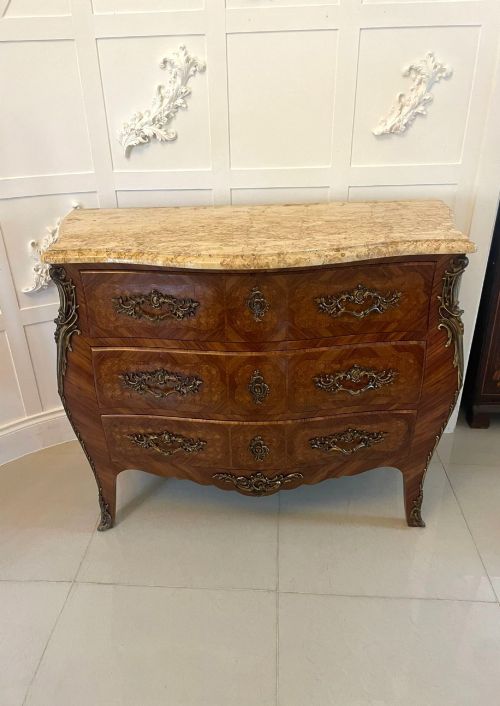
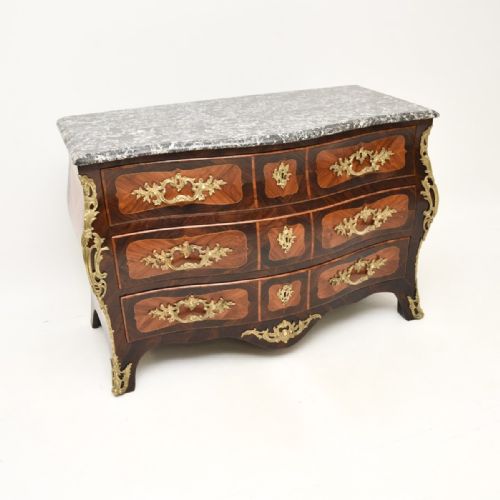
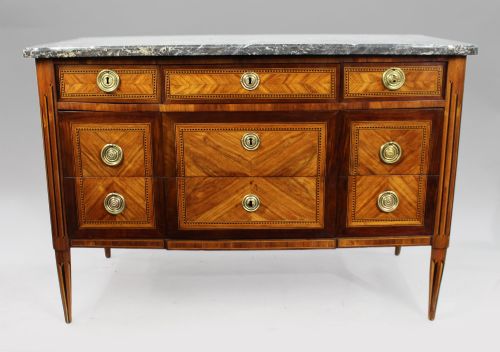
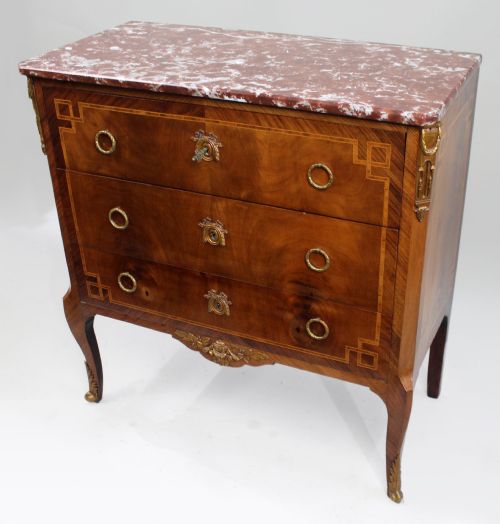
A marble topped chest most commonly takes the form of a French commode, a bedside cabinet, or a washstand originating across the eighteenth, nineteenth, and early twentieth centuries. These pieces serve primarily as functional bedroom storage while providing a flat stone surface resistant to water and wear.
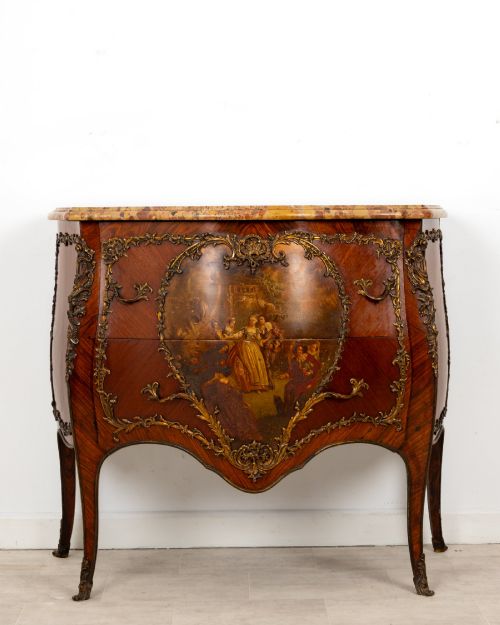
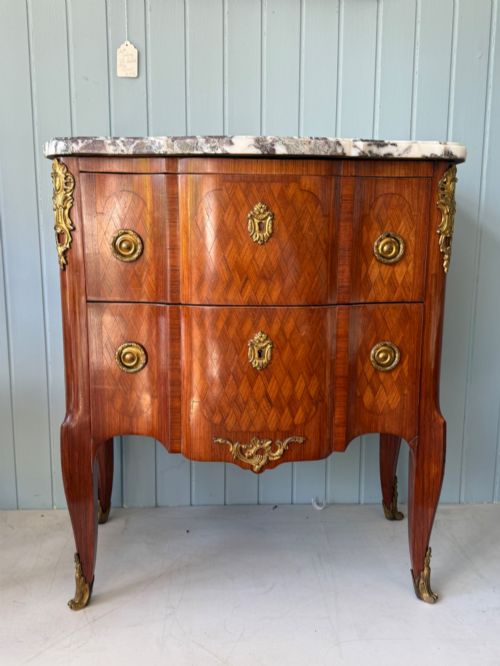
The architectural layout spans standard chest configurations, serpentine and bombe profiles, demi-lune shapes, and smaller bedside pedestals. Examples range from provincial cherrywood and oak bodies to highly decorative pieces finished in walnut, mahogany, and parquetry.
Production extends from eighteenth-century craftsmanship through nineteenth-century revival styles and into twentieth-century interpretations. The enduring combination of timber joinery and fitted stone remains the defining characteristic across all listed forms.
Materials and Technique
Construction relies on solid and veneered timbers such as walnut, mahogany, kingwood, and cherrywood, shaped over internal carcases of oak or pine. Many surfaces employ detailed parquetry and marquetry patterns, arranging grain directions and contrasting woods to create geometric designs.
Marble slabs are cut, shaped, and polished to fit the exact contours of each timber top, ranging from simple rectangular plates to complex serpentine edges. Metal mounts in ormolu, gilt bronze, and brass frequently accent corners, handles, and apron rails.
Some bedside cabinets feature hidden pull-out shelves designed for holding chamber pots out of sight.
Assessing the Pieces
Quality reveals itself in the precision of the timber matching and the complexity of the marquetry or parquetry work across the drawer fronts and sides. Superior examples display seamless joins in the wood veneers and finely cast metal mounts that integrate harmoniously with the carcase.
The thickness, colour variation, and edge profiling of the marble top indicate the tier of the piece, with heavier, well-matched stone slabs signalling higher workshop standards. Internal drawer construction, including the use of dovetail joints and secondary timbers, further distinguishes standard production from more ambitious cabinet-making.
Jacques Bircklé·Henry Dasson·E. Kahn
The Marble Topped Chest Glossary
- Commode
- A low chest of drawers or cabinet, typically originating from France and often fitted with a stone top. These pieces combine decorative presence with practical bedroom storage.
- Ormolu
- Gilded bronze mounts applied to furniture for decorative effect during the eighteenth and nineteenth centuries. The technique involves applying a gold amalgam to bronze before heating.
- Bombe
- A swelling, convex curved shape found on the front and sides of furniture carcases. This curvilinear form requires advanced woodworking skill to veneer successfully.
- Parquetry
- Geometric wood-mosaic work used to surface furniture tops and drawer fronts. Artisans arrange small blocks of timber to form repeating patterns.
- Vernis Martin
- A simulated Japanese lacquer finish developed in eighteenth-century France. It uses multiple layers of varnish to create a glossy, decorative surface.
Marble Topped Chest: Frequently Asked Questions
What are marble topped chests?
These pieces are timber drawer units and cabinets finished with heavy stone slabs, predominantly originating as French commodes and bedside tables.
The combination of wood carcases and stone tops provided a durable surface for washing and display in historic bedrooms.
How do I clean marble?
Clean the stone surface using warm water and a soft cloth, avoiding acidic or abrasive household cleaners that etch the polish.
Dry the marble thoroughly after wiping to prevent water spots from forming on the polished surface.
Where were they used?
Historic examples served primarily in domestic bedrooms, dressing rooms, and boudoirs as bedside storage or general linen chests.
The stone top made them particularly suitable for holding water jugs and washing basins before indoor plumbing became standard.
How do I spot a revival piece?
Revival items often replicate eighteenth-century Louis styles using nineteenth or early twentieth-century manufacturing techniques and machine-cut dovetails.
Examine the secondary timbers inside the drawers and the style of the hardware to determine the actual period of construction.