




Marble Top Writing Bureau
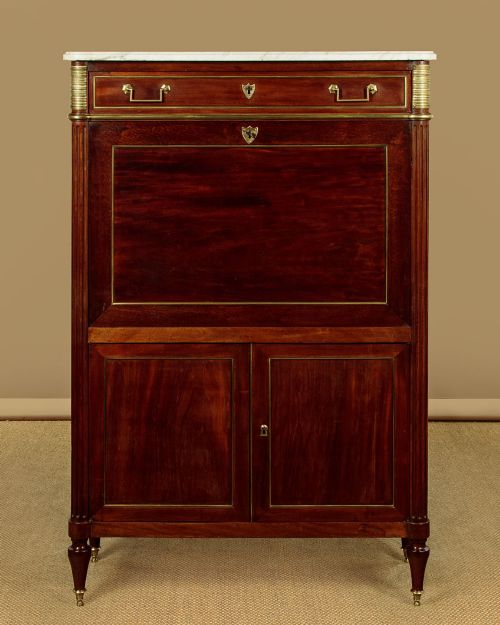
A marble top writing bureau brings together handsome timber and cool stone, providing a solid surface for correspondence.
Marble Top Writing Bureau
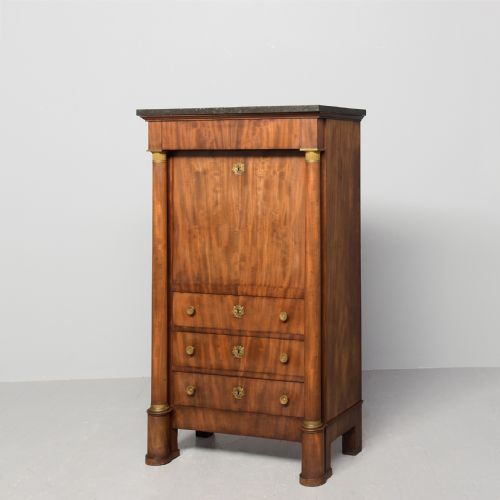
A marble top writing bureau is a dedicated piece for correspondence, combining storage with a sturdy writing surface. When searching this phrase, a buyer encounters drop-front secretaire abattant cabinets, cylinder desks, and smaller escritoires dating from the eighteenth to the early twentieth century.
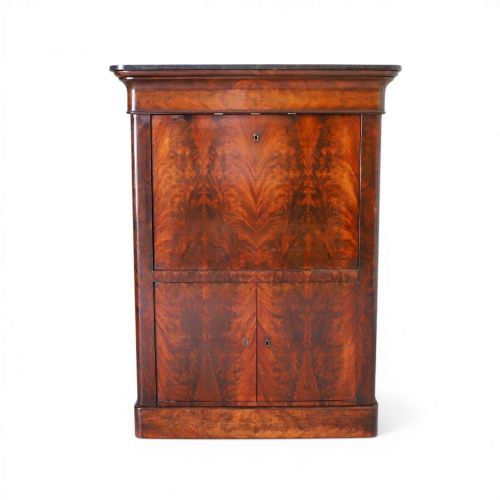
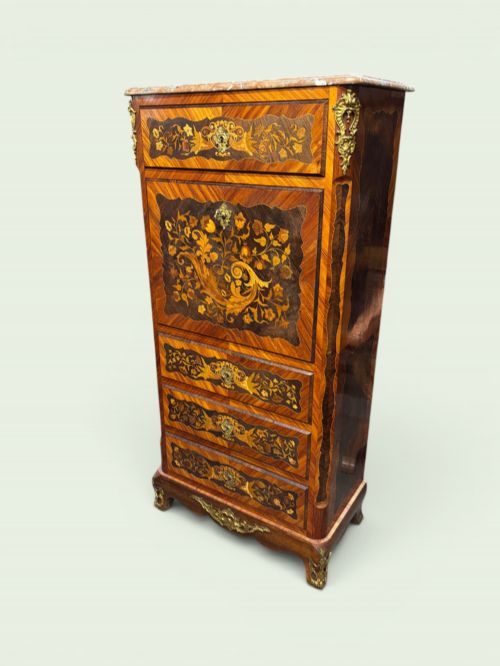
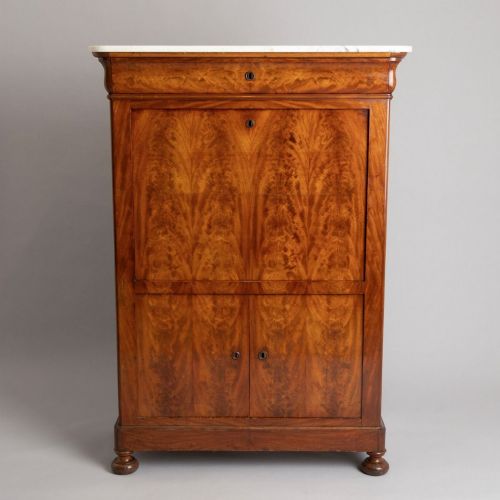
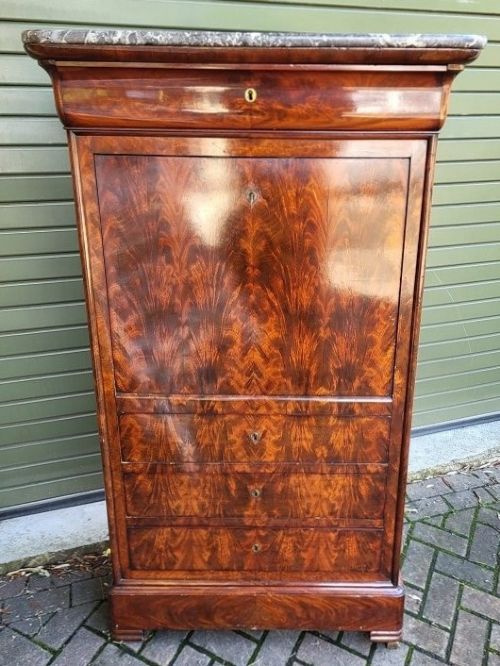
The versions most commonly met on this page are nineteenth-century French pieces, particularly those finished in mahogany, kingwood, or walnut, often built with a fall-front panel that conceals internal compartments.
Makers and cabinet-makers working in revival styles produced these desks across various periods, integrating fitted drawers and secret compartments beneath distinct polished stone slabs.
Materials and construction methods
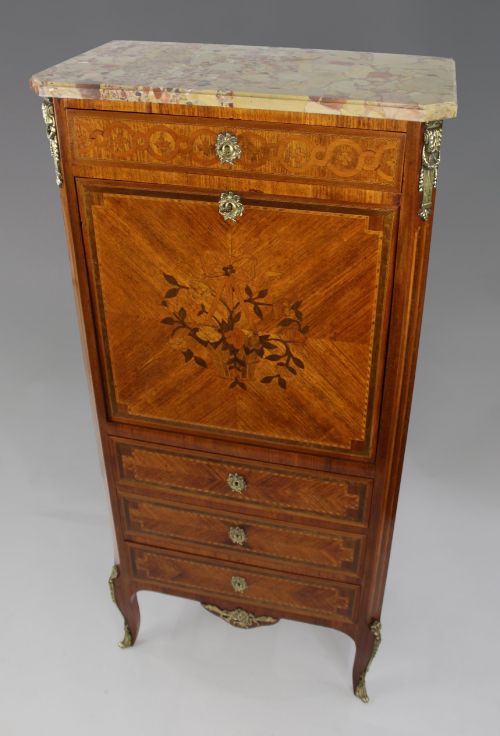
Craftsmen built these desks using foundational carcases of mahogany, walnut, kingwood, and rosewood, frequently applying elaborate marquetry, parquetry, or flame mahogany veneers across the exterior surfaces.
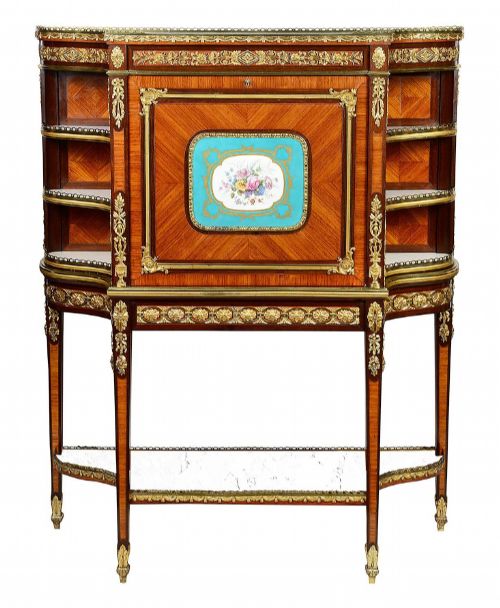
Gilt bronze, ormolu mounts, and brass detailing are fitted to corners, keyholes, and feet, adding structural reinforcement and decorative contrast to the timber and stone.
The defining stone slab sits squarely on the upper surface, requiring precise carpentry to support the heavy weight of marble while keeping the writing flap balanced.
Several desks conceal secret drawers behind hidden spring catches, designed to guard private correspondence from curious visitors.
Distinctions in construction and finish
The standard of a marble top writing bureau depends on the precision of the veneer work and the integration of internal secret drawers within the fitted carcase. Finer examples feature continuous grain matching and crisp, detailed marquetry or parquetry patterns across the fall-front.
The quality of the cast bronze ormolu mounts dictates the finished appearance, where sharper chiselling and heavier metalwork separate workshop production from simpler output.
The choice of marble slab, its thickness, and how cleanly it follows the moulded profile of the wooden top distinguish the upper tier of desks from standard pieces.
Blake, London·Paul Sormani·John Mclean·Millet·Befort Jeune for Mathieu Befort
The Marble Top Writing Bureau Glossary
- Secretaire abattant
- A tall upright cabinet featuring a hinged drop-front writing panel. This flap conceals a cluster of small drawers and pigeonholes.
- Ormolu
- Gilt bronze mounts applied to furniture for decoration. It provides a metallic contrast against mahogany and kingwood surfaces.
- Marquetry
- Inlaid wood veneers arranged to form pictorial or geometric designs. Craftsmen select contrasting timbers to build up the pattern.
- Parquetry
- Geometric wood inlay laid in repeating patterns. It differs from marquetry by sticking to angular, repeating shapes rather than pictures.
- Cylinder desk
- A writing table with a rolling curved wooden shutter that conceals the desk interior. When pushed back, it exposes the writing surface and inner drawers.
- Bonheur du jour
- A small, light lady's writing desk usually fitted with a tiered superstructure. These tables appeared in various revival styles during the nineteenth century.
Marble Top Writing Bureau: Frequently Asked Questions
What is a secretaire abattant?
A secretaire abattant is an upright cabinet designed for storage and writing. The hinged front drops down to form a flat desk surface.
Inside, the user finds multiple small compartments and hidden drawers for stationery and letters.
How do I use a cylinder desk?
A cylinder desk operates with a curved rolling shutter that slides back into the body of the furniture. This action simultaneously reveals the pull-out writing slide.
When closed, the rolling front keeps papers concealed and secure.
Where did these desks originate?
The majority of these pieces originate from French workshops spanning the nineteenth century. Cabinet-makers adopted styles from the Louis XV, Louis XVI, and Empire periods.
English makers also produced variations during the same decades.
How do I care for the marble top?
The marble top requires simple dusting with a soft cloth and cleaning with mild, neutral soap when necessary. Acidic liquids must be kept away from the stone to prevent staining.
Waxing the surrounding wood keeps the polished timber protected without affecting the stone.