


Marble Top Vanity Unit
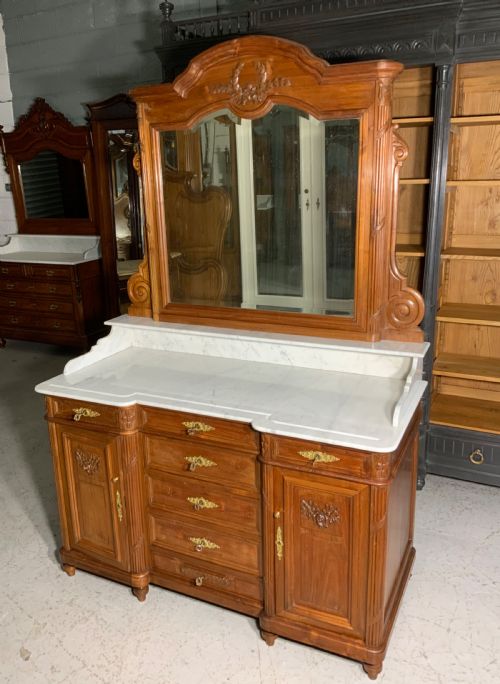
These marble top vanity unit pieces are sturdy Victorian and Edwardian washstands and dressing cabinets topped in stone, built to bring practical washroom utility into the bedroom.
Marble Top Vanity Unit
A marble top vanity unit in this collection typically appears as a washstand or dressing table originating from the nineteenth or early twentieth century. You will frequently encounter forms described as Victorian, Edwardian, or French in origin, showing how these pieces served functional domestic roles in period bedrooms.
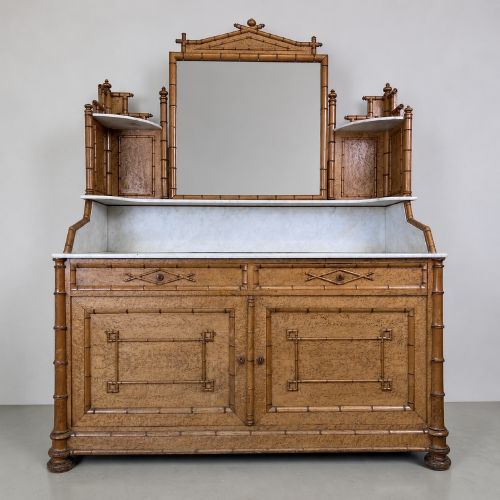
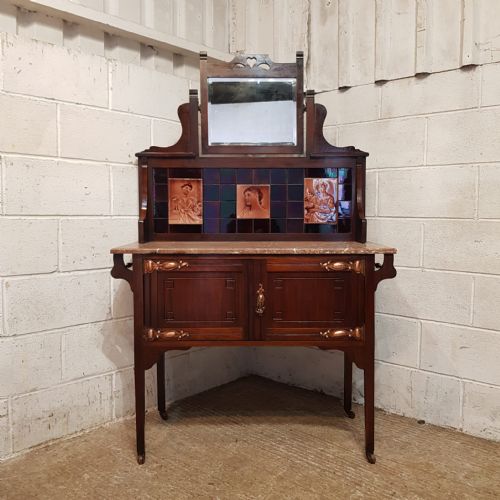
The selection ranges from simple pine wash stands to elaborate French mahogany, faux-bamboo maple, and satinwood inlaid pieces. Makers from the Arts and Crafts, Art Nouveau, and Aesthetic movements also shaped these designs, incorporating decorative ceramic tiles and brass fittings.
Washstands and dressing cabinets form the core of what is available here, offering sturdy timber frames beneath cool stone surfaces. These items combine practical washing and grooming spaces with the distinct stylistic flourishes of their respective periods.
Materials and construction
Carpenters utilised a variety of solid hardwoods and softer timbers like mahogany, walnut, oak, satinwood, pine, and bird's-eye maple to build the structural frames. These wooden bodies often feature carved details, painted finishes, or delicate inlays.
Heavy marble slabs form the distinctive working surfaces, paired frequently with ceramic washbowls, brass hardware, glass elements, and decorative ceramic tiles along the splashbacks.
The listings span the nineteenth and early twentieth centuries, capturing Victorian, Edwardian, Art Nouveau, and Arts and Crafts movements.
Judging quality and craftsmanship
Quality rests heavily on the selection of timber and the complexity of the cabinetry, where finely figured mahogany or satinwood inlay elevates a piece above standard pine. The thickness and grain of the marble top also distinguish finer examples.
Artistic execution in the carving, the integration of brass mounts or ormolu, and stylistic cohesion within movements like Art Nouveau or the Aesthetic style mark out superior workshops.
Gillows
The Marble Top Vanity Unit Glossary
- Washstand
- A piece of bedroom furniture designed to hold a basin, jug, and washing accessories. They usually feature stone tops to resist water splashes.
- Aesthetic Movement
- A late nineteenth-century design style that emphasised visual beauty and artistic expression over strict moral or narrative purpose.
- Ormolu
- Gilt bronze mounted onto furniture for decorative effect. It was frequently utilised on French pieces of the period.
- Faux-Bamboo
- Wood carved and painted to resemble natural bamboo canes. This finish was particularly popular in nineteenth-century French cabinet making.
- Satinwood
- A durable, lustrous timber with a golden sheen. It takes a fine polish and was often used for delicate inlay work.
Marble Top Vanity Unit: Frequently Asked Questions
What is a marble top vanity unit?
It is a historic bedroom piece, typically a washstand or dressing table, featuring a stone slab top designed to withstand water and daily grooming use.
These items date from the Victorian and Edwardian eras, combining timber cabinetry with durable stone surfaces for practical bedchamber hygiene.
How were these washstands used originally?
They stood in bedrooms before plumbed bathrooms became standard, holding ceramic basins, water jugs, and personal care items for morning washing.
The stone top provided an impervious surface that easily wiped clean after water splashes during daily use.
How do I fit one in a modern home?
Many buyers repurpose these sturdy cabinets as washbasin stands in modern bathrooms or as distinctive console tables in hallways.
The stone surface naturally tolerates moisture, making them suitable for contemporary settings requiring period character.
How can I tell Victorian from Edwardian pieces?
Victorian examples tend to feature heavier timbers, richer dark finishes, and more ornate carving or Aesthetic movement details.
Edwardian pieces often lean towards lighter woods, simpler lines, or painted pine finishes associated with Arts and Crafts simplicity.