


Marble Top Tier Table
A marble top tier table combines stone surfaces with multi-level frames, offering a sturdy yet decorative stage for lamps, plants and objects.
Marble Top Tier Table
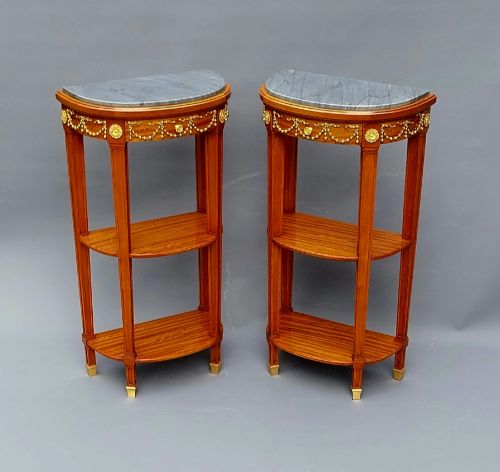
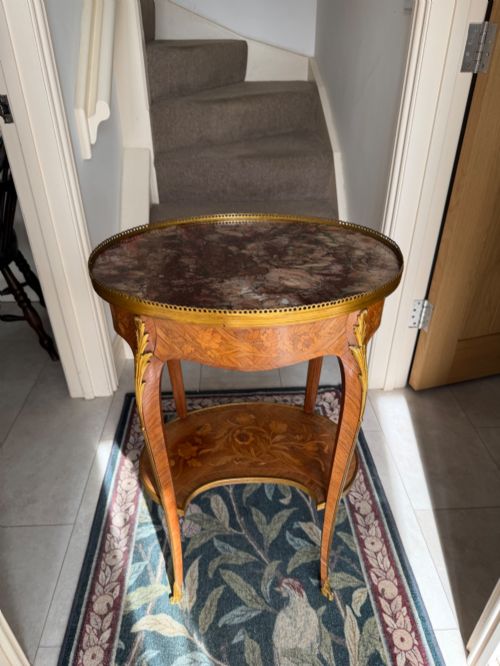
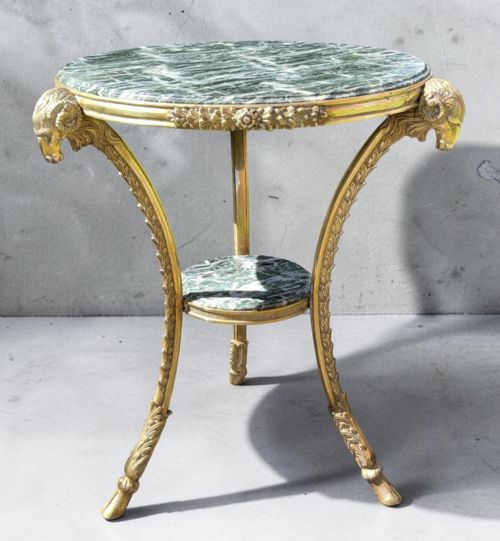
A marble top tier table brings together stone and timber in multi-level furniture designed for display and utility. These pieces appear in forms such as gueridons, plant stands, etageres and two-tier tea tables across the nineteenth and early twentieth centuries.
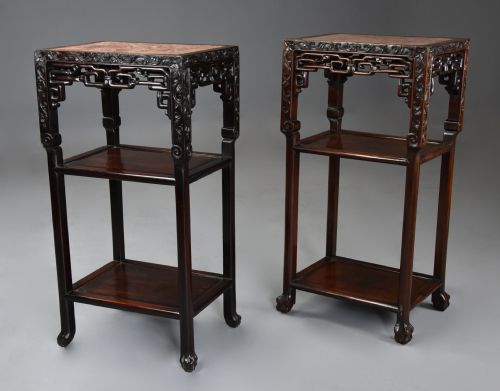
The selection here draws heavily on French continental designs alongside Chinese hardwood and rosewood stands. Buyers encounter serpentine consoles, kidney-shaped occasional tables and multi-tiered pot stands spanning Victorian and Edwardian periods.
How they were made
Joiners and cabinetmakers united dense hardwoods like mahogany, walnut, kingwood and oak with inset stone slabs. Ormolu mounts, cast brass galleries and bronze details frequently secure the framework around the stone.
Canework, intricate hand carving and marquetry inlay enrich the lower tiers and skirts of these multi-level surfaces. Stonework ranges from plain white marble to decorative pietra dura specimen panels.
Several Chinese hardwood pot stands feature surfaces specifically sized to display porcelain ginger jars or bronze jardinieres.
What varies in quality
The caliber of a marble top tier table rests on the crispness of its carved ornament and the weight of its metal mounts. Heavy cast bronze or gilt brass carries more authority than pressed sheet metal.
The selection of the timber and the integration of the stone inset define the tier table's construction standard. Tight joints in carved hardwood and finely figured kingwood or mahogany separate standard utility pieces from high-workshop examples.
Henry Dasson·Edwards and Roberts·Linke
The Marble Top Tier Table Glossary
- Gueridon
- A small French occasional table, often round and supported by a central pillar or multiple legs. These frequently feature marble surfaces and bronze mounts.
- Etagere
- A set of open shelves or tiers designed for displaying ornaments and small objects. They often combine timber frames with marble tops.
- Ormolu
- Gilt bronze ornamentation applied to furniture mounts and feet. It provides a bright metallic contrast against dark hardwoods and marble.
- Pietra dura
- An artistic technique using cut and fitted polished coloured stones to create geometric or figurative designs. It appears on high-status table tops.
- Kingwood
- A dense, richly figured exotic timber used extensively in nineteenth-century French cabinetmaking. It often appears in decorative veneer panels.
Marble Top Tier Table: Frequently Asked Questions
How do I clean the marble top?
Use a damp cloth with mild soap to wipe the stone surface clean. Avoid acidic cleaners that etch the polished finish.
Dry the marble immediately with a soft cloth to prevent water spots from forming on the stone.
Can these tables hold heavy plants?
Many tier tables and pot stands were built specifically to support heavy ceramic pots and damp soil. Hardwood frames offer substantial load-bearing strength.
Check the lower tier for adequate bracing if you plan to place heavy items on the lower shelves.
Are the marble inserts removable?
Most marble slabs rest within a wooden rebate or bronze gallery rather than being permanently glued down. This construction allowed makers to level or replace the stone during assembly.
Exercise caution when lifting the stone, as nineteenth-century marble slabs are heavy and brittle at the corners.
How do I date a tier table?
Examine the timber species, construction joints and mounting hardware to establish a production era. Victorian and Edwardian pieces often display machine-sawn elements alongside hand-finished details.
Compare the decorative style, such as French Empire or Louis XV revival motifs, against known period manufacturing dates.