


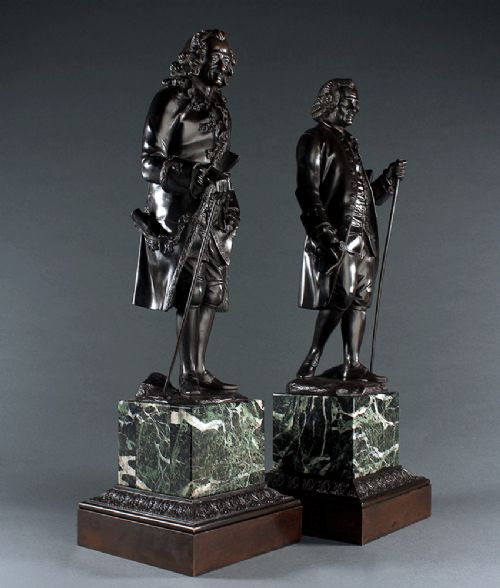
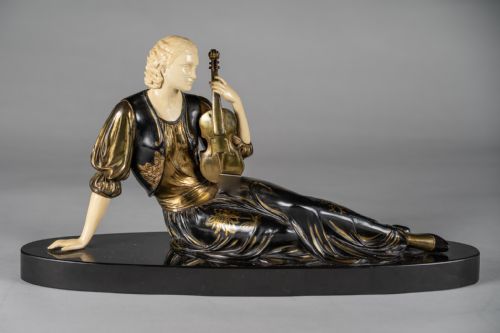
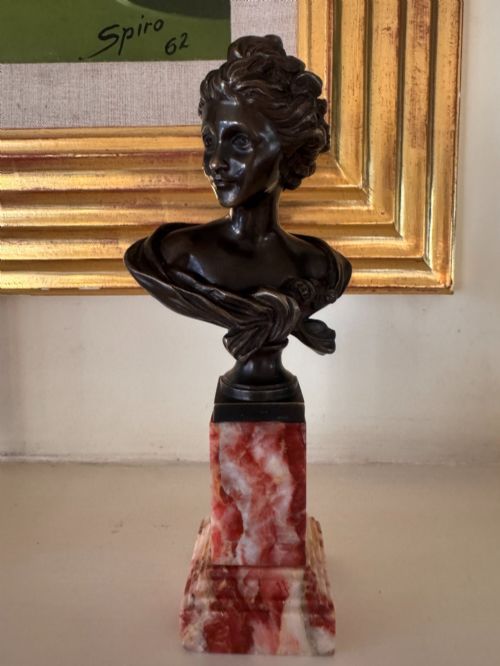
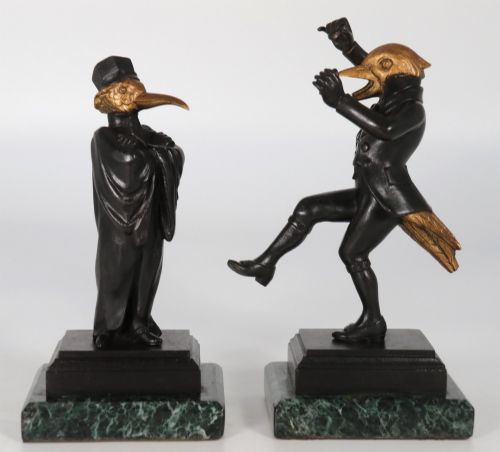

Marble Figure Statue
These marble figure statue pieces bring classical mythology, animal studies and the human form into domestic spaces through carved stone and cast metal.
Marble Figure Statue
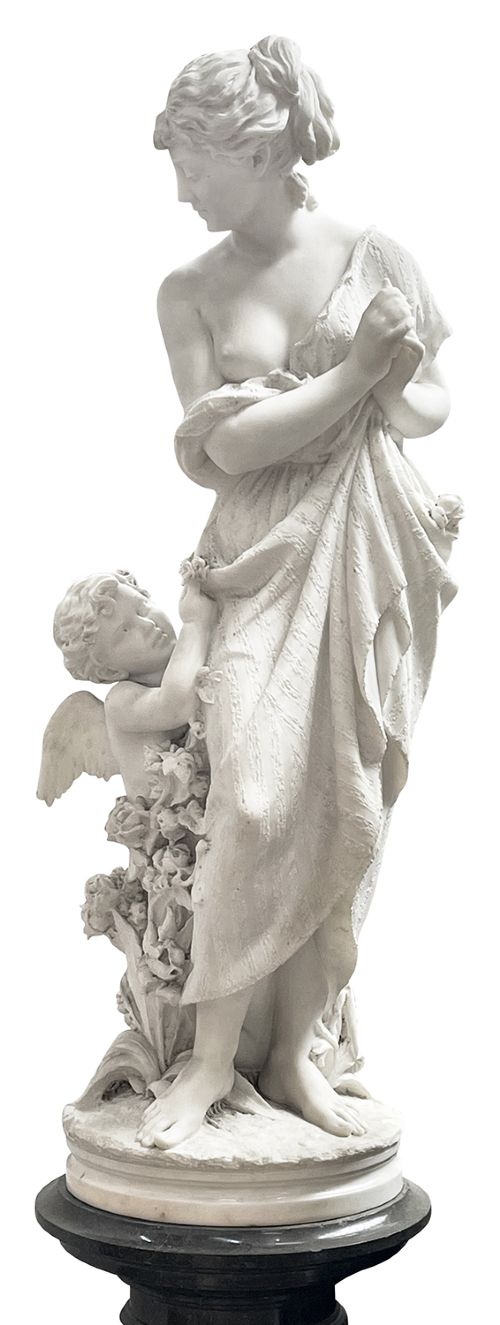
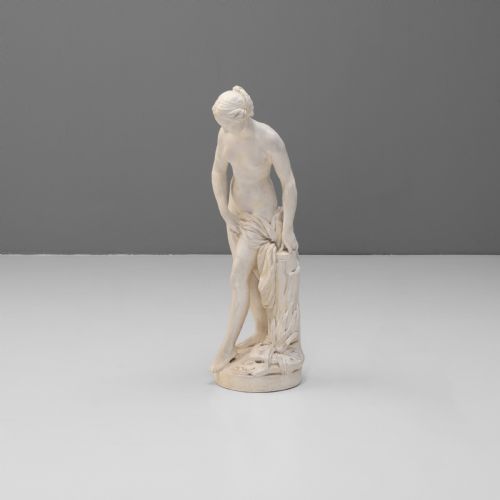
A marble figure statue encompasses carved stone sculptures, portrait busts and figural groups produced across the nineteenth and early twentieth centuries. These works draw heavily upon classical antiquity, mythological subjects and domestic portraiture intended for libraries, drawing rooms and mantelpieces.
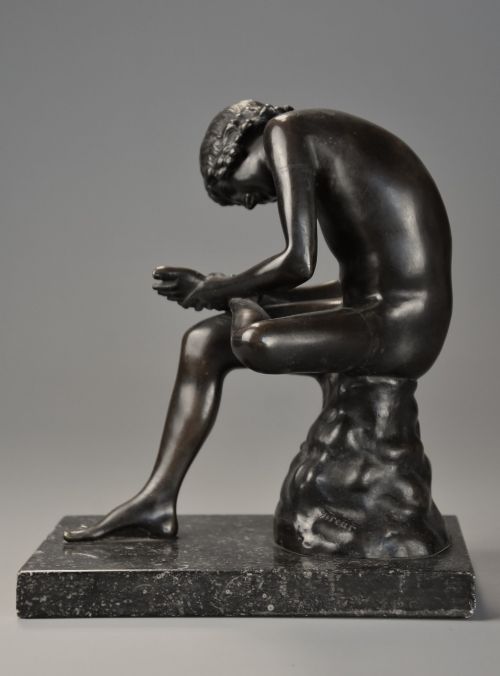
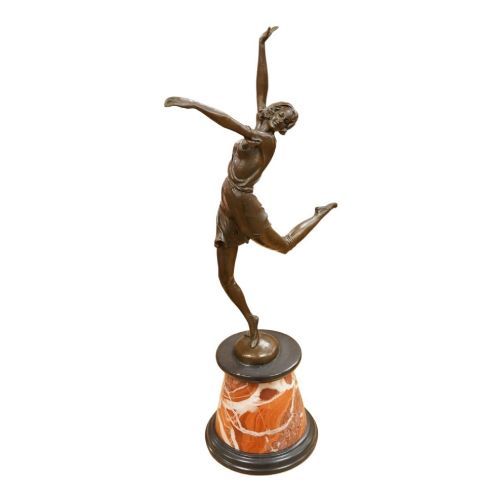
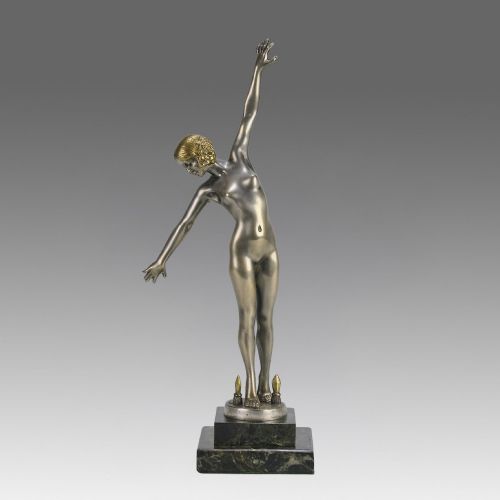
Buyers encounter substantial carved marble pieces from Italian workshops alongside cabinet bronzes mounted on marble bases. The selection bridges formal Grand Tour souvenirs, Victorian allegorical groups and later Art Deco interpretations of dancers and athletes.
Materials and methods
Carved pieces rely on fine white Carrara marble, veined varieties and green alabaster, shaped with chisels and abrasive polishing to emulate antique models. Metal components utilise bronze, silvered bronze and gilt bronze, often cast by the lost-wax method and finished with cold painting or patination.
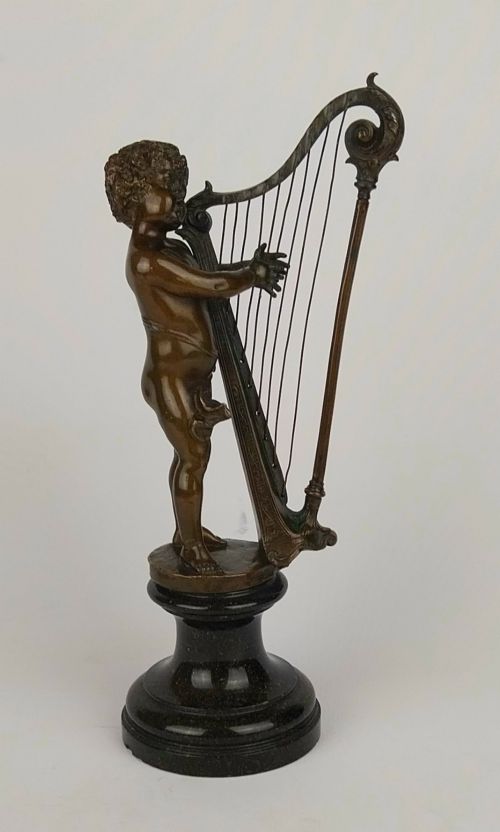
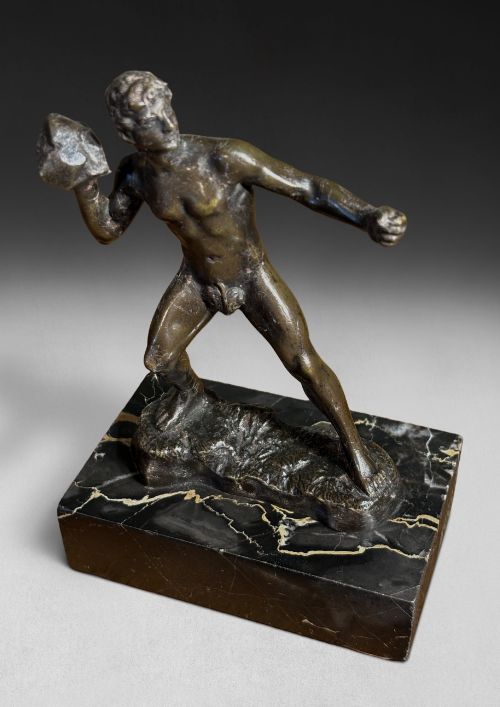
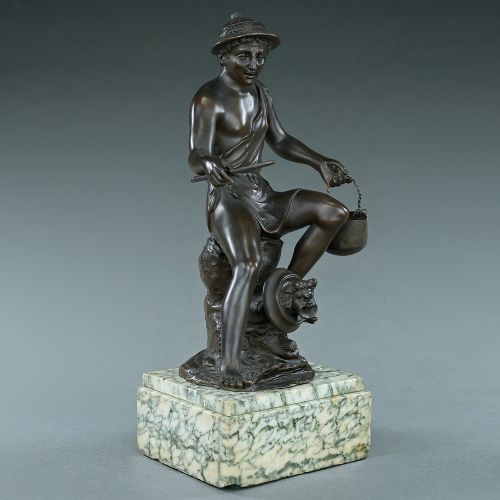
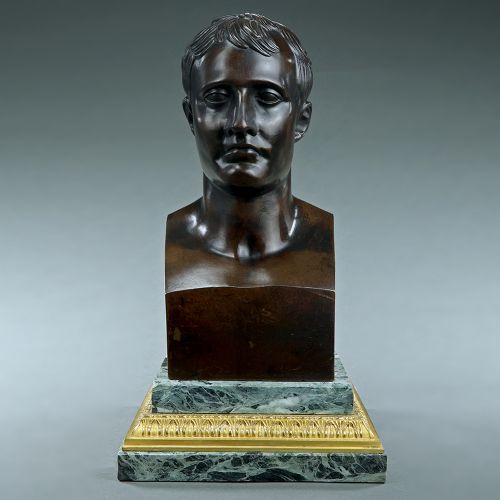
Mixed media constructions frequently combine cast metal figures mounted directly onto heavy marble or fossil marble bases. Parian ware and biscuit porcelain offer ceramic alternatives designed to mimic the smooth finish of carved stone.
Marble Figure Statue Retail Price Guide 2026
Typical asking prices for marble figure statue among the pieces listed under this phrase on Sellingantiques today, from the lower quarter to the upper quarter. They describe what is for sale here now, not the wider market.
Several bronze lizards wait patiently on marble plinths, having scrambled permanently away from classical mythology.
Assessing execution and form
Quality rests in the anatomical precision of the carving or casting, particularly in the rendering of musculature, drapery and facial expression. Finer examples display crisp chiselling that preserves intricate details in hair and ornamentation without softening the contours.
The integration between the figure and its base dictates overall success, where fitted marble plinths complement the proportions of the sculpture above. Surface patination on metal elements and the natural figuring of the stone ground the piece visually.
Ouillon Carrere·Lalique·Georges Gori·Gustave Dussart·Louis Garnier·Jean de Roncourt·Maurice Giraud-Rivière·Bruno Zach·Pierre Collinet·Charles Louis Malric·Susse Frères·Barbedienne·Carlo Albacini·Claude Michael Clodion·Barranti·Pierre-Augustin Caron de Beaumarchais·Minton·Claude Michel Clodian
The Marble Figure Statue Glossary
- Grand Tour
- A nineteenth-century tradition where travellers collected miniature bronzes and carved stone replicas of classical antiquities in Italy.
- Parian ware
- A fine-grained unglazed biscuit porcelain developed in Victorian Britain to imitate white marble statuary.
- Animalier
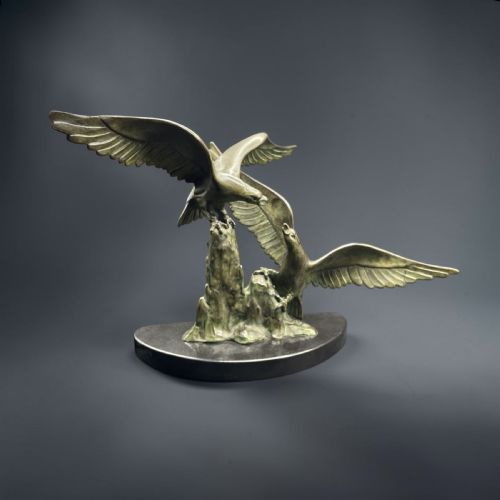
- A nineteenth-century artistic focus on the realistic depiction of animals, frequently rendered in bronze.
- Verdo prato
- A decorative dark green Italian marble utilised for classical carvings and architectural ornaments.
- Cold painted
- A technique where paint is applied to cured bronze without heat firing, common in Austrian cabinet figures.
Marble Figure Statue: Frequently Asked Questions
What periods do these figures date from?
The pieces span the nineteenth century through the early twentieth century, encompassing Victorian productions, Grand Tour souvenirs and Art Deco works.
Dates cluster around the decades of the late nineteenth century and the interwar period of the 1920s and 1930s.
How were marble bases utilised?
Heavier stone plinths provide structural stability and visual weight for cast metal sculptures, particularly dancer and animal figures.
Fossil marble and veined varieties introduce contrasting colour and texture beneath bronze and silvered metal figures.
Where were these sculptures displayed originally?
Smaller bronzes and busts occupied library shelves, writing desks and mantel clocks within nineteenth-century drawing rooms.
Larger marble groups and statues served as focal points in entrance halls and sculpture galleries.
How do ceramic figures compare to stone?
Parian ware and biscuit porcelain replicate the appearance of carved marble while permitting mass production through ceramic moulds.
These ceramic alternatives capture similar classical subjects but offer a lighter and more uniform white finish than natural stone.