

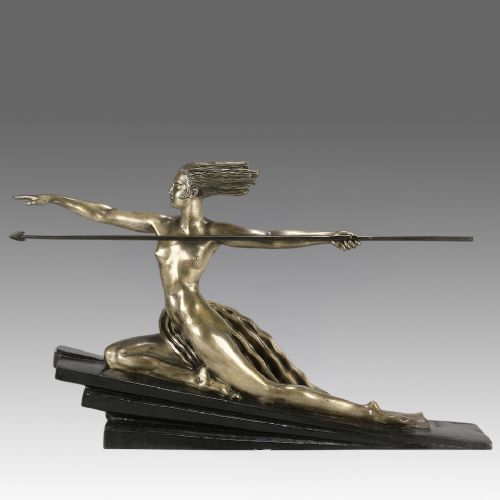
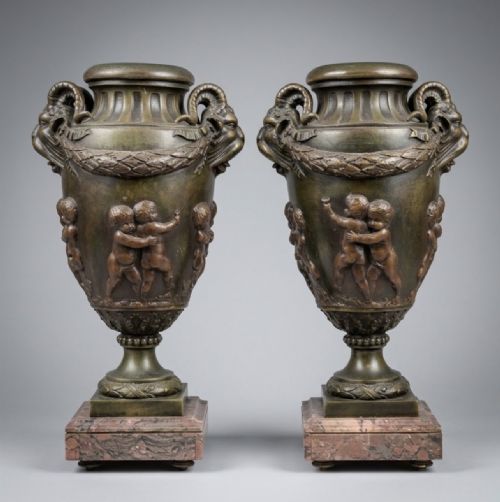
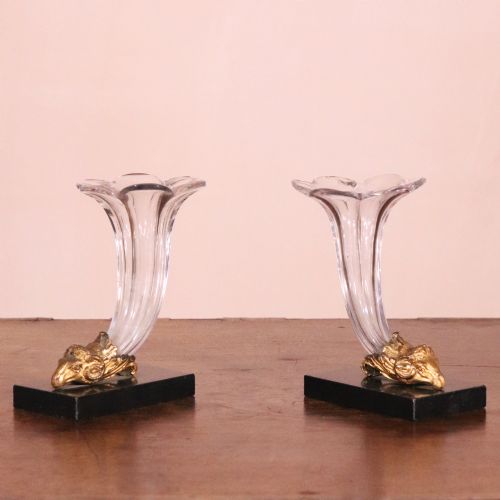

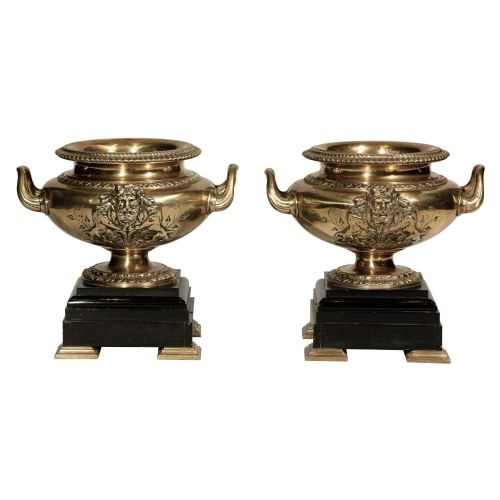


Marble Base Vase
These marble base vase selections bring classical weight and rich materials to a room, offering enduring decorative presence through bronze, glass, and stone.
Marble Base Vase
When searching for a marble base vase, a buyer encounters a diverse group of ornamental vessels and urns rooted in the nineteenth century. These objects draw heavily on French Neoclassical, Grand Tour, Regency, and Art Deco styles, merging sculptural metalwork with solid stone supports.
The versions most commonly met on this page include nineteenth-century bronze and spelter urns paired with black or siena marble plinths. Pieces range from matched pairs of lidded garnitures to single decorative vases reflecting Roman taste and classical revival aesthetics.
Makers and designers span from anonymous continental foundries to twentieth-century houses like Lalique, demonstrating how the genre evolved from classical antiquity revivals into modernist crystal production. Each item functions primarily as a decorative focal point rather than a utilitarian vessel.
Materials and construction methods
Construction relies on the combination of cast metals and heavy quarried stone bases. Founders utilised bronze, spelter, and ormolu for the bodies, often finishing them with patination, gilding, or silvering.
The stone plinths frequently employ black marble or yellow siena marble, turned and polished to contrast with the metallic upper sections. Certain examples incorporate moulded crystal glass or blown glass bodies secured directly to metal and stone mounts.
Marble Base Vase Retail Price Guide 2026
Typical asking prices for marble base vase among the pieces listed under this phrase on Sellingantiques today, from the lower quarter to the upper quarter. They describe what is for sale here now, not the wider market.
Current listings feature nineteenth-century and twentieth-century pieces utilising bronze, spelter, crystal glass, and siena marble within neoclassical and art deco styles.
Distinctions in quality
Quality rests significantly on the crispness of the metal casting and the depth of the chasing. Finer examples display sharp architectural details and animated relief work, whereas simpler pieces rely on basic patination over softer spelter.
The selection and preparation of the stone base also determine the standard of the piece. Solid, finely grained siena or black marble plinths with precise geometrical edges distinguish superior nineteenth-century works from more rudimentary mountings.
The Marble Base Vase Glossary
- Ormolu
- Gilded bronze produced by applying a mercury-gold amalgam to a bronze base, creating a rich golden surface finish that resists tarnish.
- Spelter
- A zinc alloy frequently used as a cost-effective alternative to bronze in nineteenth-century decorative metalwork, often given a bronze-like patination.
- Siena marble
- A distinctive yellow Italian marble with dark grey or purple veins, highly favoured for Grand Tour and neoclassical decorative objects.
- Grand Tour
- A cultural phenomenon of the eighteenth and nineteenth centuries where travellers collected classical antiquities and souvenirs across Italy.
- Garniture
- A set of ornamental vases or urns designed to be displayed together on a mantelpiece or sideboard.
Marble Base Vase: Frequently Asked Questions
What is a marble base vase used for?
These pieces serve as decorative focal points on mantelpieces, sideboards, and pedestals rather than containers for fresh flowers. Their substantial weight and classical ornamentation allow them to anchor interior schemes.
Historically, they were displayed in pairs as garnitures or singly to impart an air of classical antiquity and academic taste to a room.
How do I identify nineteenth century pieces?
Nineteenth-century examples typically display heavy sand-cast bronze or spelter components mounted onto genuine quarried marble plinths. Hand-chased detailing and natural patination on the metal surfaces indicate period manufacture.
Examining the construction methods underneath the base often reveals hand-cut screws or traditional fixings consistent with nineteenth-century workshop practices.
Are these vases waterproof?
Most of these vessels are decorative objects rather than functional containers. Many incorporate mixed media such as unsealed metal, gilt bronze, or fitted stone bases that would be damaged by standing water.
Using them for fresh flowers is generally discouraged to protect the interior surfaces and the structural integrity of the mounts.
How do I care for marble and bronze?
Maintenance requires gentle dusting with a soft, dry cloth to protect both the metal patination and the polished stone surface. Avoid using chemical cleaners, polishes, or abrasive cloths that can strip historical finishes.
Keeping the pieces away from direct sunlight and damp environments helps preserve the integrity of the marble and the underlying metal fixings.