





Marble Back Washstand
A marble back washstand offers practical Victorian and Edwardian utility, combining stone surfaces and timber frames for traditional bedroom use.
Marble Back Washstand
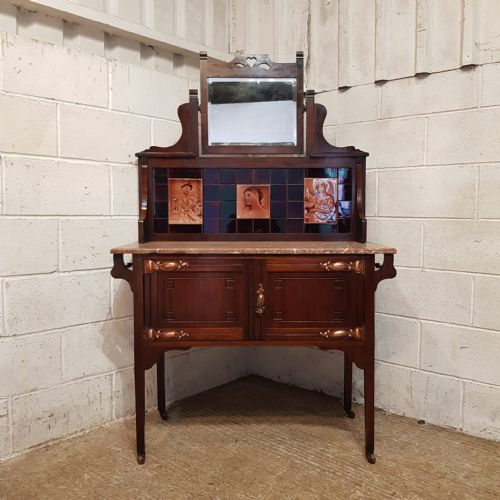
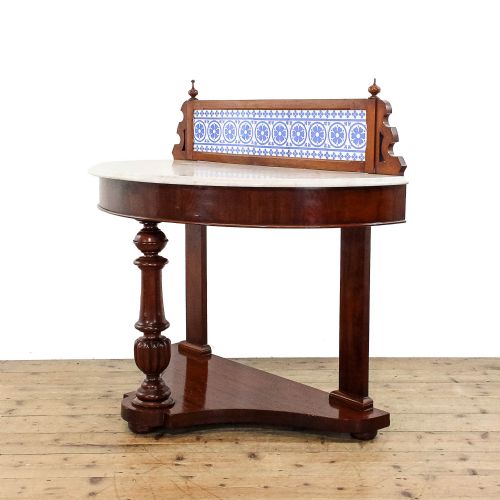
A marble back washstand is a piece of bedroom furniture designed for personal washing before plumbed bathrooms became standard in every home. These items typically feature a protective stone splashback to guard walls against water splashes during daily use.
The form often includes a stone top alongside side tables or dressing tables sharing similar period characteristics. Originating largely from the nineteenth century and around nineteen hundred, these survivors bridge the gap between antique furniture and functional daily objects.
How they were made
Makers built these pieces using solid timbers like mahogany, walnut, and pine, often shaping them into bow fronts or rectangular bedroom cabinets. Selected hardwoods provided sturdy frames capable of supporting heavy stone slabs.
Slabs of natural marble formed the tops and protective splashbacks, sometimes accompanied by decorative ceramic tiles inserted into the wooden framework. Painted faux marble finishes also appear on pine versions to mimic more costly stone.
Brass hardware, ceramic basins, and glass elements completed the construction, reflecting the prevailing Aesthetic Movement and Arts and Crafts design sensibilities of the period.
Marble Back Washstand Retail Price Guide 2026
Typical asking prices for marble back washstand among the pieces listed under this phrase on Sellingantiques today, from the lower quarter to the upper quarter. They describe what is for sale here now, not the wider market.
What varies in quality
The selection of timber and the figure of the wood grain separate standard utilitarian washstands from finer townhouse furniture. Richly grained mahogany and walnut indicate higher workshop ambition than basic painted pine.
The thickness and decorative character of the marble top and tiled splashback also distinguish different tiers of manufacture. Elaborate Aesthetic Movement detailing and integrated brass fittings elevate a piece above simpler variants.
The Marble Back Washstand Glossary
- Aesthetic Movement
- A nineteenth-century design style focusing on beauty and art for art's sake rather than narrative meaning. It heavily influenced furniture decoration with Japanese motifs and stylized floral tiles.
- Art Nouveau
- A style of the late nineteenth and early twentieth centuries characterised by organic, flowing lines and natural forms. Pieces from this era often display sinuous curves in their woodwork.
- Arts and Crafts
- A design movement championing traditional craftsmanship and simple forms over mass production. Furniture in this tradition emphasises honest construction and visible material qualities.
Marble Back Washstand: Frequently Asked Questions
What is a marble back washstand?
A marble back washstand is a nineteenth or early twentieth-century bedroom cabinet featuring a stone top and upright splashback. They were originally used for holding washbasins, water jugs, and toiletries before modern plumbing.
Today, they serve as decorative side tables or bathroom vanities within traditional interiors.
How do I date a washstand?
Dating relies on observing the timber species, construction methods, and stylistic influences present in the piece. Victorian examples often feature mahogany or walnut, while Edwardian pieces display lighter woods and simpler Arts and Crafts or Art Nouveau details.
Makers frequently incorporated period design markers like decorative ceramic tiles and brass hardware that help narrow down the decade of production.
Are these washstands suitable for modern bathrooms?
Many buyers repurpose these pieces as vanity units or hallway console tables in contemporary homes. The stone top naturally resists water, making it practical for modern utility.
Careful adaptation by a professional plumber allows modern basins and taps to integrate with the antique timber framework.
What materials are typical for these pieces?
The primary materials include natural marble for the top and splashback, supported by timber frames of mahogany, walnut, or pine. Some examples incorporate ceramic tiles, brass handles, and glass accessories.
Painted finishes, including faux marble effects on pine, also appear across the surviving inventory.