






Marble and Gilt Column
A marble and gilt column brings architectural dignity to a room, supporting sculptures or standing alone as a display of classical taste.
Marble and Gilt Column
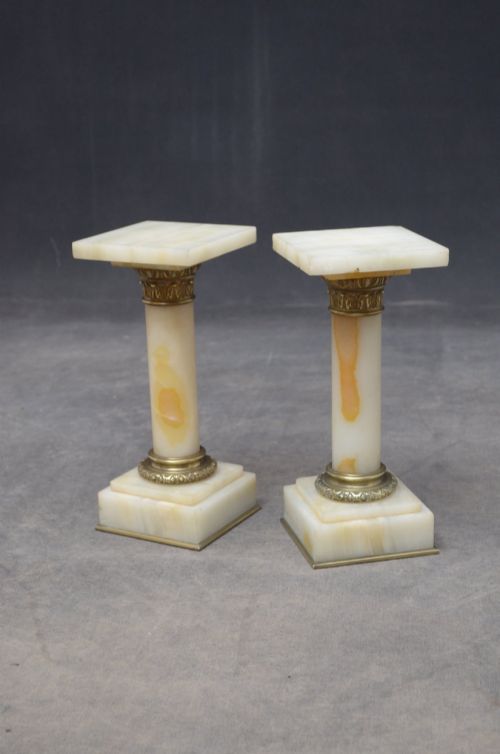
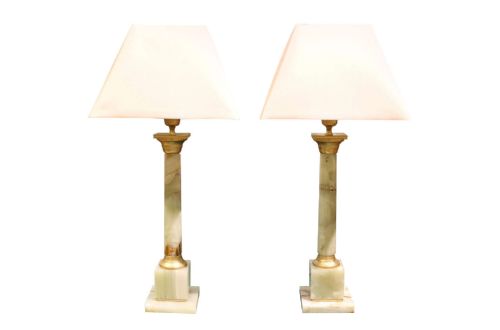
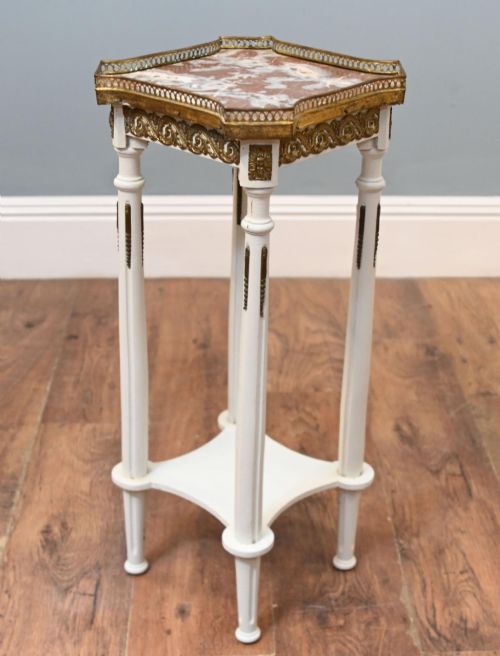
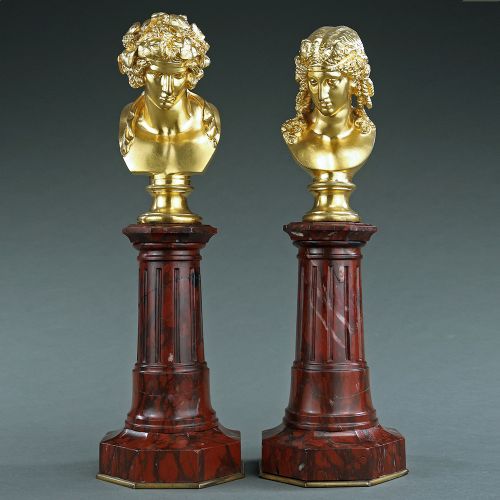
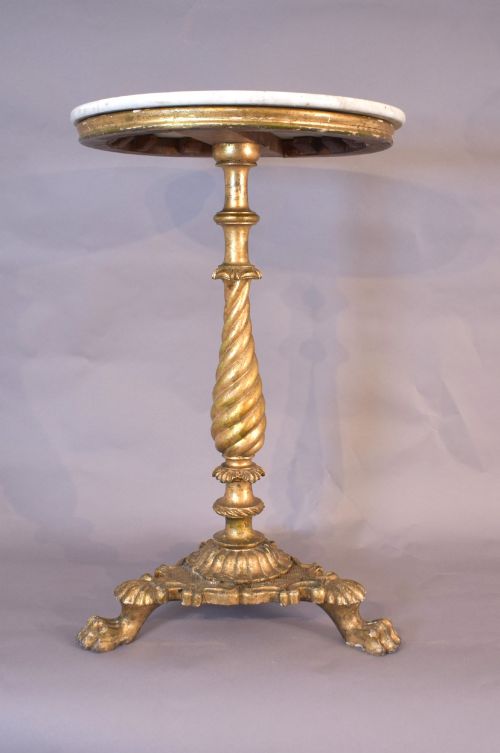
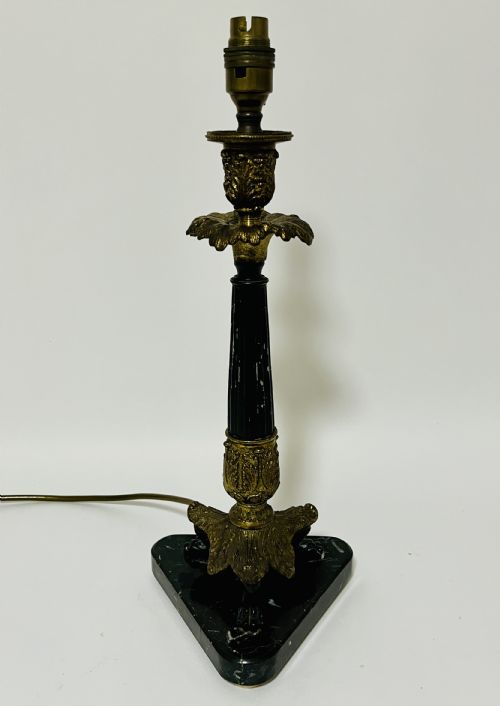
A marble and gilt column combines heavy stone shafts with metallic mounts, serving as pedestals, torchieres, table lamps, and architectural clock cases. These pieces draw heavily on Neoclassical, Louis XVI, and French Empire styles, reflecting a long European tradition of classical revival.
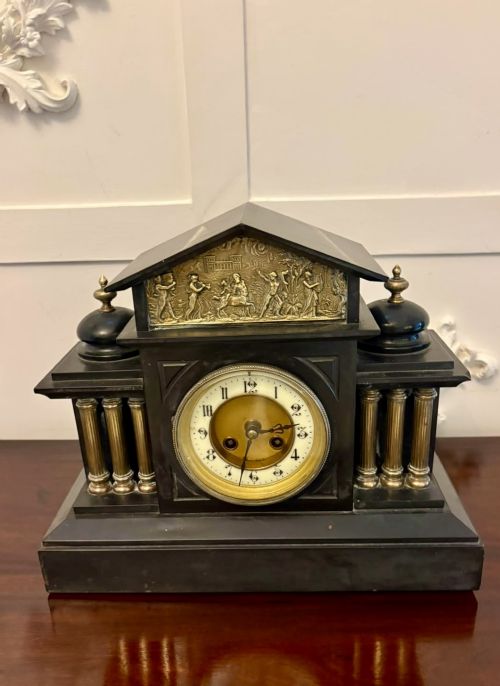
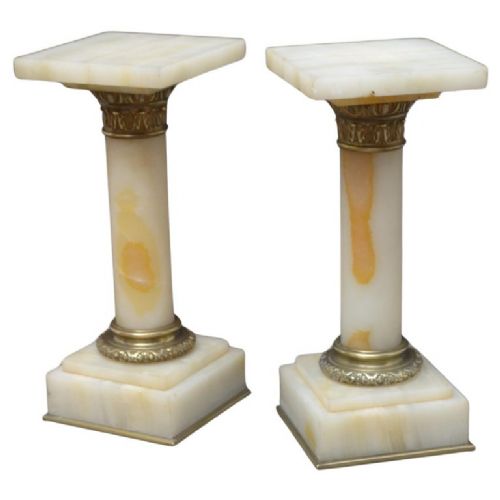
You will most commonly encounter tall pedestals, torchere columns, and mantel clocks produced during the nineteenth century. These range from slender onyx shafts with ormolu collars to substantial black marble clock garnitures and architectural portico clocks.
Makers and designers utilised these forms to elevate interior spaces, often pairing white, black, or variegated onyx marble with cast bronze, brass, and ormolu. The resulting objects function simultaneously as structural supports and decorative statements.
Materials and construction
The core structure relies on turned or carved stone, predominantly utilising white marble, black marble, and banded onyx. Artisans shaped these dense materials into smooth cylindrical or fluted shafts, often mounted on stepped square bases.
Gilt decoration takes the form of cast bronze, ormolu, and brass applied as collars, capitals, bases, and decorative mounts. These metal elements are secured to the stone with pins and screws, providing metallic contrast to the polished mineral surfaces.
Marble and Gilt Column Retail Price Guide 2026
Typical asking prices for marble and gilt column among the pieces listed under this phrase on Sellingantiques today, from the lower quarter to the upper quarter. They describe what is for sale here now, not the wider market.
Materials recorded across the inventory include black marble, white marble, onyx, glass, enamel, ormolu, brass, and gilt bronze.
Assessing quality and execution
The refinement of the cast metal mounts distinguishes finer examples from simpler production. Crisp chiselling on ormolu capitals and collars reveals the hand of a skilled bronzier, whereas lesser pieces display softer, more generalised surface detail.
The selection and turning of the stone itself dictate the overall presence of the object. Uniform veining in the marble and precise lathe work on tall columns indicate superior material selection by the workshop.
Philippes Paris
The Marble and Gilt Column Glossary
- Ormolu
- Gilded bronze produced through a mercury amalgamation process on decorative mounts. This technique imparts a deep, warm metallic lustre to capitals and collars.
- Portico clock
- A mantel clock housed within a architectural framework supported by columns. These architectural timepieces frequently combine marble and gilt bronze.
- Torchere
- A tall stand designed to hold a light source or display an urn. In this category, these tall columns elevate lamps and decorative objects above floor level.
- Garniture
- A set of matching decorative ornaments designed for display together on a mantelpiece. These sets typically include a central clock flanked by matching candelabra or urns.
- Corinthian column
- An architectural order featuring an ornate capital decorated with acanthus leaves. This classical style frequently tops slender marble and onyx display columns.
Marble and Gilt Column: Frequently Asked Questions
What is a marble and gilt column used for?
These pieces function primarily as elevated display stands for sculptures, busts, and urns, or serve as structural housings for portico and mantel clocks.
They act as architectural focal points within a room, adding height and classical proportion to interior displays.
How do I date a marble and gilt column?
Dating relies on stylistic clues such as Neoclassical or Louis XVI revival motifs, alongside the type of marble and the crispness of the gilt bronze mounts.
Nineteenth-century examples frequently combine onyx with ormolu collars, while earlier portico clocks display precise Directoire or Empire architectural proportions.
Where should I place a column in my home?
Tall torchere columns and pedestals suit corners or empty wall spaces where they can support lamps, vases, or small sculptures without blocking walkways.
Shorter architectural columns and clock garnitures sit comfortably on mantelpieces, console tables, and side cabinets.
How do I care for marble and gilt surfaces?
Dust the stone and metal components regularly with a soft, dry cloth to prevent grime accumulation on the polished surfaces.
Avoid using harsh chemical cleaners or abrasive polishes, which can strip the gilding from the bronze mounts and etch the polished marble.