



Marble and Bronze Cat
These marble and bronze cat sculptures capture feline grace in heavy metal and stone, bringing tactile presence and sculptural strength to any mantelpiece.
Marble and Bronze Cat
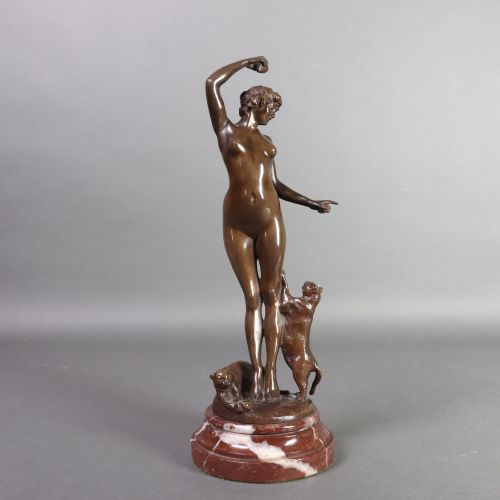
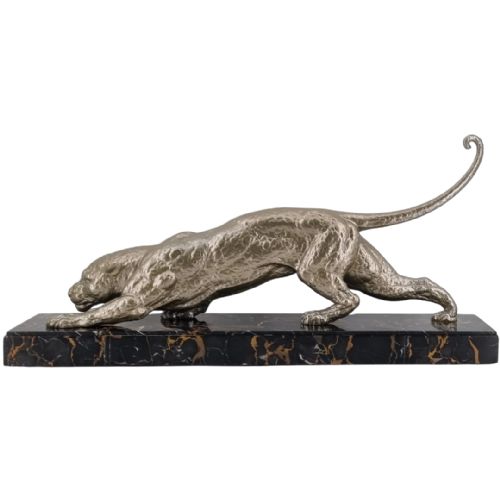
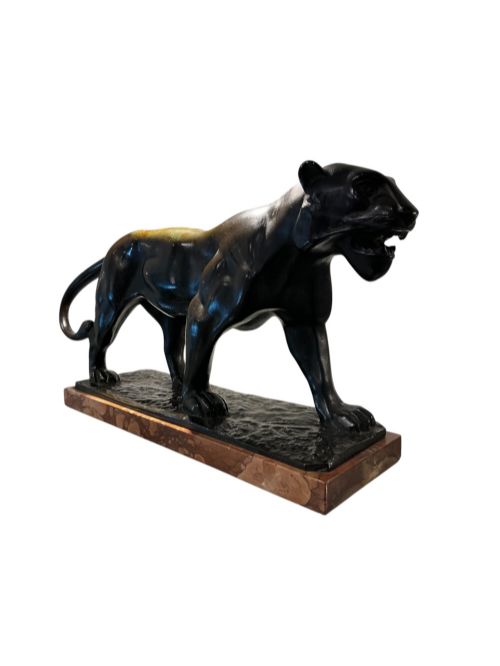
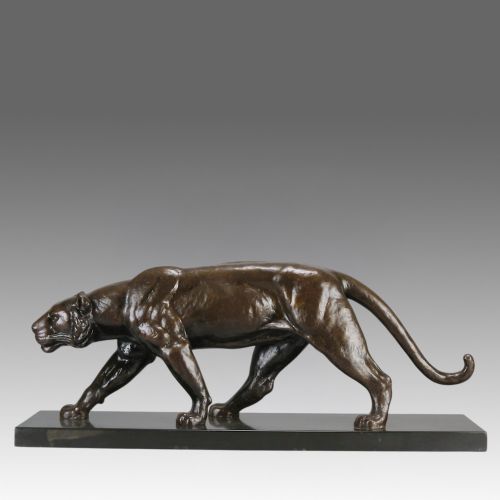
A marble and bronze cat sculpture combines metal casting with stone bases, typically presenting big cats such as panthers, tigers, and domestic felines. These pieces emerge predominantly from French workshops across the late nineteenth and early twentieth centuries, reflecting the aesthetic shifts from Art Nouveau curves to Art Deco geometry.
Most examples found here pair a patinated bronze or spelter figure with a polished marble base, often in black or variegated stone like Portoro or onyx. The animal subjects range from crouching prowlers to alert hunters, capturing tense muscular energy frozen in mid-stride.
How they were made
Foundries produced the animal figures using the lost-wax casting method for bronze or standard metal casting for spelter alternatives. These figures received chemical patination to achieve deep brown, black, or silvered tones before mounting.
The heavy stone plinths were hand-cut, carved, and polished to form stable bases that contrast with the metallic figures. Craftsmen secured the metal sculptures to the marble using threaded bolts or pins fitted through the base.
Marble and Bronze Cat Retail Price Guide 2026
Typical asking prices for marble and bronze cat among the pieces listed under this phrase on Sellingantiques today, from the lower quarter to the upper quarter. They describe what is for sale here now, not the wider market.
Listings span multiple decades from the nineteenth century through the nineteen-forties, uniting Art Nouveau fluidity with Art Deco geometric strength.
What varies in quality
The fidelity of the casting dictates the success of each piece, distinguishing sharp musculature and clean claw detail from soft, muddy contours. Superior examples retain crisp chasing work done by hand after the casting process.
Material selection creates a clear hierarchy, separating solid bronze figures mounted on fine Portoro marble from hollow spelter castings attached to plain stone bases. The weight, density, and finish of both components determine the lasting presence of the sculpture.
Gustave Dussart·D. H. Chiparus·Alexandre Ouline·Michel Decoux·Andrey
The Marble and Bronze Cat Glossary
- Animalier
- A nineteenth-century artistic movement focused on the realistic depiction of animals, particularly predators in motion. This school produced many of the finest bronze animal studies.
- Spelter
- A zinc alloy frequently utilised as a cost-effective alternative to bronze in decorative figures. It accepts patination well but possesses a lighter weight and softer surface.
- Portoro marble
- A distinctive black Italian limestone featuring dramatic gold and yellow veins. It provides a luxurious contrasting base for dark metallic animal sculptures.
- Patinated metal
- A chemically treated surface that alters the colour of bronze or spelter to achieve aged bronze, dark brown, or black tones. This finish protects the metal and defines the sculptural contours.
Marble and Bronze Cat: Frequently Asked Questions
What is an animalier cat sculpture?
An animalier sculpture focuses on realistic animal anatomy and movement, capturing beasts in wild or tense postures. These works emerged strongly in nineteenth-century France.
Artists studied live specimens in menageries to render muscles and fur with high accuracy before casting them in metal.
How do I tell bronze from spelter?
Bronze is heavier, colder to the touch, and rings with a clear tone when tapped gently. Spelter is softer, lighter, and may show a greyish metal beneath worn areas of patination.
Examining the underside or fixing bolts often reveals the lighter, more brittle nature of spelter compared to dense bronze.
Why are these cats mounted on marble?
Marble bases provide structural weight and stability to balance the heavy metal figures. They also create a formal framing device that elevates the sculpture from furniture.
Different marbles, such as black or Portoro stone, were selected to complement the dark patination of the metal cats.
Which periods do these sculptures date from?
The pieces span from the late nineteenth century through the Art Nouveau and Art Deco periods into the mid-twentieth century. Most examples cluster around the nineteen-twenties and nineteen-thirties.
Stylistic shifts in the bases and feline forms help distinguish nineteenth-century naturalism from later geometric modernist designs.