


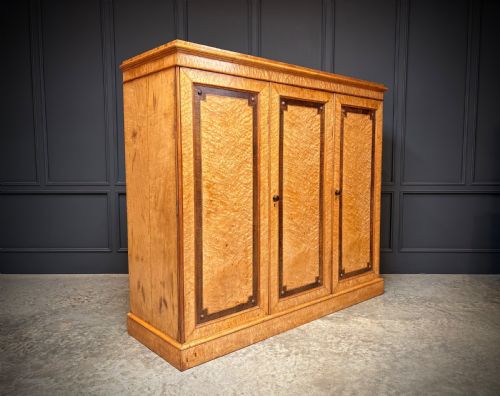


Maple Wood Cupboard
A maple wood cupboard brings a pale, figured grain and clean geometric lines to a room, offering practical storage with distinctive visual warmth.
Maple Wood Cupboard
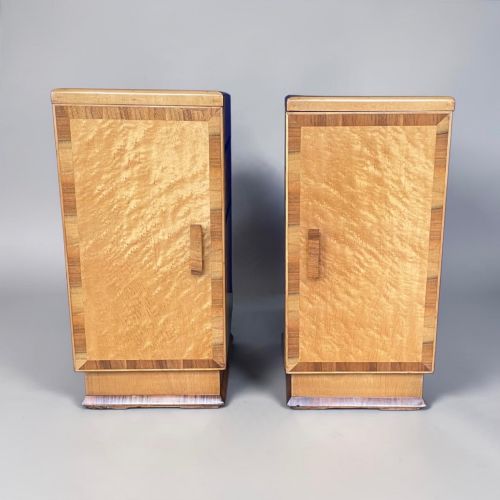
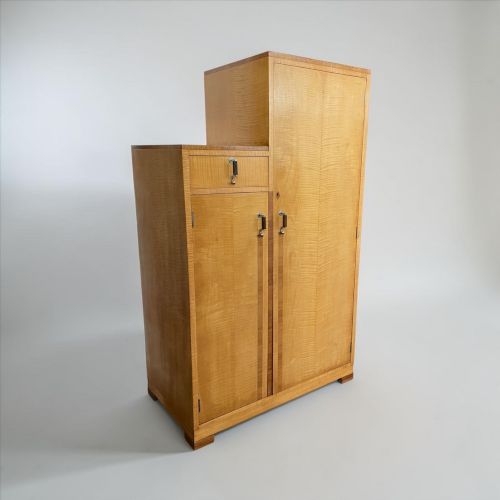
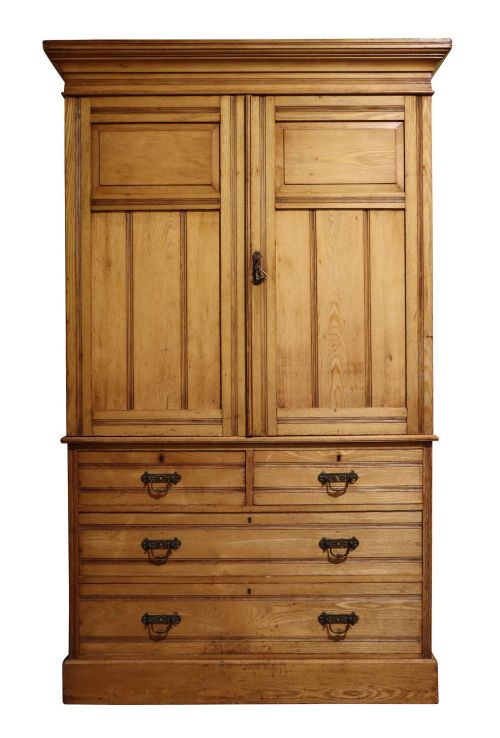
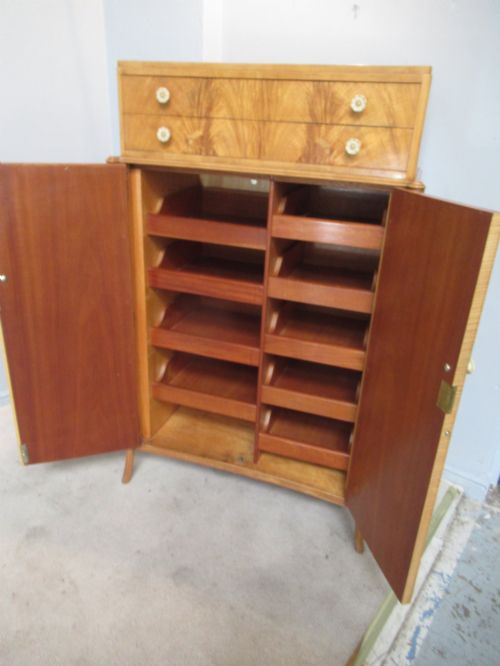
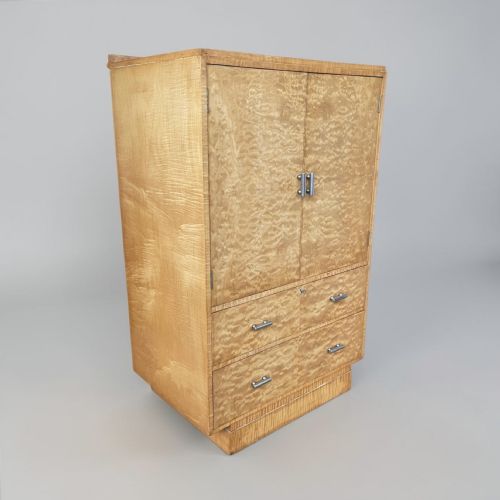
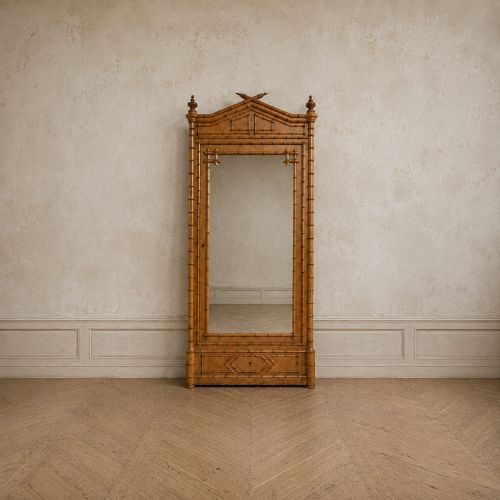
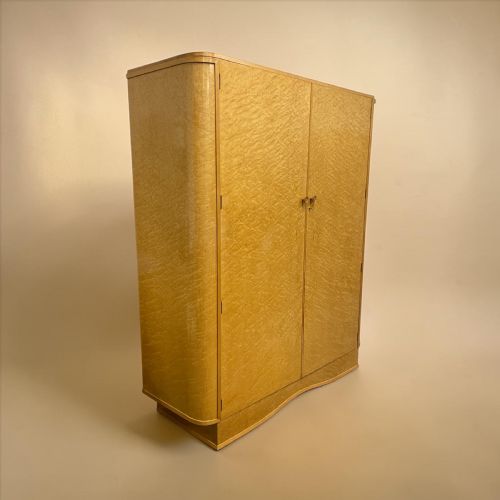
When searching for a maple wood cupboard, one encounters a range of substantial storage furniture built from the nineteenth century into the modernist period. The selection on this page leans heavily toward Art Deco bedroom cabinets, bedside tables, and compactum wardrobes alongside Victorian pieces.
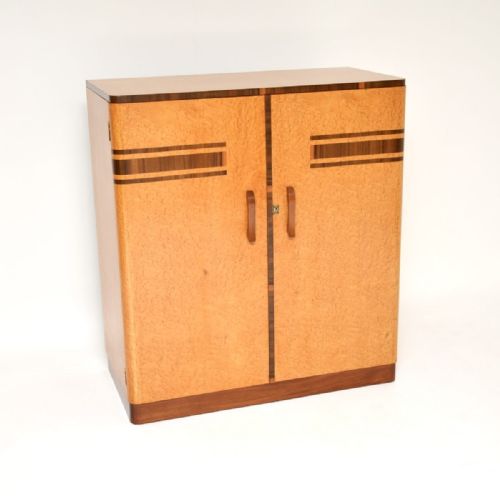
Forms vary considerably, encompassing tallboys, armoires, display cabinets, and bedside cupboards. Pieces often utilise birds eye maple, showcasing the characteristic speckled figuring across large vertical surfaces.
Origins span English, French, and Swedish workshops, moving from nineteenth-century revival styles to the sleek blonde veneers popular in the nineteen-thirties.
How they were made
Construction relies on timber framing combined with birds eye maple veneer or solid wood, paired frequently with contrasting dark woods like walnut or mahogany. Metal and brass hardware provide functional accents for hinges, handles, and locks.
Surface treatments focus on highlighting the natural grain patterns of the wood rather than heavy ornamentation. Glass panels appear on display variations, while internal shelving and hanging space cater to domestic storage needs.
Maple Wood Cupboard Retail Price Guide 2026
Typical asking prices for maple wood cupboard among the pieces listed under this phrase on Sellingantiques today, from the lower quarter to the upper quarter. They describe what is for sale here now, not the wider market.
Listings feature periods from the nineteenth century, Victorian era, and Edwardian times through to nineteen-thirty Art Deco designs.
What varies in quality
Quality rests upon the selection and matching of the veneer, particularly how evenly the birds eye figuring is displayed across the doors and drawer fronts. Superior pieces maintain crisp proportions and seamless joinery without relying on excessive applied decoration.
The choice of secondary timbers and the precision of the brass or metal fittings further distinguish high-end examples from standard utility storage. Maker attribution, where present through stamps or known design characteristics, elevates the standing of a piece.
Maple and Co·Harry and Lou Epstein
The Maple Wood Cupboard Glossary
- Birds Eye Maple
- A figure in maple wood where the grain swirls in small circular eyes, highly prized for decorative veneer work on cabinets.
- Compactum
- A multi-functional wardrobe designed with internal compartments, drawers, and hanging space to store an entire wardrobe efficiently.
- Armoire
- A large standing cupboard with doors, traditionally used for storing garments and household linen.
- Tallboy
- A tall chest of drawers or a combination cabinet standing higher than a standard dresser, maximising vertical storage capacity.
- Veneer
- A thin layer of superior wood glued to a base timber surface to provide a decorative exterior appearance.
Maple Wood Cupboard: Frequently Asked Questions
What is a compactum wardrobe?
A compactum wardrobe is a large piece of fitted storage furniture that combines hanging space with internal drawers and shelving.
These units were designed to hold a complete array of clothing within a single footprint, often featuring fitted compartments behind panelled doors.
How do I date an Art Deco maple cupboard?
Art Deco maple cupboards typically date from around nineteen-thirty and are defined by blonde wood veneers and geometric silhouettes.
They often incorporate contrasting dark wood details and streamlined metal hardware typical of the interwar period.
Where were birds eye maple cupboards made?
Birds eye maple cupboards were produced across English, French, and Swedish workshops during the nineteenth and early twentieth centuries.
European makers frequently employed the timber in revival styles and sophisticated modernist designs.
How do I care for a veneer surface?
Veneered furniture requires protection from direct sunlight and excessive moisture to prevent the wood from fading or lifting.
Regular dusting with a soft cloth and occasional gentle polishing keep the timber nourished without damaging the historical finish.