

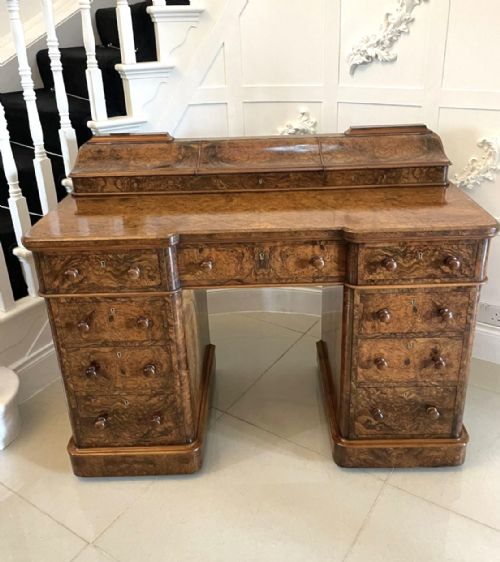
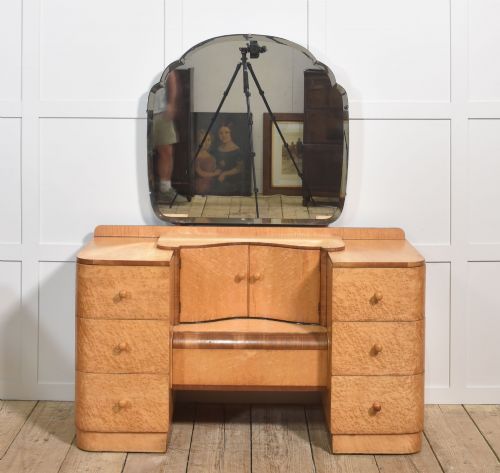
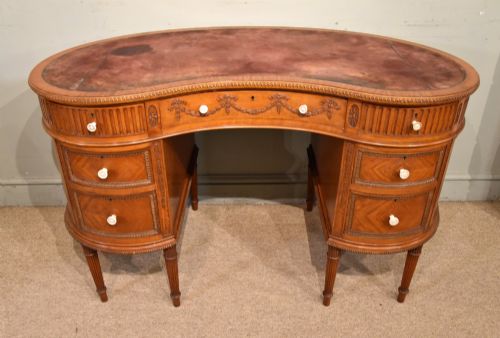
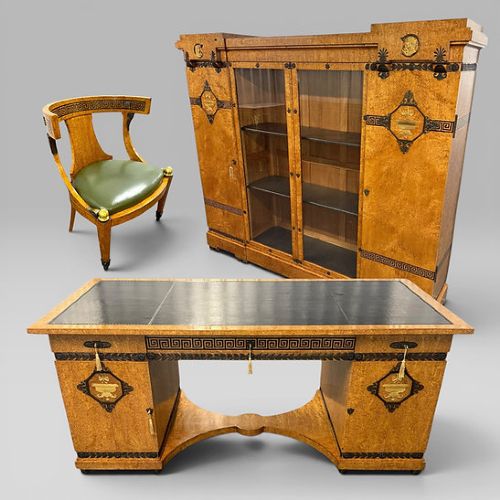


Maple Pedestal Desk
A maple pedestal desk brings distinctive wood grain and sturdy workspace utility to a study, drawing on Victorian and Edwardian craftsmanship.
Maple Pedestal Desk
A maple pedestal desk provides a dedicated working surface supported by banks of drawers, uniting practicality with striking timber figure. Buyers seeking a maple pedestal desk encounter pieces from the nineteenth century into the twentieth century, alongside related forms in dressing tables and writing tables.
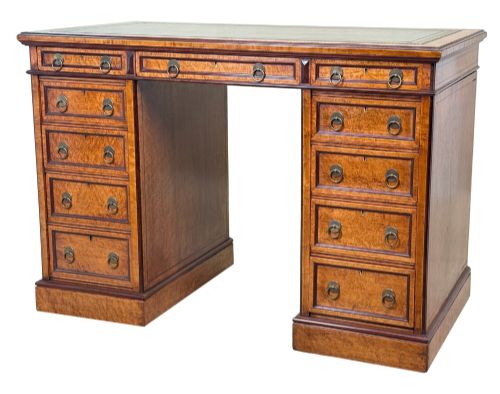
The selection ranges from compact small pedestal desks to substantial twin pedestal formats outfitted with leather linings and brass hardware. Many pieces demonstrate the distinct grain patterns of birdseye maple and burr maple, reflecting Victorian and Edwardian tastes for decorative cabinet timbers.
Materials and construction methods
Cabinet makers utilised choice veneers of birdseye maple and burr maple applied to sturdy carcases of secondary timber, often complemented by crossbanding in contrasting woods. Leather insert panels, fitted with blind tooling, provide the traditional writing surface across the top.
Brass handles, escutcheons, and occasional glass elements complete the structural detailing of these desks. Joinery relies on traditional dovetailed drawer construction and robust pedestal framing designed to bear the weight of heavy use.
Maple Pedestal Desk Retail Price Guide 2026
Typical asking prices for maple pedestal desk among the pieces listed under this phrase on Sellingantiques today, from the lower quarter to the upper quarter. They describe what is for sale here now, not the wider market.
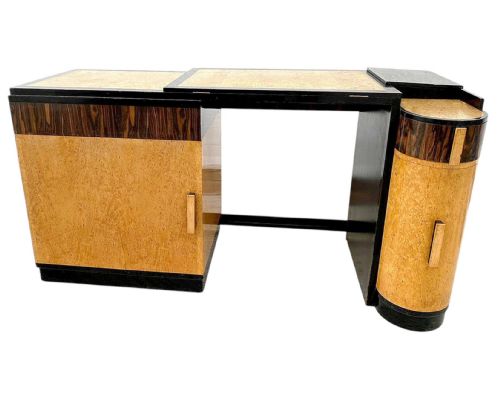
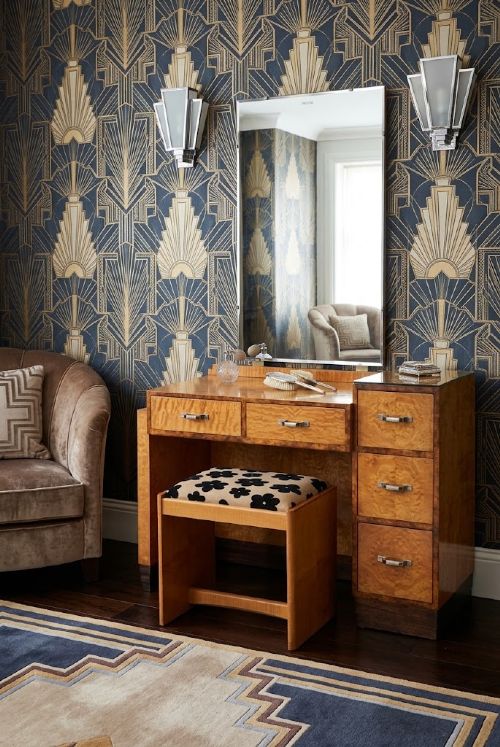
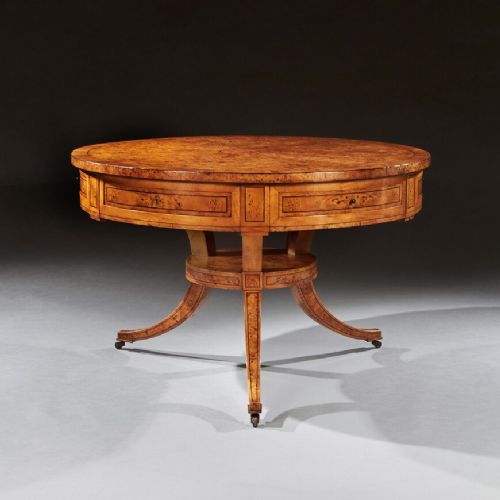
Listings feature pedestal desks alongside dressing tables, centre tables, and office sets spanning the Victorian, Edwardian, and Art Deco periods.
Distinguishing quality in construction
Quality separates through the selection and matching of the maple veneer, where symmetrical figuring across drawer fronts indicates superior craftsmanship. The crispness of inlaid details and the weight of brass furniture further distinguish finer workshops from standard production.
Internal drawer construction, including the fineness of the dovetails and the condition of the secondary wood, reveals the standard of execution. Well-preserved leather writing surfaces with sharp tooling also elevate the standing of a piece.
Maple and Co·Mercier Frères·Harry and Lou Epstein·Maples of London and Paris
The Maple Pedestal Desk Glossary
- Pedestal desk
- A form of writing furniture featuring a central workspace supported by two independent banks of drawers. These units typically stand on plinth bases or bracket feet.
- Birdseye maple
- A figure in maple wood resembling tiny swirling eyes, highly prized for veneer work on Victorian and Edwardian furniture. This pattern occurs naturally in the sugar maple tree.
- Twin pedestal
- A desk configuration with two separate pedestals holding up the top board, creating a kneehole space in the centre. This design allows for substantial storage capacity.
- Burr maple
- Wood harvested from the growth excrescences on maple trees, showing complex, swirling grain patterns. Cabinet makers utilised these burrs for decorative drawer fronts and tabletops.
- Tooled leather
- Leather writing inserts decorated with gold leaf or blind impressions along the perimeter. This treatment provides a durable and refined writing surface.
Maple Pedestal Desk: Frequently Asked Questions
How do I date a pedestal desk?
Dating a pedestal desk involves examining the construction methods, hardware styles, and overall aesthetic period. Victorian and Edwardian examples show distinct architectural or revival influences.
Timber selection and maker marks, where present, help narrow the timeline of manufacture to specific decades between the nineteenth and twentieth centuries.
What woods were used alongside maple?
Cabinet makers paired maple with contrasting timbers such as mahogany, satinwood, walnut, and rosewood for crossbanding and inlay work. Secondary timbers inside the drawers often include pine or oak.
These combinations highlighted the pale, figured grain of the primary maple veneer.
How should I care for leather desk tops?
Leather desk tops benefit from gentle cleaning with a slightly damp cloth and occasional treatment with appropriate leather dressings to prevent drying. Avoiding direct sunlight helps preserve the colour and blind tooling.
Careful maintenance protects the original surface where writing and daily tasks take place.