


Maple Co Writing Table
A maple co writing table brings the refined cabinet-making of a major London maker into a study with fitted leather and fine timber.
Maple Co Writing Table
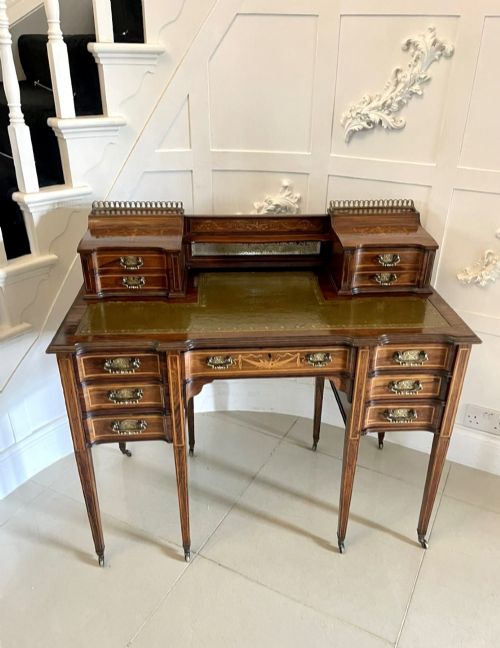
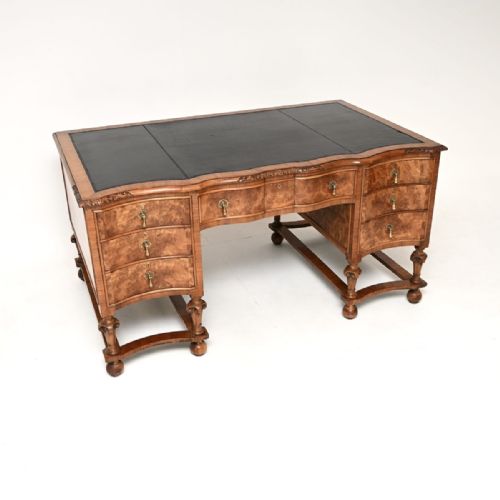
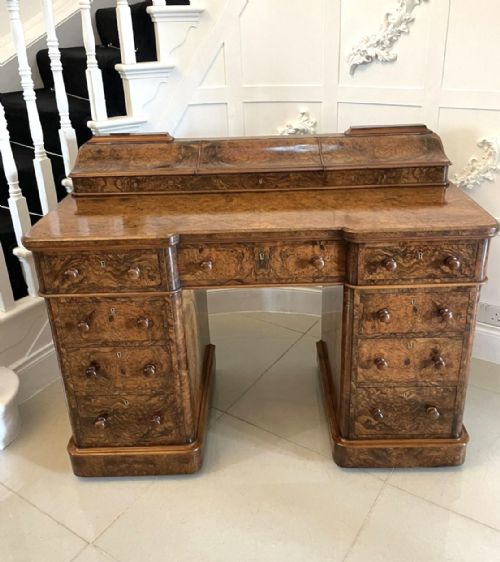
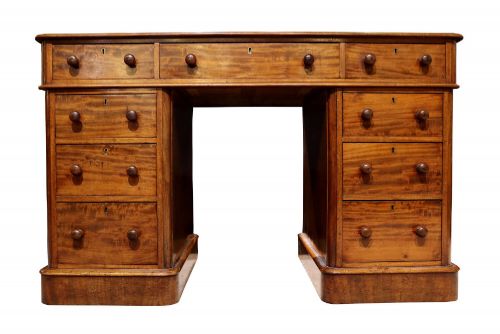
A maple co writing table represents the high standard of Victorian and Edwardian commercial furniture production from London. When searching for a maple co writing table, a buyer encounters pieces originating primarily from the nineteenth and early twentieth centuries, spanning the Victorian and Edwardian eras. These desks typically take the form of pedestal desks, kneehole desks, partners desks, or writing tables, often bearing the stamp or label of the firm.
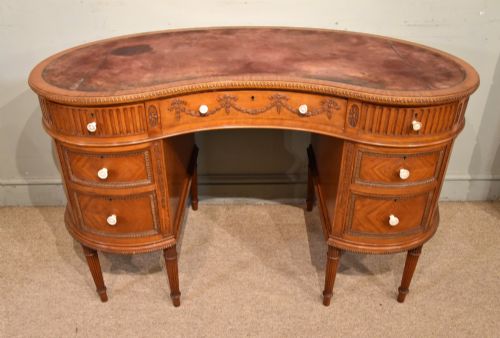
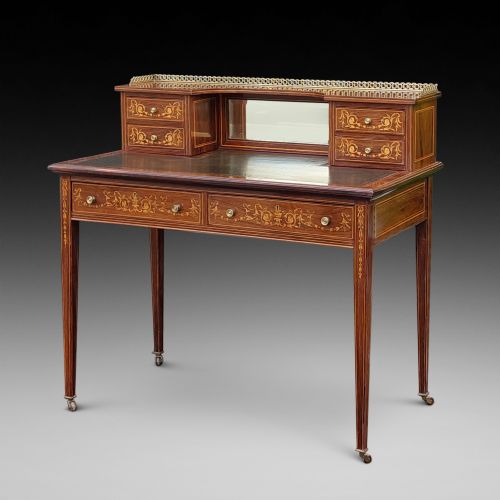
The materials utilised by the maker range from rich walnut, burr walnut, and mahogany to satinwood, rosewood, and oak, frequently enhanced with brass hardware and leather inserts. Styles fluctuate across the pieces, encompassing standard Victorian and Edwardian designs alongside Sheraton Revival, Queen Anne Revival, Chippendale Revival, and the Aesthetic Movement. The more elaborate examples incorporate detailed marquetry inlay and kidney-shaped silhouettes, while simpler variants offer straightforward walnut or mahogany surfaces.
How they were made
Carpenters constructed these tables using solid hardwoods such as mahogany, walnut, and oak, frequently applying veneers of burr walnut, satinwood, and rosewood to display striking grain patterns. Workshops employed traditional joinery techniques to ensure structural stability across large pedestal and partners desks, incorporating multiple drawers and fitted interiors.
Surfaces intended for writing received inserts of tooled leather, whilst brass handles, escutcheons, and castors provided functional and decorative accents. Cabinet-makers applied marquetry inlay using contrasting timbers to embellish the mahogany and satinwood surfaces on revival-style pieces.
What varies in quality
The choice of primary timber and decorative veneer dictates the visual hierarchy of these desks, with figured burr walnut and satinwood sitting above standard mahogany or oak. The complexity of the desk type also influences the standard, ranging from simple side tables to fifteen-drawer Dickens desks and partner desks with double-sided storage.
The presence of crisp marquetry inlay, finely cast brass hardware, and original tooled leather writing surfaces separates standard production items from the finer workshop output. Maker marks, whether stamps, plaques, or paper labels, provide definitive proof of origin and affect collector interest.
Maple and Co
The Maple Co Writing Table Glossary
- Pedestal desk
- A heavy office or library desk comprising two small pedestals of drawers supporting a single desktop. These units often feature a central drawer and leather-lined writing surfaces.
- Partners desk
- A large double-sided desk designed for two people to work opposite one another, featuring drawers and cupboards on both faces. These pieces represent the larger and more substantial end of workshop production.
- Kneehole desk
- A compact desk featuring a recessed central space for the user's legs, flanked by banks of drawers. This form is common in both Victorian and Edwardian examples.
- Marquetry
- Decorative patterns formed by fitting together small pieces of veneer of various colours and grains onto a structural surface. This technique appears frequently on Sheraton Revival writing tables.
- Satinwood
- A pale, hard timber with a natural sheen, heavily utilised for high-status Edwardian writing desks and dressing tables. It often serves as a canvas for delicate inlay work.
Maple Co Writing Table: Frequently Asked Questions
How do I identify a genuine piece?
Look for maker stamps on drawer edges, brass drawer pulls, or paper trade labels affixed inside the furniture. These stamps typically read Maple and Co or Maples of London.
Examine the secondary timbers inside the drawer boxes and the quality of the dovetail joints. These structural details confirm the period of manufacture before the twentieth century.
What is a partners desk?
A partners desk provides workspace on both sides, allowing two people to sit opposite each other with matching drawer and cupboard configurations below. They are usually larger than standard pedestal desks and were built for offices and large libraries.
These pieces feature heavy timber construction in walnut, mahogany, or oak, often finished with an inset leather writing pad on the top surface.
How should I care for the leather top?
Clean the tooled leather surface gently with a slightly damp cloth, avoiding harsh chemical cleaners that can strip the gold leaf tooling. Apply a specialised leather cream periodically to keep the material supple.
Protect the surface from direct sunlight and excessive moisture to prevent the leather from cracking or warping the timber substrate underneath.
What styles are available?
The listings encompass Victorian and Edwardian pieces, along with specific revival styles such as Sheraton Revival, Queen Anne Revival, and the Aesthetic Movement. Shapes vary from traditional rectangular pedestal desks to kidney-shaped satinwood tables and Carlton House desks.
Materials range from dark mahogany and walnut to lighter satinwood and pitch pine, reflecting the changing tastes of late nineteenth and early twentieth-century interior decoration.