

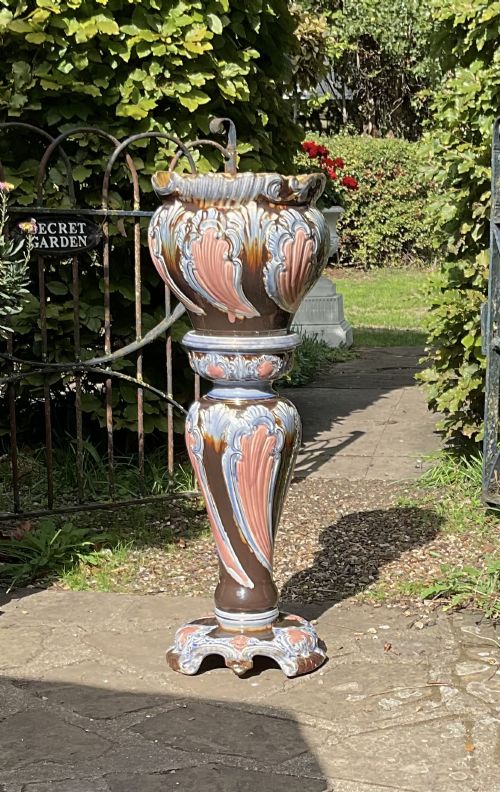


Majolica Pottery Stand
These majolica pottery stand pieces bring vibrant coloured glazes and sculptural form to interiors, combining sturdy earthenware with rich historical style.
Majolica Pottery Stand
A majolica pottery stand groups together diverse vessels and pedestals, including jardinieres, umbrella stands, and cheese dishes from the nineteenth century onwards. You will frequently encounter large jardinieres on matching pedestals and tall stick stands designed for hallway use.
The objects span Victorian, Edwardian, Art Nouveau, and Arts and Crafts aesthetics, reflecting both naturalistic plant forms and Renaissance Revival motifs. Pieces originate from English, Italian, and continental potteries, offering various scales from table domes to substantial floor-standing planters.
Materials and construction
Maker's workshops built these pieces using earthenware and ceramic bodies, shaped into naturalistic or architectural forms. Artisans then applied opaque tin glazes or rich coloured lead glazes that pooled across the moulded surface.
Firing techniques fused the vibrant glaze layers directly to the pottery body, producing the glossy sheen characteristic of majolica. Lustre finishes also appear, created through specialist metallic reduction firings during the late period.
Majolica Pottery Stand Retail Price Guide 2026
Typical asking prices for majolica pottery stand among the pieces listed under this phrase on Sellingantiques today, from the lower quarter to the upper quarter. They describe what is for sale here now, not the wider market.
Some nineteenth-century potters modelled fierce griffins directly into the supporting columns of planters to guard indoor ferns.
Judging quality in majolica pieces
Quality rests in the crispness of the moulding and the depth of the glaze application, which should accentuate relief details without obscuring them. Superior examples show careful handling of colours across complex naturalistic or classical surfaces.
The integrity of large two-piece items like jardinieres and pedestals relies on balanced proportions and precise pairing. Maker marks and attribution to known potteries further distinguish standard utility wares from distinguished artistic productions.
Clement Massier·Julius Dressler·Woodlesford Art Pottery·Burmantofts
The Majolica Pottery Stand Glossary
- Majolica
- Pottery covered in an opaque tin glaze or colourful lead glaze, fired over a prepared earthenware body. This technique allows for vibrant colour palettes and rich surface decoration.
- Jardiniere
- A decorative ceramic container or pot designed to hold plants and flowers. These often sit upon matched architectural pedestals.
- Tin Glaze
- A white, opaque ceramic glaze containing tin oxide, which forms a smooth surface for painted decoration. It defines traditional majolica production.
- Faience
- European tin-glazed earthenware, often applied historically to describe fine art pottery and decorative wares. The term bridges various continental and British traditions.
- Lustre Glaze
- A metallic film applied to ceramics and fired in a reduced oxygen atmosphere to produce an iridescent sheen. Clement Massier utilised this technique on earthenware.
Majolica Pottery Stand: Frequently Asked Questions
What is a majolica pottery stand?
A majolica pottery stand encompasses glazed earthenware vessels and display pedestals, including tall umbrella holders, plant jardiniere columns, and table cheese domes.
These pieces utilise coloured lead or tin glazes to highlight moulded relief decoration from Victorian and Edwardian makers.
How were umbrella stands used?
Umbrella and stick stands served a practical function in nineteenth-century hallways, keeping wet walking sticks and umbrellas contained.
Potteries shaped them with deep internal wells and heavy earthenware bases to catch water and prevent tipping.
How do I date a majolica stand?
Dating relies on stylistic clues such as naturalistic Victorian plant forms, Renaissance Revival motifs, or flowing Art Nouveau lines.
Maker marks, registration numbers, and specific glaze types also help narrow pieces down to periods like the Victorian era or around nineteen hundred.
How do I clean majolica pottery?
Cleaning requires gentle dusting with a soft cloth and occasional wiping with a damp sponge to preserve the delicate glaze surface.
Harsh chemical detergents and abrasive pads should be avoided entirely to protect the historic ceramic body and glaze.