



Majolica Pedestal
Majolica pedestal combinations are striking earthenware plant stands and jardinières that anchor a room with vivid colour and classical or naturalistic form.
Majolica Pedestal
A majolica pedestal search brings up grand plant stands, jardinières, and figural column supports produced primarily during the Victorian and Edwardian eras, stretching from around 1880 into the early twentieth century. You will frequently encounter matched sets of jardinières and stands, alongside monumental single vases and figural column bases.
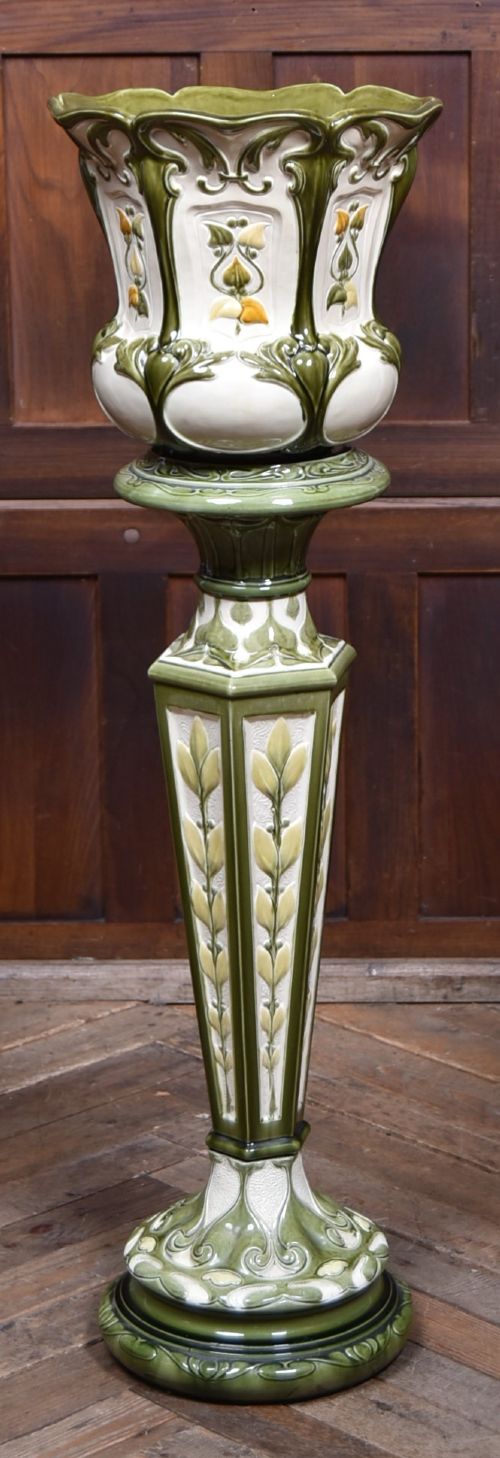
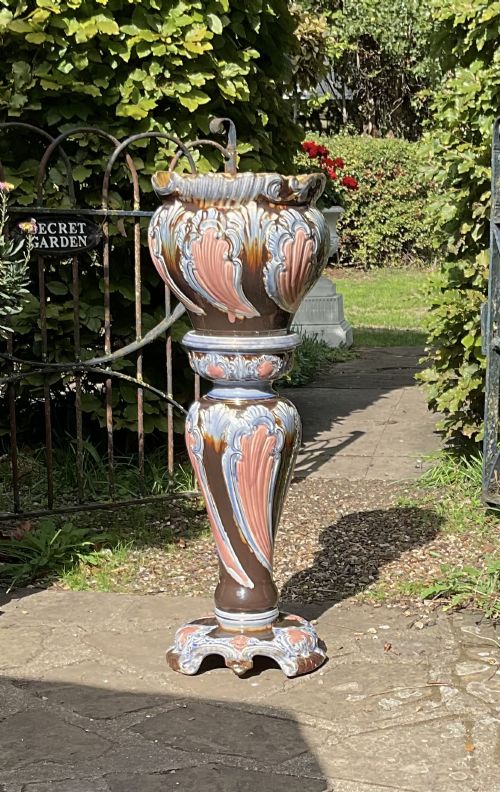
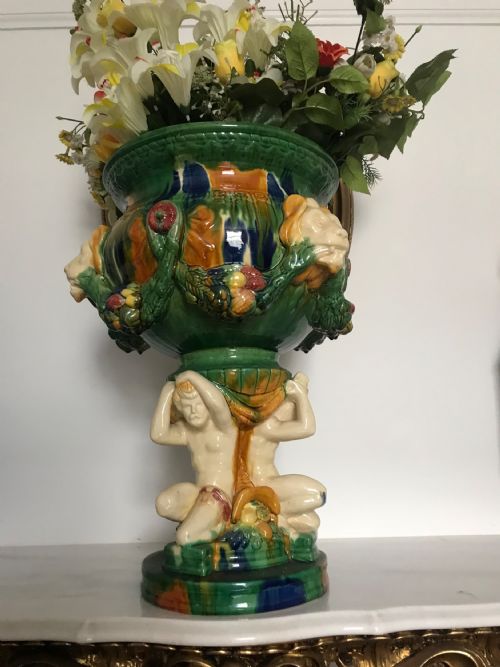
The aesthetic vocabulary draws heavily from Italian Renaissance Revival, Grand Tour sensibilities, and the flowing lines of Art Nouveau and Victorian naturalism. Forms range from classical columns decorated with lions and griffins to organic structures wrapped in foliage, begonia leaves, and swans.
Origins span British potteries like Burmantofts and Minton alongside continental European works from Italy, France, and Bohemia. These pieces served as dramatic interior architecture for conservatories, drawing rooms, and halls.
Materials and construction
Makers shaped these robust objects from earthenware, terracotta, and ceramic bodies, building up substantial forms designed to support heavy plantings and water-filled vessels. Potters applied lead glazes, tin glazes, and specialised lustre glazes to create the deep, reflective surfaces characteristic of the ware.
Decoration relied on hand-painted pigments and moulded relief work, capturing intricate details from biological motifs to mythological figures like Bacchus and cupids. Kiln firing fixed the vibrant mineral colours beneath thick, glossy glaze layers.
Majolica Pedestal Retail Price Guide 2026
Typical asking prices for majolica pedestal among the pieces listed under this phrase on Sellingantiques today, from the lower quarter to the upper quarter. They describe what is for sale here now, not the wider market.
Listings span the nineteenth and twentieth centuries, incorporating Victorian, Edwardian, Art Nouveau, and Renaissance Revival aesthetics.
Distinguishing the finer pieces
Quality rests upon the crispness of the moulded relief and the control of the glaze flows across complex figural elements like lions, griffins, and human figures. Sharp definition in naturalistic foliage and mythological faces separates ambitious works from simpler commercial productions.
The richness and depth of the coloured glaze application dictate visual success, particularly where lustre or tin glazes highlight the contours of grand vases and column stands. Scale and ambition also drive distinction, with monumental heights and complete matched sets representing peak production.
Burmantofts·Ulisse Cantagalli·Clement Massier·Minton·Julius Dressler·Eichwald·Albert Carrier
The Majolica Pedestal Glossary
- Jardinière
- A large ornamental pot or planter designed to hold growing plants, frequently paired with a matching column base.
- Majolica
- A type of pottery characterised by colourful lead or tin glazes applied over an earthenware body, noted for vibrant polychrome effects.
- Comport
- A decorative bowl or tazza raised on a stem and foot, used historically for serving fruit or as a centrepiece.
- Lustre glaze
- A metallic glaze technique that produces an iridescent, shimmering surface sheen when fired in a reduced oxygen environment.
- Faience
- European tin-glazed earthenware, often encompassing wares closely related in appearance and technique to majolica.
Majolica Pedestal: Frequently Asked Questions
What is a majolica pedestal?
A majolica pedestal is a glazed ceramic column or stand designed to elevate a matching jardiniere, plant pot, or decorative urn.
These combination pieces were created to showcase indoor foliage and architectural ceramics in Victorian and Edwardian interiors.
How were these stands used?
They were positioned in conservatories, hallways, and drawing rooms as dramatic focal points for large tropical plants and floral displays.
The taller column stands elevated plants to eye level while displaying elaborate sculptural reliefs like lions, griffins, and classical figures.
How can I tell periods apart?
Mid to late nineteenth-century pieces often favour Victorian naturalism, classical Renaissance Revival motifs, and heavy mythological figures.
Early twentieth-century examples frequently shift towards the flowing organic lines of Art Nouveau and Secessionist styling.