

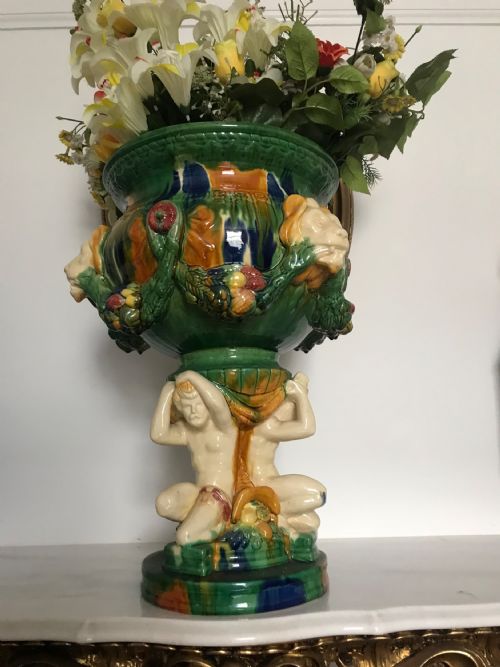


Majolica Pedestal Urn
These majolica pedestal urn pieces are dramatic ceramic statements designed for gardens and grand halls, combining sculptural bases with rich coloured glazes.
Majolica Pedestal Urn
When you search for majolica pedestal urn, you are looking at substantial decorative vessels and jardinieres raised upon matching stands or figural bases. These pieces emerge from the nineteenth century, spanning periods from Victorian production to around nineteen twenty.
The forms on this page include monumental jardinieres and stands, grand tour terracotta vessels, and vases with distinct Italian Renaissance revival influences. Many take naturalistic or rustic forms, incorporating figural elements such as lions and griffins directly into the ceramic structure.
Originating largely from European workshops and Italian traditions, these items function primarily as focal points for large rooms or sheltered garden spaces. The most frequently met versions combine earthenware bodies with heavy tin or lead glazes.
How they were made
Makers shaped these earthenware and terracotta bodies through extensive moulding and throwing before applying heavy lead or tin glazes. This glazing technique created the characteristic vibrant surface sheen across the ceramic body.
Potters incorporated metallic lustre finishes and intricate hand-painted details into the wet glaze before firing the pieces at high temperatures. The resulting ceramic surface resisted moisture while displaying deep colour variation.
Majolica Pedestal Urn Retail Price Guide 2026
Typical asking prices for majolica pedestal urn among the pieces listed under this phrase on Sellingantiques today, from the lower quarter to the upper quarter. They describe what is for sale here now, not the wider market.
Listings feature earthenware and terracotta materials spanning the Victorian era through the early twentieth century, incorporating metallic lustre and tin glazes.
What varies in quality
Glaze application and colour depth further separate ordinary items from masterworks, with finer pieces showing controlled tonal variation and metallic lustre without uneven running or dull patches. The architectural balance between the upper vessel and its pedestal base dictates the visual success of the entire composition.
Clement Massier·Minton·Cantagalli·Julius Dressler·Albert Carrier
The Majolica Pedestal Urn Glossary
- Majolica
- A type of earthenware coated with an opaque white tin glaze and painted with metallic oxide colours. This technique produces vibrant hues and a glossy surface finish.
- Jardiniere
- An ornamental ceramic receptacle designed to hold plants or flowers. These items often sit upon matching columns or stands.
- Lustre glaze
- A metallic film applied to ceramics to create an iridescent sheen. It reflects light with a rainbow-like effect across the surface.
- Terracotta
- A porous unglazed or glazed red earthenware clay body. It serves as a sturdy foundation for large garden vessels and architectural pottery.
- Renaissance revival
- A nineteenth century design movement drawing inspiration from classical Italian art and architecture. Pieces in this style feature formal symmetry and mythological motifs.
Majolica Pedestal Urn: Frequently Asked Questions
What is a majolica pedestal urn used for?
These large ceramic vessels served as decorative centrepieces in nineteenth century reception halls, conservatories, and formal gardens. They frequently functioned as planters for substantial ferns or palms.
Today, they remain statement decorative objects that anchor a room without necessarily holding plants. Their height and sculptural form make them natural focal points in large entryways.
Are these pieces waterproof?
While the heavy glazes make the interior surfaces resistant to moisture, nineteenth century ceramics can occasionally develop micro-fissures over time. Water may seep through tiny lines in the glaze.
Use a modern waterproof saucer or liner inside the urn if you intend to display live potted plants indoors. This protects both the historic ceramic base and your flooring from dampness.
How can I tell a Victorian piece apart?
Victorian examples often display naturalistic plant motifs, rustic branches, or mythological creatures like griffins and bacchus figures. The weight of the earthenware and the richness of the coloured tin glaze provide strong period indicators.
Look closely at the underside or base for maker marks, registry diamonds, or impressed numbers typical of nineteenth century European pottery factories. The complexity of the moulded relief work also points toward specific manufacturing decades.