



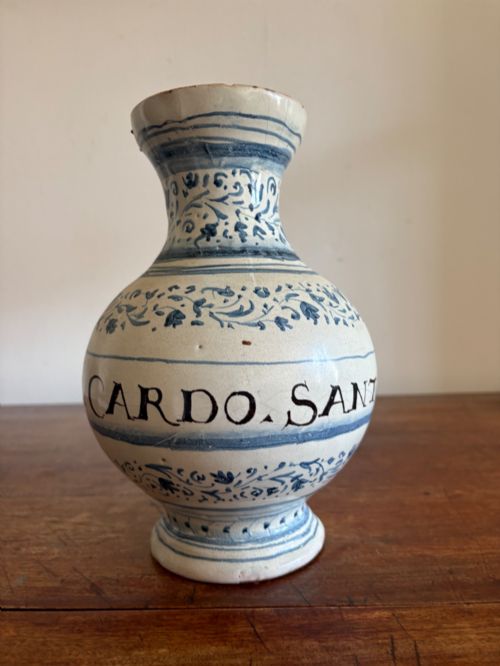


Majolica Ceramic Vessel
These majolica ceramic vessel pieces bring vibrant tin-glazed colours and sculptural earthenware forms into a room, offering rich historical presence.
Majolica Ceramic Vessel
A majolica ceramic vessel encompasses a diverse group of earthenware objects ranging from utilitarian apothecary jars and pharmacy jugs to decorative vases, flasks, and umbrella stands. The pieces seen here stretch across the eighteenth and nineteenth centuries, alongside examples from the early twentieth century.
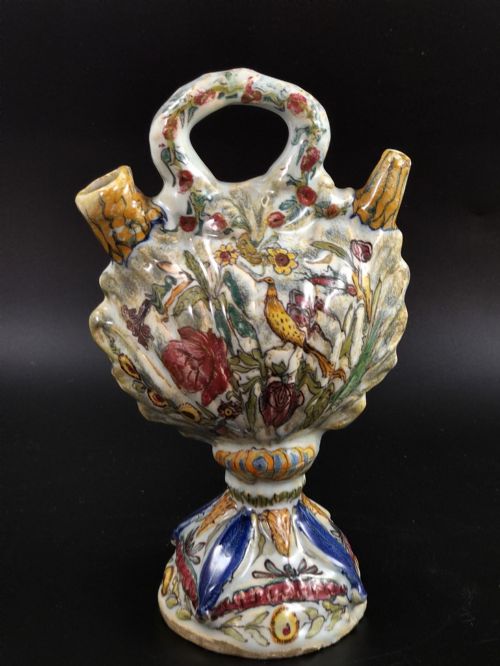
Italian traditions dominate the selection, appearing alongside French faience, British art pottery, and continental works. Buyers encounter distinct forms such as the cylindrical albarello, handled pharmacy wet drug jugs, scallop-shell pilgrim flasks, and large centrepiece bowls.
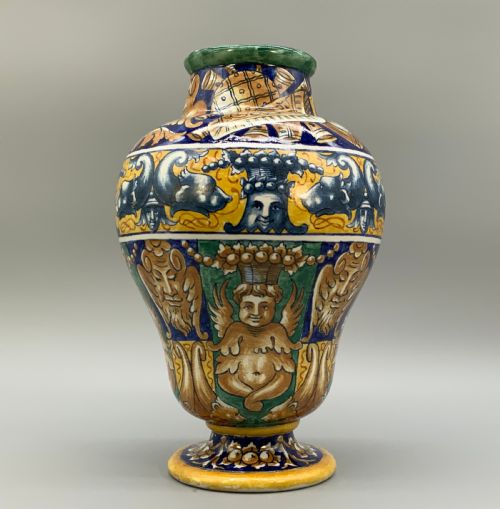
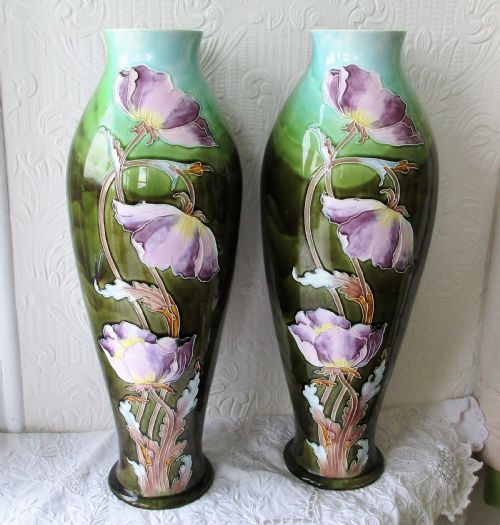
The aesthetic vocabulary spans Italian Baroque and Renaissance Revival motifs, Victorian naturalist designs, Chinoiserie scenes, and later Art Nouveau styling. These objects combine functional utility with elaborate painterly and sculptural ambition.
Materials and production methods
Makers shaped these objects using earthenware or terracotta bodies, which provided a porous foundation suitable for absorbing liquid tin-glazes. Tin-glaze application created a smooth, opaque white surface that acted as a canvas for subsequent pigment work.
Polychrome decoration relied on mineral oxides such as manganese and yellow pigments, alongside deep cobalt blues for traditional blue and white painting. Firing locked the metallic oxides into the glaze matrix, producing enduring gloss and rich surface depth.
Majolica Ceramic Vessel Retail Price Guide 2026
Typical asking prices for majolica ceramic vessel among the pieces listed under this phrase on Sellingantiques today, from the lower quarter to the upper quarter. They describe what is for sale here now, not the wider market.
Frogs, Chinese boys riding melons, and royal coronation steins peer out from the glaze.
Evaluating quality and execution
The distinction between ordinary and exceptional pieces lies in the crispness of the painted detail and the ambition of the modelling. Fine pharmacy jars and vases display confident brushwork in their polychrome or blue and white motifs, while lesser items show rushed or formulaic execution.
Sculptural forms, such as figural teapots, shell flasks, and umbrella stands, depend on the precision of the mould and the careful distribution of glaze without pooling or dry patches. Greater sophistication appears when tin-glaze and overglaze colours maintain their brilliance and register correctly across complex contours.
Minton·Cantagalli·Sarreguemines·Joseph Holdcroft·Albert Carrier
The Majolica Ceramic Vessel Glossary
- Albarello
- A cylindrical earthenware jar used by apothecaries to store drugs and ointments. These vessels typically feature a waisted centre to allow handlers a secure grip.
- Faience
- Tin-glazed earthenware produced in France and other European regions outside Italy. The technique involves applying an opaque white glaze over a fired clay body before painting.
- Maiolica
- The Italian form of tin-glazed earthenware decorated with metallic oxide colours. It encompasses both Renaissance masterworks and later revival pieces.
- Pilgrim Flask
- A flattened globular vessel with side lugs intended for suspension on a cord or strap. Historical versions echo leather or metal containers carried by travellers.
- Tin Glaze
- An opaque white ceramic glaze containing tin oxide. It provides a bright ground for painting in cobalt, manganese, and other mineral pigments.
Majolica Ceramic Vessel: Frequently Asked Questions
What are apothecary jars used for?
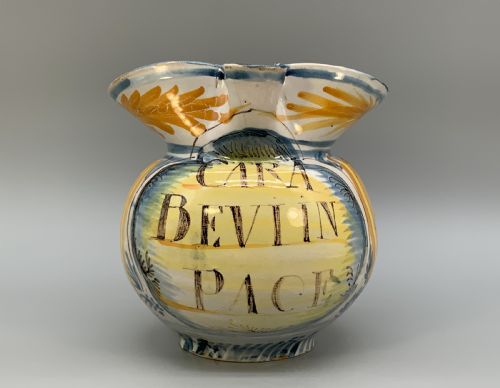
Apothecaries utilised cylindrical albarello jars and spouted drug jugs to store dried herbs, syrups, and medicinal compounds. The opaque tin-glaze protected contents from light while painted labels identified the remedies within.
Over time, these utilitarian containers transitioned into decorative objects prized for their historical inscriptions and rich cobalt or polychrome palettes.
How do I identify eighteenth-century pieces?
Eighteenth-century examples typically display hand-painted blue and white or restrained polychrome motifs influenced by traditional Italian styles. The earthenware bodies feel heavier and show the subtle irregularities of manual throwing.
Later nineteenth-century revivals often feature brighter manganese and yellow tones, alongside more mechanically precise forms and crisper printed or painted factory marks.
Where were pilgrim flasks displayed?
Pilgrim flasks served as ornamental showpieces in grand interiors rather than functional travel equipment. Their scallop-shell shapes and armorial crests suited placement on sideboards and cabinets.
Collectors appreciate these vessels for their sculptural silhouettes and the dexterity required to glaze curved, handled bodies evenly.
How should I clean glazed earthenware?
Dust tin-glazed earthenware gently with a dry, soft cloth to protect the historic surface. Avoid soaking or using chemical detergents, which can penetrate hairline fractures in the glaze.
Keep pieces away from direct sunlight and damp environments to preserve the stability of the terracotta body and mineral pigments.