
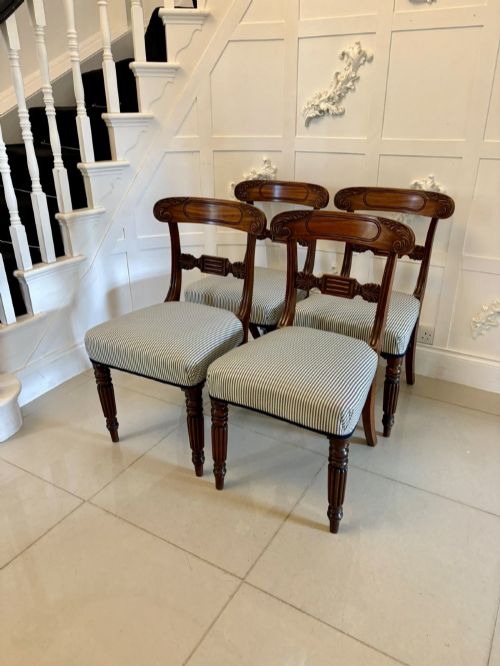
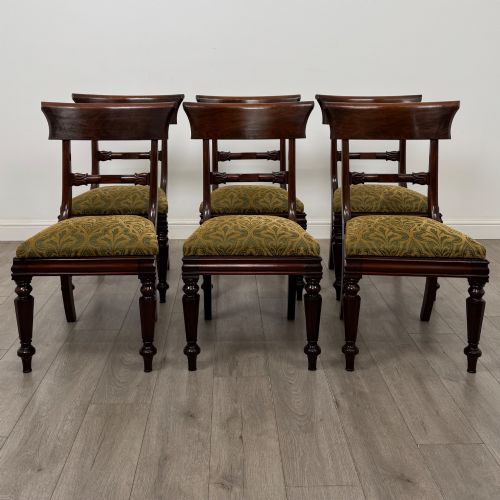
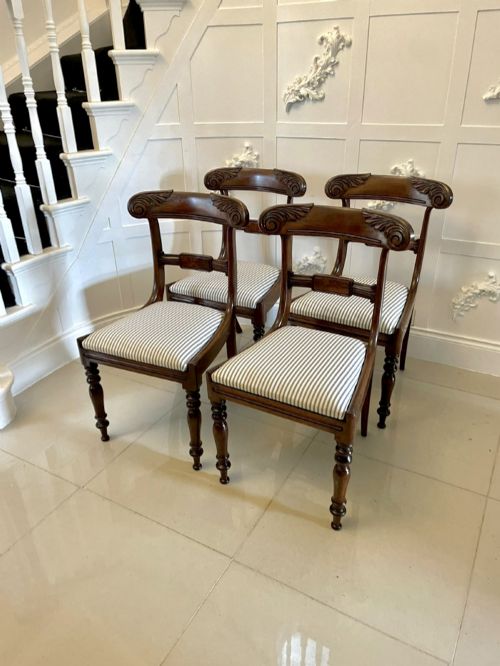
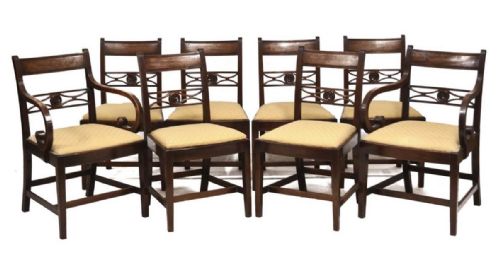
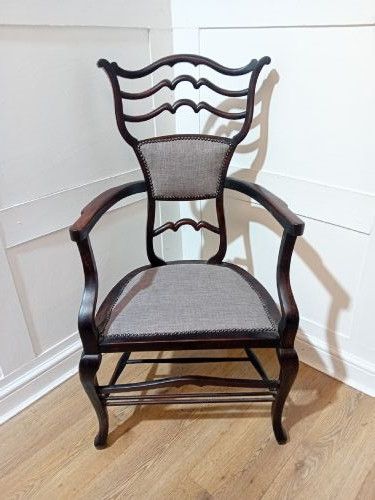
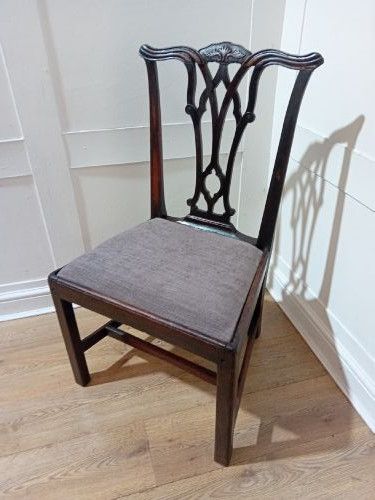


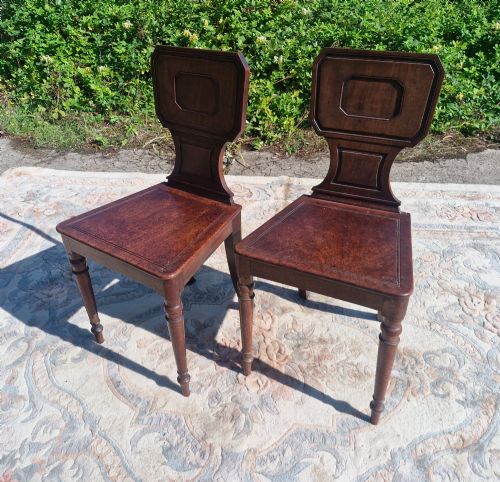
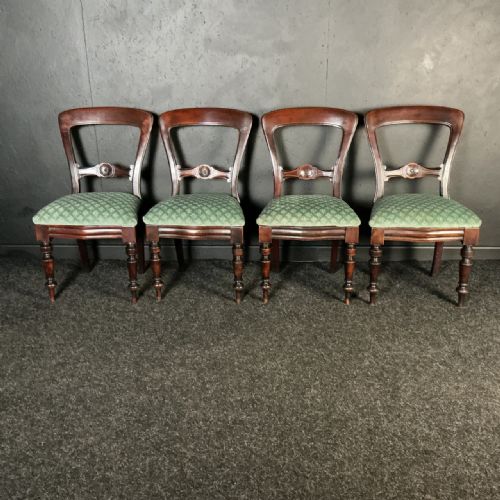
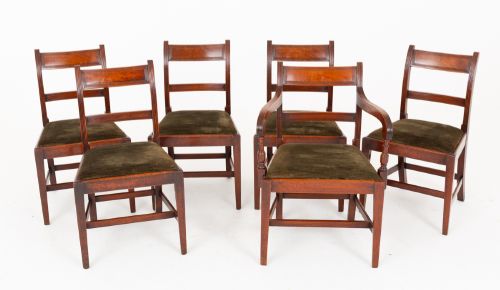
Mahogany Wooden Side Chair
A mahogany wooden side chair brings solid timber and period proportion into daily dining and reception rooms.
Mahogany Wooden Side Chair
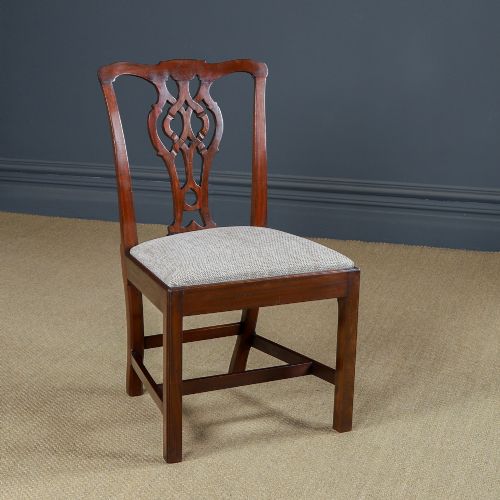
A mahogany wooden side chair is a seat designed primarily for dining tables, hallways, and reception rooms without arms, allowing it to tuck neatly beneath a table or against a wall. When searching for this phrase, a buyer meets seating spanning from the Georgian and Regency eras through the Victorian period and into Edwardian times.
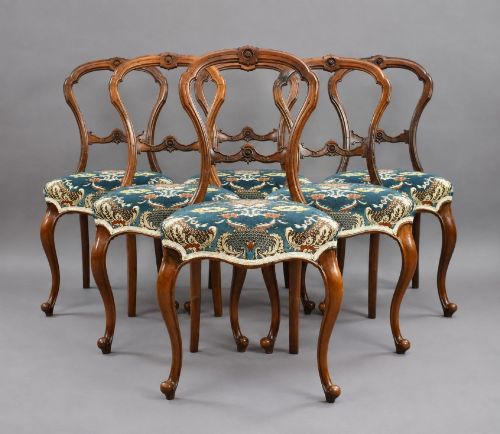
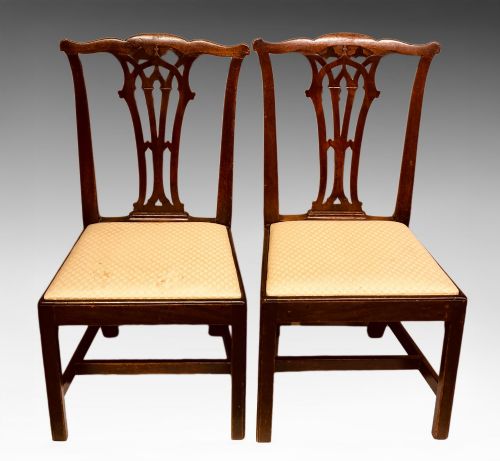
The most common forms on this page include single chairs from larger dining sets, pairs of hall chairs with solid wooden seats, and balloon back or shield back variations. Workshops of the eighteenth and nineteenth centuries produced these pieces in single items, pairs, or matched sets of four, six, eight, ten, or twelve.
Origins range across English, Scottish, and Irish cabinet makers, spanning styles from Chippendale and Hepplewhite through William IV and neoclassical revivals. Buyers encounter everything from formal George III reception seating to late nineteenth-century salon chairs.
How they were made
Cabinet makers utilised dense, durable mahogany for the structural frames, legs, and carved backsplats, ensuring longevity and strength under daily use. Timber selection focused on grain pattern and colour depth, particularly when creating show-wood frames for dining and hall seating.
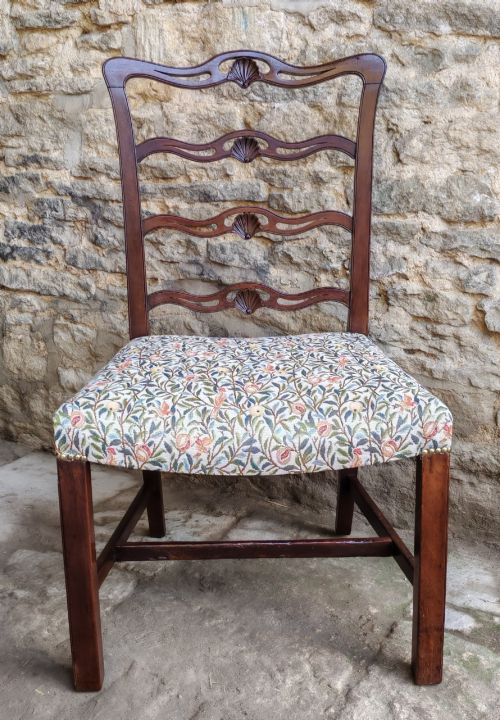
Joinery relied on traditional mortise and tenon construction, secured with pegging and corner blocks to maintain rigidity across centuries of sitting. Carving was executed by hand on details such as ladder backs, bar backs, and shield backs.
Upholstery involved drop-in seats or webbing covered in fabric, velvet, or leather, held in place with brass tacks. Secondary timbers were often employed beneath seat frames, while specialised brass inlay appeared on select Regency examples.
Listings feature mahogany side chairs across Georgian, Victorian, and Edwardian periods, utilising fabric, velvet, and brass details.
What varies in quality
The distinction between standard production and top-tier pieces rests on the crispness of hand-carved details and the selection of figured mahogany timber. Master workshops achieved finer proportions, deeper relief carving, and superior grain matching across sets.
Structural integrity and originality dictate the standing of a piece, distinguishing untouched frames with period joinery from those with extensive timber replacement. The consistency within a matched set, particularly regarding leg turnings and back splat thickness, defines the upper range.
Maple and Co
The Mahogany Wooden Side Chair Glossary
- Side chair
- A chair without arms, designed for dining tables or occasional placement around a room. These pieces form the majority of seating found in antique sets.
- Hall chair
- A rigid wooden seat, usually without upholstery, intended for entrance halls and often featuring a painted or carved family crest on the back. They were statement pieces for guests entering a home.
- Balloon back
- A rounded, oval-shaped chair back resembling a hot air balloon, popular during the Victorian era. This form provided comfortable lumbar support through curved timber.
- Shield back
- A chair back shaped like a heraldic shield, popularised by designers like Hepplewhite in the eighteenth century. These backs frequently incorporate delicate pierced splats.
- Bar back
- A horizontal cross rail set across the upper portion of a chair back, characteristic of William IV design. This structural member often displays central carving or scrollwork.
Mahogany Wooden Side Chair: Frequently Asked Questions
How do I spot a Georgian chair?
Georgian chairs display understated elegance, straight or cabriole legs, and precise hand-carving on the top rail and splat. Timbers show deep patination accumulated over centuries of use.
Construction typically involves heavy mahogany with pegged mortise and tenon joints. Look for proportions that favor function alongside refined decorative restraint.
Are these chairs comfortable for daily dining?
Period chairs offer firm support, particularly designs with upholstered drop-in pads or padded seats. Their dimensions reflect historical sizing standards, which tend to be slightly more compact than modern equivalents.
When paired with a standard dining table, they provide stable and upright seating. Many buyers use them daily by ensuring the internal webbing and padding remain sound.
Can I mix single chairs with a set?
Mixing single chairs works well when matching timber tone, height, and general period style. Many historical dining sets grew organically over time through individual acquisitions.
Maintaining consistency in wood species like mahogany ensures visual harmony around a table. Hall chairs and carvers also offer contrasting focal points when placed near matching side seats.