



Mahogany Wine Storage
Mahogany wine storage encompasses cellarettes, coolers and boxes built to keep bottles secure and temperate in the dining room.
Mahogany Wine Storage
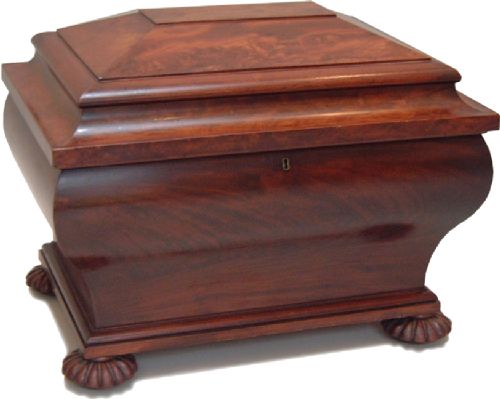
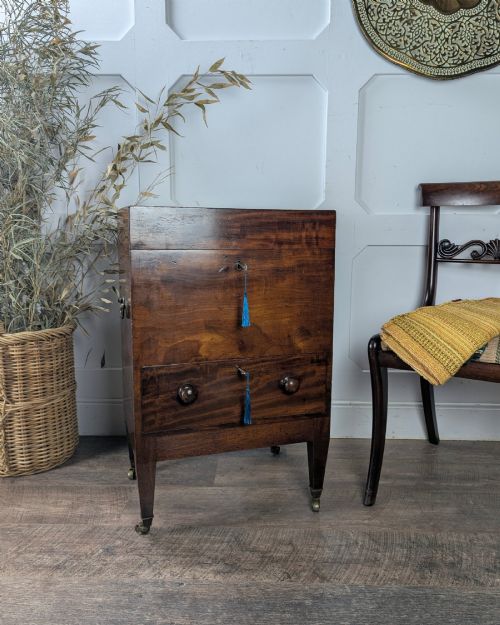
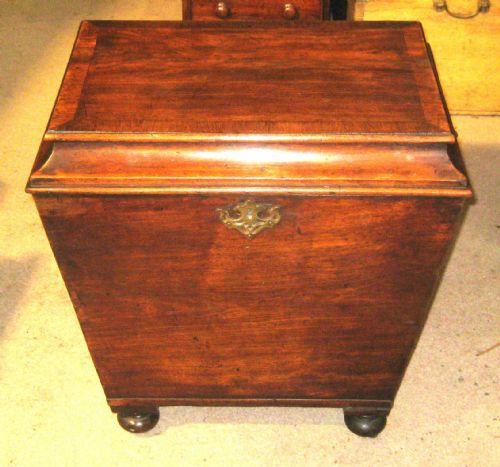
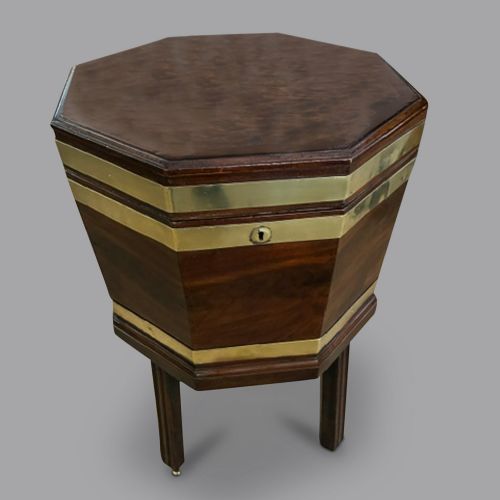
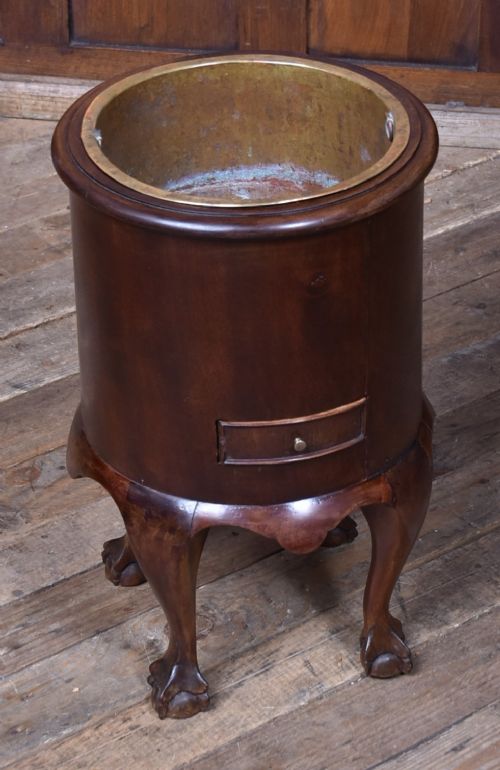
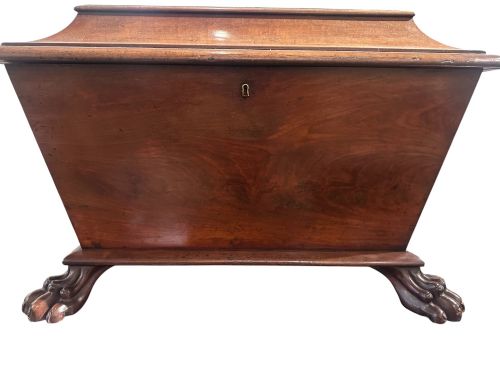
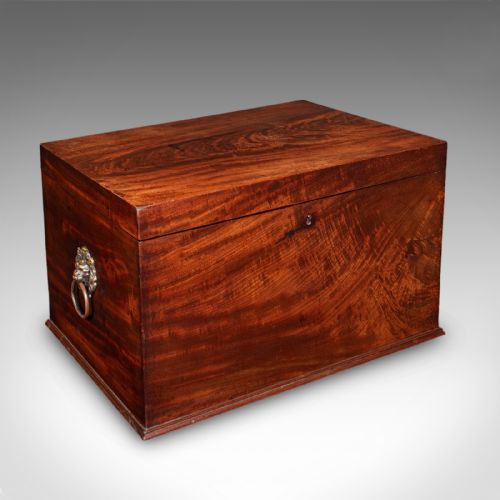
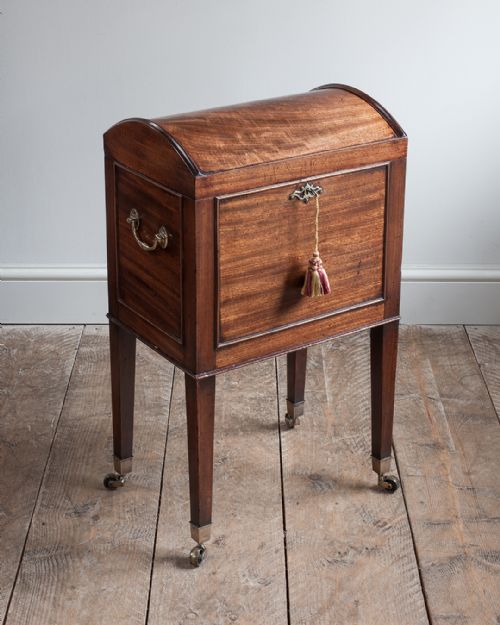
Mahogany wine storage takes the form of cellarettes, wine coolers and bottle storage chests designed for period dining rooms. These pieces appear most frequently in Georgian, Regency and Victorian incarnations, ranging from octagonal containers to large sarcophagus-shaped boxes.
The objects served a practical domestic purpose alongside their formal appearance, holding bottles and ice near the dining table. Many examples stand on short legs or feet, while others take the form of table units or floor-standing storage cases.
How they were made
Cabinet makers utilised solid mahogany and flame mahogany veneers over secondary timbers, often accentuating the grain with boxwood inlay or brass fittings. Metal linings in zinc or lead frequently protected the interior wood from moisture when ice and bottles were added.
Construction techniques include finely dovetailed box construction, moulded plinths and applied carved decoration such as fluting or ormolu mounts. Ebonised wood and brass drop handles appear regularly as structural and decorative enhancements on Regency and Georgian pieces.
Object types include octagonal coolers, sarcophagus forms, plate buckets and metamorphic tables designed to serve multiple functions in the dining room.
What varies in quality
Quality rests in the choice of timber, particularly the selection of figured flame mahogany and the crispness of any carved or inlaid detail. Pieces featuring original brass mountings, fitted internal bottle dividers and sound zinc linings display superior craftsmanship.
Proportion and execution separate standard utility items from masterwork commissions, especially in forms like the sarcophagus or octagonal cooler. The integration of structural supports, such as stable bracket feet or robust pedestals, indicates higher workshop standards.
Gillows of Lancaster and London·Gillingtons·Freemans of Norwich
The Mahogany Wine Storage Glossary
- Cellarette
- A lockable container or box specifically built for storing wine bottles near the dining table. They frequently include internal compartments or lead linings.
- Sarcophagus form
- A monumental box shape with a domed lid and sloping sides reminiscent of classical stone coffins. This silhouette proved popular during the Regency and late Georgian periods.
- Flame mahogany
- A veneer cut from timber where the branches join the main trunk, producing a distinctive leaping flame pattern. Cabinet makers reserved this timber for the primary visual surfaces.
- Ormolu
- Gilt bronze mounts applied to furniture for decorative contrast. This technique appears on French-influenced pieces from the nineteenth century.
Mahogany Wine Storage: Frequently Asked Questions
What is a cellarette?
A cellarette is a dedicated storage box or chest designed to hold wine bottles in the dining room. They were historically lined with metal to hold ice and keep the wine cool.
Most examples date from the eighteenth and nineteenth centuries, constructed in timber with secure locks to protect the contents from servants.
How were wine coolers used?
Wine coolers stood close to the dining table during formal meals, allowing hosts to replenish bottles without returning to the cellar. Inside, ice and water chilled the wine before pouring.
Some designs incorporated internal dividers or racks to keep bottles upright and separated while immersed in the cooling compartment.
How do I date a mahogany piece?
Dating relies upon a combination of stylistic cues, hardware, timber selection and construction methods. Georgian pieces tend toward classical proportions with subtle inlay, whereas Regency examples favour bolder architectural forms like the sarcophagus.
Examination of the internal linings and secondary woods also helps place an object within its correct period.
Can these be used today?
These boxes function effectively as modern storage chests, blanket boxes or decorative side tables in a living space or dining room. Their sturdy timber construction suits contemporary domestic environments.
Many retain internal compartments that accommodate modern bottles, though original metal linings should be checked for integrity if used with ice.