

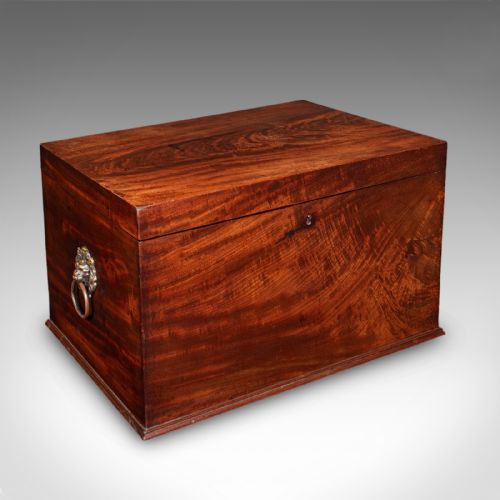
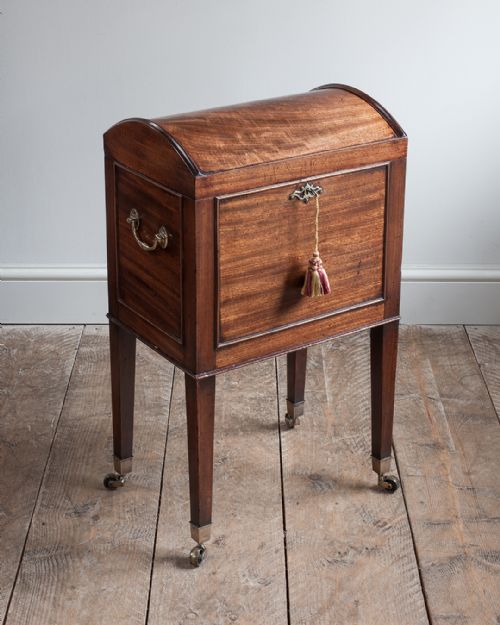


Mahogany Wine Storage Box
Mahogany wine storage box options encompass robust cellarettes and coolers designed to hold bottles securely in period interiors.
Mahogany Wine Storage Box
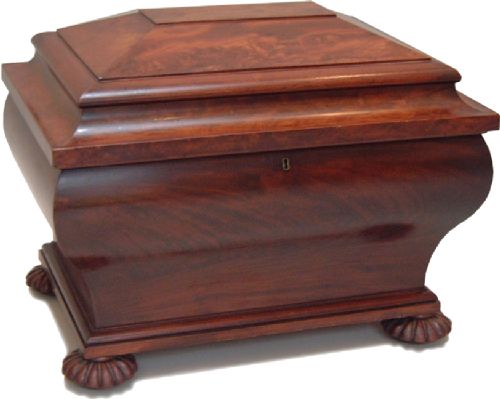
A mahogany wine storage box, frequently styled as a cellarette or wine cooler, serves to hold and protect bottled wine in formal dining rooms. These pieces originate across the eighteenth and nineteenth centuries, spanning Georgian, Regency, and Victorian periods.
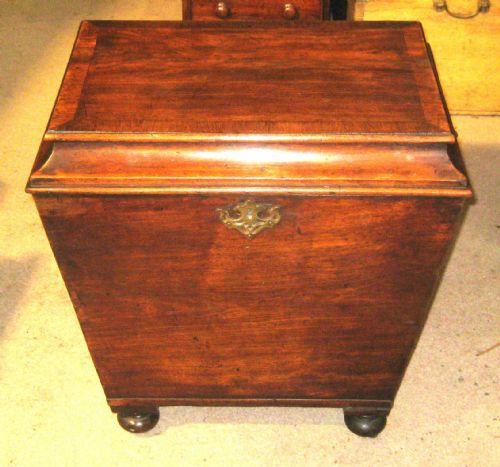
Buyers commonly encounter sarcophagus forms and rectangular box shapes sitting upon feet, stands, or directly on the floor. Most examples utilise dense timbers designed to maintain temperature and protect contents during dining hours.
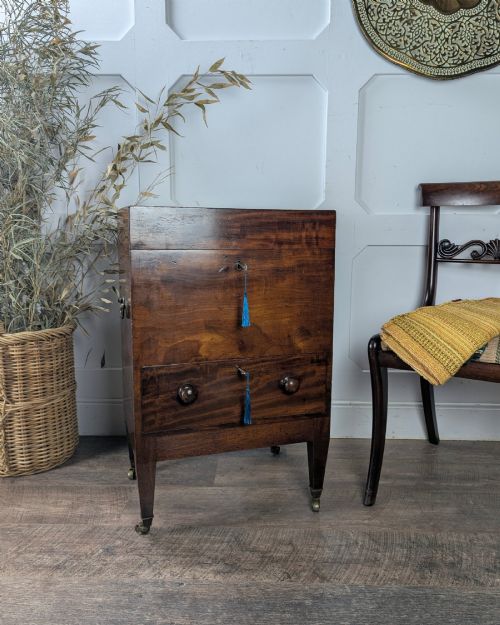
The objects vary from modest tabletop storage boxes to large freestanding floor pieces equipped with internal dividers for individual bottles. Makers from the Georgian and Regency eras shaped these items to function both as practical storage and as decorative furniture.
How they were made
Cabinetmakers constructed these pieces primarily from solid mahogany and flame mahogany veneers over secondary woods, applying expert joinery to handle the weight of heavy bottles. Surfaces often display careful polishing to highlight the natural grain of the timber.
Metal components such as brass carrying handles, ormolu mounts, and internal zinc linings were integrated to manage ice and water when the boxes functioned as active coolers. Ebonised wood and subtle inlay work frequently provided contrast to the main mahogany body.
Listings feature mahogany, brass, and flame mahogany across Georgian, Regency, and Victorian periods.
What varies in quality
The grade of mahogany timber and the choice of flame veneer heavily influence the visual presence of a cellarette. Superior examples display rich, deeply figured grain patterns matched carefully across the lid and panels.
Hardware quality distinguishes workshop standards, where heavy cast brass handles and intact internal zinc liners indicate higher original cost. The refinement of carved details, such as fluted tops or classical feet, separates standard production from exceptional cabinetmaking.
Gillingtons·Freemans of Norwich·Gillows of Lancaster and London
The Mahogany Wine Storage Box Glossary
- Cellarette
- A lockable container designed to hold wine bottles safely within a dining room. These boxes often feature internal wooden dividers or metal linings.
- Sarcophagus
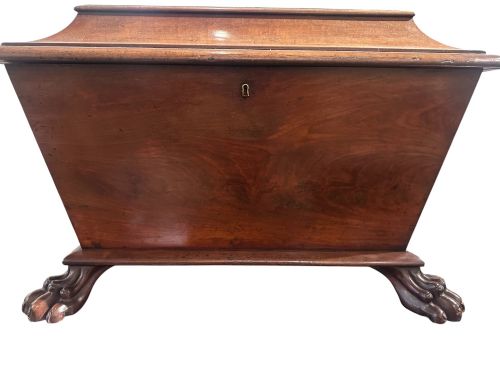
- A coffin-like box shape with a domed lid popular during the Regency and Georgian periods for wine coolers. This architectural form lent gravity to formal dining spaces.
- Flame mahogany
- A wood veneer cut from the fork of the mahogany tree to produce a flickering, flame-like pattern. Cabinetmakers reserved this material for prominent exterior surfaces.
- Ormolu
- Gilded bronze used for decorative mounts and feet on high-end furniture pieces. This French-influenced technique added bright metallic contrast to dark woods.
- Zinc lining
- A protective internal metal sheet fitted inside a wine cooler to hold ice and water without damaging the wood. It allowed bottles to be chilled directly at the table.
Mahogany Wine Storage Box: Frequently Asked Questions
What is a mahogany wine storage box?
A mahogany wine storage box is a specialised container used historically to hold, protect, and sometimes chill wine bottles near the dining table. These items include cellarettes and wine coolers built by period cabinetmakers.
Most examples date from the Georgian, Regency, and Victorian eras, utilising dense hardwoods and secure lids. They range from small tabletop boxes to large floor-standing sarcophagus forms.
How were these boxes used?
Servants placed wine bottles inside the box alongside ice or cold water when the piece included a metal lining. This kept vintages at the correct temperature before pouring.
When unlined, the boxes functioned simply as secure storage chests for locking away fine wines from household staff. The internal dividers kept glass bottles from clinking together.
How do I tell Regency pieces apart from Georgian ones?
Georgian pieces often display simpler rectangular cabinet forms with bracket feet and understated brass ring handles. They reflect the classical restraint of the eighteenth century.
Regency examples tend to adopt bolder architectural shapes, such as the sarcophagus form with carved paw feet and prominent brass lion mask handles. They show influences from French and classical antiquity.
Where do I place a wine storage box at home?
These boxes sit well as freestanding statement pieces beside a dining room sideboard or a living room fireside. Their flat tops allow them to function additionally as small side tables.
They also serve effectively in hallways or studies as decorative storage containers for miscellaneous items. Keep them away from direct heat sources to protect the mahogany timber.