




Mahogany Vitrine Side Table
These mahogany vitrine side tables combine display glass with timber surfaces to show off small treasures while serving as practical furniture.
Mahogany Vitrine Side Table
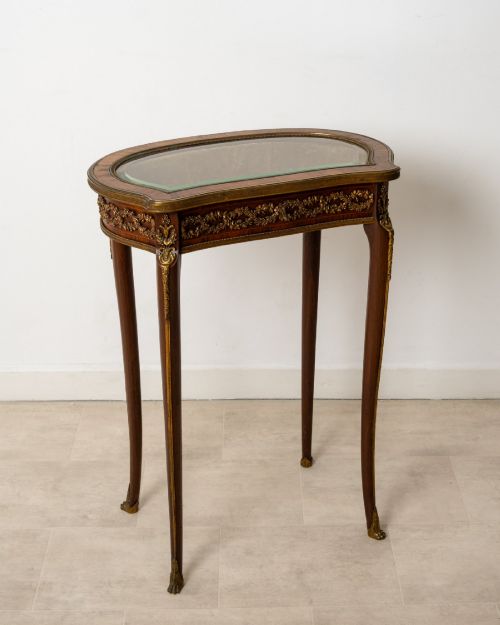
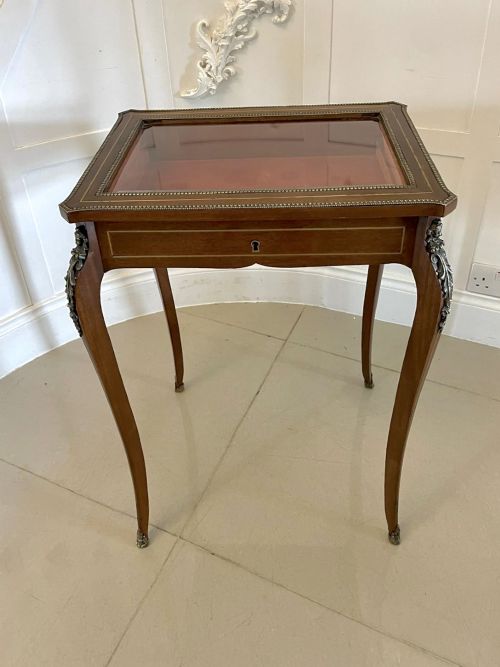
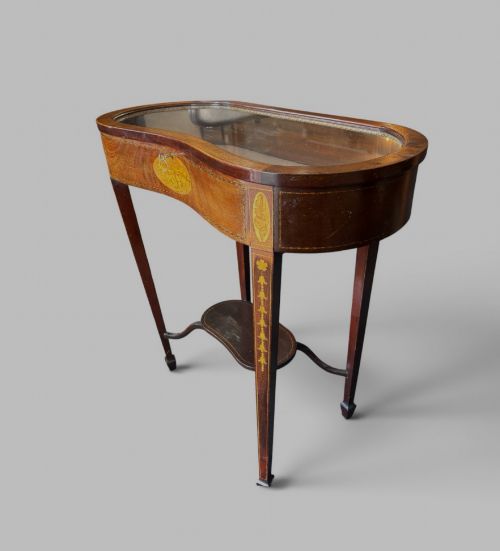
A mahogany vitrine side table serves as both a functional surface and a glazed cabinet for displaying precious items. These pieces appear most frequently in Edwardian interpretations alongside French revival styles, George III examples, and later twentieth-century forms.
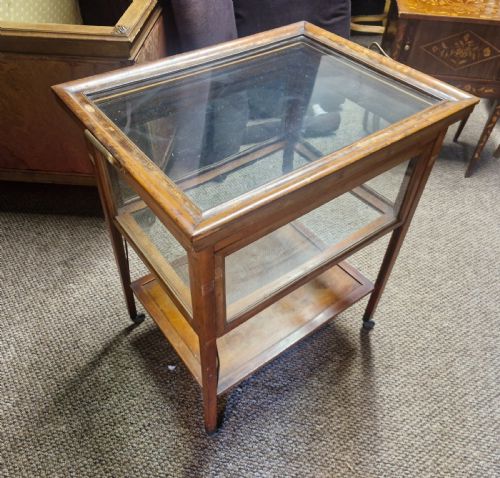
The objects span varied configurations, including kidney shapes, oval display tables, square bijouterie cabinets, and tea trolleys with drop sides. Most items rely on mahogany timber frames fitted with glass panels to protect and exhibit collections of small objects.
Origins stretch from English workshops to continental makers, encompassing French Louis XV and Louis XVI designs. The selection balances domestic utility with the formal display requirements of earlier drawing rooms.
Materials and Construction Methods
Makers built these tables primarily using solid and veneered mahogany, frequently combining satinwood, kingwood, and marquetry for decorative contrast. Brass mounts, ormolu accents, and inlaid details punctuate the timber surfaces.
Glazing forms the central visual component, enclosing the display compartments to keep dust away from delicate collections. Interior surfaces often feature linings of velvet or fabric to cushion displayed items.
One twentieth-century hardwood display table bears later sign-writing for Breitling watches, bridging domestic furniture and retail history.
Distinctions in Quality and Craftsmanship
The standard of timber selection and inlay precision marks the primary division between basic and superior examples. Fine pieces employ carefully matched veneers and subtle satinwood stringing rather than heavy, uniform finishes.
Metalwork quality separates ordinary production from exceptional work, visible in the weight of brass mounts and the crispness of ormolu detailing. Structural integrity in the hinged glass lids and leg joints determines long-term durability.
The Mahogany Vitrine Side Table Glossary
- Vitrine
- A glass-fronted cabinet or table designed for displaying fine objects or curiosities. It protects delicate items while offering all-round visibility.
- Bijouterie table
- A specialised display table featuring a glazed compartment beneath the top surface for showing jewellery and small collectibles. These pieces often stand at a height suitable for seated viewing.
- Marquetry
- Decorative woodwork where pieces of various coloured veneers are fitted into a ground material to form intricate designs. This technique frequently decorates the tops of display tables.
- Ormolu
- Gilded bronze or brass applied as a decorative mount on furniture. It adds metallic contrast to the dark mahogany timber frames.
- Drop side
- A hinged table leaf that lowers when not in use to save space. This mechanism appears on trolley and table hybrids.
Mahogany Vitrine Side Table: Frequently Asked Questions
What is a bijouterie table?
A bijouterie table is a specialised piece of furniture featuring a glazed compartment under the top surface. It was traditionally used in drawing rooms to display small valuables, medals, and pocket watches.
The glass top allows visitors to inspect the collection without handling individual items. These tables combine the height of a side table with the display function of a cabinet.
How do I date an Edwardian display table?
Edwardian display tables usually date from the period between 1901 and 1910. They often feature lighter mahogany frames with subtle satinwood inlay and neoclassical revival motifs.
Examining the construction methods, secondary timbers underneath, and the type of glass helps confirm the manufacturing era. Many pieces from this time draw inspiration from earlier George III designs.
Where should I place a vitrine table?
These tables suit reception rooms, studies, or hallways where natural light can illuminate the glass display area. Positioning them away from direct sunlight protects both the mahogany timber and any fabric linings inside.
Because they function as both display cases and side tables, they work well beside seating areas or against feature walls.
What items can I display inside?
The glazed compartments suit small collectibles such as pocket watches, vintage jewellery, porcelain figures, and medals. The enclosed space keeps dust away from fragile items.
Velvet or fabric linings cushion the objects and provide a contrasting background for detailed metalwork or ceramics.
Are French style tables different from English ones?
French revival styles often incorporate curvier cabriole legs, elaborate ormolu mounts, and kingwood veneers. English interpretations tend to favor straighter lines, simpler mahogany construction, and subtle satinwood stringing.
Both traditions utilise glass display tops, but the decorative vocabulary reflects the distinct furniture-making history of each region.