


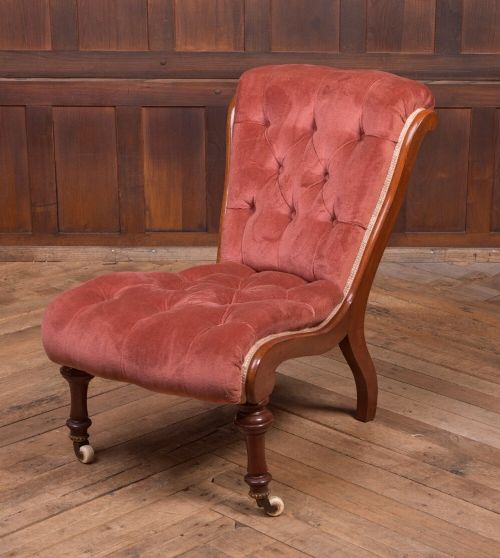

Mahogany Velvet Nursing Chair
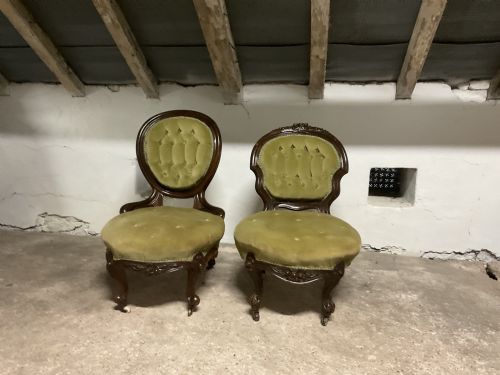
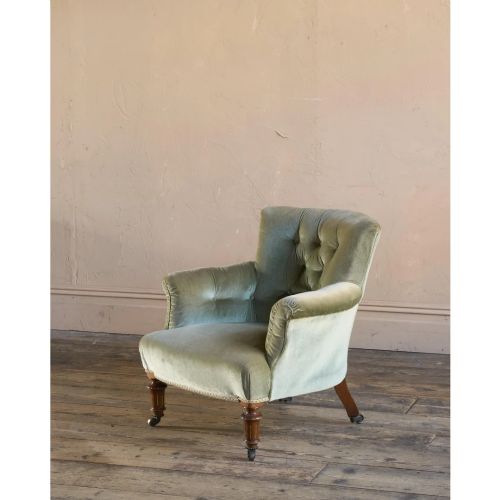
These mahogany velvet nursing chairs are low-slung, upholstered bedroom seats designed for comfort and ease of dress in nineteenth-century interiors.
Mahogany Velvet Nursing Chair
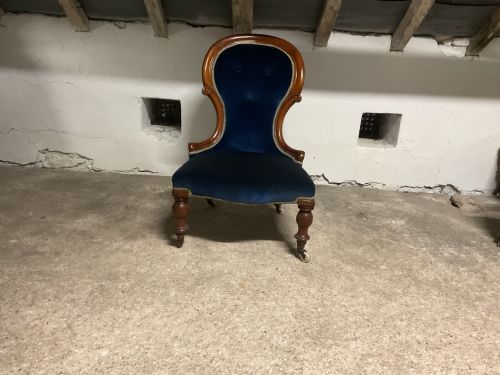
A mahogany velvet nursing chair is typically encountered here in Victorian forms, spanning the nineteenth century through to the Edwardian period, alongside occasional Regency and William IV examples. These low bedroom seats frequently appear as spoonback, balloon back, or prie-dieu variants, designed with short legs to facilitate the fastening of shoes and garments.
The evidence shows these pieces classified under various interchangeable nineteenth-century terms, including bedroom chairs, slipper chairs, salon chairs, and fireside armchairs. Most examples rely on sturdy timber frames paired with plush textiles, often featuring turned front legs fitted with castors for mobility across carpets.
Materials and construction
The primary structural timber across these pieces is mahogany, accompanied by occasional walnut and other woods, providing a dense, durable framework for upholstered seating. Artisans shaped these hardwoods into curved spoonbacks and turned supports, utilising brass castors to finish the legs.
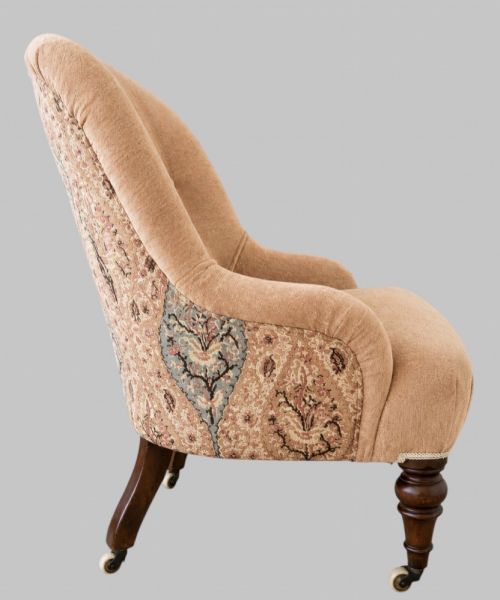
Upholstery relies heavily on velvet fabrics, alongside cotton and modern specialty textiles like Robert Kime weaves, stretched over padded interiors. Button backing and deep buttoning techniques secure the fabric firmly to the sprung or padded frames, creating the characteristic tufted appearance.
Listings demonstrate a strong preference for Victorian mahogany frames paired with velvet upholstery, alongside occasional Edwardian and Regency variants.
Judging quality in nineteenth-century seating
Quality rests in the precision of the timber carving and the integrity of the frame construction, particularly around the delicate junctions of the low back and legs. Finer examples display crisp turning on the front supports and harmonious proportions in the spoon or balloon back.
The standard of upholstery work and the choice of textile also define the tier of the piece. Superior specimens retain well-sprung interiors and tightly secured buttoning that honours the original nineteenth-century aesthetic.
Gillows
The Mahogany Velvet Nursing Chair Glossary
- Spoonback
- A chair back carved in the concave contour of a spoon to fit the human spine. This style became immensely popular during the Victorian era for parlor and bedroom seating.
- Prie-dieu
- A devotional chair featuring a tall, narrow back often topped with a carved rail, originally intended for kneeling while praying. In secular settings, they served as low bedroom seats.
- Castor
- A small wheel mounted on a swivel attached to the foot of a chair leg. They allowed heavy nineteenth-century armchairs to move easily across thick carpets.
- Balloon back
- An open chair back shaped in a continuous curved loop resembling a balloon. This silhouette is a defining hallmark of mid-nineteenth-century cabinet work.
Mahogany Velvet Nursing Chair: Frequently Asked Questions
What is a nursing chair?
A nursing chair is a low-seated nineteenth-century armchair designed originally for women to sit comfortably while nursing infants or dressing.
The low height and absence of restrictive arms made it practical for bulky historical garments and everyday bedroom use.
How do I date a Victorian chair?
Dating relies on observing stylistic markers such as spoonbacks, balloon backs, and turned wooden legs alongside construction methods.
Mid-nineteenth-century examples often feature exposed mahogany frames and delicate proportions, whereas later pieces tend toward heavier upholstery and late Victorian ornamentation.
Where should I place a low chair?
These compact seats suit bedrooms, dressing rooms, and firesides where low furniture maintains an open sightline.
Their diminutive scale also allows them to fit comfortably into reading corners or tight alcoves in modern living spaces.
Are these chairs comfortable for daily use?
The low seat height and supportive padded backs offer a relaxed, inclined posture suited for reading or resting.
Many surviving pieces have been rebuilt with modern internal webbing and cushioning to ensure everyday seating comfort.