


Mahogany Vanity Unit Mirror
These mahogany vanity unit mirror pieces are practical dressing furniture and washstands designed to organise a morning routine with traditional elegance.
Mahogany Vanity Unit Mirror
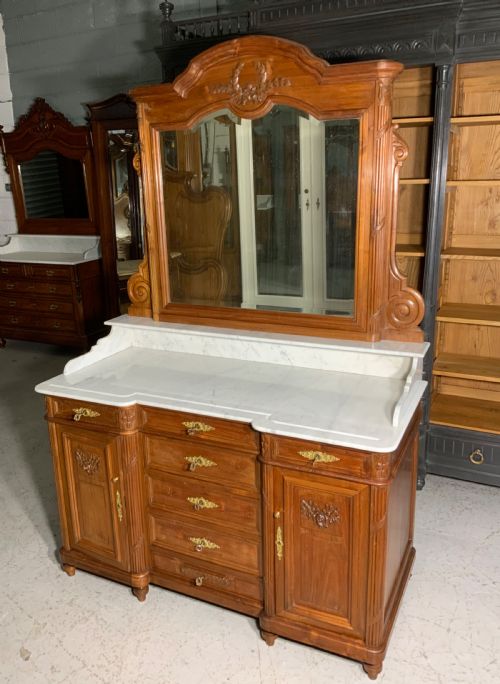
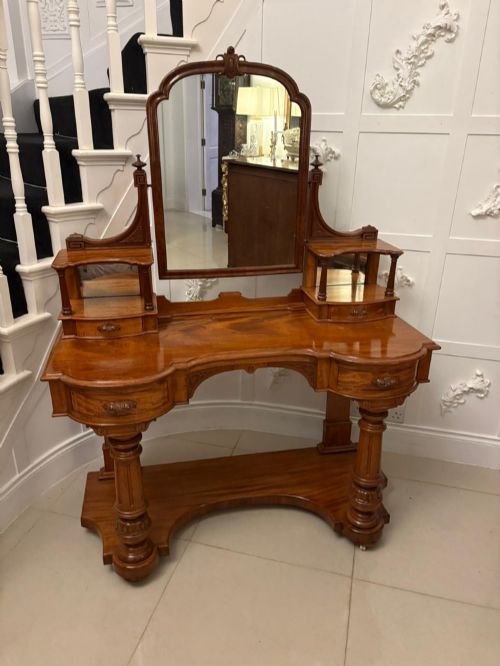
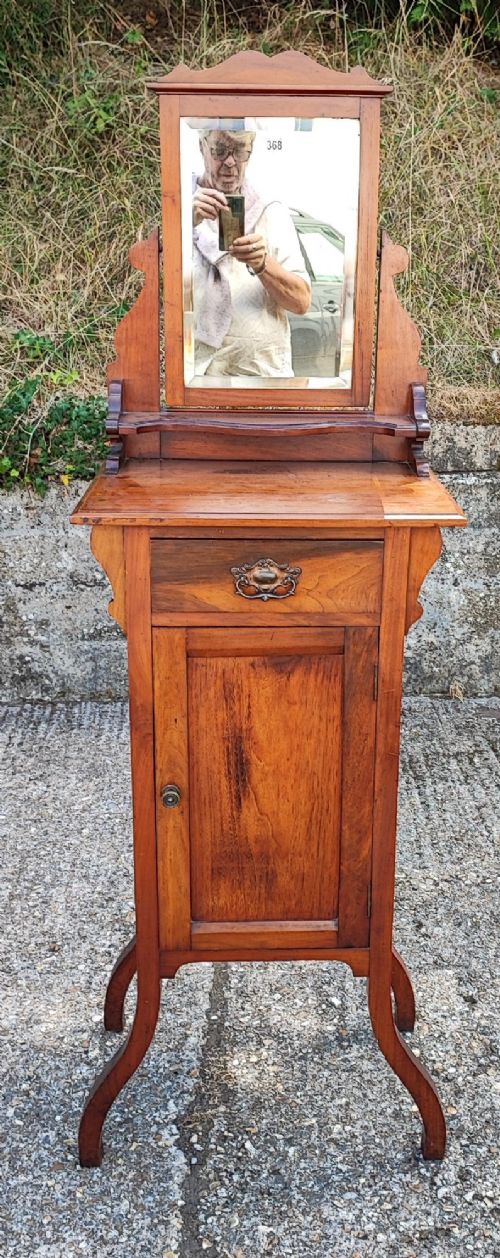
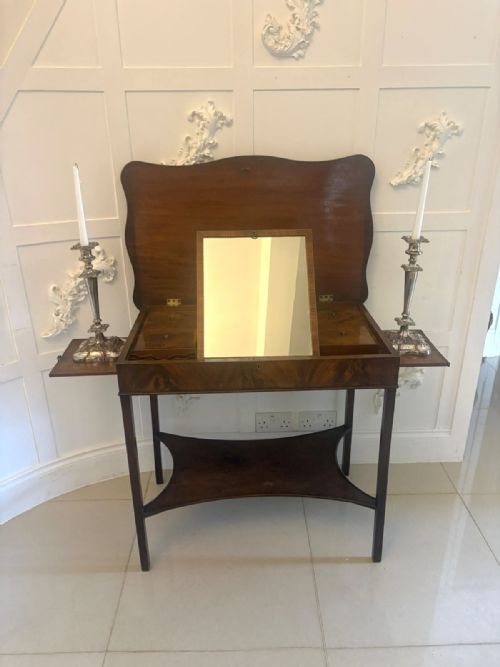
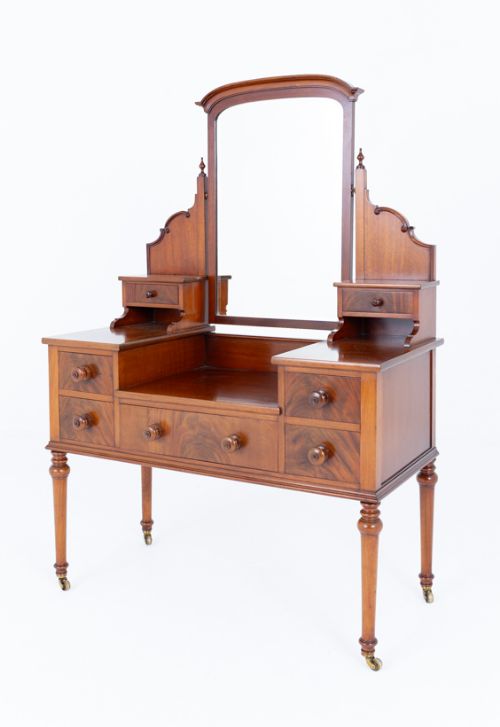
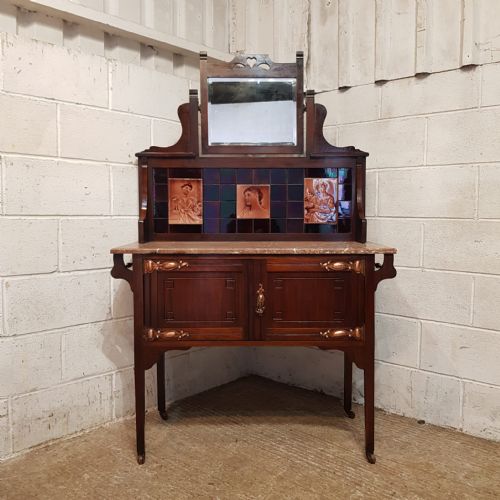
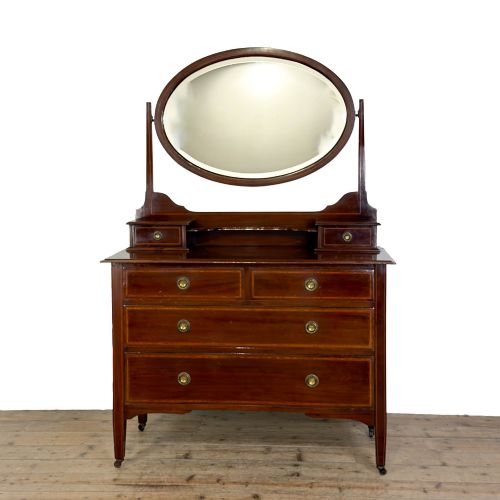
When you search for a mahogany vanity unit mirror, you are looking at nineteenth-century and early twentieth-century dressing furniture, washstands, and shaving stands. The pieces vary from compact campaign washstands to large Victorian pedestal dressing tables and French marble-topped examples.
Most items you will meet on this page date from the Victorian and Edwardian eras, constructed primarily in solid mahogany or mahogany veneers. They often incorporate tilting or fixed mirrors, pivoting plates, and integrated surfaces of marble or timber.
Forms range widely across the selection, including duchess dressing tables, kneehole tables, and specialised shaving cupboards with mirrors. Regional variations include French Empire and revival styles alongside British Georgian and Victorian designs.
How they were made
Cabinet makers utilised solid mahogany and rich veneers supported by secondary timbers, shaping the frames through traditional joinery techniques. Surfaces frequently display intricate marquetry, satinwood inlay, or crossbanding that highlights the grain of the wood.
Fittings and mounts typically involve cast brass, ormolu, and occasionally copper, securing adjustable mirrors and drawer pulls. Marble tops provide durable, water-resistant surfaces on washstands and French dressing tables, while ceramic components appear in related washware.
Listings feature mahogany, satinwood, marble, brass, and ormolu across Victorian, Edwardian, and Georgian periods.
What varies in quality
The standard of a piece rests largely on the depth of the mahogany timber and the crispness of any carved detailing or marquetry inlay. Superior examples display refined proportions, matched veneers, and robust framing that has survived decades of daily use without excessive movement.
Maker attribution and original hardware heavily influence the standing of an item. Stamped signatures on drawers, high-status retail provenance, and heavier cast ormolu mounts separate standard commercial production from workshop pieces of distinction.
Edwards & Roberts·J. Shoolbred
The Mahogany Vanity Unit Mirror Glossary
- Cheval mirror
- A full-length plate glass mirror suspended on a vertical swivelling frame, allowing the glass to tilt at various angles. This form often stands independently or integrates directly into the upper structure of a pedestal dressing table.
- Campaign washstand
- A portable piece of furniture designed for travel or military use, typically featuring folding wooden frames and detachable basins. These items prioritize compact storage and functional efficiency.
- Marquetry
- The decorative art of applying small pieces of veneer to a structural structure to form pictorial or geometric patterns. Makers utilised contrasting timbers such as satinwood against a dark mahogany background.
- Duchess dressing table
- A grand nineteenth-century dressing table style featuring a large central mirror flanked by smaller drawers or trinket boxes. The design sits atop a substantial base with scrolling supports.
- Ormolu
- Gilded bronze mounts applied as decorative ornaments to furniture frameworks, frequently seen on French Empire pieces. The technique involves treating bronze with an amalgam of gold.
Mahogany Vanity Unit Mirror: Frequently Asked Questions
What is a mahogany vanity unit mirror?
It refers to nineteenth and early twentieth-century dressing tables, washstands, and shaving stands that feature integrated or adjustable mirrors. These items served functional roles in bedrooms and dressing rooms for grooming and washing.
They combine timber storage cabinetry with glass plates, marble surfaces, and occasionally ceramic basins. The overarching category spans British vernacular styles and continental French designs.
How do I date a mahogany dressing table?
Dating relies on observing construction methods, timber choice, hardware styles, and general design motifs. Earlier pieces from the Georgian era show hand-cut joinery and simpler lines, while Victorian examples often introduce heavier carvings and pedestal configurations.
Edwardian items frequently display lighter marquetry inlay and Sheraton revival influences. Maker stamps or retailer labels inside drawers offer the most precise chronological indicators.
Were mirrors always attached to these units?
Many dressing tables and washstands were manufactured with fixed superstructure mirrors supported by upright arms, or freestanding swivelling cheval plates. Some pieces, particularly campaign or simpler washstands, incorporated adjustable mirrors mounted on pivoting brass brackets.
In certain instances, mirrors were added as secondary components or replaced over time due to the fragile nature of old glass.
How do I care for antique mahogany furniture?
Maintain the wood by keeping pieces away from direct sunlight and steady sources of heat, which can dry out the timber and crack veneers. Dust regularly with a dry, soft cloth and avoid modern silicone polishes.
Protect marble tops from acidic substances and moisture rings by using coasters or mats. Ensure brass and ormolu mounts are cleaned gently without abrasive compounds.