




Mahogany Turned Leg Stool
Mahogany turned leg stool selections bring sturdy nineteenth-century timber frames and traditional upholstery together for practical everyday seating.
Mahogany Turned Leg Stool
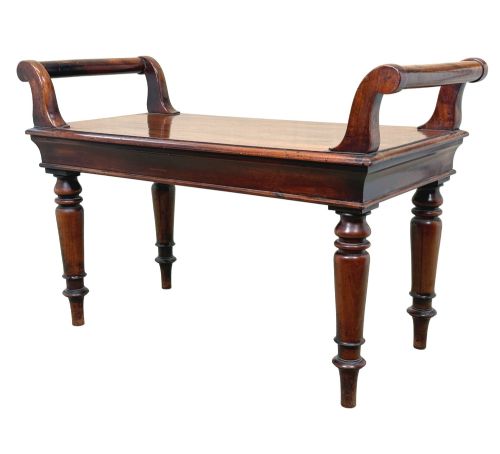
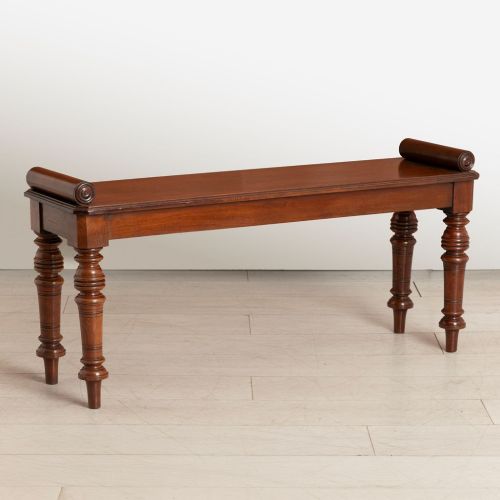
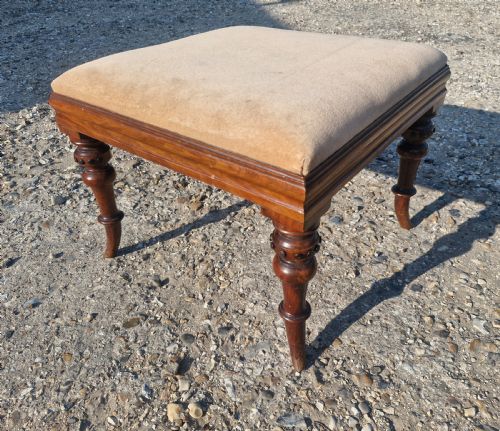
A mahogany turned leg stool provides a compact seating form found across Georgian, Regency, Victorian and Edwardian periods in English homes. Buyers seeking this exact piece will encounter low footstools, dressing table seats and piano stools resting upon carved or lathe-turned wooden supports.
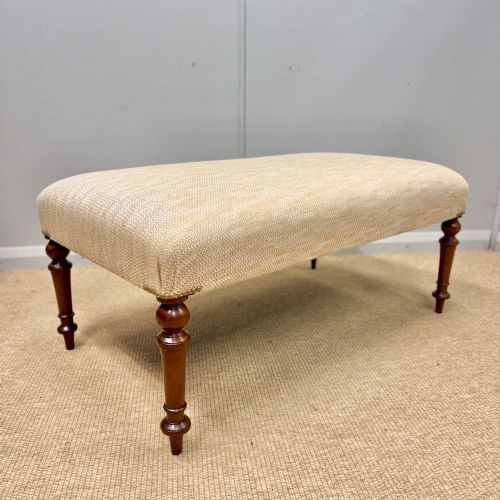
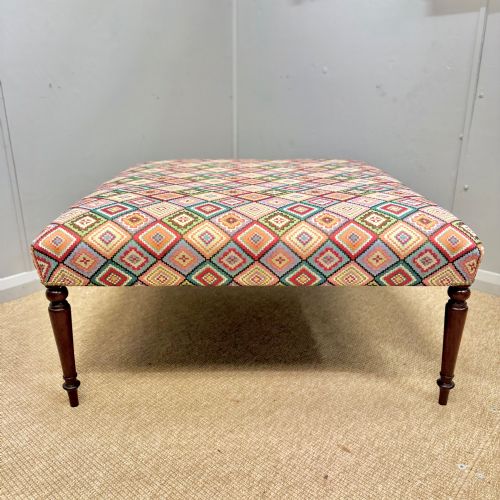
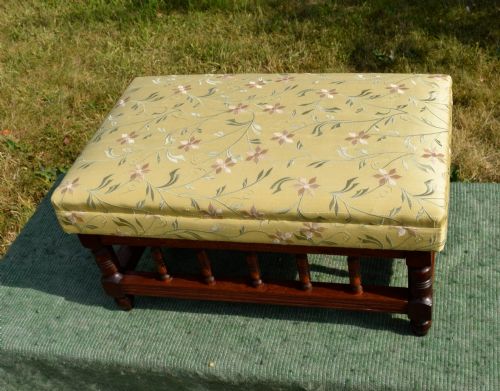
The selection ranges from small domestic footrests to long window seats and double stools upholstered in fabric, leather or kilim. Most examples date from the nineteenth century, reflecting the durable popularity of mahogany furniture in traditional settings.
Makers adapted the basic turned leg frame into revolving piano seats, saddle stools and large ottomans suited to country house interiors. These versatile pieces combine solid timber structures with diverse textile coverings spanning multiple decades of British design.
Materials and Construction
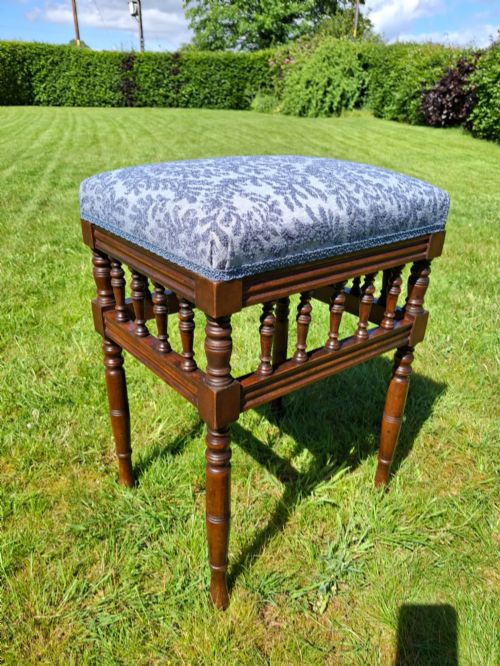
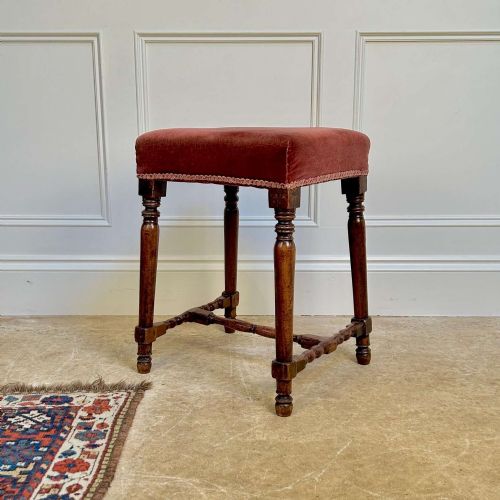
Frames rely on dense mahogany shaped by hand turning on a lathe to create cylindrical or reeded legs, frequently fitted with brass castors. Joinery typically employs traditional mortise and tenon methods to ensure the structural stability of the base under daily use.
Upholstery involves textiles such as wool, velvet, leather, chenille and ticking stretched over internal padding and secured with webbing or buttoning. Caned tops also appear on square frames, providing a lighter woven alternative to padded textile surfaces.
One historical maker even produced a designated walnut cock-fighting stool for eighteenth-century sporting enthusiasts.
Design and Execution
Quality rests in the precision of the timber turning, the sharpness of carved details and the proportional harmony of the legs to the seat frame. Superior examples demonstrate careful timber selection with rich grain patterns and robust underlying joinery.
The integrity of the original upholstery foundation, whether deep buttoned leather or woven textile, influences the character of each piece. Well-drawn proportions and retained mechanical elements, such as revolving or adjustable height screws, elevate specific piano stools and seating designs.
Gillows·J. Shoolbred·James Shoolbred
The Mahogany Turned Leg Stool Glossary
- Turned leg
- A wooden support shaped on a lathe to produce cylindrical, reeded or spiralled profiles. This traditional technique defines the structural legs of the stool.
- Mahogany
- A durable tropical hardwood valued for its deep reddish-brown colour and fine grain. It forms the primary structural timber for these frames.
- Window seat
- An elongated stool or bench designed to sit low beneath a window recess. These pieces often feature upholstered tops and supportive end rails.
- Castor
- A small wheel attached to the base of a furniture leg to facilitate movement. Brass examples frequently appear on nineteenth-century footstools.
- Kilim
- A flat-woven carpet or textile utilised as an alternative upholstery covering. It introduces geometric patterns and varied wool textures to stool tops.
Mahogany Turned Leg Stool: Frequently Asked Questions
How do I date a mahogany stool?
Dating relies on stylistic markers, timber characteristics and construction methods associated with periods like the Regency or Victorian eras. Turned leg designs and upholstery techniques often provide clear clues to the decade of manufacture.
Examining the underside for tool marks and screw types helps confirm the age of the frame. Comparing the piece with documented examples narrows down the likely production window.
Were these stools used for pianos?
Many mahogany stools with turned legs served specifically as piano or music seats during the nineteenth century. Adjustable height mechanisms and revolving tops allowed musicians to find a comfortable seating position.
Standard footstools and dressing table seats lack these mechanical height adjustments but share similar timber frames. Both types utilised durable upholstery to withstand regular daily use.
What textiles cover these stools?
Original and replacement coverings include leather, velvet, wool, chenille, ticking and woven kilim carpets. Buttoned leather and heavy fabric upholstery were common choices for Victorian footstools.
Textiles often reflect subsequent reupholstery campaigns rather than the original factory state. Examining the fabric helps determine the visual character and comfort level of the seat.
Can I use a footstool as a seat?
Most sturdy mahogany frames with solid turned legs easily support the weight of an adult sitting. Larger footstools and window seats were built with robust joinery intended for seating.
Checking the internal frame stability ensures the piece remains safe for everyday domestic use. Smaller low footstools work best for resting feet rather than continuous sitting.