



Mahogany Tripod Server
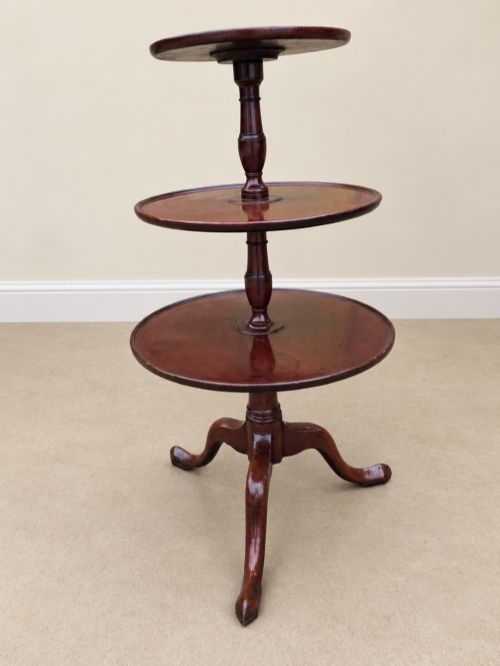
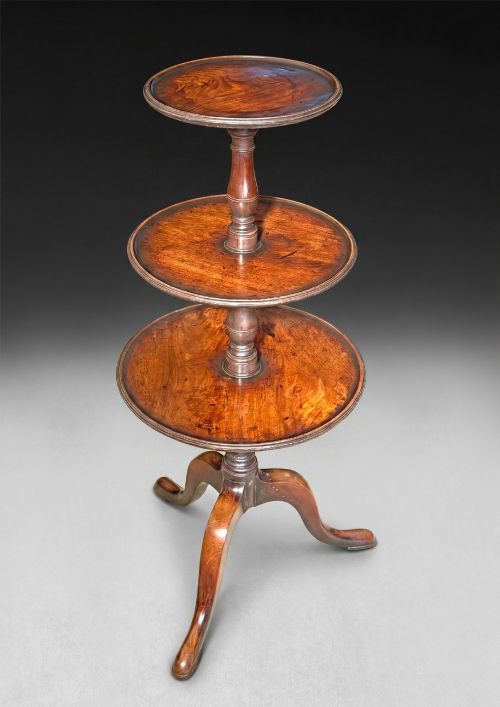
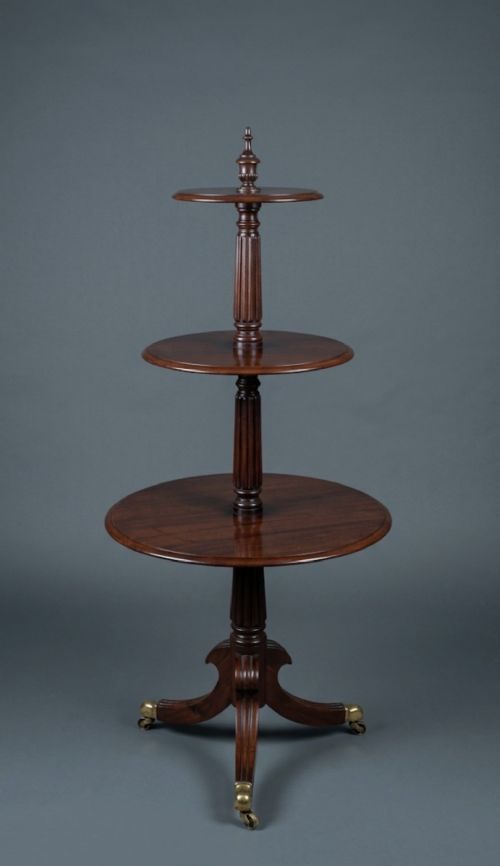
A mahogany tripod server stands as a clever multi-tiered piece designed to hold dishes and glasses near the dining table without needing a servant.
Mahogany Tripod Server
A mahogany tripod server, commonly catalogued as a dumb waiter, appears frequently across the Georgian, Regency, and Victorian periods. These pieces serve dining rooms through tiered circular or rectangular revolving shelves supported on a central pillar and three legs.
Most examples found on this page date from the eighteenth and nineteenth centuries, including specific George III and Regency interpretations. The form ranges from simple two-tier circular stands to grander three-tier variants with drop-leaves or folding shelves.
Makers occasionally produced designs with galleried edges or fiddleback grain figures to catch the light. Buyers frequently encounter variations in height and tier count intended to accommodate different dining settings.
Judging quality and proportion
Quality rests heavily on the choice of timber and the crispness of the turning on the central pillar. Fine examples display well-figured mahogany grain across each revolving tier rather than plain utility boards.
Proportion and stability separate standard pieces from superior work, especially in tall three-tier constructions. The strength of the tripod base and the smooth action of the revolving shelves dictate the standard of execution.
Mahogany Tripod Server Retail Price Guide 2026
Typical asking prices for mahogany tripod server among the pieces listed under this phrase on Sellingantiques today, from the lower quarter to the upper quarter. They describe what is for sale here now, not the wider market.
Servers were called dumb because they replaced chatty human attendants during private dining.
Gillows
The Mahogany Tripod Server Glossary
- Tripod base
- A support structure formed of three legs radiating from a central column. This design provides steady floor contact for tall revolving furniture.
- Dumb waiter
- A tiered serving stand holding food and tableware beside a dining table. The rotating shelves allow diners to help themselves.
- Fiddleback mahogany
- Timber featuring a wavy, rippled grain pattern resembling the back of a violin. Cabinet makers prized this figure for decorative surfaces.
- Drop-leaf
- A hinged table section that folds down when not in use. This mechanism helps save space in smaller dining rooms.
- Gallery
- A raised wooden border running around the edge of a shelf. It stops glassware and plates from sliding off during rotation.
Mahogany Tripod Server: Frequently Asked Questions
What is a mahogany tripod server used for?
These tiered stands held spare plates, dishes, and wine bottles within arm's reach during long formal meals. They allowed diners to serve themselves without servants present in the room.
Today they function effectively as display stands or side tables in living spaces and dining rooms. The rotating tiers make them practical for holding decorative objects or books.
How do I tell a Georgian piece from a Victorian one?
Georgian and George III pieces generally display lighter timber proportions, finer turning on the central column, and subtle brass fittings. The wood often exhibits a rich, aged patina developed over centuries.
Victorian examples tend toward heavier proportions and broader turning. They frequently incorporate broader tripod legs and sturdier mechanisms to support heavier service.
Why do some tiers fold down?
Drop-leaf mechanisms allowed servants to fold the circular shelves flat against the central pillar when clearing the dining room. This made the heavy furniture easier to store against a wall.
Such folding shelves indicate higher-grade craftsmanship designed for flexible domestic use. Many surviving examples retain these operational brass hinges.
Do all tiers rotate?
Most circular tiers on these stands rotate independently on a central spindle, allowing easy access to dishes from any seat. The revolving action is a defining characteristic of the form.
Some rectangular or drop-leaf variants feature fixed tiers or stationary drop leaves supported by swing brackets. Reviewing individual descriptions clarifies the exact mechanism.