


Mahogany Travelling Chest
These mahogany travelling chest pieces are compact wooden containers designed for transit, offering practical storage and sturdy construction that collectors value.
Mahogany Travelling Chest
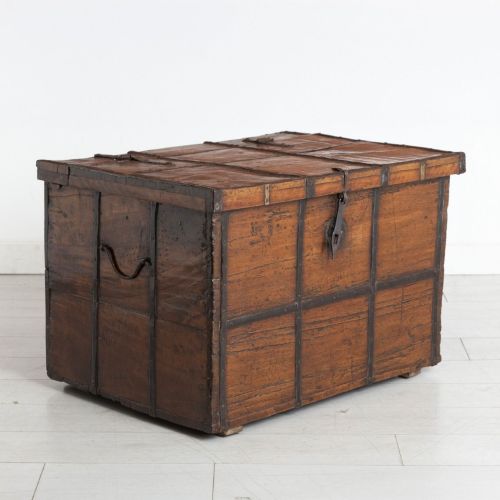
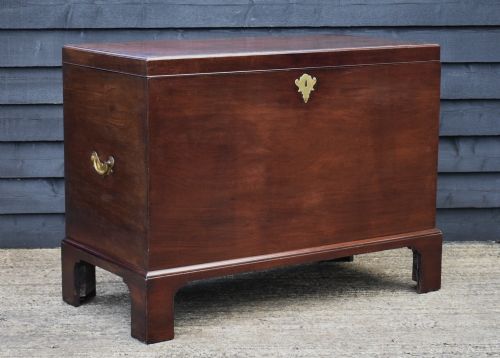
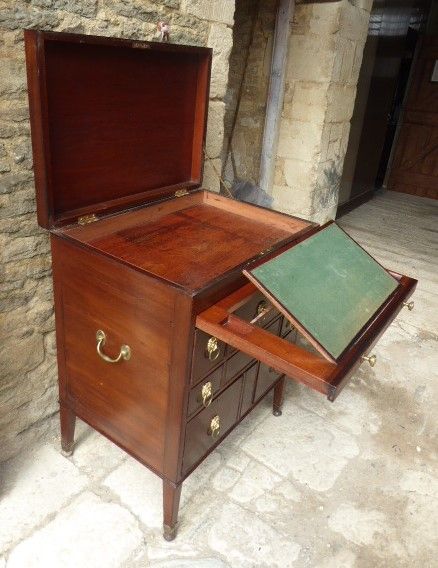
A mahogany travelling chest provides portable storage designed for officers, physicians, and travellers across the eighteenth, nineteenth, and Victorian periods. These pieces appear in forms such as military campaign chests, apothecary boxes, dressing chests, and trunks, with mahogany timber dominating the construction.
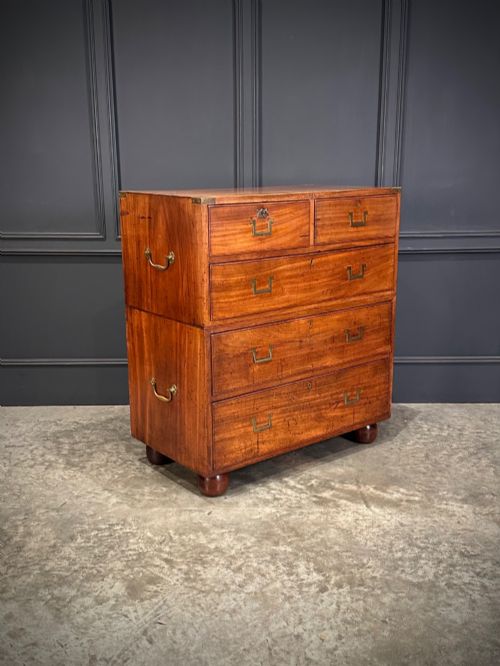
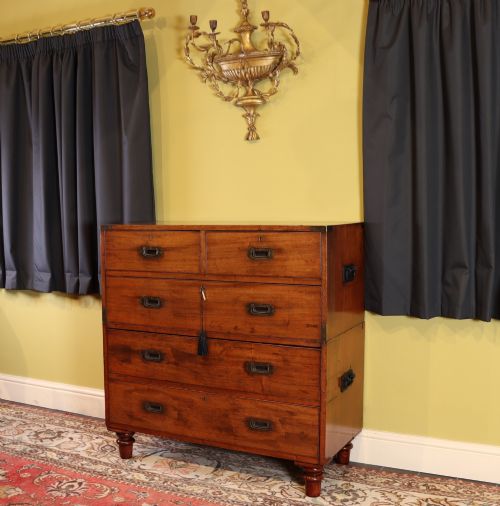
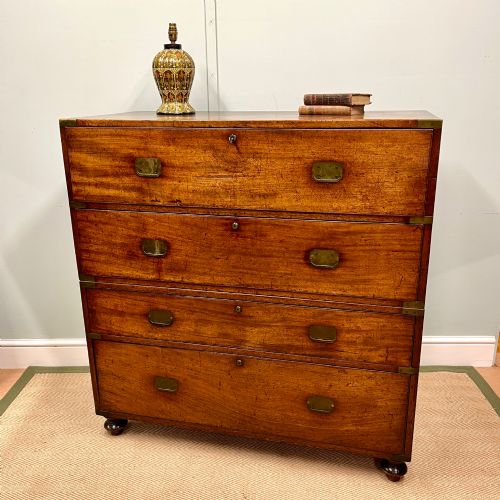
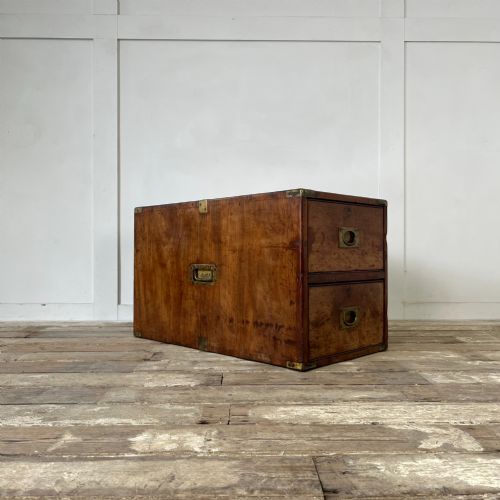
The version most commonly met on this page is the nineteenth century campaign chest or apothecary box, often fitted with brass hardware and interior compartments. Examples span Georgian, Regency, and Victorian styles, occasionally reflecting French, Chinese Hongmu, or English origins.
Makers and workshops of the period engineered these items to withstand rigorous journeys while maintaining a refined appearance suitable for domestic or field use. Buyers encounter various configurations, from desktop storage and secretarie chests to large trunks and fitted dressing cases.
Materials and construction
Craftsmen utilised dense timber such as mahogany alongside structural elements of iron and zinc linings to protect contents during transit. Brass corners, straps, and flush-fitting handles reinforced the structure and prevented snagging while moving through cramped quarters on ships or carriages.
Interiors frequently incorporate glass bottles, baize, and velvet linings to secure delicate items like apothecary vials or dressing instruments. Dovetail joinery and specialised locking mechanisms ensured that drawers and lids remained secure under rough handling.
Several apothecary boxes still harbour the faint, ghostly scent of nineteenth-century medicinal tinctures locked inside for over a century.
Assessing quality and craftsmanship
The distinction between tiers rests upon the precision of the joinery, the thickness of the mahogany timber, and the quality of the brass mounts. Finer specimens display meticulous hand-cut dovetails and perfectly fitted internal partitions that show little wear from movement.
Completeness significantly influences the standing of a piece, particularly the presence of original glass bottles, working locks, and matching keys. Lesser examples may exhibit replaced hardware, substitute timber panels, or missing internal components that alter the original utility.
S. W. Silver & Co. London & Liverpool·Winsor & Newton
The Mahogany Travelling Chest Glossary
- Campaign chest
- A modular chest of drawers or desk built in two or more sections with recessed brass handles for ease of transport during military deployment.
- Apothecary box
- A fitted wooden case housing medical bottles, scales, and drawers designed for a travelling physician or household use.
- Secretarie chest
- A storage chest featuring a drop-front writing drawer that conceals smaller compartments and pigeonholes for correspondence.
- Flush handle
- A hardware fitting sunk level with the wood surface so that it does not catch on ropes or packing cases during transit.
- Hongmu
- A dense, dark hardwood used in Chinese furniture making, sometimes found in travelling boxes of the nineteenth century.
Mahogany Travelling Chest: Frequently Asked Questions
What is a mahogany travelling chest used for?
These chests served officers, doctors, and travellers on long journeys to transport clothing, documents, and medical supplies safely. Their compartmentalised interiors kept fragile items secure while moving between ships, camps, and temporary quarters.
Today, buyers utilise them as distinctive storage containers, side tables, or decorative focal points in studies and living rooms. Their robust build makes them practical for holding everyday items while displaying period craftsmanship.
How do I tell a campaign chest from a standard chest?
Campaign chests are typically built in two separate stacking sections to ease lifting and transport. They feature recessed brass handles and corner brackets that protect the edges from impacts during travel.
Standard chests of the same era sit on fixed bases and use protruding wooden or brass pulls. The presence of side carrying handles and screw-in feet further distinguishes true campaign pieces from domestic furniture.
What periods do these travelling chests come from?
The pieces span the eighteenth and nineteenth centuries, encompassing the Georgian, Regency, and Victorian eras. Earlier examples date back to the mid-eighteenth century, while the majority originate from the Victorian period around eighteen-fifty to eighteen-eighty.
Stylistic details, such as the shape of the brass hardware and the cut of the dovetails, help indicate the specific decade of manufacture. Regency and early Victorian pieces often display refined proportions and tighter brass work.
Are the original bottles included in apothecary boxes?
Some apothecary boxes retain their original glass bottles and stoppers, nestled securely within velvet or baize-lined partitions. These complete interiors are valued by collectors for their historical intactness.
Other boxes survive with empty compartments or replacement vials where the originals were lost or broken over time. Examining the interior layout helps determine whether the fittings remain undisturbed.
How should I care for mahogany travelling chests?
Keep the wood away from direct heat sources and sudden humidity shifts to prevent the mahogany panels from splitting. Occasional application of quality wax helps nourish the timber and maintain the surface sheen.
Handle brass fittings gently and avoid using abrasive cleaners on the metalwork or interior linings. Ensuring the chests rest on level surfaces prevents distortion of the drawers and doors over time.