




Mahogany Towel Horse Stand
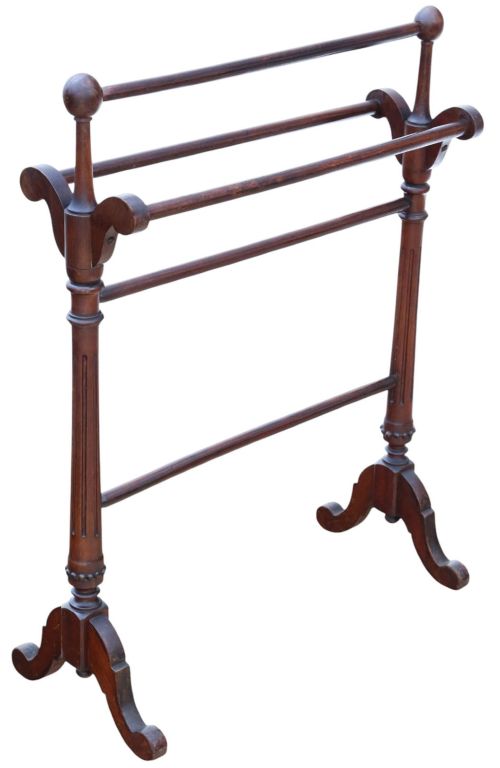
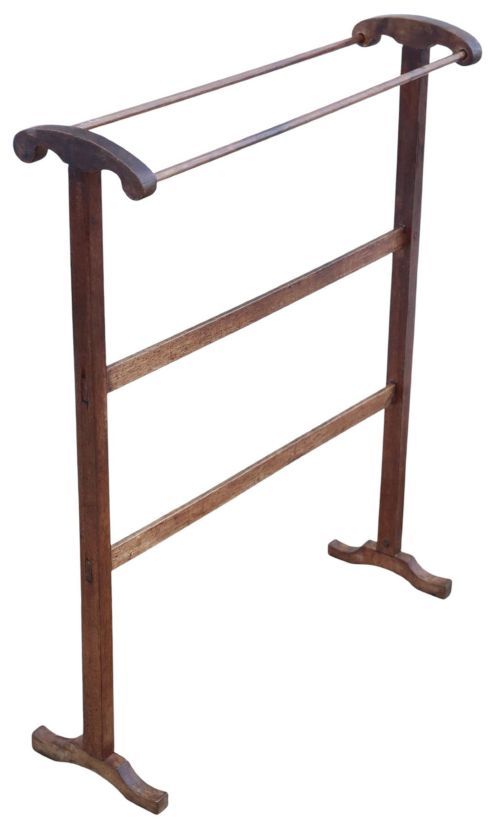
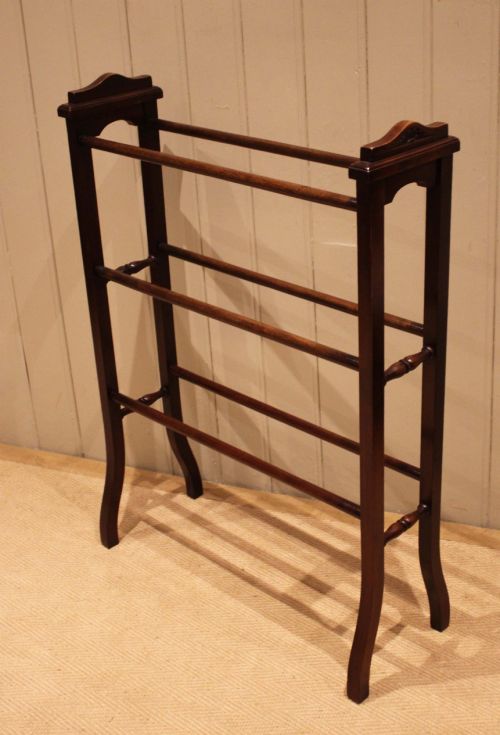
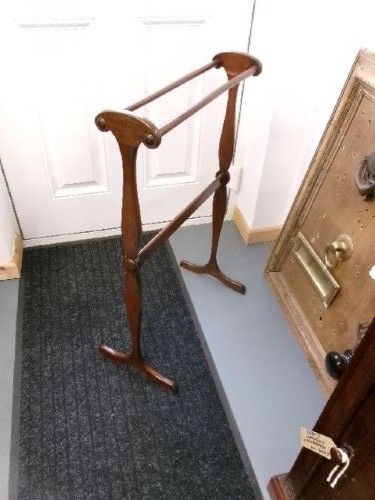
A mahogany towel horse stand brings genuine period warmth and practical utility to a bathroom or bedroom.
Mahogany Towel Horse Stand
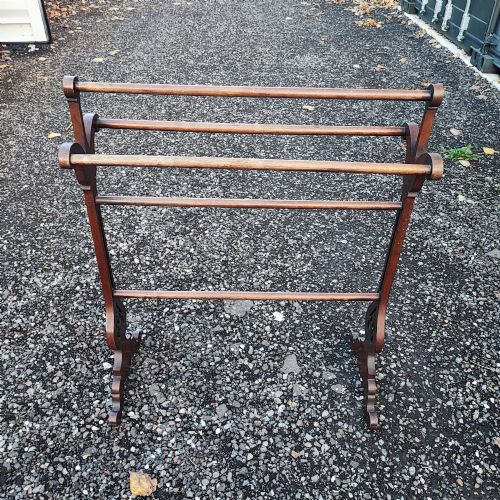
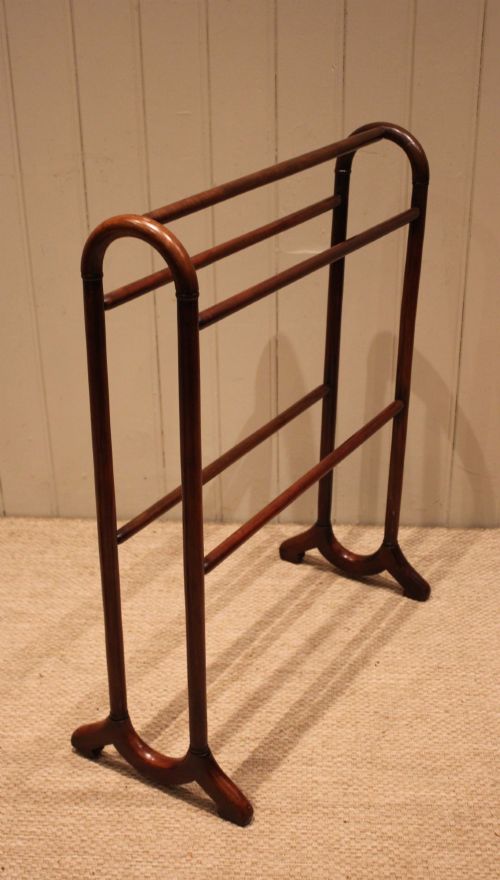
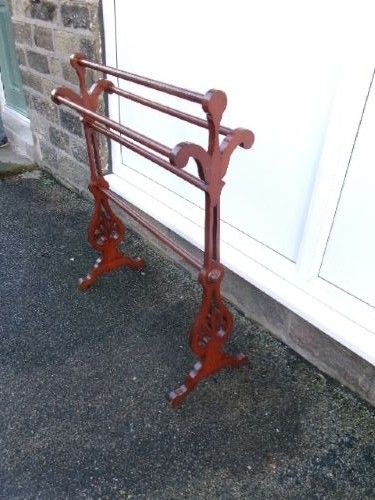
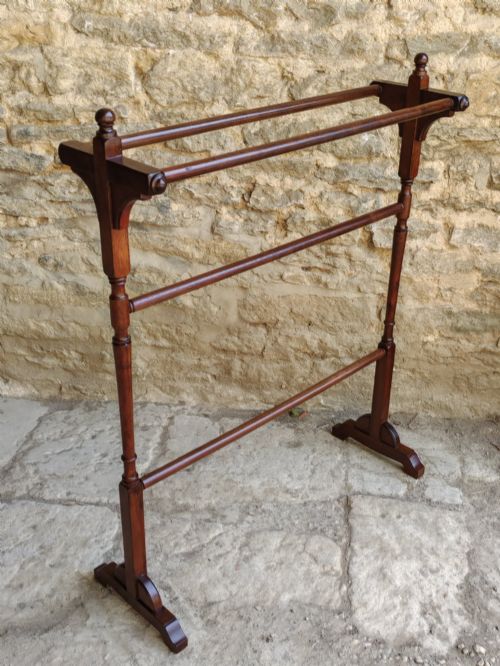
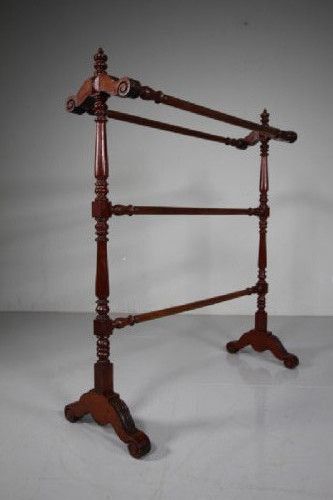
A mahogany towel horse stand is a functional domestic furnishing designed to hold household linens, most commonly appearing as freestanding rails dating from the nineteenth and early twentieth centuries. These pieces emerge across Victorian, Edwardian, and Regency periods, spanning styles from early Victorian to Edwardian.
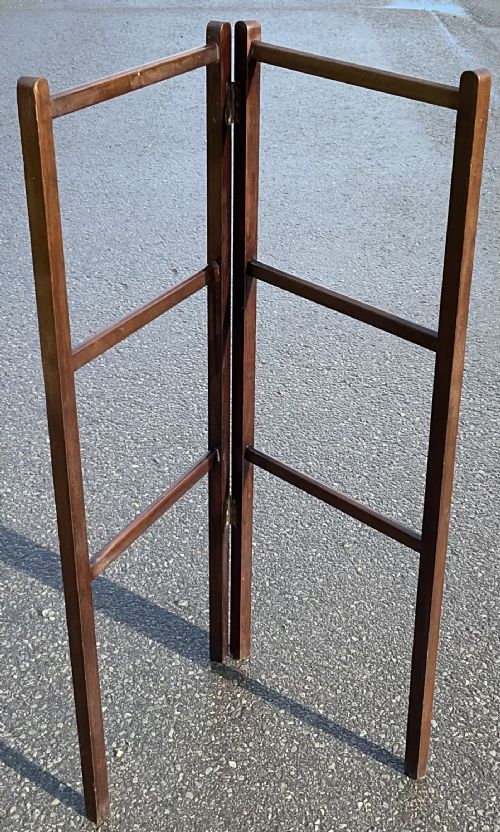
The version most frequently encountered on this page is the Edwardian mahogany towel rail, often constructed with multiple rails or folding sections. Buyers also find larger Victorian and William IV iterations, alongside distinct variants such as the five-bar towel rail and three-fold formats.
Many examples utilise sturdy standing frames, while specific pieces incorporate brass or boxwood details to accent the primary timber. Dimensions range from small formats to large oversized and generous proportions suitable for substantial garments as well as towels.
Materials and construction
Makers built these stands predominantly using solid mahogany and mixed hardwoods, occasionally combining oak or boxwood elements within the framework. Timber selection determined both the structural rigidity and the rich visual grain visible across the rails and uprights.
Joinery techniques relied on traditional framing methods to support daily hanging use without compromising stability. Selected pieces integrate brass hardware fittings to facilitate folding mechanisms or decorative accentuation.
Mahogany Towel Horse Stand Retail Price Guide 2026
Typical asking prices for mahogany towel horse stand among the pieces listed under this phrase on Sellingantiques today, from the lower quarter to the upper quarter. They describe what is for sale here now, not the wider market.
Some Edwardian stands offered up to five bars for linens, proving that Victorian laundry logistics demanded serious architectural planning.
Evaluating construction and design
Quality in a mahogany towel horse stand rests on timber selection and the complexity of the frame. Simpler three-fold designs contrast with larger oversized pieces or specific multi-bar configurations.
The presence of secondary timbers like boxwood inlay or superior brass fittings elevates standard utility items into refined decorative pieces. Heavier proportions and substantial framing distinguish superior nineteenth-century workshops from later mass production.
The Mahogany Towel Horse Stand Glossary
- Mahogany
- A durable tropical hardwood prized for its deep reddish-brown colour and fine grain. It forms the primary structural material for these stands.
- Boxwood
- A dense, pale wood frequently utilised for subtle inlay work and contrasting decorative stringing on Edwardian pieces.
- William IV
- A transitional design period spanning the early decades of the nineteenth century. Pieces from this era often display heavier, robust proportions.
- Edwardian
- A stylistic period covering the early twentieth century up to the First World War. Stands from this time frequently feature lighter frames and inlaid decoration.
Mahogany Towel Horse Stand: Frequently Asked Questions
How were these stands used?
These pieces served in bedrooms and dressing rooms for airing and hanging towels or garments near a heat source. Their freestanding nature allowed effortless relocation around the house as domestic needs shifted.
Today, they function similarly in modern bathrooms or guest rooms, combining period decorative charm with practical linen storage.
Are folding rails common?
Folding formats appear frequently, particularly among Edwardian examples designed with three or five rails. These hinged configurations allowed the stands to fold flat when not in use.
Multi-fold variants provided greater hanging capacity while maintaining a compact footprint in smaller dressing spaces.
How do I date a rail?
Dating relies on stylistic markers and timber characteristics associated with specific nineteenth and early twentieth-century periods. Regency and William IV pieces tend to show heavier proportions, whereas Edwardian items often feature lighter frames and subtle inlay.
Examining the construction methods and any secondary woods like oak or boxwood further clarifies the era of manufacture.
Where should I place one?
A standing rail suits bathrooms, bedrooms, or utility spaces where extra hanging capacity is useful. Their timber construction warms up tiled or modern interiors.
Ensure placement avoids excessive moisture or direct heat sources to preserve the finish of the mahogany timber.