
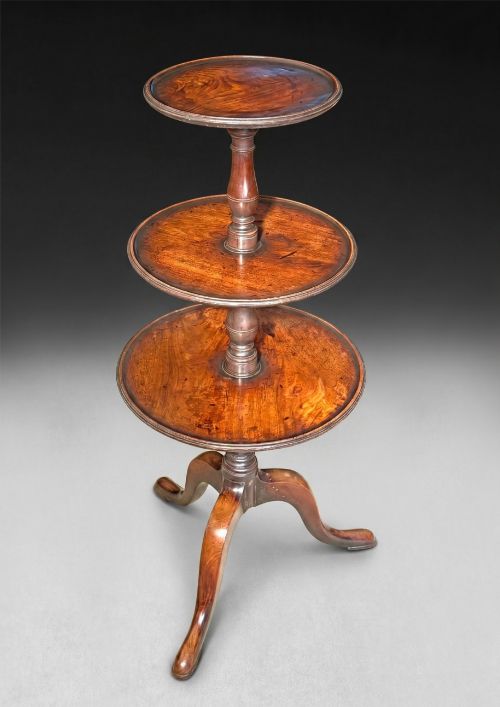


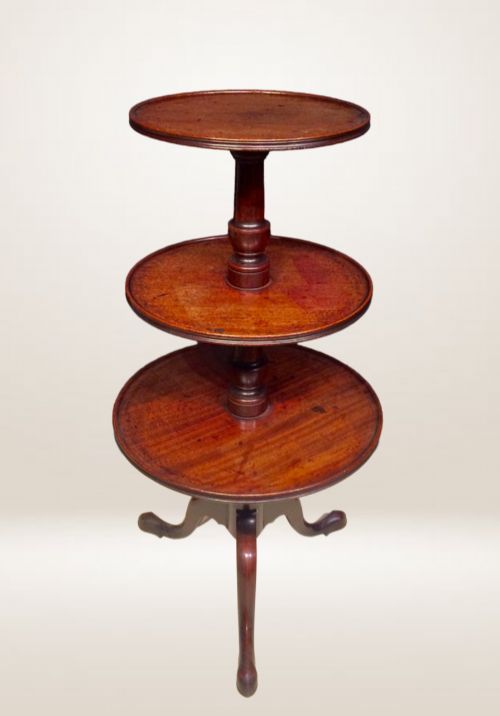
Mahogany Tiered Dumb Waiter
Mahogany tiered dumb waiter pieces are multi-tiered serving furniture designed to hold dishes without servant assistance.
Mahogany Tiered Dumb Waiter
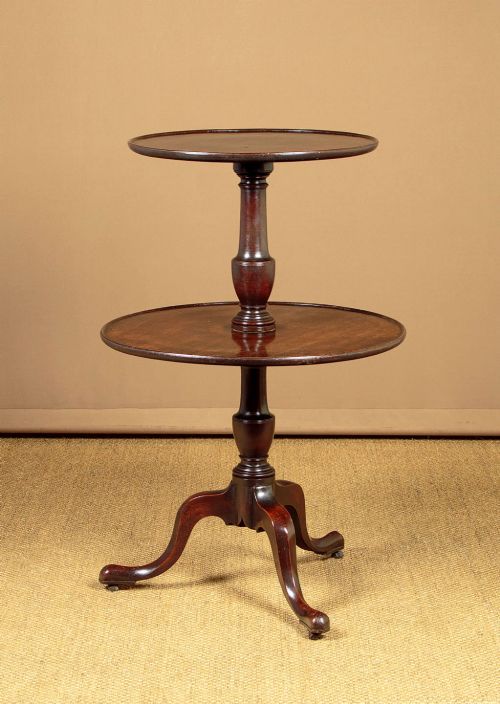
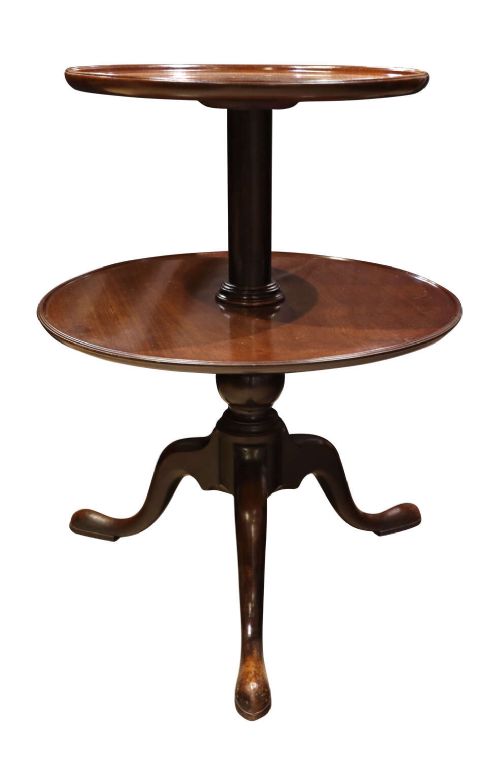
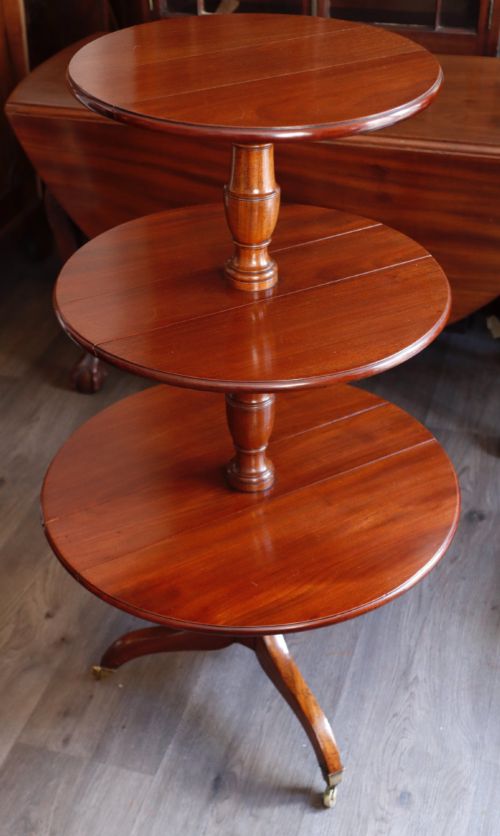
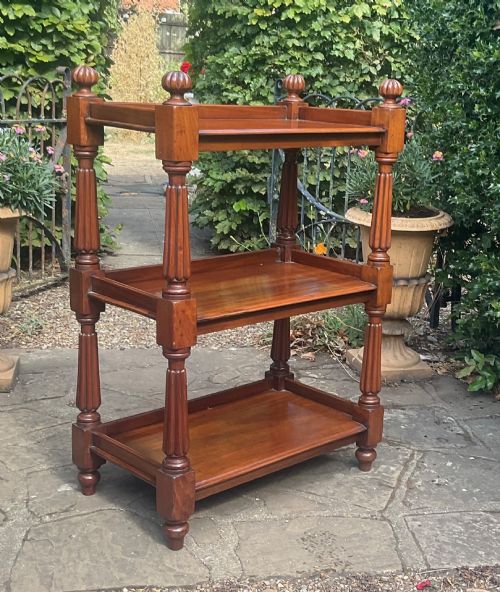
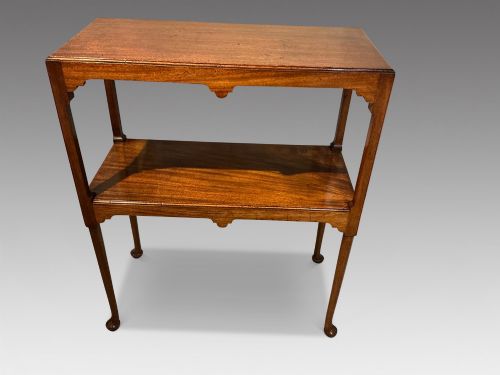
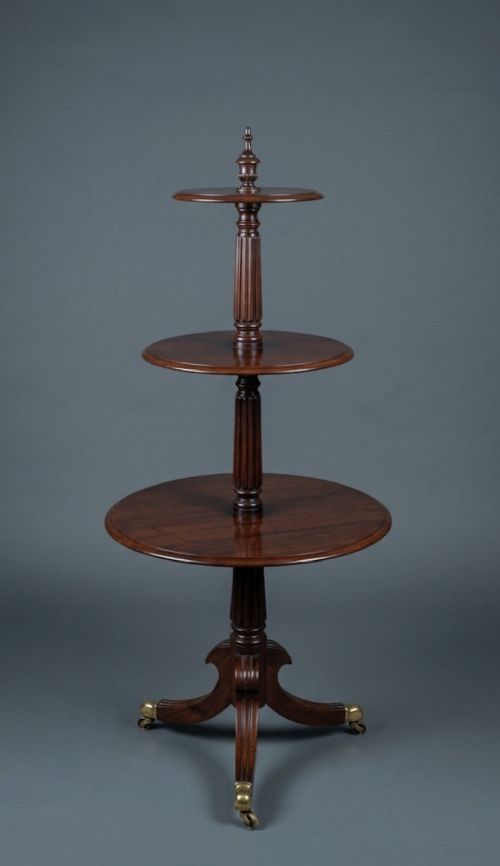
A mahogany tiered dumb waiter provides graduated circular or rectangular shelves arranged vertically on a central column or supporting frame. These pieces function as practical side tables or serving stands for dining rooms and drawing rooms.
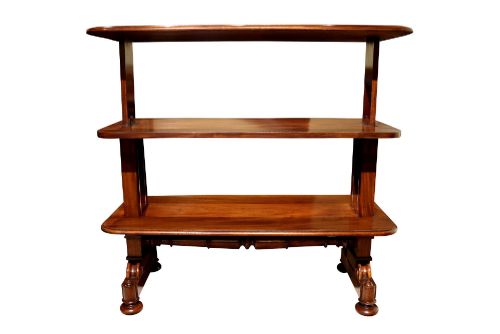
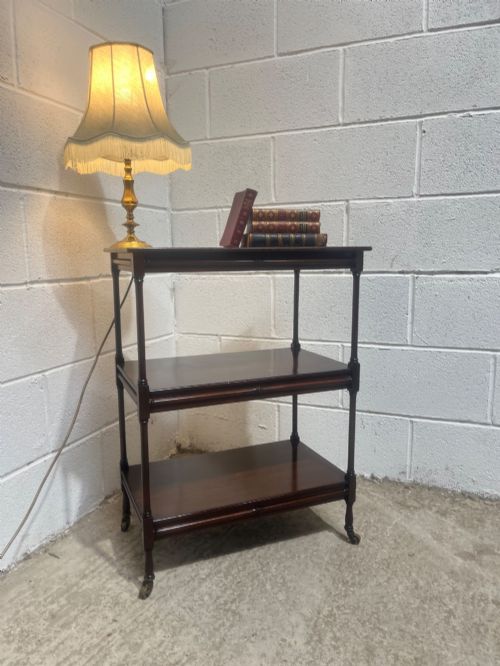
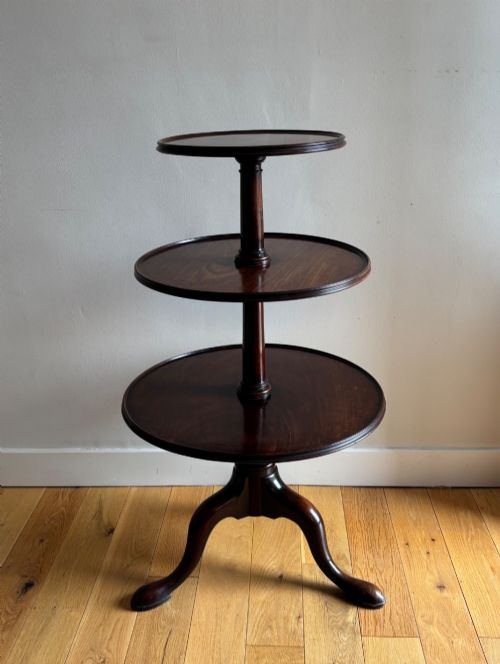
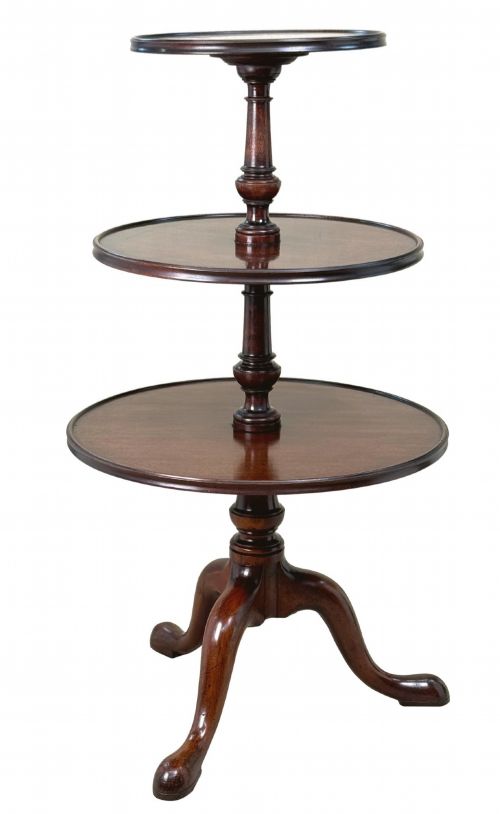
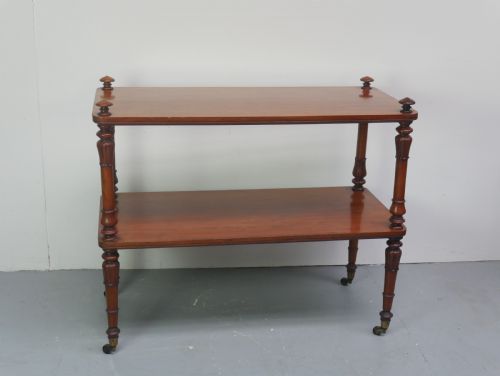
The most common examples encountered here date from the eighteenth and nineteenth centuries, spanning the Georgian, Regency and Victorian periods. Most specimens feature two or three graduating tiers, often supported by tripod bases or castors.
How they were made
Cabinetmakers utilised solid mahogany and Cuban mahogany alongside decorative veneers, often turning central columns on lathes and shaping tripod legs by hand. Brass fittings such as castors and hinges appear frequently on nineteenth-century examples to facilitate movement.
Selected pieces incorporate subtle satinwood or boxwood inlay to accent the tiered edges, while structural joinery relies on pegged tenons and robust central threading for revolving trays.
Listings demonstrate forms spanning Georgian tripod tables to Victorian metamorphic designs, constructed primarily in solid mahogany with brass and satinwood accents.
What varies in quality
The choice of timber underpins the distinction between standard examples and superior productions, with dense Cuban mahogany and fiddleback figuring commanding greater attention. The crispness of the turned columns and the stability of the revolving tier mechanisms indicate the skill of the original workshop.
Proportion and balance define the visual success of a piece, particularly in how the graduated diameters of the tiers relate to the strength of the tripod base.
The Mahogany Tiered Dumb Waiter Glossary
- Dumb waiter
- A freestanding tiered piece of furniture used to hold food, plates or drinks during a meal. It allowed diners to serve themselves without domestic staff present in the room.
- Etagere
- A set of open shelves arranged in tiers for displaying or holding small objects. These pieces often overlap in form with standard dumb waiters.
- Tripod base
- A three-legged support structure commonly found beneath the central column of circular tables and dumb waiters. This design ensures stability on uneven dining room floors.
- Rise and fall
- A mechanical action allowing specific tiers to be adjusted vertically for height. This mechanism demonstrates ingenious nineteenth-century carpentry.
- Fiddleback mahogany
- Highly figured timber exhibiting a rippled grain pattern resembling the back of a violin. Cabinetmakers reserved this wood for high-status furniture fronts and tops.
Mahogany Tiered Dumb Waiter: Frequently Asked Questions
What was a dumb waiter used for?
These pieces served as supplementary tables beside the main dining table to hold dishes, cutlery, and wine bottles. They allowed households to dine without servants lingering in the room.
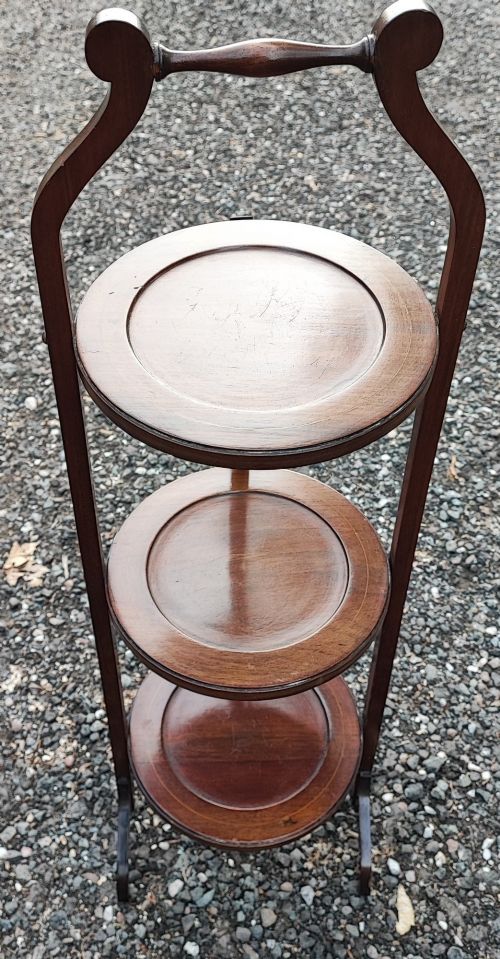
Over time, smaller tiered versions also found placement in drawing rooms for afternoon tea and cake service.
How do I date a mahogany dumb waiter?
Georgian examples often display simpler mahogany turnings and slender tripod legs without heavy ornamentation. Regency and William IV pieces introduce brass details, revolving mechanisms, and figured timber grains like fiddleback.
Later Victorian and Edwardian iterations frequently incorporate castors, folding frames, or delicate inlay work.
Are these pieces stable enough for daily use?
Most tiered designs utilise sturdy tripod bases engineered to distribute weight evenly across the shelves. Solid mahogany construction provides the structural integrity necessary for holding heavier serving items.
Care should be taken when rotating tiers on older pivoting mechanisms to avoid straining the central column.
What is the difference between an etagere and a dumb waiter?
While both utilise multiple stacked shelves, traditional dumb waiters often feature revolving circular tiers designed for dining service. Etageres tend to function more broadly as display stands for decorative objects and books.
In period listings, however, makers and dealers frequently used these terms interchangeably.