


Three Tiered Dessert Stand
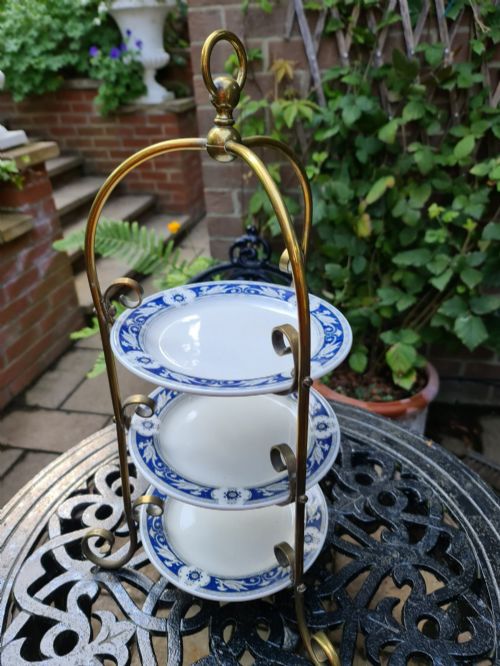
A three tiered dessert stand brings graduated tiers of timber or glass to a dining room or parlour for serving fruit and cakes.
Three Tiered Dessert Stand
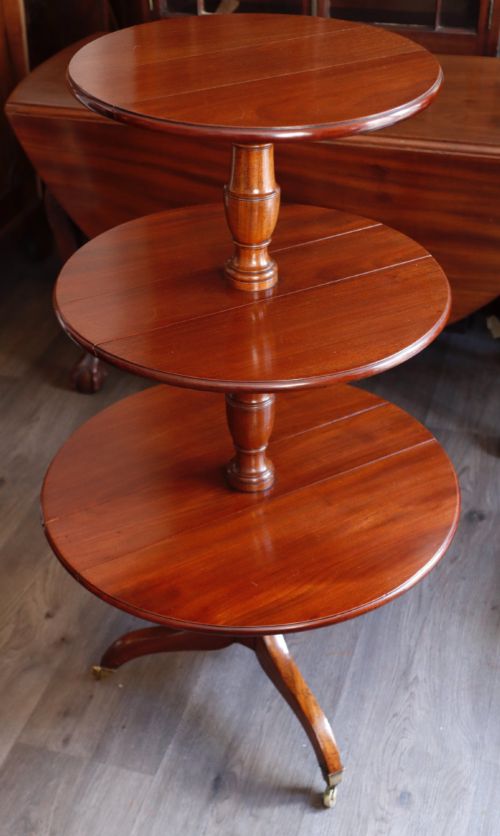
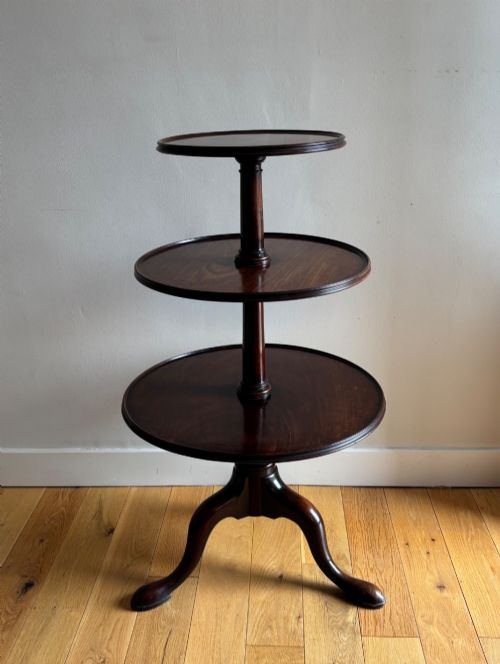
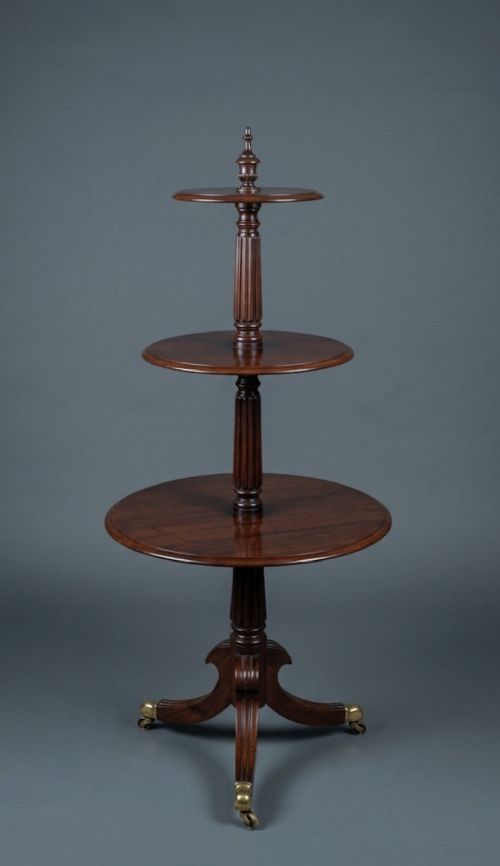
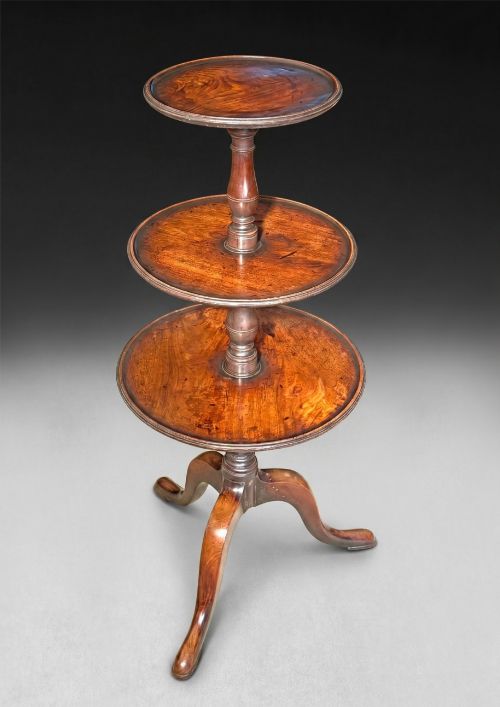
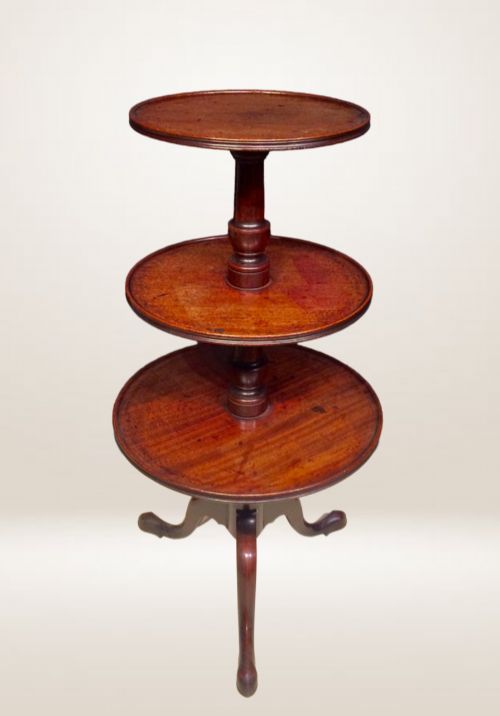
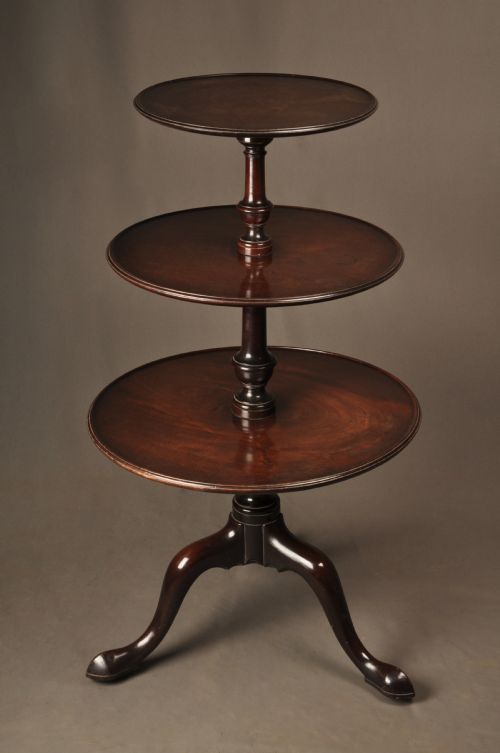
A three tiered dessert stand is typically encountered here as a mahogany dumb waiter or tiered cake stand dating from the eighteenth century to the Edwardian period. These pieces present multiple graduating circular levels supported on central pillars or tripod bases designed to hold dishes within reach during dining. Many examples from the Georgian and Regency eras feature folding or drop-leaf mechanisms that allow the circular trays to tilt or collapse when not in use.
The objects appear under various historical designations including dumb waiters, tiered stands, side tables, and cake stands across Georgian, Victorian, and Edwardian styles. Mahogany remains the dominant timber across the selection, though walnut, rosewood, brass, and glass also appear in specific pieces from later decades. Buyers selecting a three tiered dessert stand will find both utilitarian serving furniture from the dining room and lighter display pieces from the Victorian and Edwardian drawing room.
How they were made
Cabinet makers constructed these pieces primarily using solid and veneered timbers such as mahogany, walnut, and rosewood, often incorporating turning and carving on the central uprights. Brass fittings secure the pivoting or folding mechanisms on drop-leaf trays, allowing the tiers to adjust or fold flat. Selected examples incorporate marquetry inlay and decorative banding into the circular tabletops to enhance the visual grain of the wood.
Tripod bases with cabriole or sabre legs provide stability for the weighted vertical tiers above, terminating frequently in pad feet or castors. Glass and polished brass tiers appear in twentieth-century pieces, shifting the construction from traditional cabinet-making joinery to metal framing and plate glass. The tiered configuration requires precise balancing of the graduated circular trays so each level remains stable on the central shaft.
Listings for a three tiered dessert stand span the eighteenth century to the Edwardian era, featuring mahogany, walnut, rosewood, brass, and glass.
What varies in quality
The distinction between ordinary and superior pieces rests on the choice of timber and the crispness of the turning on the central column. Finer examples display well-figured mahogany with deep natural patination on all three graduating tiers, whereas simpler pieces utilise plain timber without distinctive grain patterns. The integration of the folding or tilting mechanisms also marks the standard of manufacture, with better pieces operating smoothly without looseness in the joints.
Proportion and balance define the visual success of the piece, particularly where the graduated diameters of the three tiers create a harmonious silhouette from top to base. Carved details on the tripod legs and fine inlay work indicate workshops that invested greater labour into the finish of the stand. The presence of original brass castors and fittings further separates standard utilitarian items from pieces made for formal entertaining.
Maple & Co·Gillows
The Three Tiered Dessert Stand Glossary
- Dumb waiter
- A freestanding piece of dining room furniture with multiple graduating tiers used for serving food without servants present. These stands allow dishes to be placed within reach of diners.
- Tripod base
- A three-legged support structure commonly found beneath the central pillar of Georgian and Regency tables and stands. This design ensures stability on uneven floors.
- Drop-leaf
- A tabletop design featuring hinged flaps that can be folded down when the stand is stored. On these pieces, the circular trays often tilt vertically.
- Marquetry inlay
- Decorative patterns formed by fitting contrasting veneers into the primary wood surface of the tier. This technique creates geometric or floral ornamentation.
- Galleried
- A raised rim or border around the edge of a tabletop to prevent items from sliding off. This feature is frequently seen on circular serving tiers.
Three Tiered Dessert Stand: Frequently Asked Questions
What was a three tiered dessert stand used for?
These stands served food, wine, and dessert items during formal meals in dining rooms where diners preferred to help themselves without servants hovering. The graduating tiers held plates, fruit, and small dishes within easy reach of the table.
In later periods, similar tiered forms transitioned to the parlour as cake stands for afternoon tea or as display surfaces for decorative objects and ceramics.
How do I date a three tiered dessert stand?
Dating relies on timber choice, leg style, and the construction of the central pillar and joints. Eighteenth-century and Georgian pieces typically feature heavy mahogany with tripod snake legs or pad feet, while Regency examples show sharper reeded turning.
Victorian and Edwardian pieces often introduce lighter rosewood, walnut, or walnut marquetry, and twentieth-century versions incorporate materials like brass and plate glass.
Are the tiers fixed or movable?
Many traditional examples feature revolving tiers or folding drop-leaf mechanisms that allow the circular trays to tilt upright. This ingenuity made the stands easier to store against a dining room wall when not in use.
Fixed tiers also occur frequently, particularly on later cake stands and display pieces where tilting mechanisms were no longer required for storage.
How do I place one in a modern room?
A three tiered dessert stand fits well in a corner or beside seating where its vertical height occupies minimal floor space. The graduating circular shelves provide practical levels for displaying plants, books, or decorative objects.
Folding versions can be adjusted to show off their timber grain even when not actively holding items, adding architectural interest to a room.