
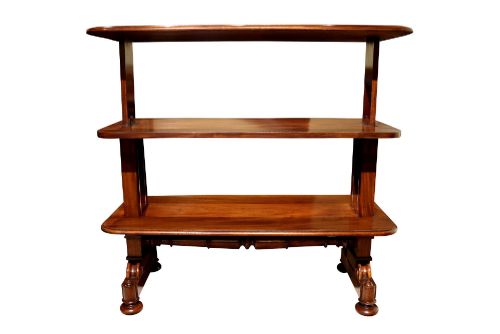
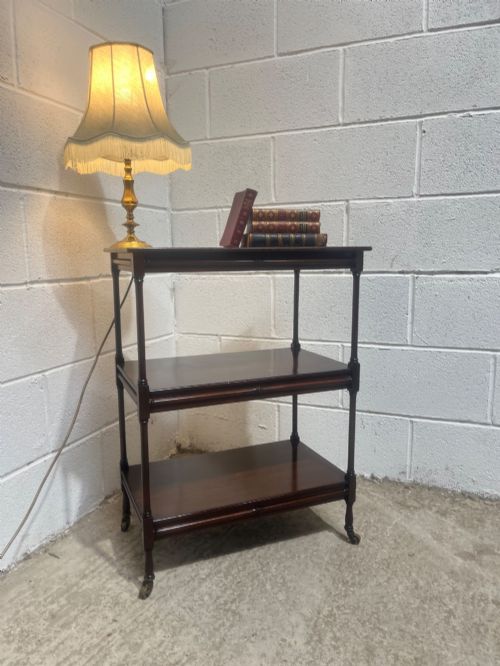
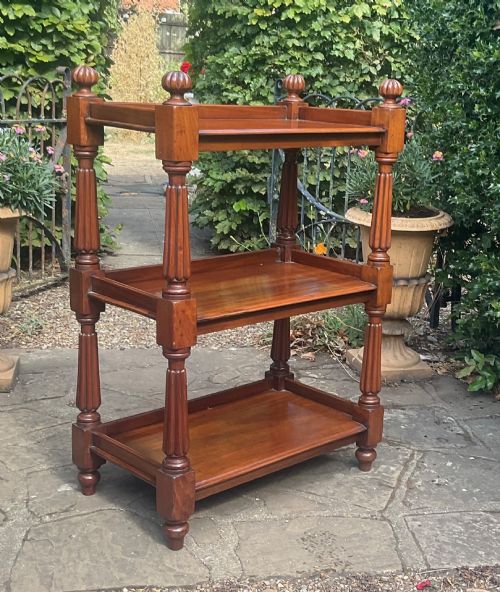

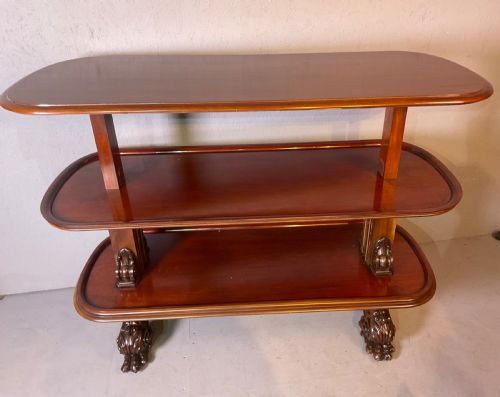


Mahogany Three Tier Trolley
A mahogany three tier trolley brings tiered timber shelving and serving space into a room, offering practical display surfaces across multiple levels.
Mahogany Three Tier Trolley
A mahogany three tier trolley consists of three distinct horizontal surfaces arranged vertically to serve food, hold drinks or display objects. The pieces appearing here span the William IV, George IV and Victorian periods, alongside general nineteenth-century examples.
Forms cross over with related serving furniture, appearing as dumb waiters, etageres, buffets, serving tables and stands. Many sit on original castors to allow smooth movement across the floor during dining or social gatherings.
Construction and materials
Makers built these pieces primarily from solid and veneered mahogany, chosen for its rich grain and durability. Metal fittings, particularly brass, often appear on castors or structural mounts to support the tiered shelves.
Some examples incorporate ceramic elements alongside the timber framework. Specialised mechanisms also surface in the selection, including rise and fall functions and metamorphic designs.
Materials recorded across the selection include mahogany timber paired with brass hardware and occasional ceramic components.
Assessing quality in tiered serving furniture
Quality rests in the handling of the timber and the solidity of the vertical supports holding the three tiers apart. Refined turning on the columns and clean joinery distinguish better workshops from standard production.
The presence of original hardware, such as brass castors or operating rise and fall mechanisms, elevates an example. Format also plays a part, with unusual proportions or slim profiles showing greater ambition in design.
Maple & Co
The Mahogany Three Tier Trolley Glossary
- Dumb waiter
- A tiered serving piece designed to hold dishes or drinks without needing a servant at the table. These items typically feature multiple shelves mounted on a central column or corner supports.
- Etagere
- A piece of furniture consisting of a set of open shelves for displaying small objects or serving items. The term highlights the tiered and open nature of the design.
- Metamorphic
- A descriptive term for furniture that transforms or alters its configuration for different uses. These clever designs adapt their height or shape through integrated mechanical parts.
- Castor
- A small wheel mounted on a swivel attached to the bottom of furniture legs. Original castors allow the trolley to glide easily across carpets and wooden floors.
- Rise and fall
- A mechanical function allowing shelves or tiers to adjust in height. This capability provided flexibility during formal dining and serving.
Mahogany Three Tier Trolley: Frequently Asked Questions
What is a mahogany three tier trolley used for?
These pieces served historically for holding dishes, side plates or beverages during meals, keeping dining tables clear of clutter. Today they function equally well as drinks trolleys, side tables or display stands for books and ornaments in a living space.
The three levels provide ample surface area without taking up excessive floor space. Their mobility allows them to move easily between rooms as needed.
How do I tell a dumb waiter from an etagere?
A dumb waiter traditionally served a dining function with tiers meant for food and serving vessels, often featuring robust timber construction and sometimes mechanical adjustments. An etagere leans more toward decorative display with lighter open shelving.
In practice, makers and sellers often used these terms interchangeably during the nineteenth century. Examining the sturdiness of the shelves helps determine its original intended use.
Are these trolleys easy to move around?
Most examples are fitted with castors on the base to enable smooth transportation across rooms. Because they carry three heavy mahogany tiers, the castors bear considerable weight.
Checking that the castors rotate freely ensures the piece moves safely without straining the lower frame joints.
How do I date a nineteenth-century trolley?
Dating relies on stylistic clues such as the transition from George IV and William IV heavy classical proportions to lighter Victorian forms. Cabinetmaking techniques, timber choice and the style of turning on the supports also point to specific decades.
Makers' marks or stamps, when present, offer a definitive guide to the origin and era of production.