





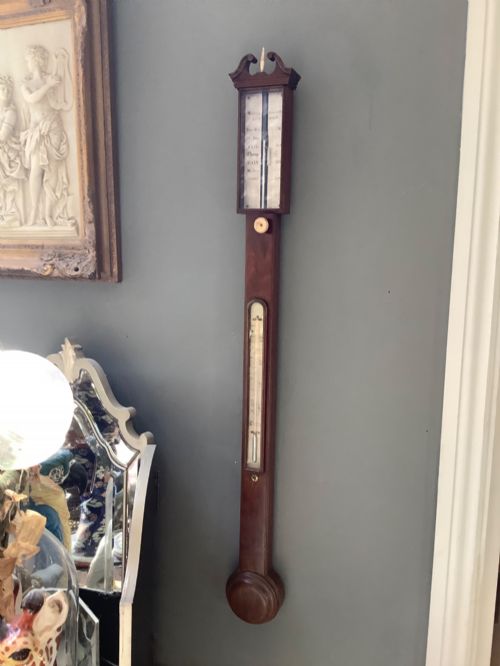


Mahogany Thermometer
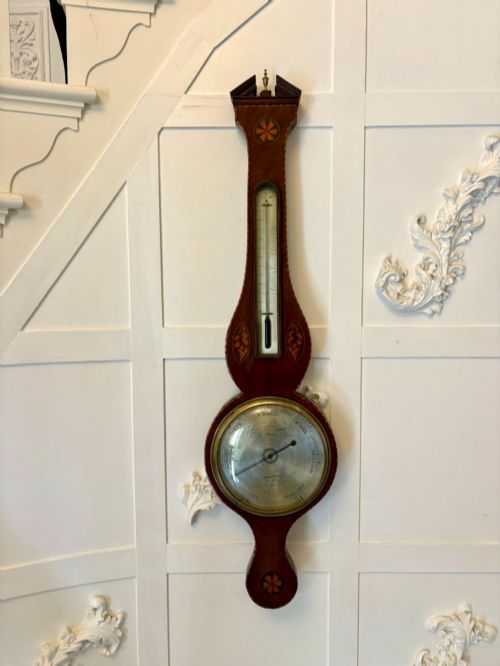
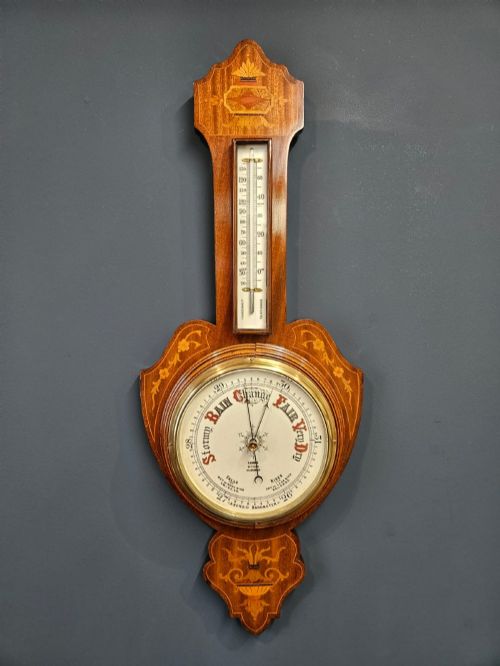
A mahogany thermometer records ambient temperature within a rich timber housing shaped for wall mounting or desk placement.
Mahogany Thermometer
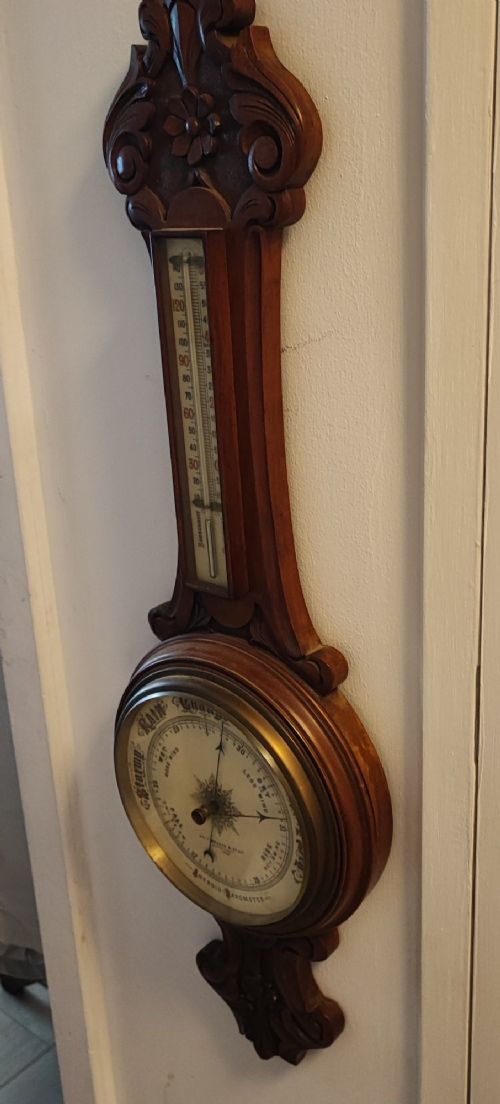
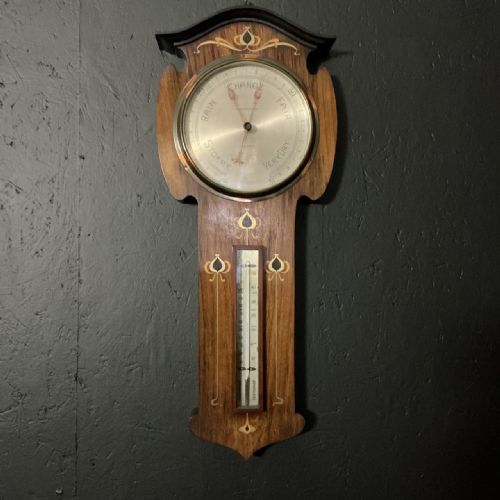
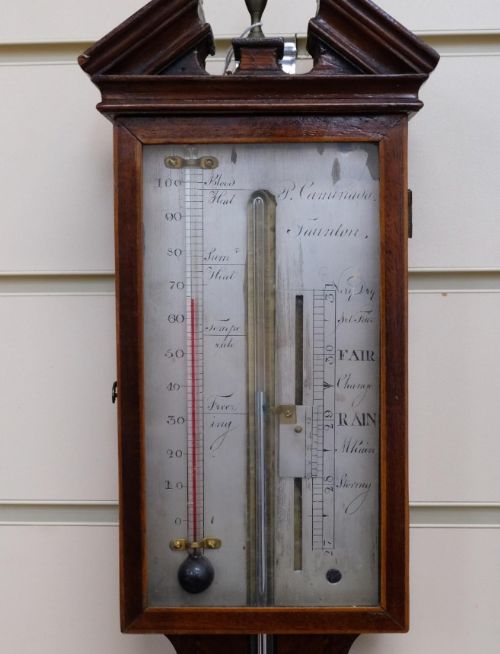
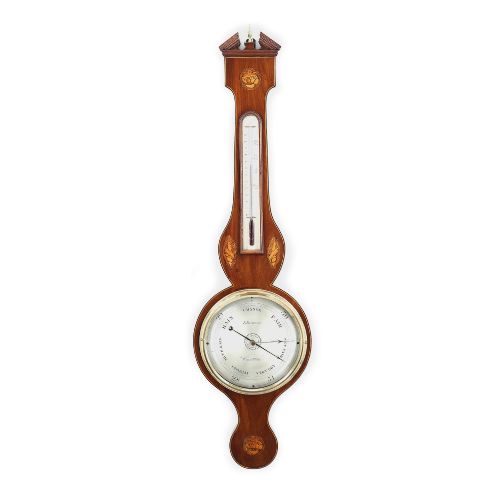
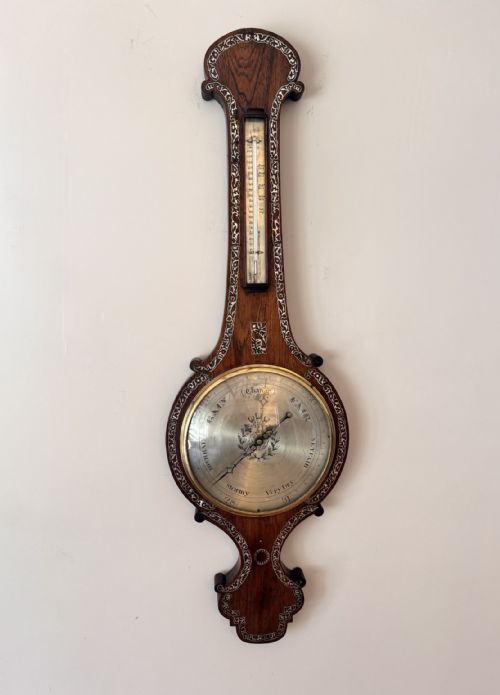
A mahogany thermometer represents a fusion of practical meteorological recording and fine cabinet making, spanning periods from the Georgian era through to the Edwardian years. These instruments appear primarily as wall thermometers, wheel barometers, and stick barometers where temperature scales accompany atmospheric pressure dials.
Makers housed these instruments in timber frames varying from simple domestic wall panels to complex banjo shapes adorned with brass and silvered metal details. The examples on this page reflect the craftsmanship of regional opticians and London instrument makers alike, utilising the deep reddish grain of mahogany as a primary medium.
Materials and construction methods
Cabinet makers constructed the chassis using solid mahogany or mahogany veneers applied to secondary woods, frequently incorporating boxwood and satinwood inlay to accentuate the edges. Glass tubes containing mercury or spirit formed the working core, mounted over engraved silvered metal plates or bone scales.
Workshops utilised brass for bezels, indicators, and dampeners, while specialised instrument makers signed their scales by hand using fine punch tools or early pantograph methods. Artisans shaped the wood using hand saws and planes, creating distinct architectural outlines such as onion top cases and scroll pediments.
Mahogany Thermometer Retail Price Guide 2026
Typical asking prices for mahogany thermometer among the pieces listed under this phrase on Sellingantiques today, from the lower quarter to the upper quarter. They describe what is for sale here now, not the wider market.
Some nineteenth century domestic thermometers were specifically designated as hot bed instruments, designed to monitor the quiet fermentation heat of agricultural manure heaps.
Assessing quality in mahogany thermometer items
The integrity of the scientific scale dictates the historical worth, with hand-engraved silvered metal dials offering greater precision than later printed paper or plastic replacements. Maker signatures from established instrument firms add a layer of documentary importance to the physical object.
George Adams of Fleet Street·Patrick Adie of London·Negretti and Zambra London·George Dollond of London
The Mahogany Thermometer Glossary
- Banjo barometer
- A domestic weather glass housed in a curved wooden case resembling a stringed instrument, often incorporating a thermometer alongside the main pressure dial.
- Stick barometer
- A tall, narrow wall instrument containing a vertical mercury column that measures atmospheric pressure directly without magnification.
- Silvered metal
- A brass plate treated with a silver solution to create a matte white surface for engraved measurement scales and numbers.
- Boxwood inlay
- Contrasting pale wood inserted into recesses cut into the darker mahogany ground to form geometric or floral patterns.
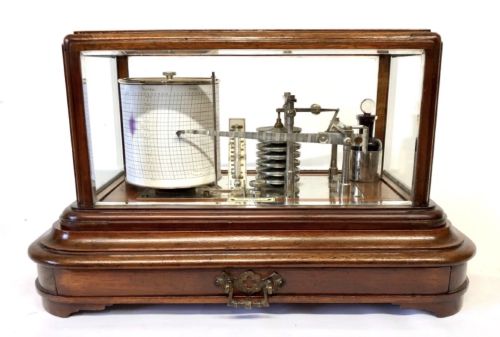
- Barograph
- A self-recording aneroid barometer that charts atmospheric pressure continuously onto a rotating drum using a mechanical arm.
Mahogany Thermometer: Frequently Asked Questions
How do you read a mercury thermometer?
The mercury column rises and falls inside the glass tube in response to ambient heat, aligning with marked degree lines on the adjacent scale.
Users read the temperature at the top of the mercury meniscus against the engraved graduation marks on the silvered or bone plate.
Where should a wall thermometer hang?
These instruments require placement on interior walls away from direct sunlight, draughts, and artificial heat sources to record room temperature accurately.
Stable indoor conditions prevent extreme thermal shock to the delicate glass tubes and wooden housings over extended periods.
How do you clean mahogany timber?
Maintenance involves gentle dusting with a dry, soft cloth to prevent particulate accumulation on the polished wood surface.
Harsh chemical polishes and water damage the finish; traditional wax helps nourish the antique grain without softening the original patina.
Can antique thermometers be repaired?
Specialist conservators can repair broken glass tubes, recalibrate scales, and stabilise cracked timber housings using period-appropriate materials.
Retaining the original signed dial and mercury column preserves the historical integrity of the piece during any necessary conservation work.