


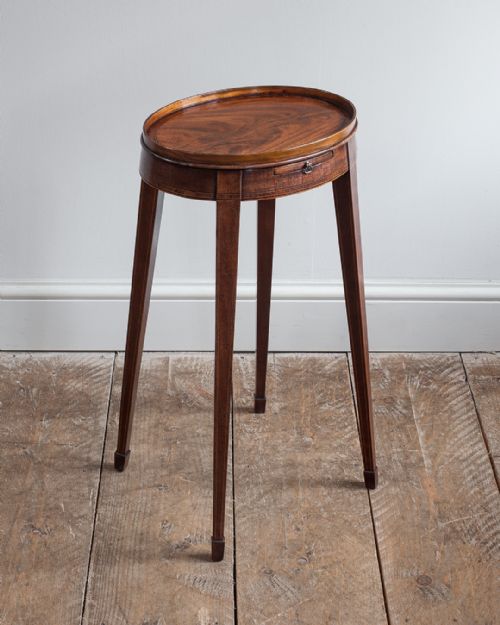


Mahogany Tea Urn Stand
A mahogany tea urn stand serves the formal tea service with a compact stage, bringing raised edges and slender legs to the drawing room.
Mahogany Tea Urn Stand
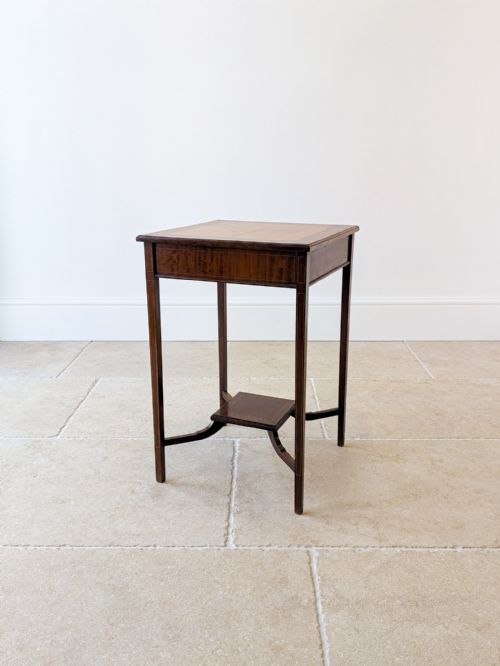
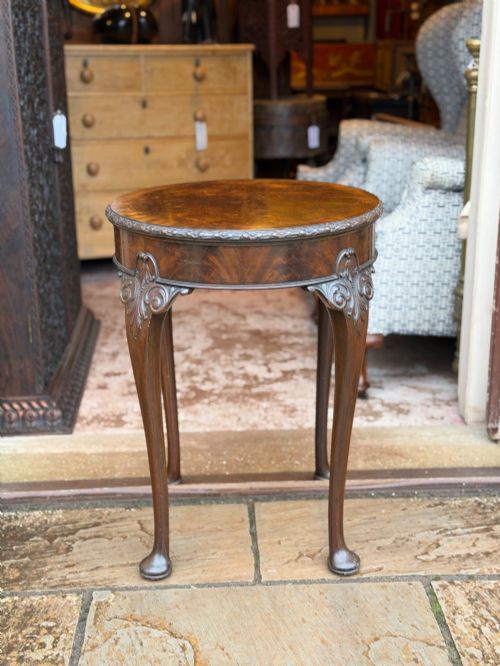
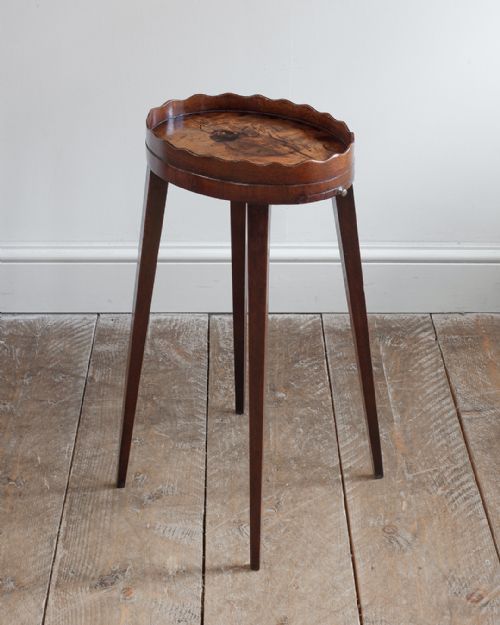
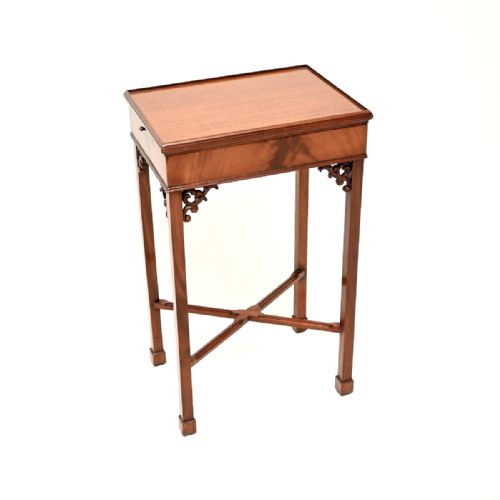
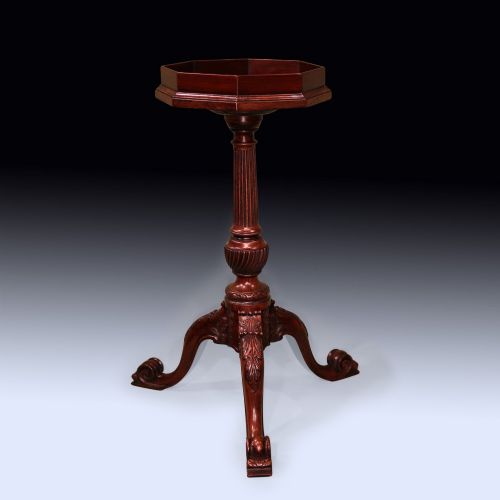
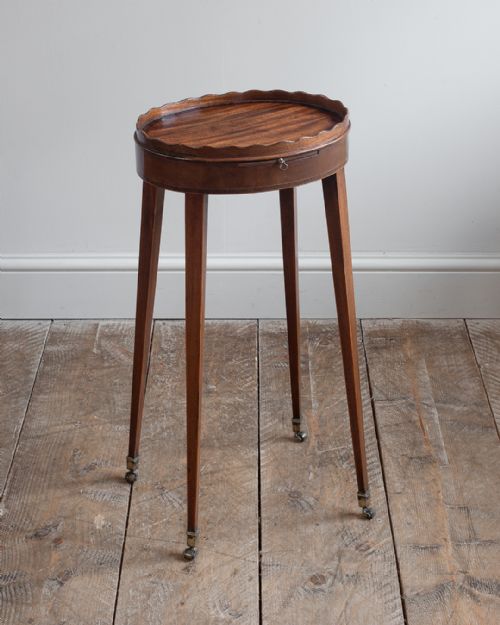
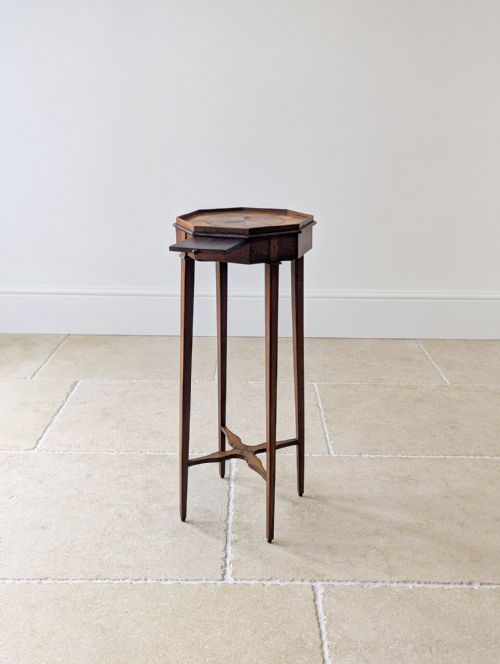
When you search for a mahogany tea urn stand, you enter a field of small-scale tables designed to hold heavy vessels of hot water. The examples found here span the eighteenth century up to the Edwardian period and later revivals, taking the form of dedicated kettle stands, urn stands, and occasional tables. Oval and octagonal tops dominate the historical pieces, offering a neat geometry suited to small spaces beside a fireside chair.
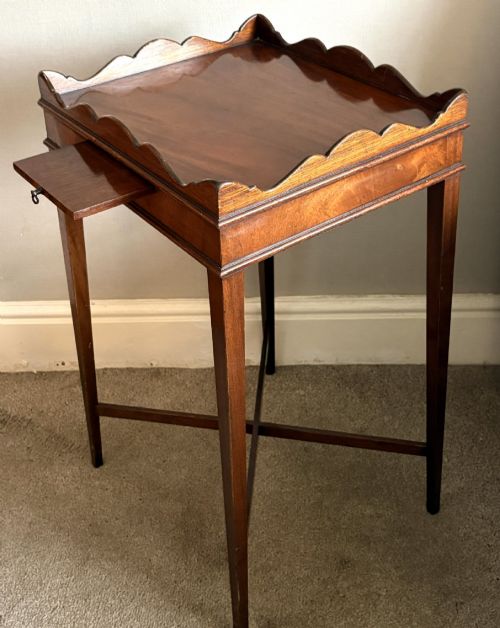
The eighteenth-century items lean heavily into Georgian and Sheraton idioms, alongside Chinese Chippendale interpretations featuring carved or fretted galleries. Later iterations from the Edwardian years and the 1920s bring simpler occasional formats and marquetry inlay into the mix. Buyers encounter both square and circular tops, occasionally paired with pull-out slides designed to catch stray drops from the spout.
How they were made
Makers relied on dense tropical hardwood for its strength under weight, shaping solid timber and applying carefully selected veneers. Satinwood, boxwood, and various burr woods appear as contrasting stringing or detailed inlay upon the primary mahogany surfaces. Brass fittings such as castors or subtle handles occasionally supplement the woodwork on specific examples.
Joinery methods prioritized stability for a tall, narrow piece holding boiling water, employing tight tenons and sturdy pillar supports. Carved details on Georgian and Chippendale revival pieces required skilled hand chiselling along legs and gallery edges. Inlaid Edwardian tables utilised precise marquetry techniques to set pale botanical motifs into the dark background.
Mahogany Tea Urn Stand Retail Price Guide 2026
Typical asking prices for mahogany tea urn stand among the pieces listed under this phrase on Sellingantiques today, from the lower quarter to the upper quarter. They describe what is for sale here now, not the wider market.
Listings feature mahogany, satinwood, and boxwood across periods ranging from the eighteenth century to the 1930s.
What varies in quality
The crispness of the carved ornamentation separates standard production from superior craftsmanship. Sharp mouldings on a Georgian top or well-defined fretwork on a Chinese Chippendale stand reflect a maker operating at a high level. Softer, rounded edges often point to later revival work or hurried execution.
Proportion and timber selection dictate the visual weight of the stand. Dense graining with rich natural figuring elevates an eighteenth-century piece above plainer stock. Balance is critical in such tall, narrow furniture; the best examples rest firmly on their legs without wobble.
The Mahogany Tea Urn Stand Glossary
- Urn stand
- A small, tall table specifically designed to support a heavy metal urn used for hot water during tea service. These pieces typically feature raised edges to prevent the vessel from sliding.
- Kettle stand
- A close cousin to the urn stand, built to hold a tea kettle over a spirit lamp. They often incorporate a small sliding shelf for a cup or tea caddy.
- Gallery
- A low raised border running around the perimeter of a table top, frequently pierced or fretted in Chinese Chippendale interpretations. It keeps valuable ceramic or metal vessels secure.
- Marquetry
- The art of forming decorative patterns by fitting together contrasting veneers of wood such as satinwood and boxwood into a mahogany ground. Edwardian examples often use this technique for floral motifs.
- Stringing
- Thin inlay lines of a contrasting light wood embedded into channels cut into the darker mahogany surface. It provides a crisp border to tabletops and drawer fronts.
Mahogany Tea Urn Stand: Frequently Asked Questions
What is a mahogany tea urn stand used for?
These pieces were originally constructed to hold heavy heated water urns or kettles safely away from the main tea table during formal gatherings. Their elevated height made it simple for a host to dispense water without bending down to the floor.
Today, modern collectors employ them in similar roles as small accent tables, plant stands, or lamp tables beside seating areas. Their compact footprints allow them to fit into tight corners where standard side tables would prove too bulky.
How do I tell an 18th-century stand from a later revival?
Eighteenth-century pieces display the natural oxidation, hand-cut joinery marks, and dense secondary timbers characteristic of period workshop practice. The patination on genuine Georgian surfaces develops a deep warmth that mechanical sanding cannot replicate.
Revival pieces from the Edwardian era or the 1920s often feature machine-cut components, standardised screw threads, and lighter interior construction. Examining the underside and the grain structure reveals the age of the timber and the methods used to shape it.
Are these tables stable enough for daily use?
Most stands are surprisingly sturdy due to their original engineering, which required them to support heavy metal vessels filled with water. Pillar-and-tripod bases and four-legged frames distribute weight effectively when placed on level flooring.
Care should be taken to avoid overloading the small top surfaces or placing them in high-traffic hallways where they might suffer knocks. Gentle use in a low-traffic sitting room suits their lightweight historical construction.