

Mahogany Tea Tray Table
A mahogany tea tray table combines a removable serving surface with a sturdy stand, offering a practical piece for entertaining that doubles as an adaptable surface.
Mahogany Tea Tray Table
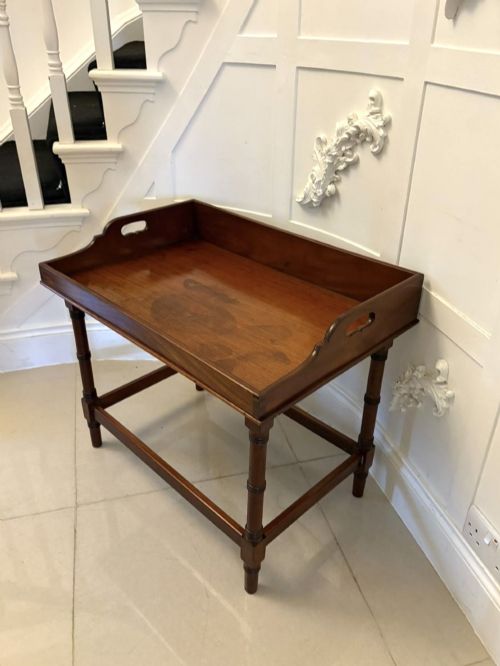
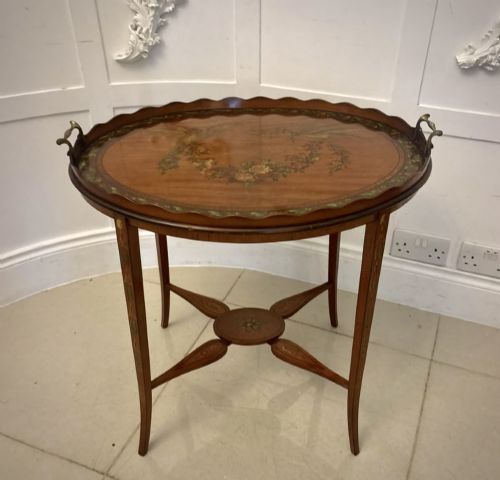
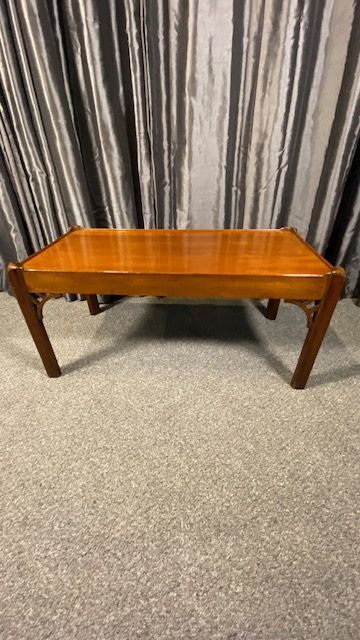
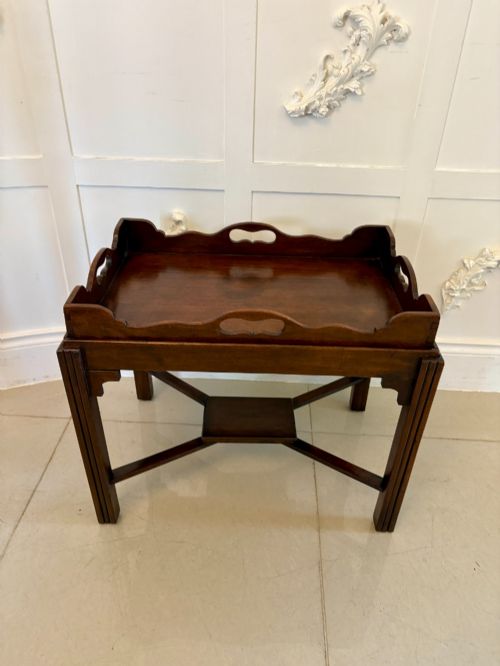
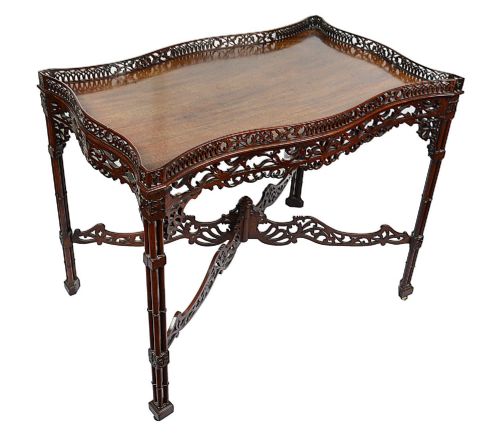
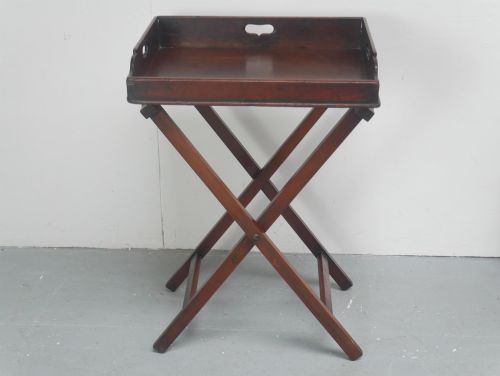
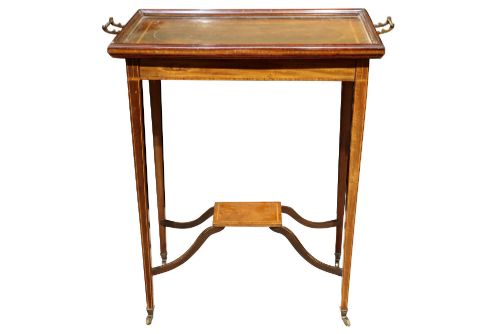
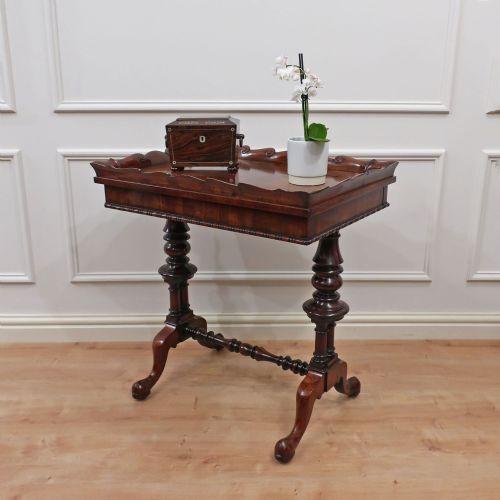
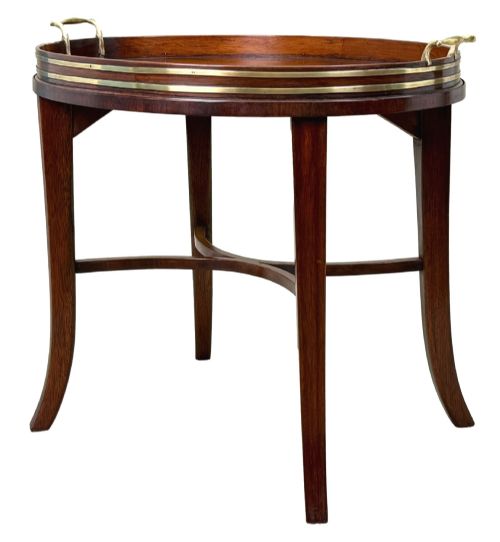
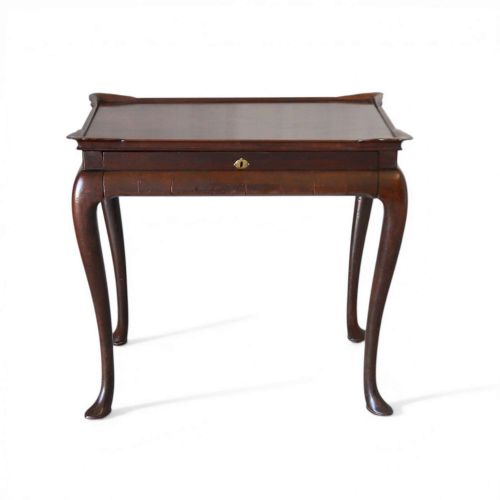
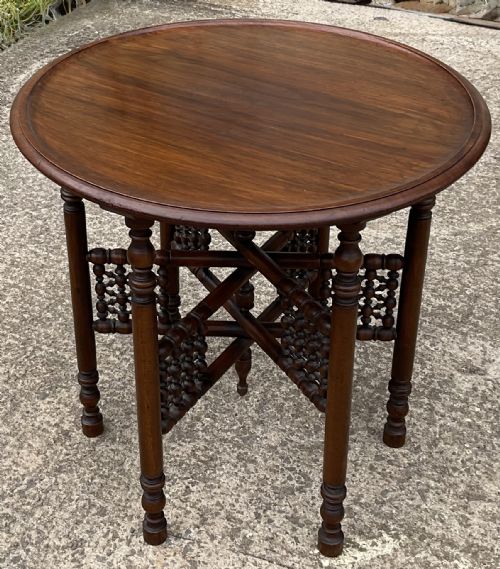
When you search for a mahogany tea tray table, you encounter diverse forms ranging from traditional Georgian silver tables and butler's trays to Edwardian occasional pieces and later coffee tables. These versatile items bridge the gap between portable serving trays and permanent furniture, designed to hold tea service items or display silver.
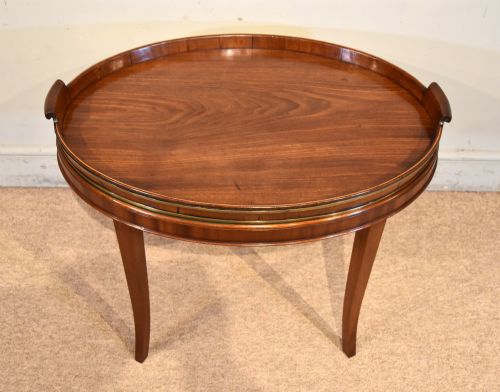
The pieces on this page lean heavily towards 18th century, Georgian, and 19th century examples, alongside Edwardian revivals and early 20th century interpretations. You will frequently find oval or rectangular trays resting upon folding or fixed stands, some featuring raised galleries, brass bound decoration, or drop sides.
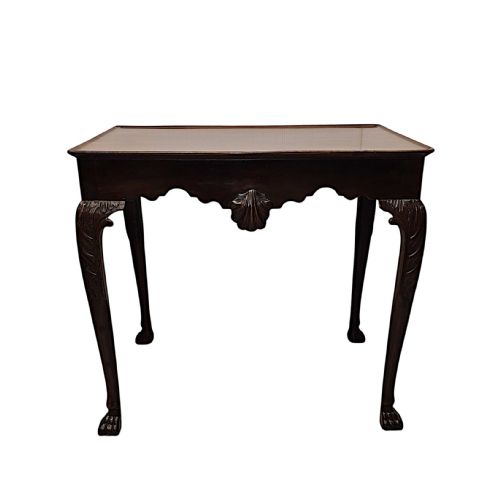
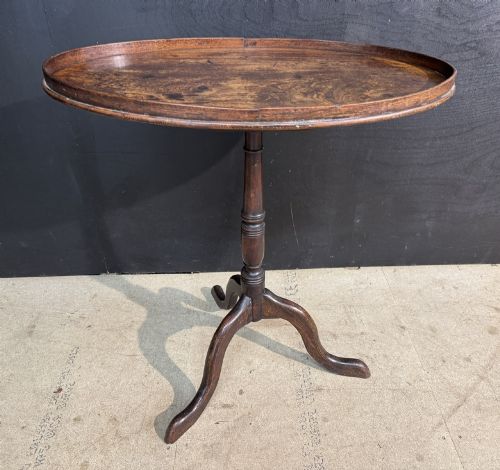
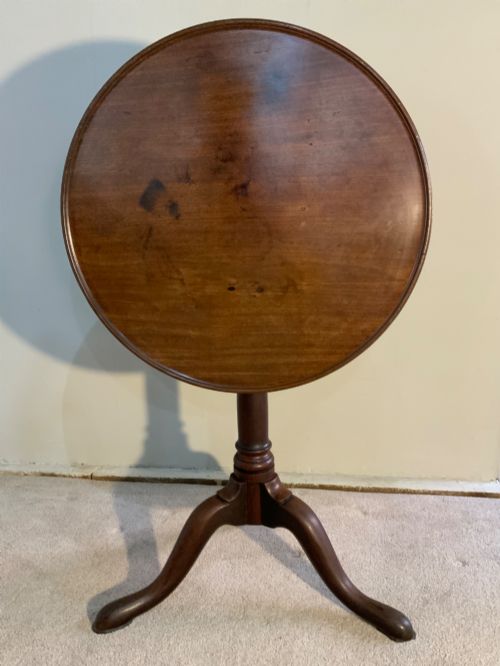
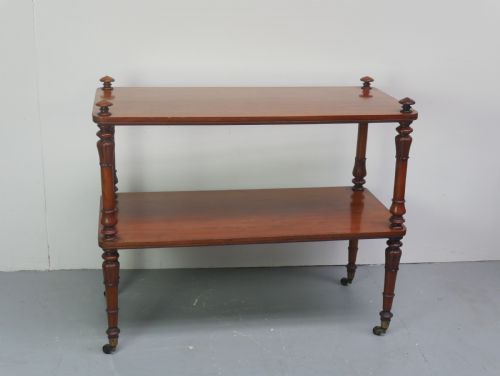
Makers and designers drew on Chippendale, Sheraton, and Regency styles to shape these tables, resulting in variations like tripod bases, cabriole legs, and two-tier etageres. Whether configured as a silver table or a simple butler's tray on a stand, each piece demonstrates the enduring utility of raised rim surfaces for domestic service.
How they were made
Craftsmen utilised primary woods like standard mahogany, Cuban mahogany, and flame mahogany to build the frames and trays, frequently incorporating satinwood for contrasting inlay and banding. These timbers provided both the structural strength needed for serving stands and the rich grain patterns valued in polite drawing rooms.
Secondary materials such as brass featured prominently in bound decorations, handles, and hinges, while occasional pieces integrated glass or paper elements within trays and etageres. Joinery techniques varied from traditional silver table construction with cabriole legs to simple folding stands designed for portable butler's trays.
Mahogany Tea Tray Table Retail Price Guide 2026
Typical asking prices for mahogany tea tray table among the pieces listed under this phrase on Sellingantiques today, from the lower quarter to the upper quarter. They describe what is for sale here now, not the wider market.
Materials documented across the inventory include standard mahogany, Cuban mahogany, flame mahogany, satinwood, brass, glass, and paper.
What varies in quality
Quality rests upon the selection of timber, distinguishing standard mahogany from heavily figured Cuban or flame mahogany variants that display superior depth of grain. The choice of contrasting satinwood inlay and the crispness of carved details further separate standard production from exceptional examples.
Construction integrity defines the upper tier, seen in the seamless integration of removable trays with their stands, precise brass bound decoration, and sturdy cabriole or tripod leg frameworks. Superior pieces maintain structural rigidity while retaining the delicate proportions characteristic of Georgian and Regency design.
Gillows
The Mahogany Tea Tray Table Glossary
- Silver table
- A display or serving table with a raised edge or gallery, originally designed in the Georgian period to hold silver tea services. These tables often feature elaborate carving or cabriole legs.
- Butler's tray
- A portable wooden tray with hinged or fixed sides, traditionally lifted off its folding stand for carrying service items. They appear frequently in 18th and 19th century variations.
- Gallery
- A raised wooden or brass rim surrounding the edge of a tray or table top to prevent items from sliding off. Galleries range from simple pierced frets to solid moulded borders.
- Etagere
- A set of open shelves or multiple tiers used for displaying small objects or serving afternoon tea. These pieces often combine mahogany with satinwood details.
- Tilt top table
- A table with a mechanism that allows the top to pivot into a vertical position when not in use. This design saved space in smaller Georgian and Regency rooms.
Mahogany Tea Tray Table: Frequently Asked Questions
How do I use a silver table today?
These tables function well as display surfaces in living areas or hallways for decorative objects, lamps, or collections. Their raised edges keep items securely contained.
They also serve effectively as compact cocktail or coffee tables in smaller sitting rooms where flexibility matters.
How do I distinguish Georgian from Edwardian pieces?
Georgian examples, dating from the 18th century, typically feature heavier proportions, dense Cuban mahogany, and hand-carved details like cabriole legs or pierced galleries. Cabinetmakers focused on structural integrity and classic classical lines.
Edwardian pieces from the early 20th century often show lighter construction, extensive satinwood inlay, and revival styles influenced by earlier Georgian designs.
What are drop sides used for?
Drop sides allow the surface area of a tray or table to expand or contract depending on space requirements. Hinged flaps fold downward when not in use.
This adaptability made them popular for afternoon tea service and casual entertaining in period homes.