





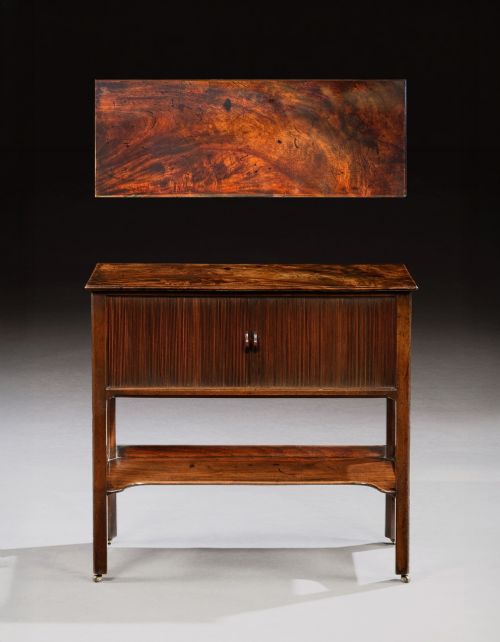


Mahogany Tambour Door Cupboards
Mahogany tambour door cupboards are versatile bedroom and reception storage pieces defined by flexible slatted shutters, offering both concealed organisation and refined timber grain.
Mahogany Tambour Door Cupboards
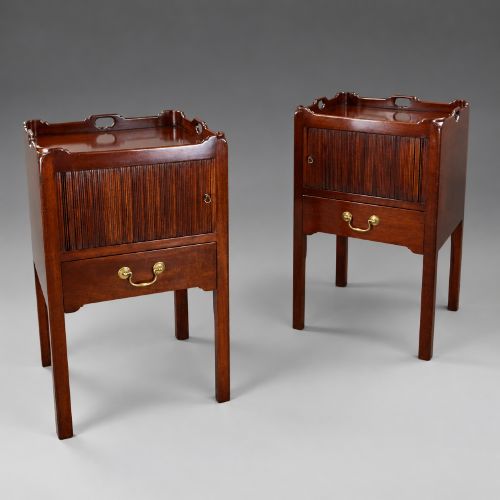
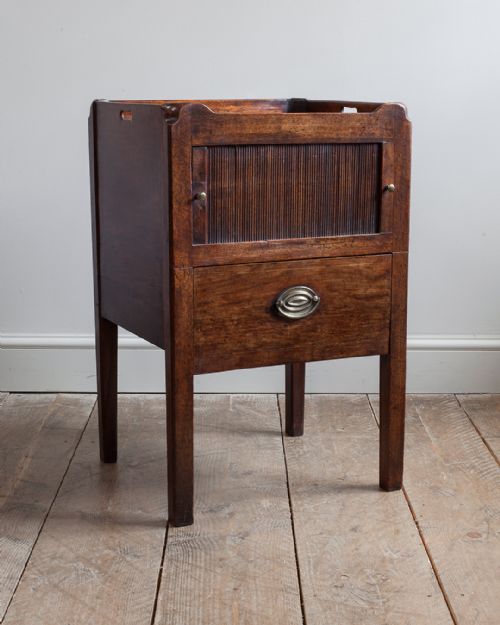
When you search for mahogany tambour door cupboards, you encounter compact bedside tables, nightstands, and commodes engineered with sliding slatted closures. These pieces originate predominantly from the Georgian, Regency, and nineteenth century periods, alongside later twentieth century revivals.
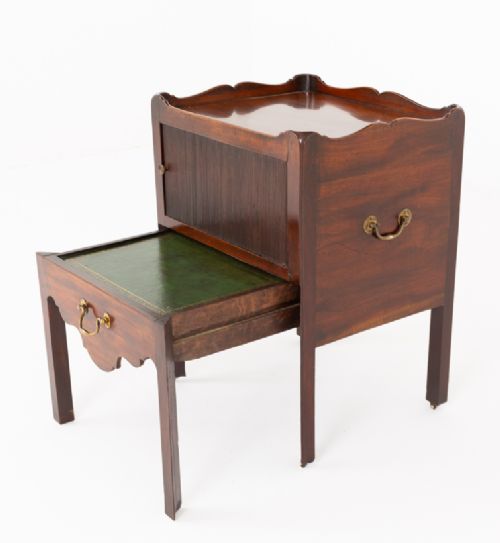
Forms span serpentine and bow fronts, tray tops, and corner units, often featuring rich timber surfaces. The core of the selection comprises bedside cabinets and nightstands designed to conceal bedroom necessaries behind flexible wooden shutters.
How they were made
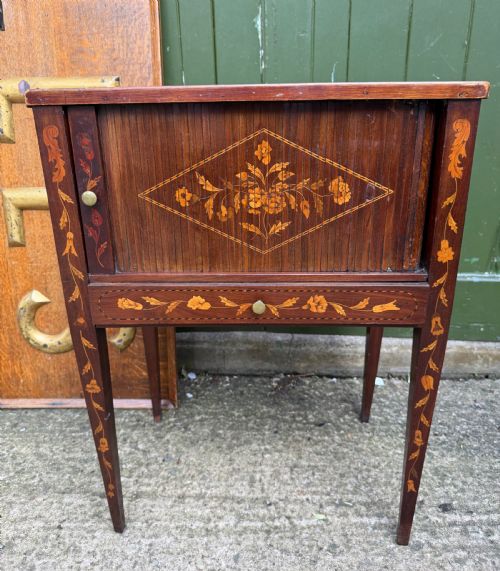
Cabinet makers constructed these bodies primarily from solid mahogany and mahogany veneers, occasionally incorporating secondary timbers like oak and fruitwood for drawer linings and internal framing. Decorative details frequently involve satinwood inlay, boxwood stringing, and floral marquetry.
The defining tambour mechanism relies on narrow wooden strips glued to a flexible canvas or linen backing, allowing the door to slide smoothly within curved tracks. Brass fittings, including handles and occasional bracket feet, complete the construction.
Object forms on this page include bedside tables, corner cabinets, tray-top commodes, and chest of drawers featuring sliding tambour shutters.
What varies in quality
The smoothness of the sliding shutter operation distinguishes finer examples, requiring precision in the alignment of the canvas backing and the wooden slats. Cabinets with tight, unwarped tracks demonstrate superior workshop execution and timber seasoning.
Surface grain and Figuration also dictate worth, where well-matched mahogany veneers and crisp boxwood or satinwood inlay elevate the visual presence. Structural integrity in the joints and original brass hardware further separate standard production from exceptional cabinet work.
The Mahogany Tambour Door Cupboards Glossary
- Tambour
- A flexible door formed of narrow vertical strips of wood glued to a canvas or linen backing. This allows the shutter to slide around a curved track to conceal the interior.
- Commode
- A small cabinet or chest of drawers, often used beside a bed during the Georgian period. Many versions incorporated enclosed cupboards or pot spaces.
- Marquetry
- Decorative patterns formed by inserting pieces of contrasting wood, ivory, or shell into a veneer background. Dutch examples frequently display elaborate floral motifs.
- Tray top
- A raised rim around the upper surface of a small table or cabinet, designed to prevent items from rolling off. It is a common feature on eighteenth century bedside pieces.
- Serpentine front
- A furniture front characterised by a convex centre flanked by concave curves. This shape requires advanced woodworking skill to execute cleanly in solid timber.
Mahogany Tambour Door Cupboards: Frequently Asked Questions
What is a tambour door?
A tambour door is a flexible shutter made from narrow wooden slats attached to a fabric backing. It slides smoothly along a recessed track to open and close.
This clever mechanism allows storage access in tight bedroom spaces where hinged doors would otherwise obstruct movement.
How were these cupboards used?
These cabinets served primarily as bedside furniture to hold chamber pots, night lights, and personal items. Their enclosed compartments kept necessary domestic items neatly hidden away.
Over time, their compact proportions made them adaptable for use as small side tables in reception rooms and hallways.
How do I identify a Georgian piece?
Georgian pieces display hand-cut dovetails, solid mahogany construction, and period-appropriate hardware such as brass pulls. Stylistic cues like bracket feet and tray tops help establish the era.
Examining the internal secondary woods like oak or fruitwood also clarifies the period of manufacture.
Are tambour doors difficult to maintain?
Tambour doors require occasional cleaning within their tracks to prevent dust accumulation from hindering the slide. Keeping the timber conditioned helps maintain the flexibility of the backing material.
Avoid excessive moisture to ensure the wooden slats do not swell and bind within the runners.