
Mahogany Swivel Table
A mahogany swivel table brings versatile timber movement and clever folding mechanism into domestic spaces, offering hidden surfaces and clever pivoting designs.
Mahogany Swivel Table
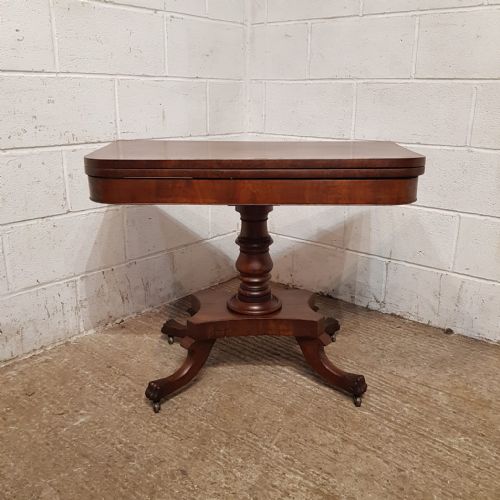
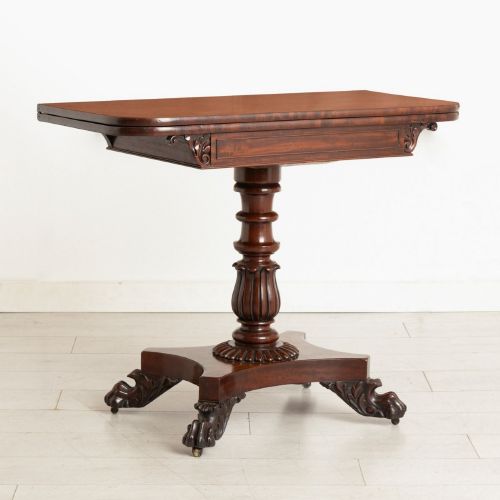
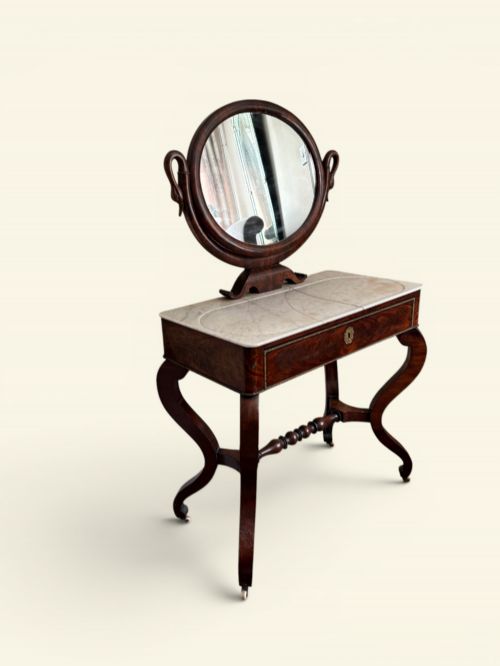
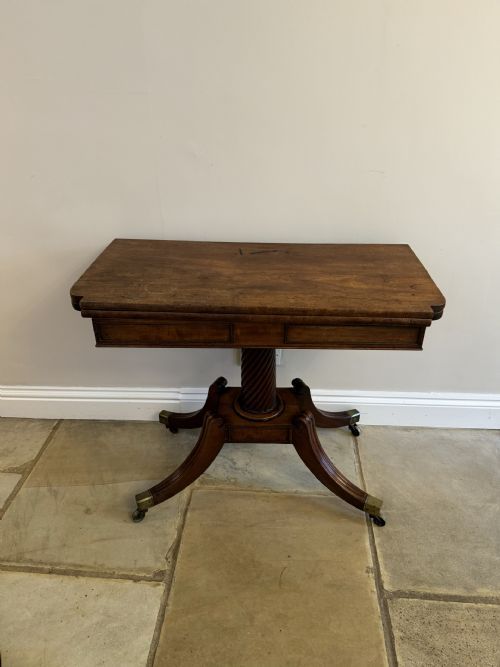
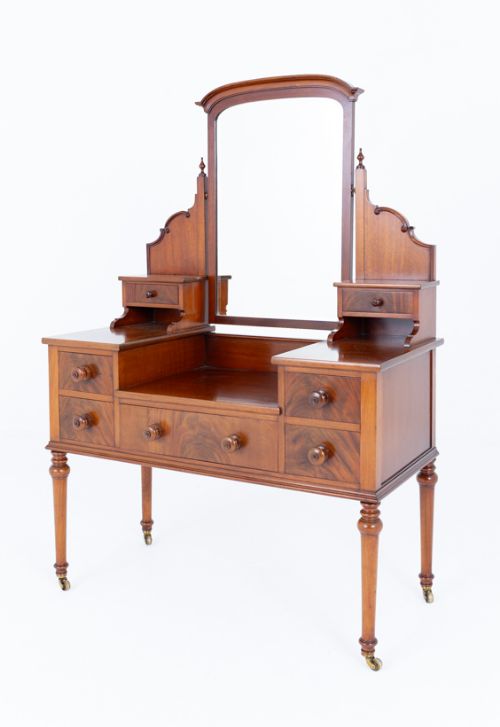
A mahogany swivel table encompasses diverse pivoting forms, ranging from compact card and games tables to rotating desk armchairs and folding top tables.
The pieces appearing in these listings span several distinct periods including Georgian, Regency, Victorian, and Edwardian eras, alongside specific dates from the eighteenth through to the twentieth century.
Makers and retailers such as Heal & Sons, Harrods, and Thomas Rubergall of London occasionally mark these works, while many others remain unlabeled examples of fine cabinet work.
Materials and construction
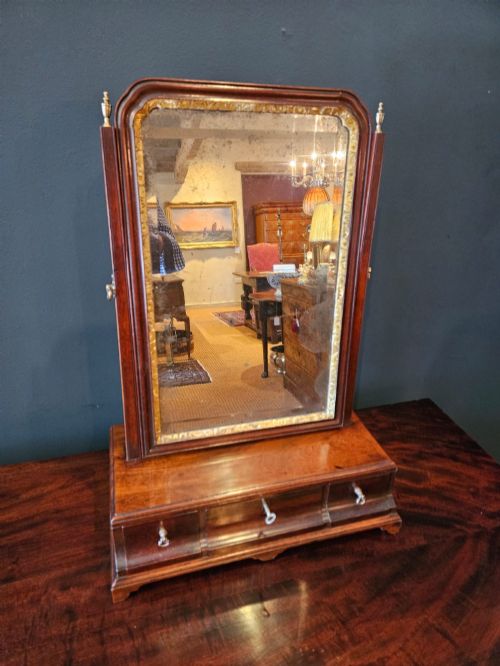
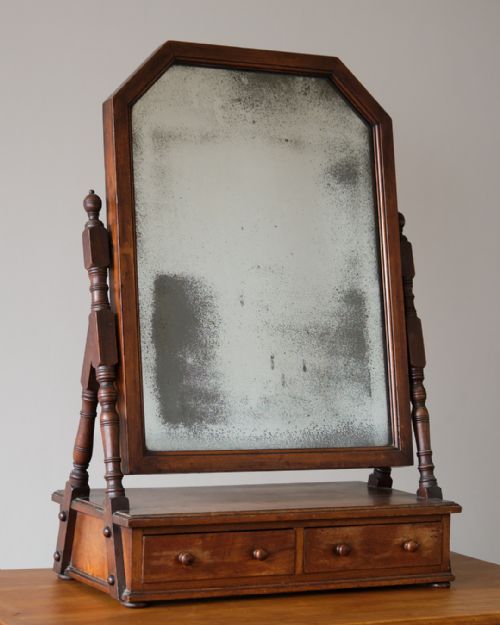
Solid and figured mahogany timber forms the primary structure of these tables and mirrors, often accented with brass hinges, pivots, and glass mirror plates.
Secondary elements incorporate giltwood, marble, cast iron, and leather upholstery, supporting the functional movement required by swivelling tops and adjustable mechanisms.
Scientific instrument maker Thomas Rubergall once turned his optical expertise to mirrors, proving that even a reflection requires proper scientific backing.
Standards of craftsmanship
The distinction between ordinary and superior pieces rests in the selection of figured mahogany timber and the precise execution of the pivoting mechanism.
Finely turned supports, crisp mouldings, and integrated brass fittings separate standard domestic furniture from exceptional workshop production.
Heal & Sons·Thomas Rubergall of London
The Mahogany Swivel Table Glossary
- Swivel top
- A table design featuring a pivoting surface that rotates to reveal a concealed compartment or unfolds to double its footprint.
- Card table
- A folding or pivoting table constructed specifically for card games, often lined with baize or leather.
- Shield mirror
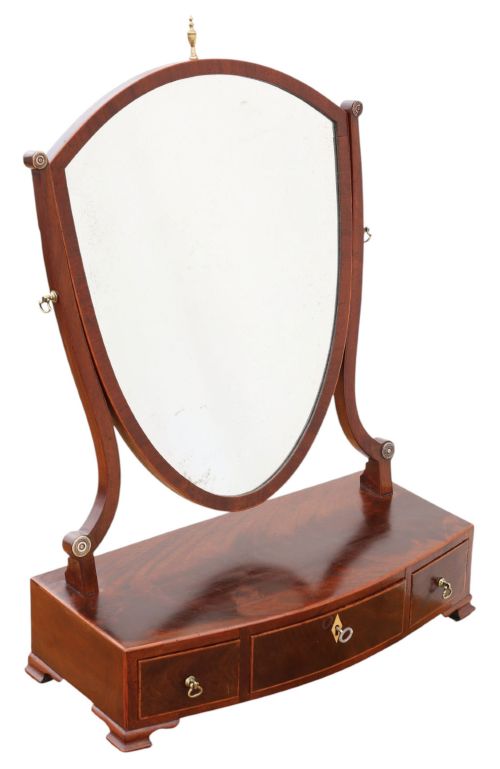
- A dressing mirror featuring a vertical plate cut into the shape of a heraldic shield, mounted on upright supports above a small base.
- Parcel-gilt
- Woodwork partially decorated with applied gold leaf to highlight carved details and mouldings.
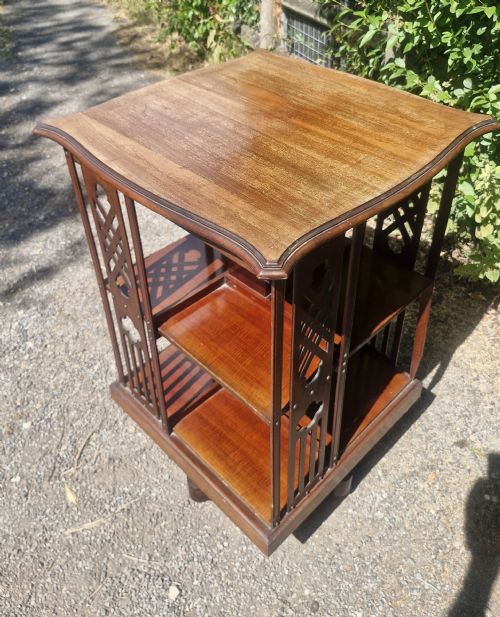
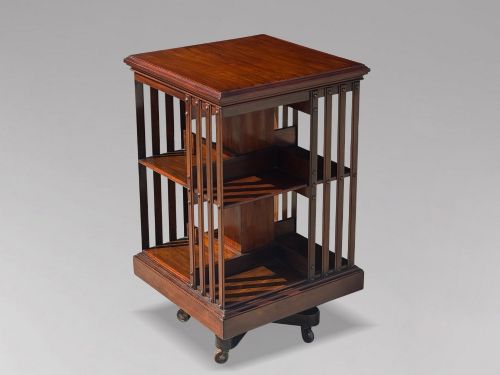
- Revolving bookcase
- A freestanding tiered shelving unit designed to rotate on a central pivot for easy book selection.
Mahogany Swivel Table: Frequently Asked Questions
How do swivel tables function?
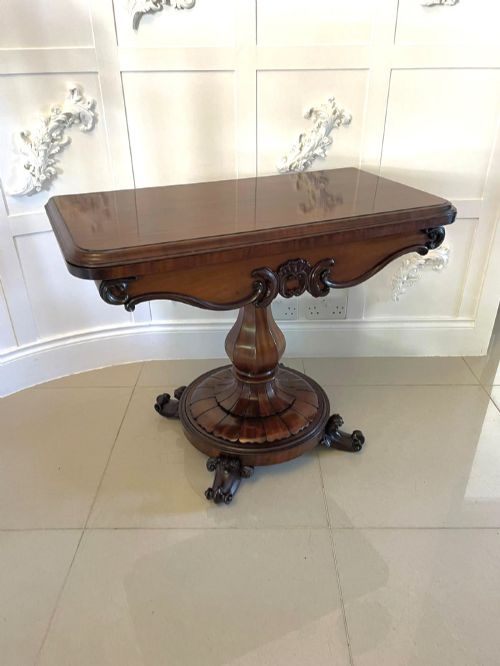
The upper surface pivots on a central pivot or hinge mechanism, allowing the top to rotate ninety degrees or flip open to reveal storage compartments beneath.
This clever design enabled nineteenth-century households to transform a compact console into a full-sized gaming surface with minimal effort.
What is the difference between a card table and a games table?
Card tables generally feature specific green baize or leather playing surfaces designed for card games, while games tables accommodate a broader range of pastimes.
Both variants frequently utilise folding or swivelling timber tops to conceal the playing area when not in use.
How can I date a mahogany table?
Dating relies on observing construction methods, timber choice, and stylistic cues associated with periods like the Georgian, Regency, or Victorian eras.
Earlier eighteenth-century pieces often display solid timber framing and hand-cut joinery, whereas later nineteenth-century examples incorporate factory-produced brass hardware.
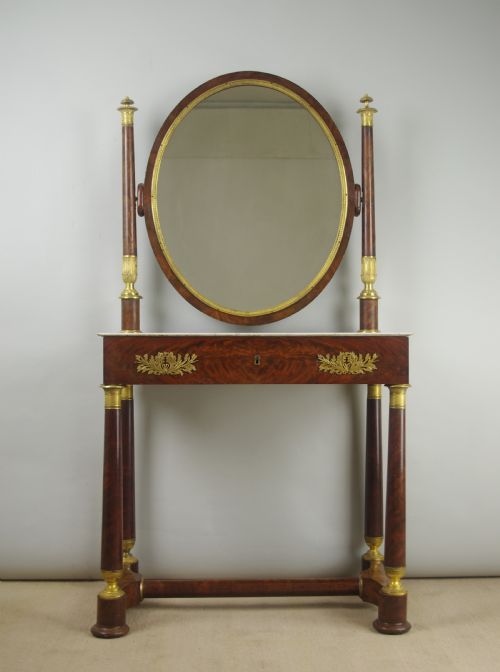
Where were dressing mirrors placed?
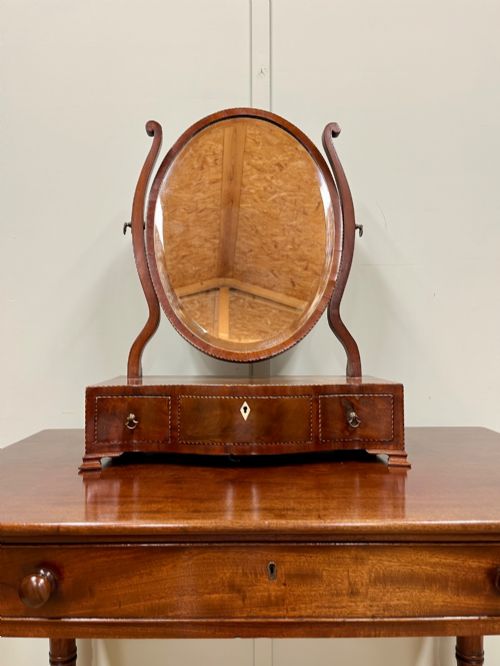
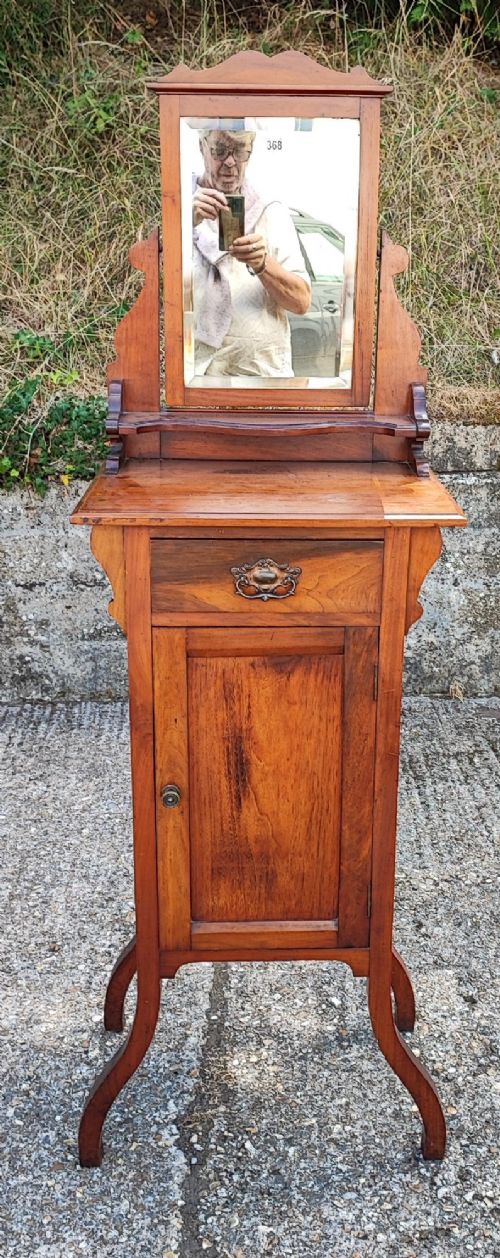
These mirrors sat atop larger dressing tables, chests of drawers, or functioned as standalone toilet mirrors on dedicated surfaces.
Their adjustable swing frames allowed users to alter the angle of the glass for personal grooming.