

Mahogany Study Furniture
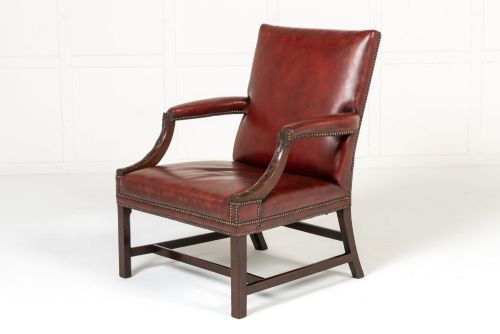
Mahogany study furniture comprises desks, writing tables, and chairs built from dense timber to serve scholarly pursuits.
Mahogany Study Furniture
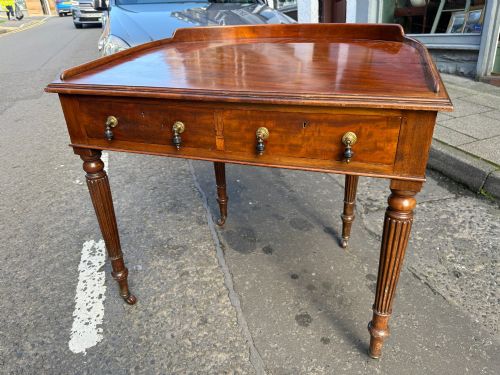
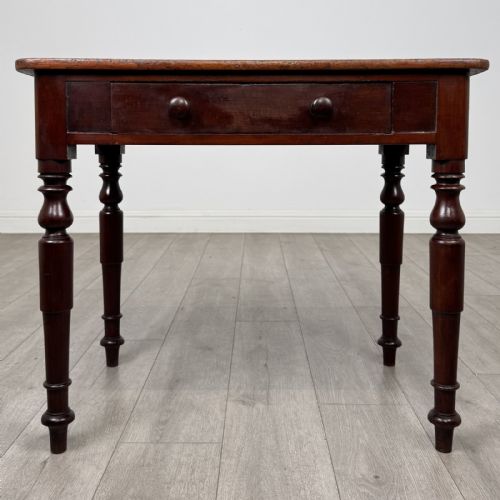
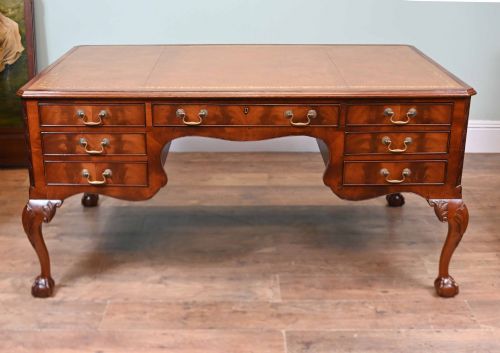
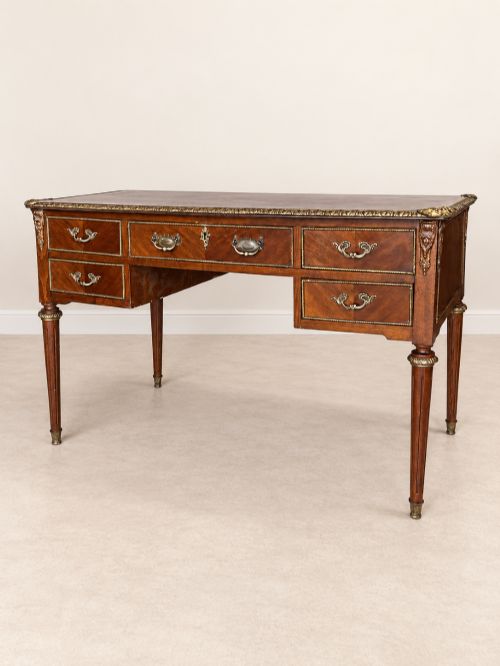
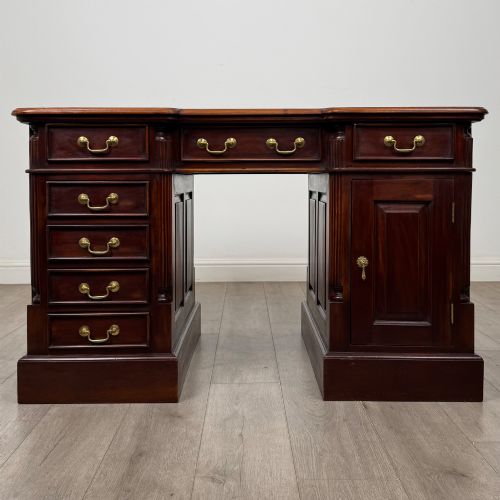
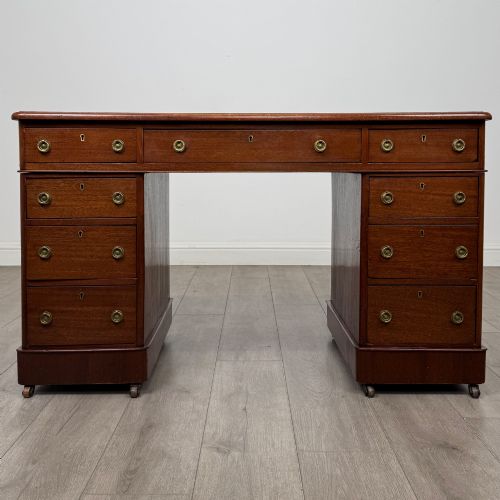
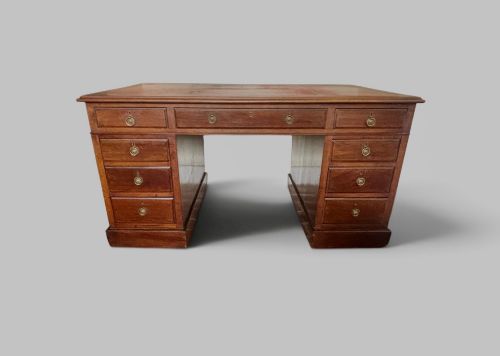
Mahogany study furniture spans practical working pieces built for offices and libraries, with desks and writing tables dominating the forms. Buyers encounter pedestal desks, partner desks, and compact writing tables originating from Georgian, Victorian, and Edwardian periods.
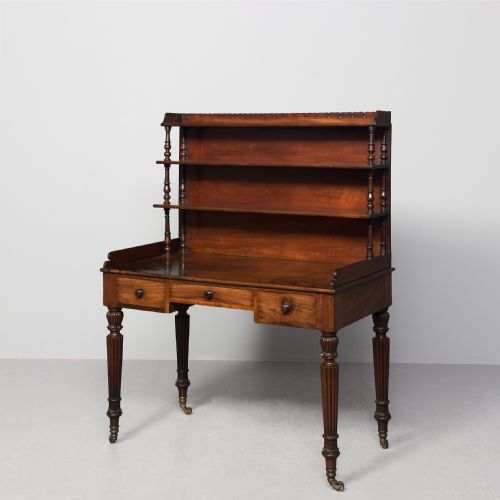
The pieces on this page include specific utilitarian forms like campaign desks alongside refined Davenport desks and revolving bookcases. Makers constructed these items to organise paperwork and provide stable writing surfaces.
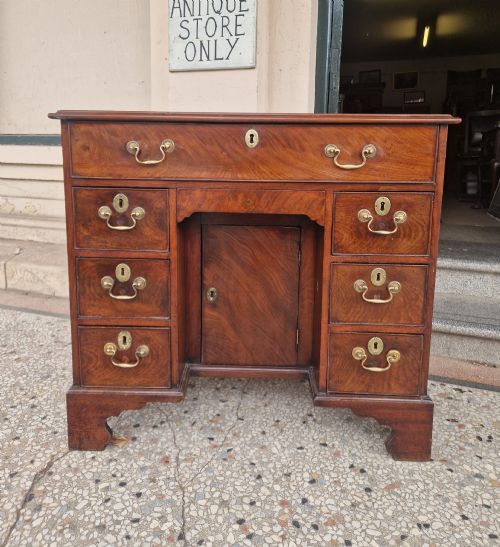
Examples range from restrained 18th-century kneehole desks to heavily inlaid Edwardian writing tables. Each piece reflects the functional requirements of domestic and institutional studies across multiple centuries.
How they were made
Cabinet makers utilised solid and veneered mahogany, often selecting flame or curl varieties for visual depth on primary surfaces. They incorporated secondary timbers like oak and pine for drawer linings and internal framing.
Structural joints relied on traditional dovetails for drawers and mortise and tenon connections for frames. Brass hardware, including handles, castors, and paw feet, provided functional reinforcement and decorative contrast.
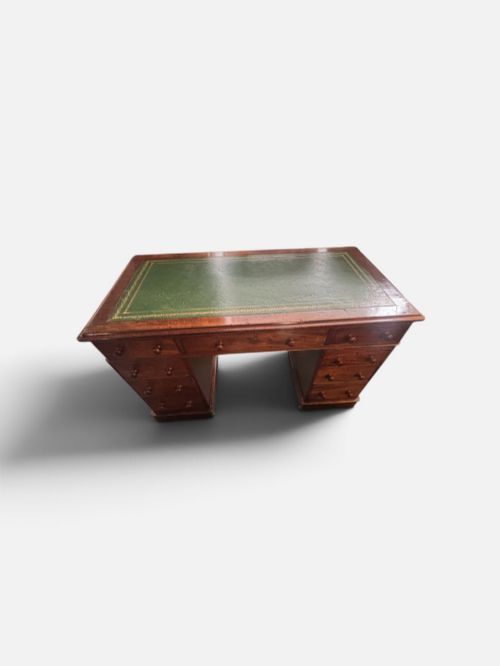
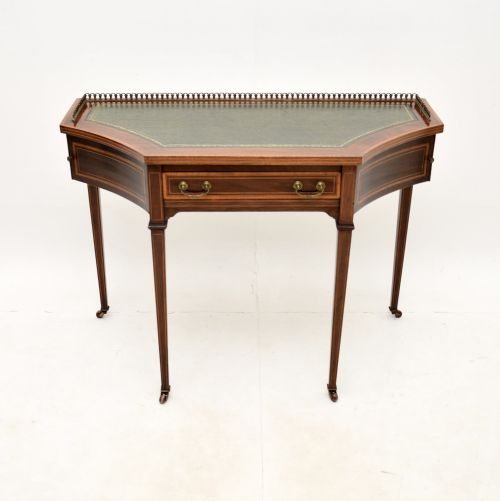
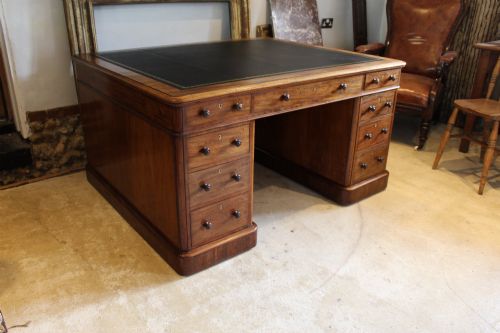
Workshops frequently applied tooled leather writing inserts to desk tops, secured with subtle blind-tooling or gold leaf borders. Inlaid details in satinwood added geometric and floral contrast to later Edwardian pieces.
The listings span multiple centuries, ranging from eighteenth-century Georgian kneehole desks to early twentieth-century Edwardian and Art Deco writing tables.
What varies in quality
The refinement of timber selection distinguishes standard utility pieces from master workshops, particularly where figured mahogany veneer is matched across drawer fronts. Superior execution shows in the precision of dovetailing and the seamless integration of secondary woods.
Proportion and architectural balance dictate the success of a design, with top-tier examples maintaining clean sightlines and harmonious hardware placement. The quality of original brass fittings and surviving leather inserts elevates an individual piece.
Maker attribution through stamps or documented provenance shifts the standing of a desk or chair within its period. Exceptional construction ensures drawers run smoothly and structural integrity remains uncompromised by heavy historical use.
Trollope & sons·James Mein of Kelso·Charles Andrea Nosotti·Whytock & Reid of Edinburgh·Betty Joel·Gillows
The Mahogany Study Furniture Glossary
- Pedestal desk
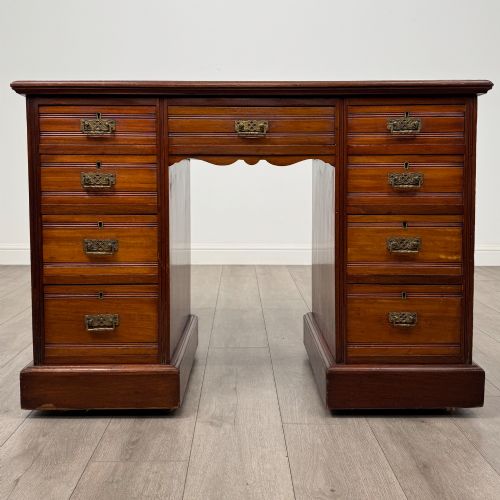
- A freestanding desk comprising two supporting banks of drawers connected by a central top and kneehole space. These units provide extensive storage and a large writing surface.
- Partners desk
- A double-sided pedestal desk designed to accommodate two people working opposite each other simultaneously. They feature drawers and cupboards accessible from both long sides.
- Davenport
- A compact writing desk featuring a sloping, hinged leather-lined writing surface above a set of side drawers. The interior often contains small pigeonholes and stationary compartments.
- Tambour
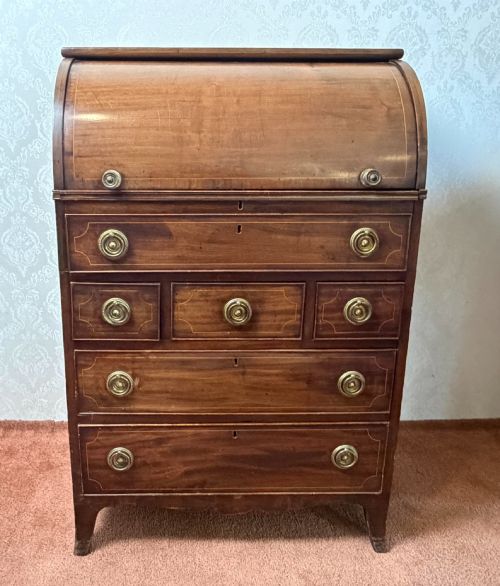
- A flexible sliding shutter formed of narrow vertical strips of wood glued to canvas, used to enclose desk pigeonholes. This mechanism conceals the upper writing compartments when not in use.
- Kneehole desk
- A modest desk featuring a recessed central space for the user's legs, flanked by single or double banks of drawers. Georgian versions frequently conceal a central cupboard within the kneehole recess.
Mahogany Study Furniture: Frequently Asked Questions
What is a partners desk?
A partners desk is a large pedestal desk built with drawers and cupboards on both operational sides. This configuration allowed two individuals to sit and work opposite each other in a shared library or study.
Cabinet makers produced these pieces primarily for institutional offices, boardrooms, and large stately homes. They require substantial floor space and function best as freestanding centrepieces within a room.
How do I identify a Georgian desk?
Georgian desks are characterised by restrained architectural proportions, solid mahogany construction, and traditional brass swan-neck handles or drop rings. They often feature cockbeaded drawer edges and bracket or ogee feet.
Unlike later Victorian examples, Georgian pieces rely on structural timber quality rather than heavy applied ornamentation. The interior layouts typically include simple pigeonholes and small secret drawers.
What is a Carlton House desk?
A Carlton House desk is a refined writing table featuring a curved superstructure of small drawers and pigeonholes that wrap around the back and sides of the top. This distinctive form originated in the late eighteenth century.
These pieces provide numerous compartmentalised storage options while maintaining a compact footprint. They are celebrated for their intricate joinery and elegant serpentine or horseshoe-shaped profiles.
How should I care for a leather desk top?
Leather desk surfaces require gentle cleaning with a slightly damp cloth followed by a neutral leather cream to prevent drying and cracking. Avoid using harsh chemical solvents or excessive water during maintenance.
Because antique leather is sensitive to moisture and heat, placing hot drinks or unprotected writing instruments directly on the surface can cause permanent marking. Using blotters helps preserve the original tooled finish.
What distinguishes Edwardian mahogany furniture?
Edwardian mahogany furniture frequently incorporates satinwood stringing, delicate floral inlay, and lighter structural proportions than earlier Victorian pieces. Makers embraced revival styles while adapting forms for smaller domestic spaces.
These items often utilise machine-sawn veneers alongside traditional solid framing. The overall aesthetic prioritises brightness and refined decorative detail over sheer structural mass.