

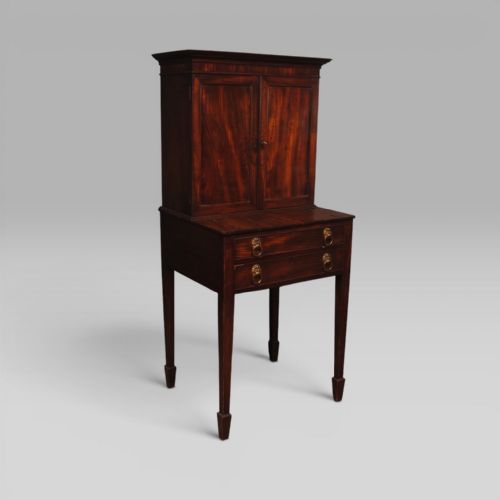


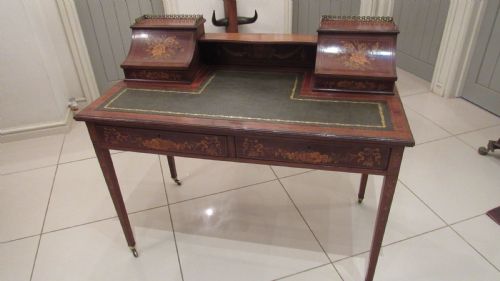
Mahogany Stationery Bureau
A mahogany stationery bureau provides a dedicated writing space with integrated storage, combining rich timbers and practical compartments for letters and papers.
Mahogany Stationery Bureau
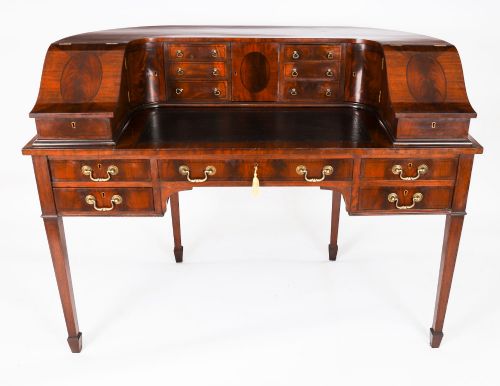
A mahogany stationery bureau brings together timber surfaces and dedicated letter compartments, appearing across periods such as the Georgian, Victorian, and Edwardian eras. These pieces function as writing desks and cabinets, often incorporating fitted stationery drawers, writing slides, and small compartments.
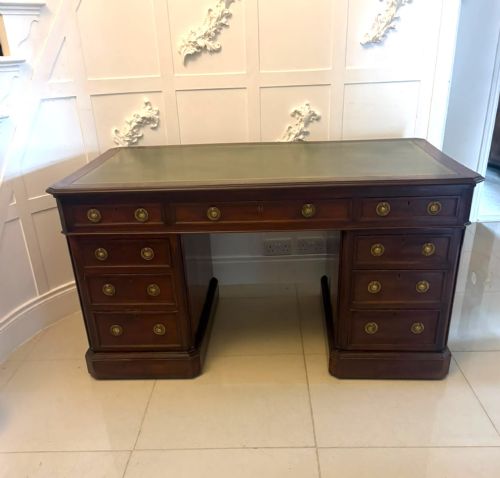
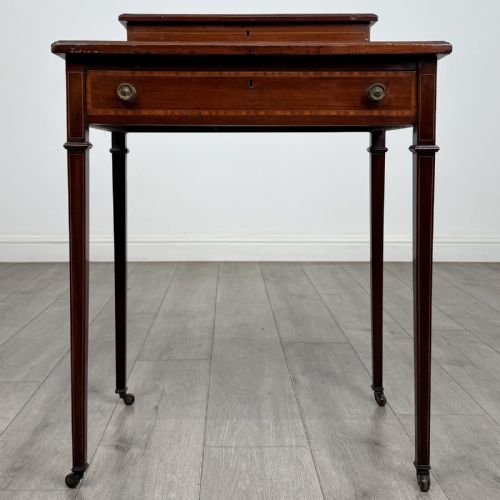
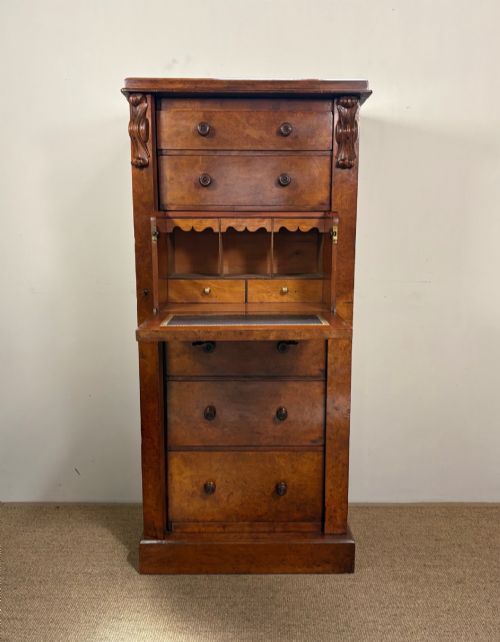
On this page, buyers most frequently encounter variations ranging from George III writing cabinets on stands and Wellington secretaire chests to Victorian Davenport desks and Edwardian writing tables. These forms span freestanding pedestal kneehole desks, ladies writing desks, and estate cabinets, reflecting diverse domestic workspace needs.
Originating in the 18th and 19th centuries and extending into the early 20th century, these items utilise styles such as George III, Regency, William IV, and Edwardian Sheraton Revival. Anglo-Indian examples also appear, showing carved details and regional interpretations of British form.
How they were made
Cabinetmakers utilised primary timbers of mahogany alongside secondary woods, incorporating satinwood, boxwood, and walnut for contrast and structural integrity. Brass hardware such as handles, hinges, and gallery rails provides functional and decorative accents.
Surfaces frequently feature inlaid details and marquetry decoration, particularly in Edwardian and Georgian examples. Writing surfaces commonly integrate fitted leather writing panels or slides designed for correspondence.
Mahogany Stationery Bureau Retail Price Guide 2026
Typical asking prices for mahogany stationery bureau among the pieces listed under this phrase on Sellingantiques today, from the lower quarter to the upper quarter. They describe what is for sale here now, not the wider market.
Some Edwardian desks hide secret letter compartments designed for private correspondence.
What varies in quality
Quality differences emerge in the selection and figure of the mahogany timber, alongside the precision of satinwood and boxwood inlay work. Superior examples demonstrate careful matching of grain patterns across drawer fronts and writing surfaces.
The sophistication of the internal stationery fittings, including secret compartments, tidy drawers, and leather writing surfaces, distinguishes finer pieces. Structural execution in the carcase joinery and the retention of original brass hardware further separate standard production from exceptional pieces.
The Mahogany Stationery Bureau Glossary
- Stationery bureau
- A compact desk or cabinet designed specifically for writing letters and storing paper goods. It typically includes internal pigeonholes and small drawers.
- Davenport
- A small, compact writing desk featuring a sloping top, side drawers, and a pedestal base. This form gained popularity during the 19th century.
- Secretaire
- A piece of furniture containing a writing drawer or drop-front writing flap that conceals a fitted interior with pigeonholes and small drawers.
- Kneehole desk
- A freestanding desk featuring a central recess for the user's legs, flanked by pedestals of drawers on both sides.
- Marquetry
- Decorative veneer work arranged in pictorial or geometric patterns using various woods, often seen on Edwardian examples.
Mahogany Stationery Bureau: Frequently Asked Questions
What is a Davenport desk?
A Davenport desk is a compact writing cabinet featuring a sloping leather-lined writing surface above a pedestal of drawers. These pieces became popular during the 19th century for use in smaller rooms or drawing rooms.
Many examples include side drawers that lock when the top is slid forward, combining secure storage with a small footprint.
How do I use a stationery bureau?
A stationery bureau serves as a functional workspace for correspondence, letter writing, and organising paperwork. The internal pigeonholes and small drawers hold envelopes, stamps, and documents.
Drop-front writing flaps or pull-out slides provide a surface for writing while keeping the interior contents concealed when closed.
How do I date a mahogany bureau?
Dating relies on observing stylistic details, construction methods, and timber usage across different periods. Georgian pieces often show restrained classical lines, while Victorian and Edwardian examples incorporate marquetry or satinwood inlay.
Hardware styles and secondary woods inside the drawers also provide indicators of the manufacturing period.
What is a Wellington chest?
A Wellington chest is a tall, narrow set of drawers secured by a hinged locking side pilaster that fastens over the drawer edges. Originally designed as a secure cabinet for papers and valuables.
These chests often incorporate a secretaire drawer that folds down to create a writing surface.