


Mahogany Specimen Top Table
A mahogany specimen top table brings together rich timber and geometric stone or wood inlays to anchor a room.
Mahogany Specimen Top Table
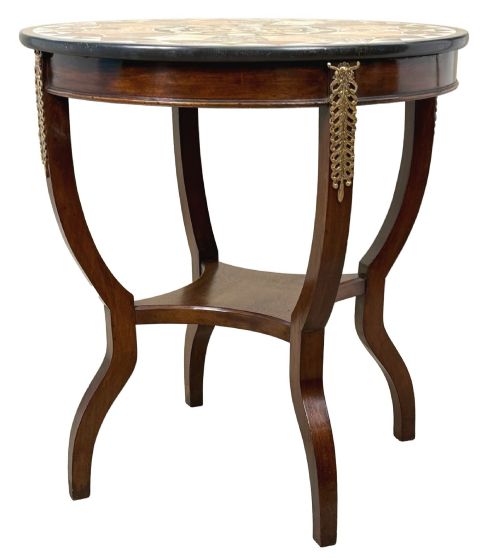
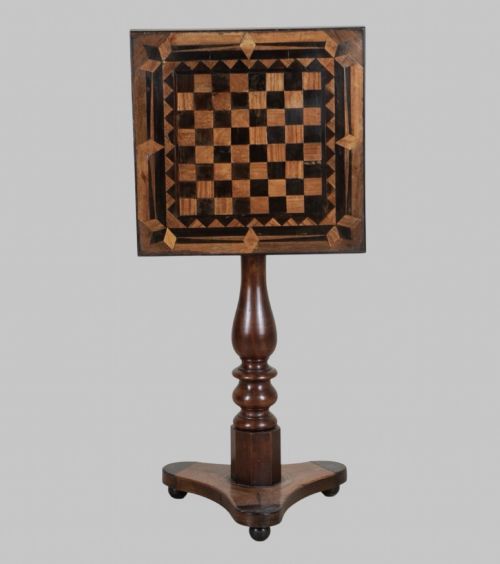
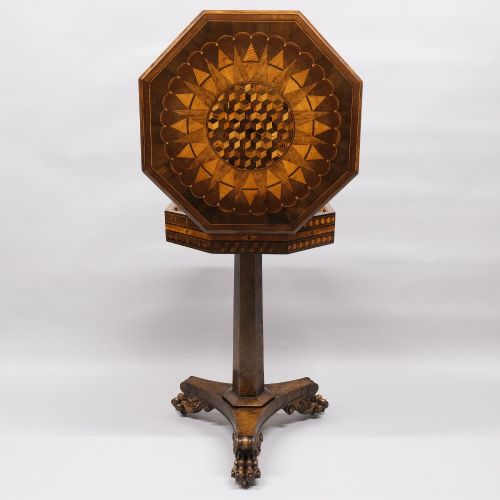
A mahogany specimen top table is a surface designed to display geometric arrangements of coloured marbles, Pietra Dura birds, parquetry, or varied timber veneers within a sturdy mahogany frame. These pieces serve as occasional tables, centre tables, and side tables intended to draw the eye with intricate mosaic tops.
Most examples date from the nineteenth century, spanning Georgian, Regency, William IV, and Victorian periods, often influenced by Grand Tour travel where makers gathered stones and woods abroad. You will frequently encounter circular occasional tables supported by pillars, alongside rectangular library and games tables.
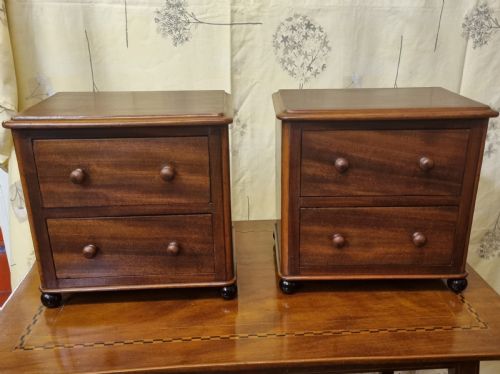
Beyond standard tables, the selection includes miniature centre tables, work tables fitted with compartments, and tabletop cabinets or chests that share the characteristic inlaid top. The primary focus remains on the interplay between the dark frame of the mahogany and the complex multi-coloured surface above.
Materials and construction
Makers utilised solid mahogany and mahogany veneers for the structural bases, turning pedestals and shaping table supports while incorporating brass details where appropriate. The tabletops combine this timber foundation with carefully fitted segments of specimen marble, slate, walnut, rosewood, and diverse specimen woods.
Pietra Dura techniques set hard stones into a marble base to form pictorial motifs like birds, while parquetry and sunburst veneer arrangements geometricise timber grain. Each piece relies on precise joinery to marry the heavy stone or inlaid wooden top securely to the table frame.
Listings feature 19th-century periods including Georgian, Regency, William IV, and Victorian alongside early 20th-century items.
What separates the finest examples
Execution of the supporting frame also dictates standing, where carved swan supports, solid timber pedestals, and inlaid borders elevate the piece beyond a basic utility surface. Cohesion between the design of the mahogany base and the ambition of the top determines overall success.
James Shoolbred·Ralph Turnbull·The Woodley family
The Mahogany Specimen Top Table Glossary
- Specimen marble
- A tabletop composed of numerous distinct varieties of marble and mineral stone cut and fitted into a geometric pattern. These stones often reflect the geological finds of nineteenth-century collectors.
- Pietra Dura
- An artistic technique using cut and fitted polished coloured stones to create pictorial designs. Examples on these tables frequently depict birds or classical motifs.
- Parquetry
- A geometric mosaic of wood veneers arranged in regular patterns across a surface. Makers utilised contrasting timbers to achieve sharp visual depth.
- Grand Tour
- A cultural journey undertaken by wealthy young Europeans in the eighteenth and nineteenth centuries. Travellers often returned with decorative stone panels and inlaid tops.
- Turtle-stone
- A descriptive term for fossiliferous limestone containing organic patterns resembling turtle shells. It appears as an unusual inset material within specific table tops.
Mahogany Specimen Top Table: Frequently Asked Questions
Where were these tables placed?
These tables typically functioned as centre tables in principal rooms, occasional lamp tables, or specialised work tables for domestic tasks. Their decorative tops made them intended focal points rather than hidden furniture.
In the nineteenth century, they stood in parlours and libraries where guests could closely examine the intricate stonework and timber veneers.
How do I care for a mahogany table?
Keep mahogany furniture away from direct sunlight and sudden temperature changes to protect the timber and prevent the veneer from drying or lifting. Dust gently with a dry cloth and avoid harsh chemical polishes that damage the finish.
Take extra care around the inlaid sections, ensuring moisture does not seep into the joints between the different stones and woods.
How do I distinguish Regency from Victorian styles?
Regency pieces often display cleaner classical lines, lighter proportions, and restraint influenced by ancient Roman and Greek designs. They frequently date from the early nineteenth century.
Victorian examples tend to be heavier, incorporating exuberant carving, revival motifs, and complex multi-material tops that reflect mid-nineteenth-century manufacturing confidence.