


Mahogany Slope Desk
A mahogany slope desk brings tangible presence to a room, offering a tactile writing surface built to endure.
Mahogany Slope Desk
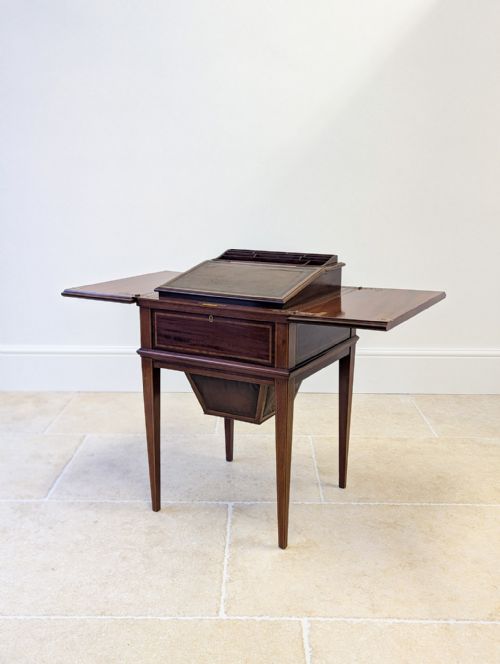
A mahogany slope desk encompasses several practical forms, from compact table-top writing boxes to substantial fall-front bureaux and fitted Davenport desks. These items appear across Georgian, Regency, Victorian and Edwardian periods, constructed to meet the daily correspondence needs of past households.
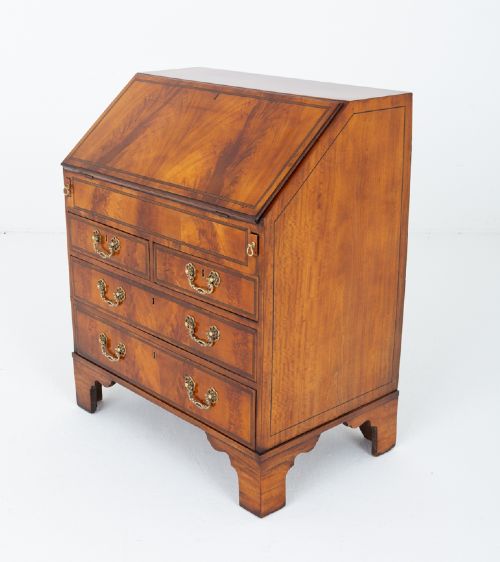
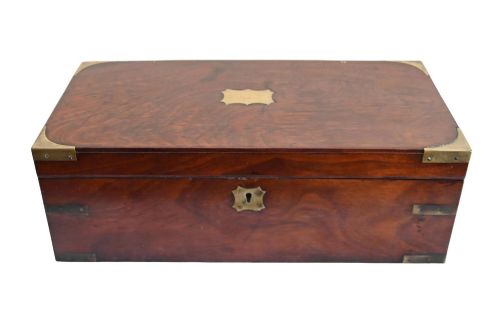
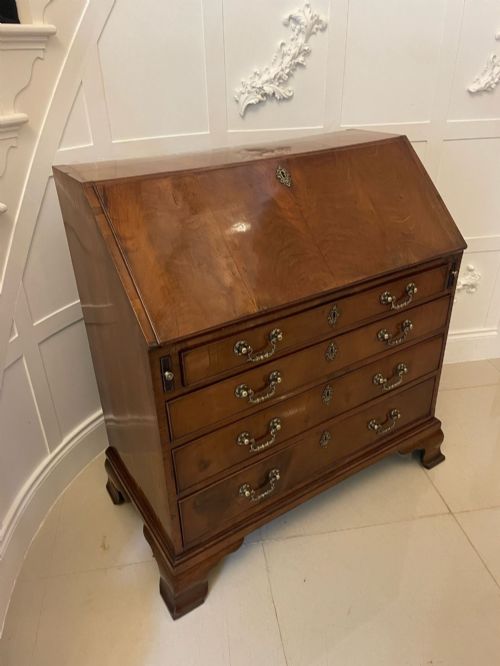
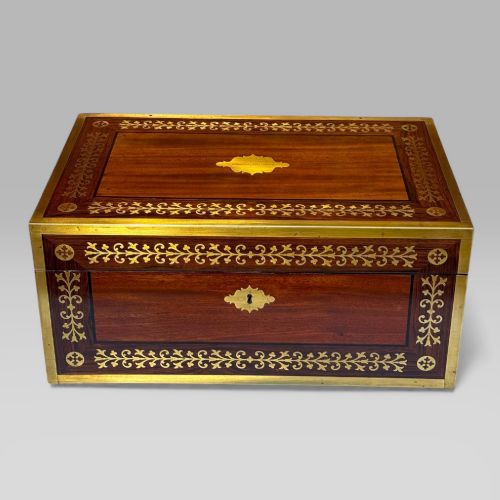
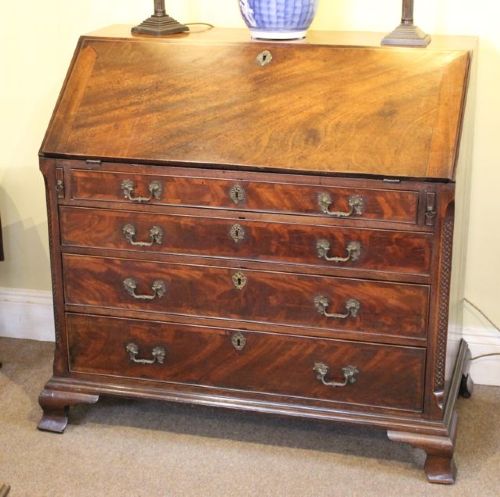
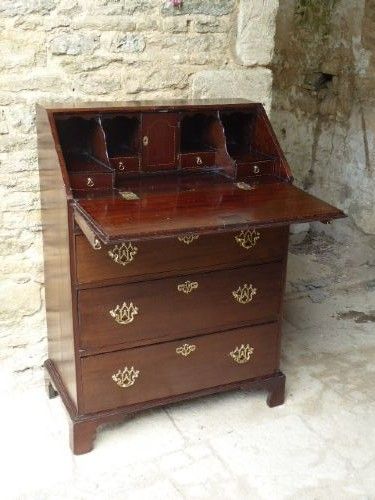
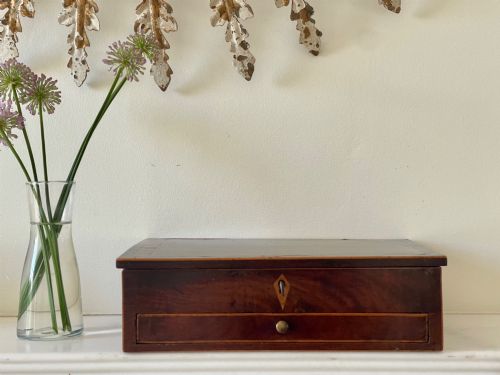
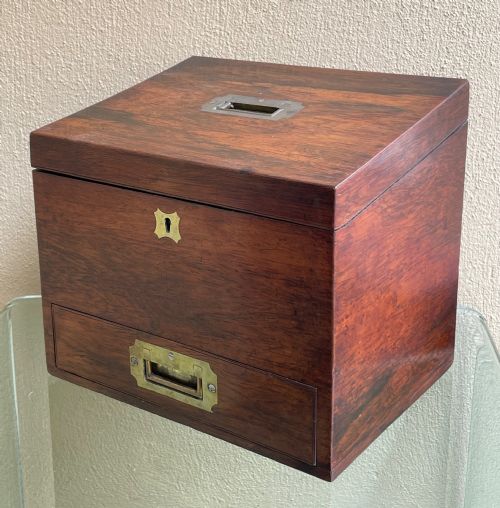
The version most commonly encountered on this page is the Victorian or Georgian bureau, featuring a sloping lid that opens to reveal internal pigeonholes and small drawers. Alongside these, campaign writing slopes with brass bindings and portable correspondence boxes represent the traveller's choice in solid mahogany.
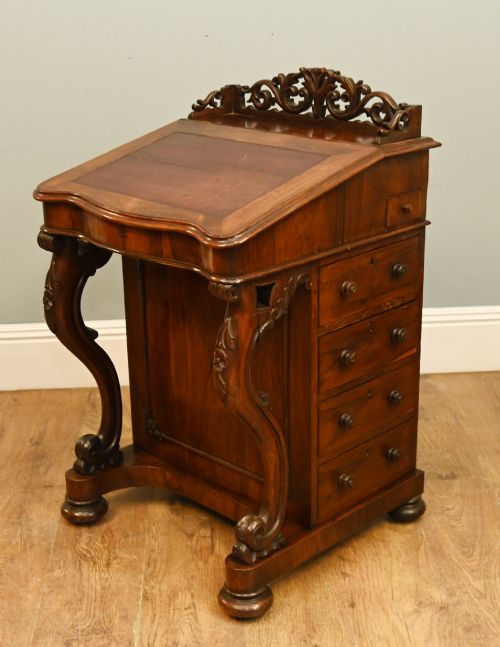
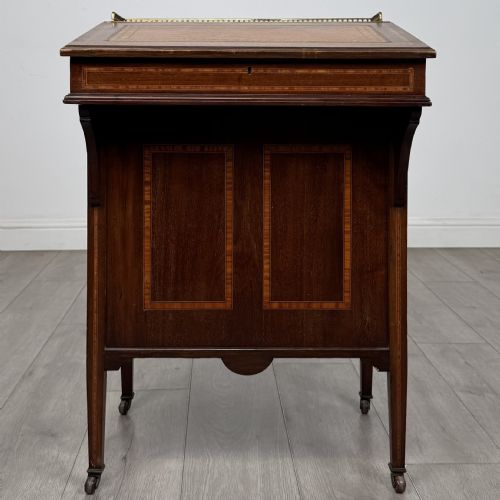
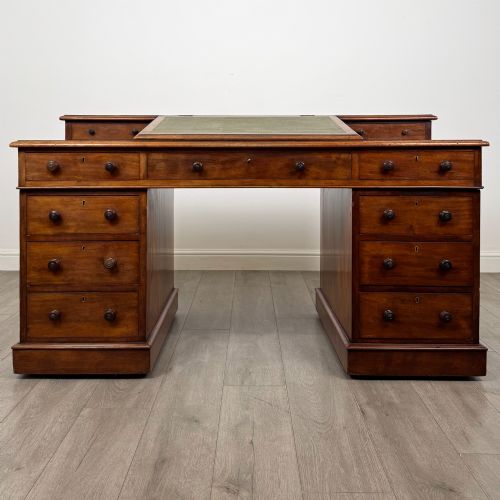
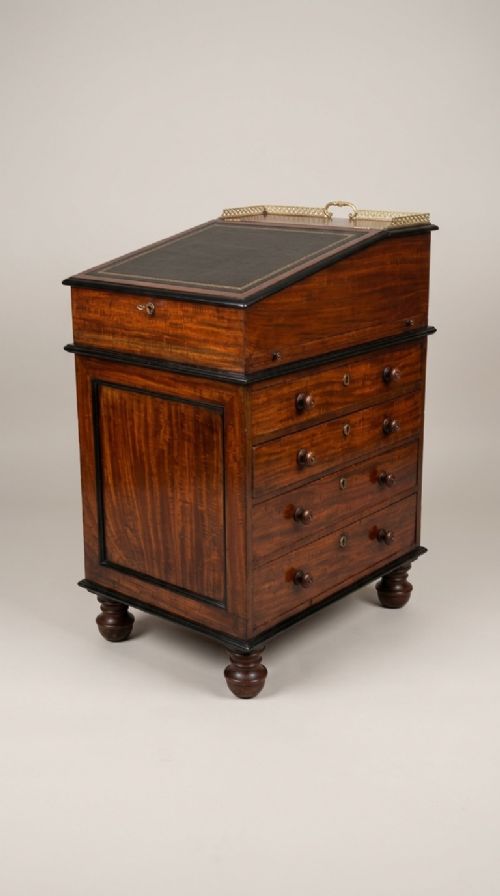
Davenport desks also feature frequently among these listings, combining a sloping top with a pedestal of side drawers. Whether standing on bracket feet or resting on a library table, each piece is defined by its sloping writing plane.
How they were made
Makers relied primarily on solid and veneered mahogany, often selecting timber with rich flame or grain figures. Secondary woods such as oak appear in internal framing and drawer linings.
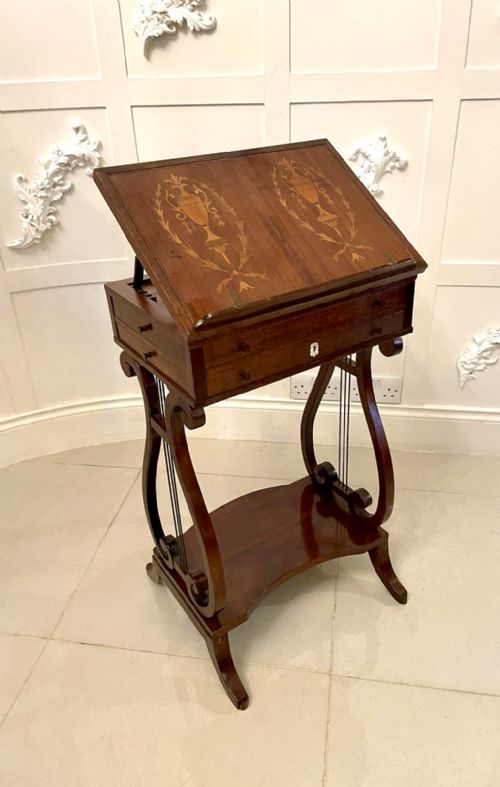
Brass hardware played a structural and decorative role, forming flush carrying handles, corner braces and escutcheons on campaign pieces. Inlaid details utilised contrasting woods like satinwood, boxwood and rosewood to frame panels and borders.
Leather inserts provided a durable writing surface on many desks, while clever internal mechanisms allowed compartments to lock securely with working keys.
Listings feature items spanning the eighteenth century through the Edwardian period, constructed primarily in mahogany with brass and leather.
What varies in quality
Timber selection dictates much of the visual appeal, distinguishing plain boards from richly figured flame mahogany carefully matched across the fall front. The choice of secondary woods and the precision of the dovetail joints reveal the joiner's hand.
Hardware and internal fittings separate standard production from superior workshops, where secret drawers, original brasses and fine boxwood or satinwood stringing remain intact. The crispness of carved mouldings and the smooth operation of sliding mechanisms mark the distinction.
Proportion and structural integrity matter greatly, as the best examples maintain balanced lines while offering robust housings for heavy use over generations.
Gillows of Lancaster
The Mahogany Slope Desk Glossary
- Bureau
- A desk featuring a sloping hinged lid that opens to form a writing surface above a chest of drawers. This form provides substantial storage for papers while concealing internal compartments.
- Campaign writing slope
- A portable box bound in brass with folding surfaces, designed for travel by officers on military campaigns. These units pack flat and protect writing materials during transit.
- Davenport desk
- A compact Victorian writing desk featuring a sloped, leather-lined top above a pedestal of side drawers. The design maximises utility in smaller rooms.
- Fall front
- The hinged panel on a bureau or cabinet that drops down to create a horizontal writing ledge. It conceals pigeonholes and small drawers when closed.
- Stringing
- A narrow inlay of contrasting light wood, such as boxwood or satinwood, set flush into the mahogany surface. This technique outlines drawers and panels for decorative effect.
Mahogany Slope Desk: Frequently Asked Questions
What is a Davenport desk?
A Davenport is a compact writing desk featuring a sloping top above a pedestal of drawers, originating in the Regency and Victorian eras.
Its clever layout allows for storage within a small footprint, making it suitable for drawing rooms and studies.
How do campaign slopes differ?
Campaign slopes are portable writing boxes reinforced with brass corners and flush handles for travel.
Officers used them on military campaigns to store stationery and provide a stable writing surface away from home.
How do I care for mahogany?
Mahogany benefits from occasional waxing and placement away from direct heat sources to prevent the timber from drying out.
Regular polishing maintains the rich lustre of the grain and protects the surface from everyday wear.
What makes a bureau Georgian?
Georgian bureaux typically display restrained classical proportions, solid brass handles and fine dovetailing in the drawer construction.
They rely on the natural figure of the mahogany rather than heavy ornamentation for their visual presence.