

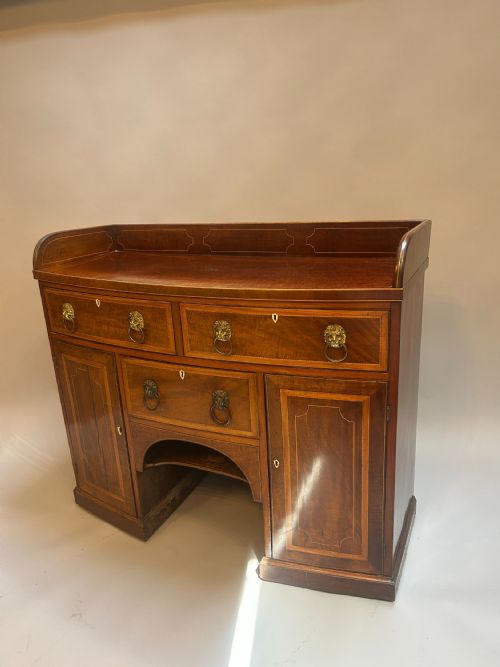
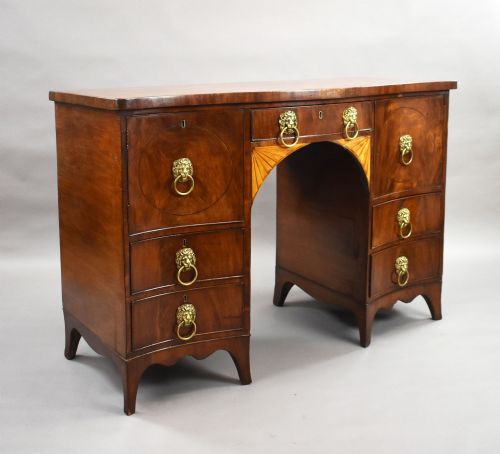


Mahogany Sideboard Lion Mask
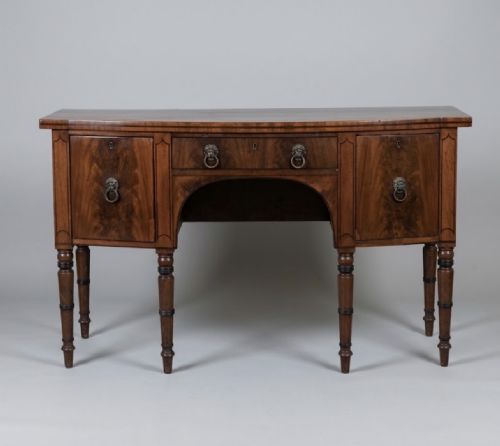
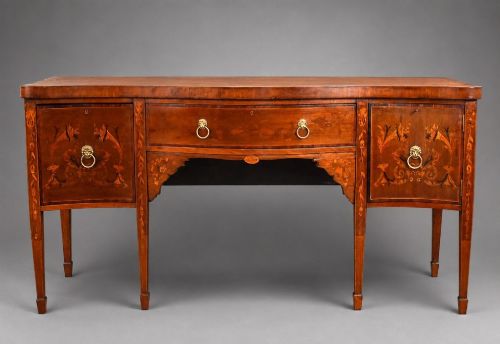
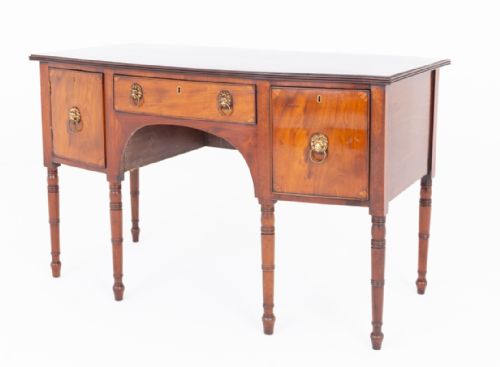
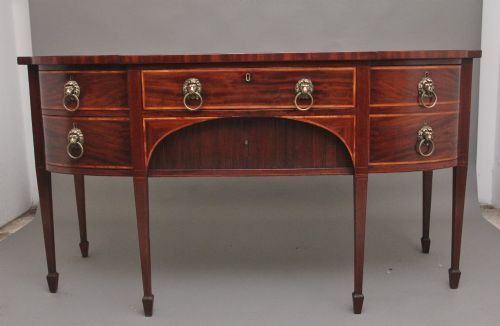
A mahogany sideboard lion mask is a commanding dining room centrepiece defined by bold carved detailing that anchors a room with presence.
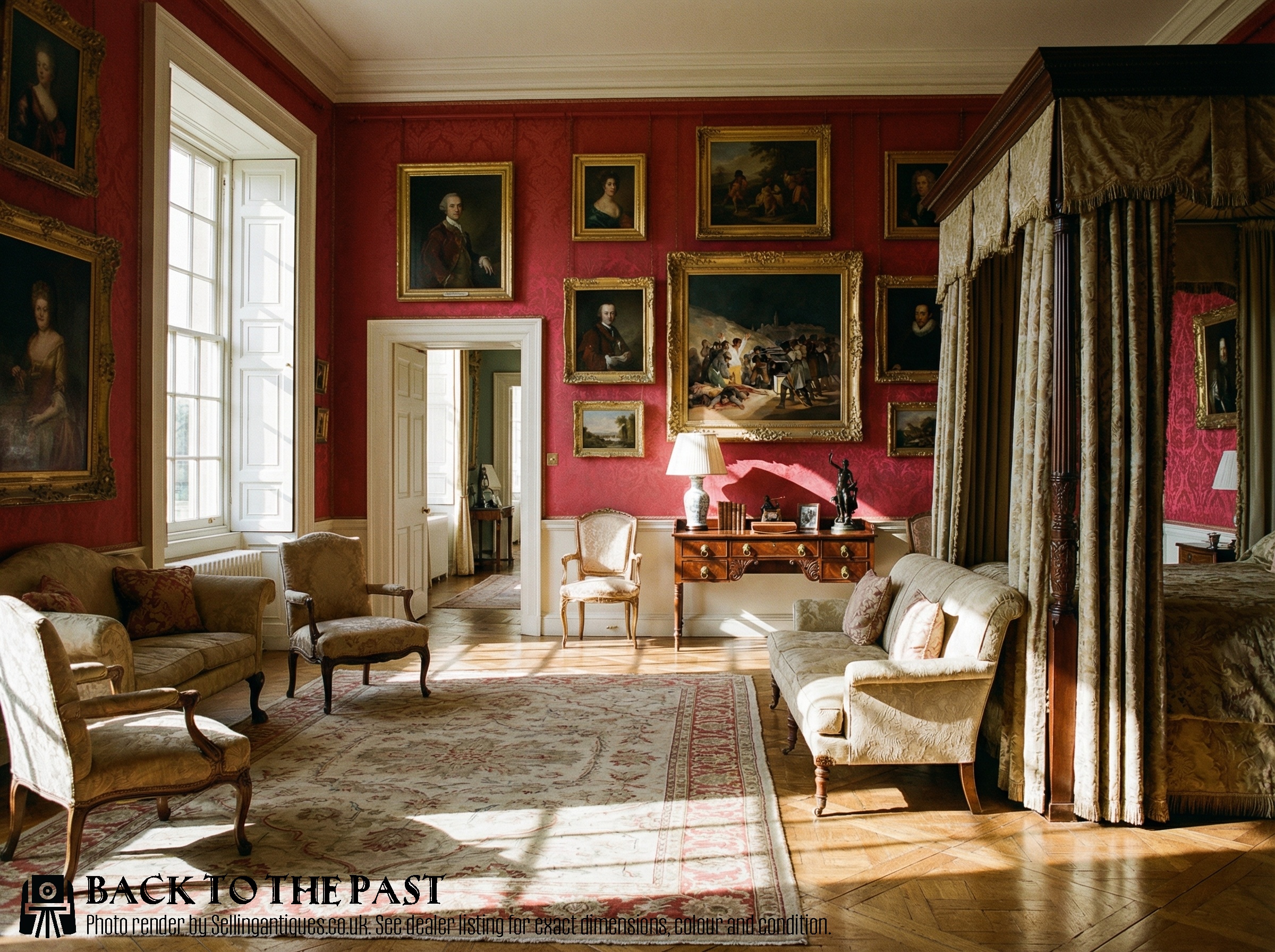
Mahogany Sideboard Lion Mask
A mahogany sideboard lion mask represents a grand dining room form encountered across Georgian, Regency, and Edwardian periods. These pieces combine substantial storage with prominent carved animal motifs.
The listings show various formats including bowfront, serpentine, and breakfront shapes, alongside serving tables. Makers utilised rich timber grains to elevate the functional serving surface.
Originating primarily from British cabinet making traditions, these sideboards display stylistic revivals stretching from the late eighteenth century into the twentieth century.
How they were made
Cabinet makers worked primarily with solid timber and veneers, selecting flame mahogany for its striking visual depth and figure. This was frequently combined with contrasting boxwood and ebony inlay.
Brass fittings such as handles, feet, and galleries were cast and applied to complement the dark wood tones. Carved wooden elements like lion masks were shaped by hand to create high relief detail.
Mahogany Sideboard Lion Mask Retail Price Guide 2026
Typical asking prices for mahogany sideboard lion mask among the pieces listed under this phrase on Sellingantiques today, from the lower quarter to the upper quarter. They describe what is for sale here now, not the wider market.
The listings show pieces spanning from the 18th century through the Edwardian era, utilising brass, boxwood, ebony, and glass.
What varies in quality
The standard of a mahogany sideboard lion mask rests on the crispness of the timber carving and the choice of mahogany veneers. Superior examples exhibit tightly figured grain patterns and deep, sharp relief in the carved masks.
Construction methods also distinguish finer workshops, seen in the precision of the boxwood or ebony inlay and the weight of the brass hardware. Structural integrity and timber selection determine the enduring presence of the piece.
H Mower & Stephenson
The Mahogany Sideboard Lion Mask Glossary
- Bowfront
- A curved convex cabinet front that swells outward in the centre. This shape softens the room and provides deep central storage space.
- Breakfront
- A cabinet design where the central section projects forward from the flanking outer sections. It creates a strong architectural rhythm across the front.
- Serpentine
- A front profile defined by a central concave curve flanked by two convex sweeps. This undulating line requires exceptional skill from the cabinet maker.
- Flame mahogany
- A timber veneer displaying a swirling, flame-like grain pattern prized for its decorative impact. It is cut from the fork of the tree where the branches join the trunk.
- Inlay
- A technique where contrasting woods like boxwood or ebony are fitted flush into the primary timber surface. This creates geometric or botanical patterns.
Mahogany Sideboard Lion Mask: Frequently Asked Questions
Where did people put a sideboard?
These pieces traditionally stood against the dining room wall to hold silver, linen, and serving dishes during meals.
They functioned both as practical storage units and as display surfaces for large dining accessories.
How do I spot a Georgian sideboard?
Georgian pieces typically show restrained classical proportions combined with rich mahogany timbers and subtle inlay work.
Look for hand-cut dovetails in the drawer construction and traditional timber framing methods underneath.
How do I care for mahogany?
Keep the wood away from direct heat sources and strong sunlight to prevent the timber from drying out.
Apply a traditional wax polish occasionally to maintain the natural lustre of the surface.