




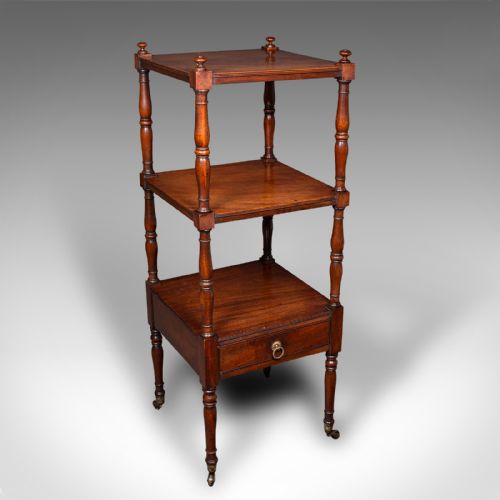


Mahogany Side Shelf Unit
A mahogany side shelf unit brings open tiers and sturdy timber into a room, offering a practical surface for display and storage.
Mahogany Side Shelf Unit
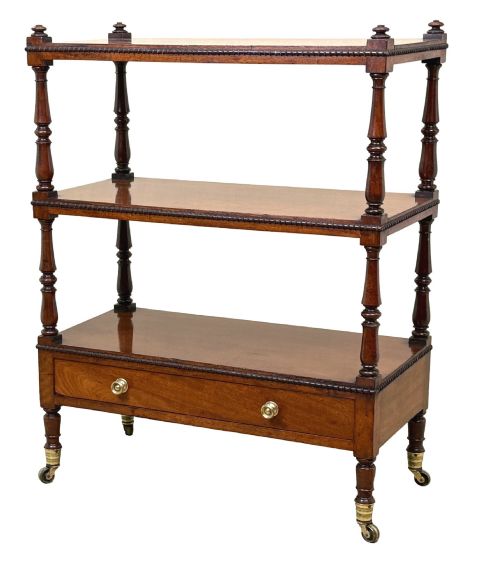
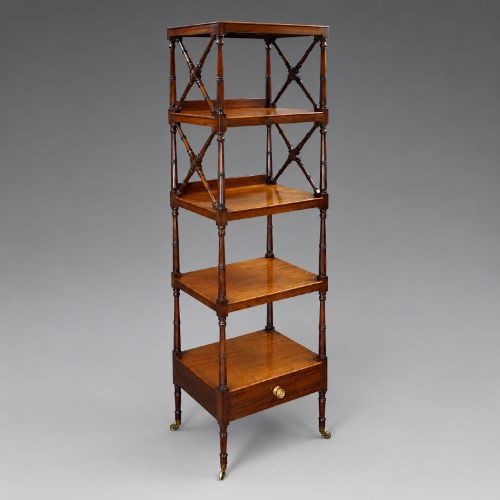
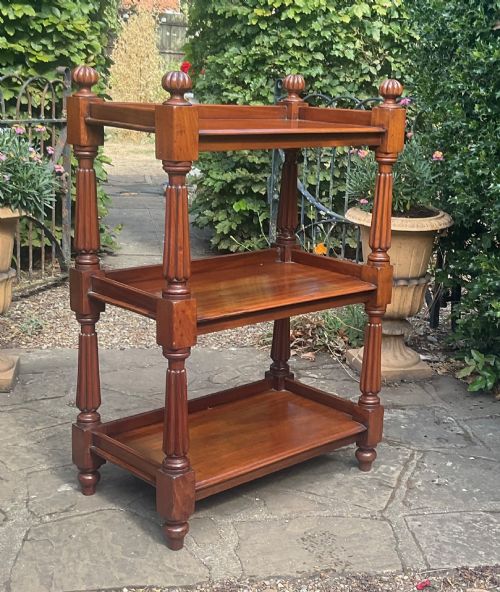
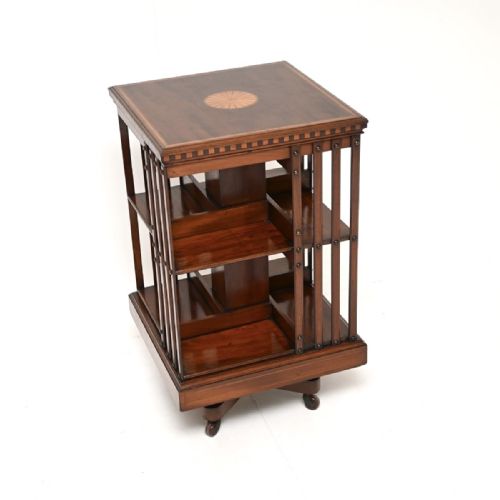
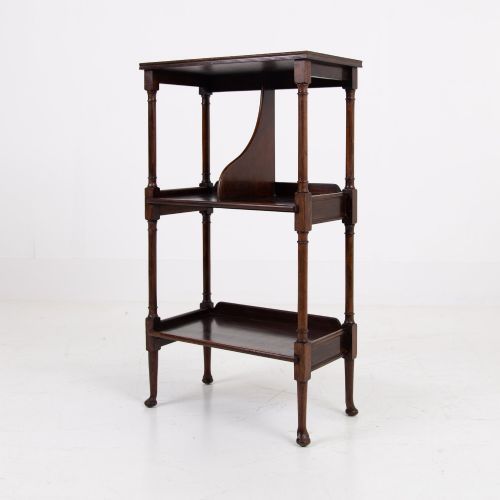
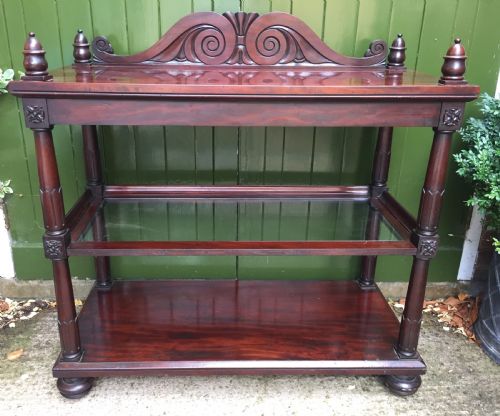
When you search for a mahogany side shelf unit, you are looking at multi-tiered display stands, étagères, and whatnots that date from the Georgian, Regency, and Victorian eras through to the Edwardian period. These pieces span multiple open shelves supported by upright columns, occasionally incorporating lower cabinets, cellarettes, or revolving mechanisms.
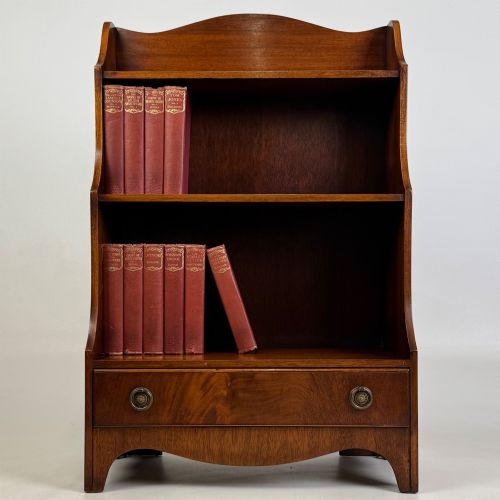
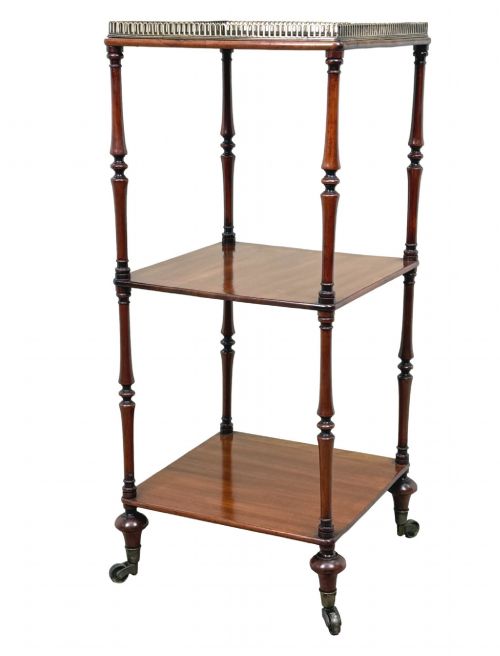
The versions you are most likely to meet on this page include compact three-tier and four-tier étagères and whatnots from the nineteenth century, alongside Edwardian open bookcases and side tables. They appear in forms ranging in scale from narrow bedside units to broader display stands.
Materials and construction
The primary timber across these pieces is mahogany, chosen for its rich grain and structural stability, often accented with satinwood inlay or brass details such as original castors. Cabinetmakers constructed these multi-tiered units with vertical supports joining horizontal shelves, sometimes adding shaped sides or enclosed lower compartments.
Joinery techniques from the Georgian and Victorian periods relied on precise fitting and turning for the upright posts and shelf supports. Metal fittings, including brass castors and hinges on cabinets or cellarettes, were integrated to aid mobility and secure functional doors.
Mahogany Side Shelf Unit Retail Price Guide 2026
Typical asking prices for mahogany side shelf unit among the pieces listed under this phrase on Sellingantiques today, from the lower quarter to the upper quarter. They describe what is for sale here now, not the wider market.
Materials across the selection focus on mahogany timber, supported by brass hardware, glass panels, and satinwood accents.
Distinctions in quality
The refinement of the timber and the crispness of the turned supports separate the finer examples from standard production. Superior pieces display carefully selected mahogany grain, balanced proportions, and thoughtful detailing such as fine inlay work or well-cast brass hardware.
Proportion and scale also dictate quality, with compact, purposeful designs showing greater architectural harmony. The inclusion of original elements, from castors to fitted cellarettes, marks out pieces that retain their intended character.
The Mahogany Side Shelf Unit Glossary
- Whatnot
- A piece of furniture consisting of a set of open shelves for displaying small objects, popular from the late eighteenth century onwards.
- Étagère
- A French term for a piece of furniture with a series of shelves for ornament or display, closely related to the English whatnot.
- Cellarette
- A lockable compartment or drawer incorporated into furniture for storing bottles, sometimes found within lower sections of étagères.
- Regency
- A British design period spanning the early nineteenth century, characterised by classical restraint and refined proportions.
Mahogany Side Shelf Unit: Frequently Asked Questions
What is a whatnot?
A whatnot is an open-shelved piece of furniture designed for holding books, ornaments, and small household items. These multi-tiered stands were widely used in nineteenth-century interiors to maximise display space.
They appear in various heights, from compact bedside versions to taller multi-tier units, resting on feet or original castors for ease of movement.
How were étagères used?
Étagères served as decorative display stands in principal rooms, holding porcelain, silver, and small curiosities. Their open tiers allowed objects to be viewed from multiple angles.
Over time, their function expanded to include practical storage, with some designs integrating drawers, side cabinets, or revolving bookshelf mechanisms.
How do I identify a Georgian piece?
Georgian pieces, spanning the eighteenth and early nineteenth centuries, are identified by restrained classical lines and solid mahogany construction. They often feature simple, elegant upright supports and precise joinery.
Later Regency and revival pieces continued these classical forms while introducing bolder turned columns and occasional satinwood stringing.
Where should I place a side shelf unit?
These units suit living rooms, hallways, and bedrooms where surface space is needed without heavy cabinetry. Their open shelving keeps rooms feeling light while providing functional storage.
Compact scales allow smaller étagères to sit beside seating or beds, while taller three or four-tier versions anchor larger wall spaces.