




Mahogany Serving Tray Stand
These mahogany serving tray stand designs bring practical folding agility and rich timber to the room.
Mahogany Serving Tray Stand
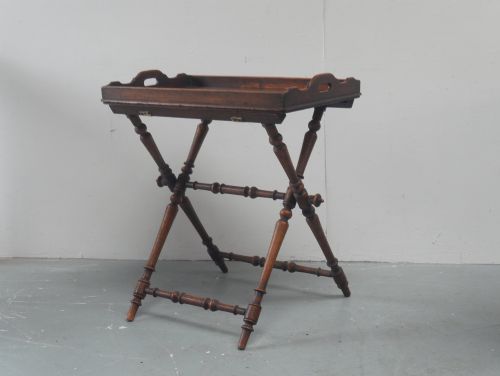
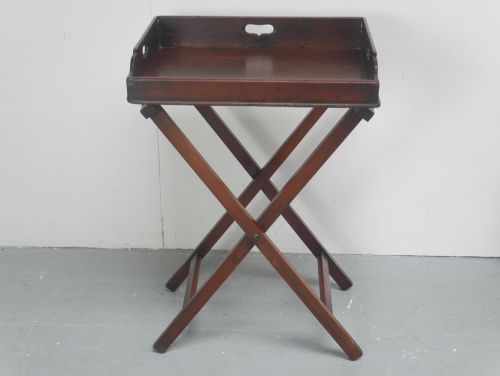
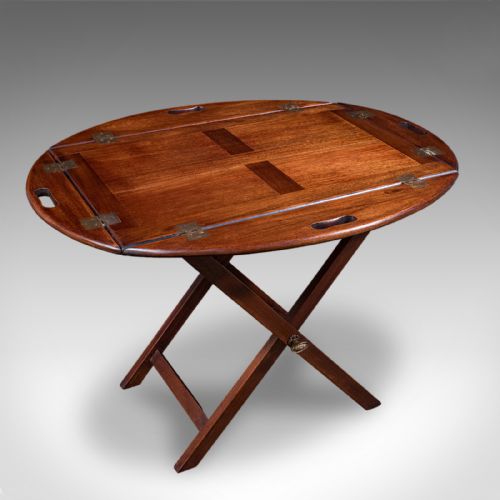
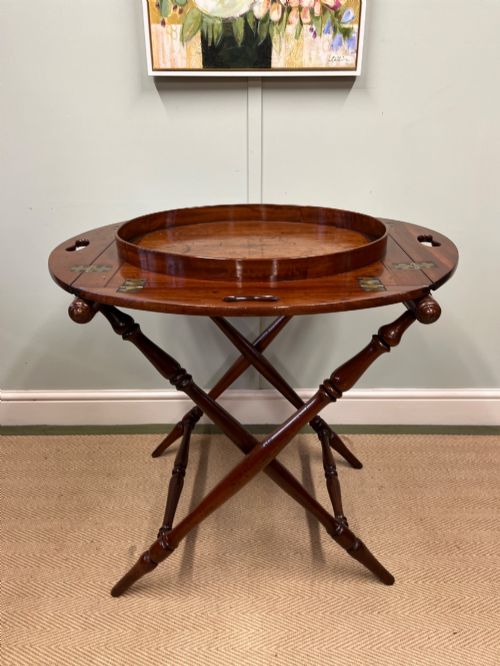
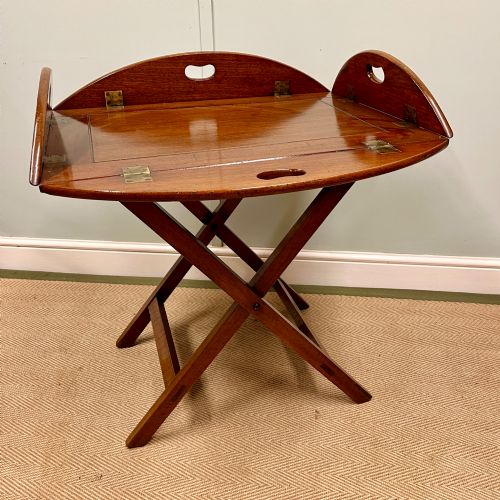
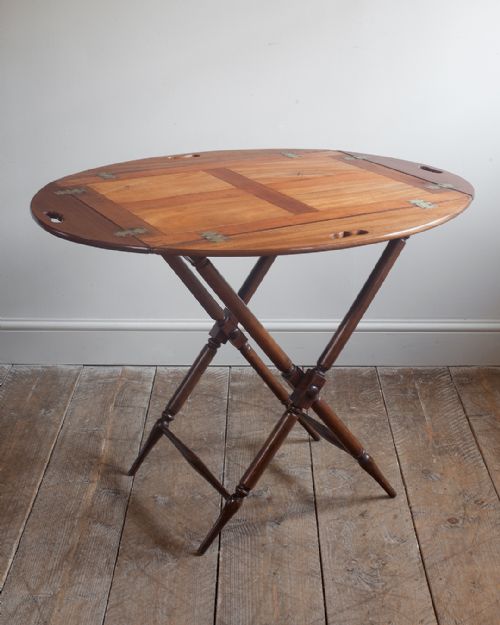
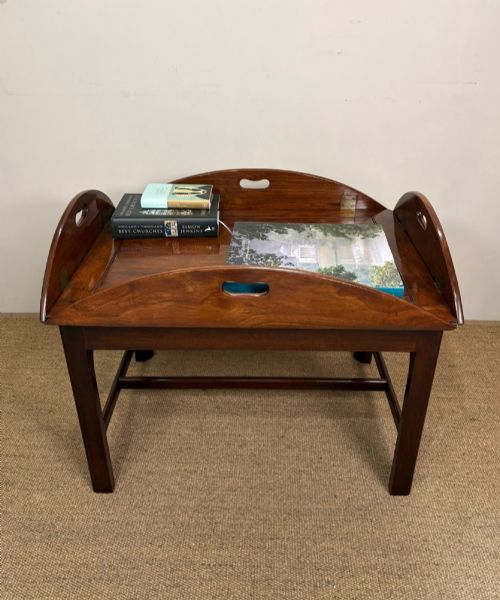
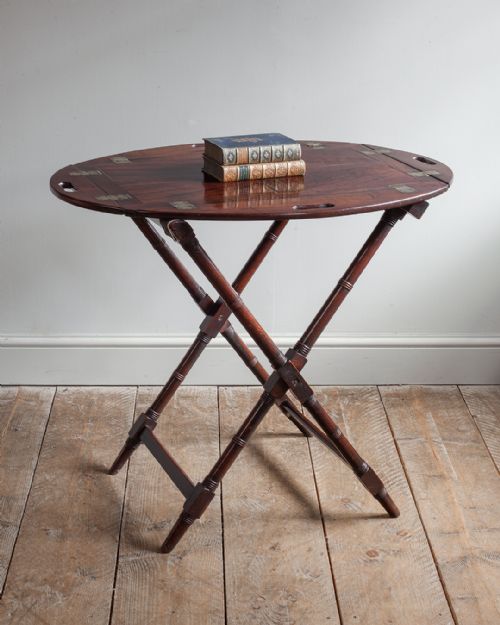
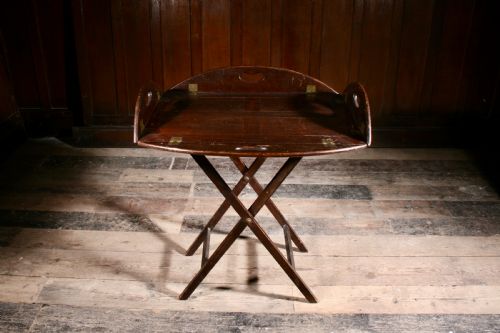
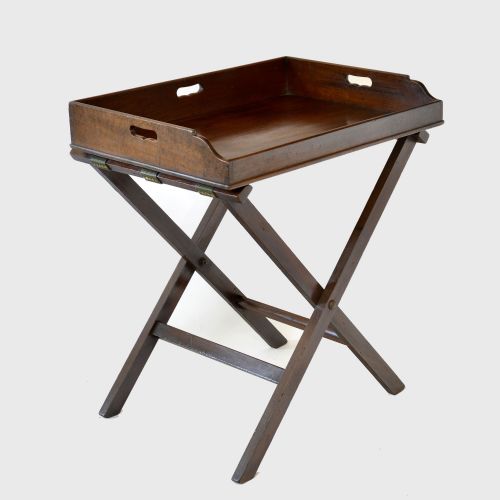
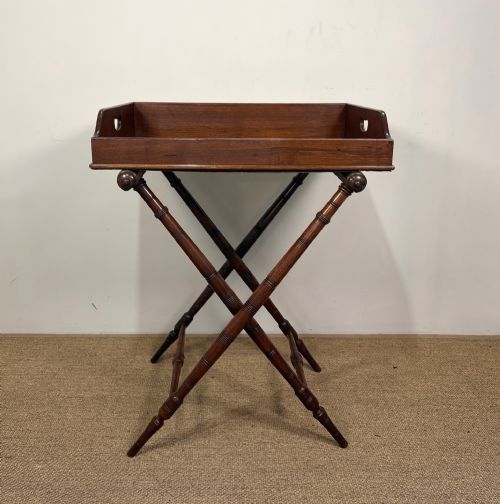
A mahogany serving tray stand combines a portable timber tray with a folding or fixed support frame, serving centuries of hospitality needs. When you search for a mahogany serving tray stand, you encounter pieces designed for moving food and drink with ease. The forms range from simple folding butler trays to multi-tiered dumb waiters and occasional side tables.
The pieces on this page span the Georgian, Regency, Victorian and Edwardian periods, stretching into the early twentieth century. You are most likely to meet nineteenth-century folding butler trays alongside eighteenth-century George III examples and multi-tier stands. English country workshops and larger makers produced these versatile items for domestic service and entertaining.
How they were made
Cabinet makers relied primarily on solid mahogany and Cuban mahogany, sometimes accented with satinwood or brass fittings. The timber was selected for grain depth and durability, then polished to a deep lustre.
Support structures integrate cotton, canvas, or fabric webbing to brace folding stands securely. Joinery techniques include dovetailing for trays and hinged cross-frames that allow the stands to collapse flat when not in use.
Listings feature mahogany, oak, and brass, spanning the Georgian, Victorian, Regency, and Edwardian eras.
What varies in quality
The distinction between standard utility items and finer examples lies in the selection of timber and the crispness of the cabinet work. Superior pieces display figured Cuban mahogany, elegant galleried edges, and precise dovetail joints that withstand regular folding.
Originality of the matching stand and tray elevates a piece significantly. Stands retaining their early webbing, brass hinges, and undisturbed surface patination represent the pinnacle of the maker's output.
Maple And Co
The Mahogany Serving Tray Stand Glossary
- Butler's tray
- A removable wooden tray, often with hinged or cutout flaps, designed to lift off its support frame. These trays were carried by staff to serve refreshments in grand houses.
- Dumb waiter
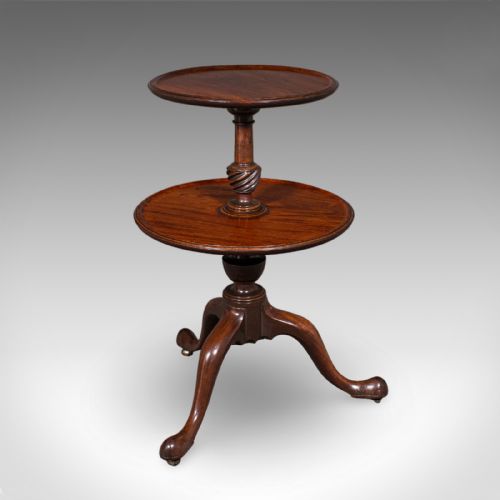
- A multi-tiered revolving stand used for holding dishes and drinks without the need for attendants. Georgian and Regency examples often feature graduated circular shelves on a central column.
- Galleried
- A raised edge surrounding the perimeter of a tray or shelf to prevent items from sliding off. This feature is frequently pierced for handgrips on butler trays.
- Webbing
- Strong woven strips of cotton, canvas, or fabric stretched across a folding frame to support the weight of a tray. Original webbing indicates an untouched survival.
- Cuban mahogany
- A dense, heavily figured timber exported from Cuba, prized for its rich dark colour and exceptional grain. Cabinet makers utilised it extensively during the eighteenth and early nineteenth centuries.
Mahogany Serving Tray Stand: Frequently Asked Questions
How did servants use butler trays?
Staff lifted the detachable tray from its folding stand to carry food and beverages between rooms. Once positioned, the tray served as a temporary table for guests.
After use, the frame folded flat for compact storage in pantries or hallways until the next meal service.
What is a dumb waiter?
A dumb waiter is a tiered standing piece of furniture featuring multiple revolving shelves on a central pillar. It allowed diners to help themselves to courses without servants present in the dining room.
Georgian and Regency versions typically showcase two or three graduated trays supported by tripod or pedestal bases.
Are the trays detachable?
Traditional butler trays lift entirely free from their folding X-frame supports. This removable design allowed staff to load the timber tray in the kitchen before mounting it onto the stand in the parlour.
Some later Edwardian or Victorian iterations feature fixed tops or locking mechanisms, but the classic form separates tray from base.
How do I date a mahogany stand?
Dating relies on timber choice, hardware, and construction style. Eighteenth-century pieces display dense Cuban mahogany and hand-cut dovetails, while Regency and Victorian variants introduce different leg turnings and brass hinges.
Matching the patination between the tray and the base helps confirm whether the two components were manufactured together.