

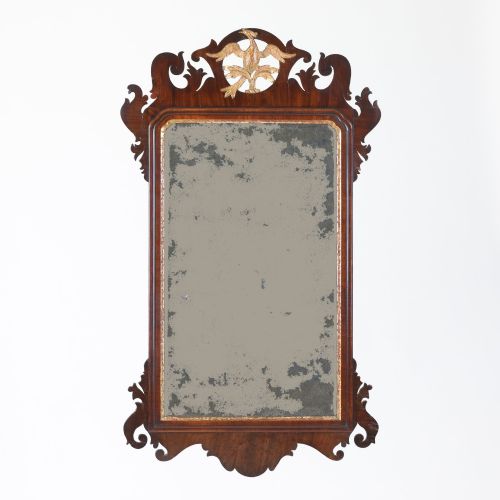
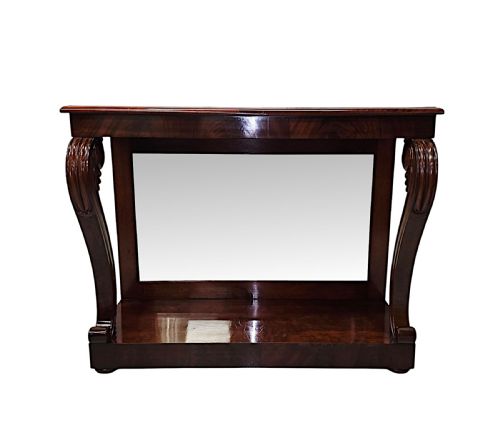
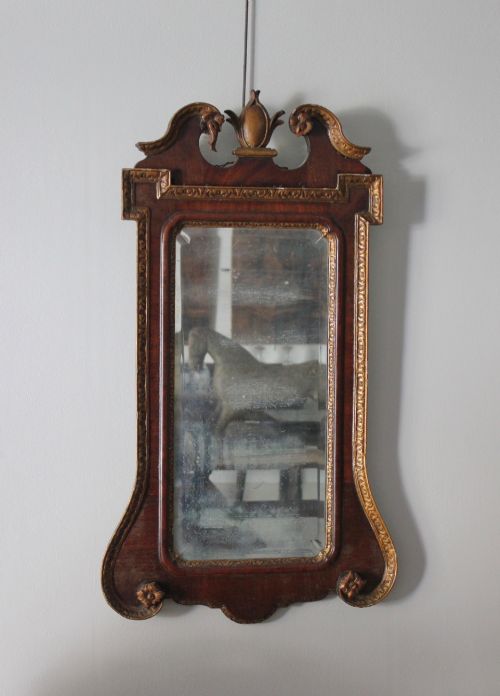
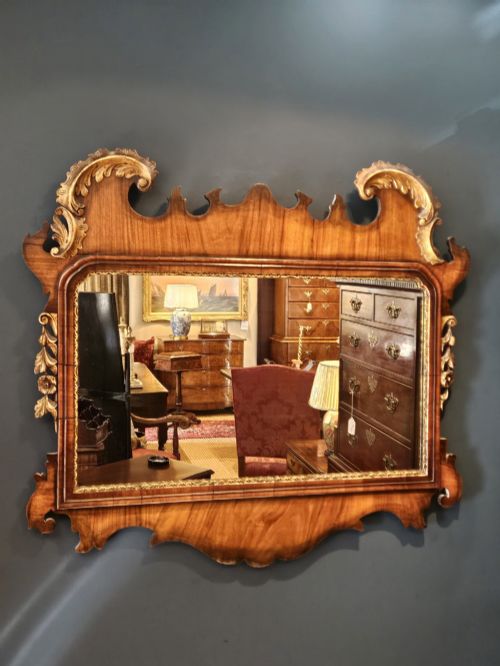


Mahogany Scroll Mirror
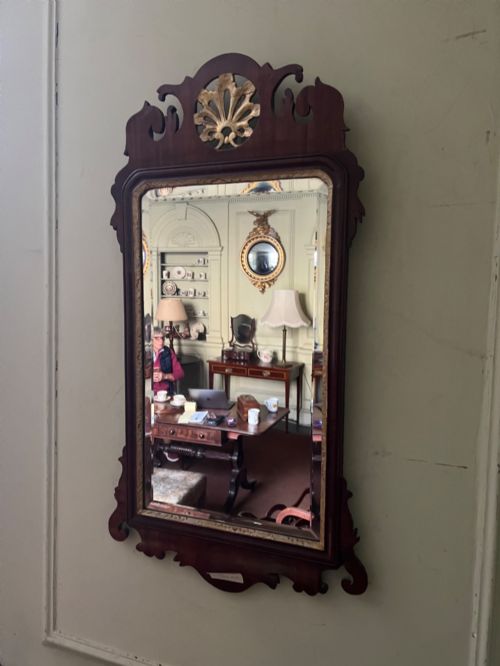
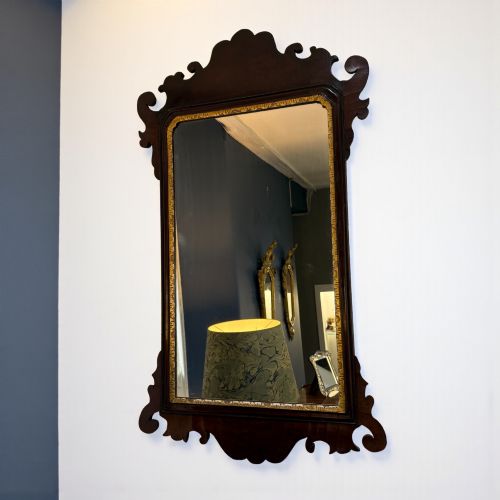
A mahogany scroll mirror brings warmth and depth to a room, framing reflections in richly figured timber shaped with traditional fretwork.
Mahogany Scroll Mirror
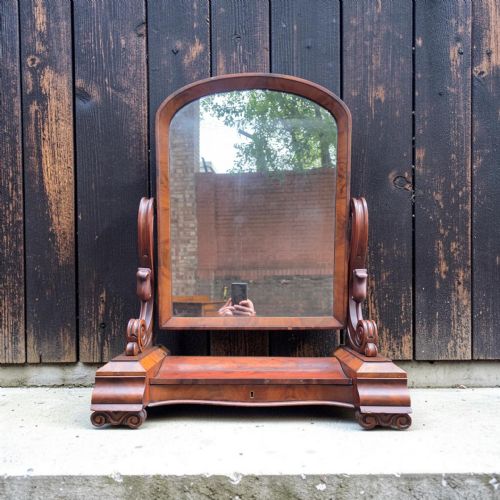
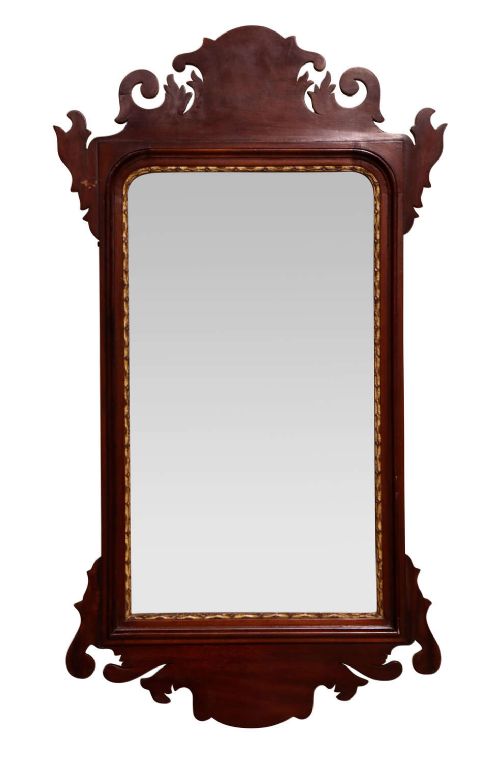
A mahogany scroll mirror unites eighteenth-century Georgian elegance with the skilled cabinet work of the Victorian revival, centring on deep red-brown timber frames and scrolled crests. Collectors looking for a mahogany scroll mirror encounter wall-hung fretwork designs alongside dressing mirrors and larger cheval glasses designed for bedrooms and reception rooms.
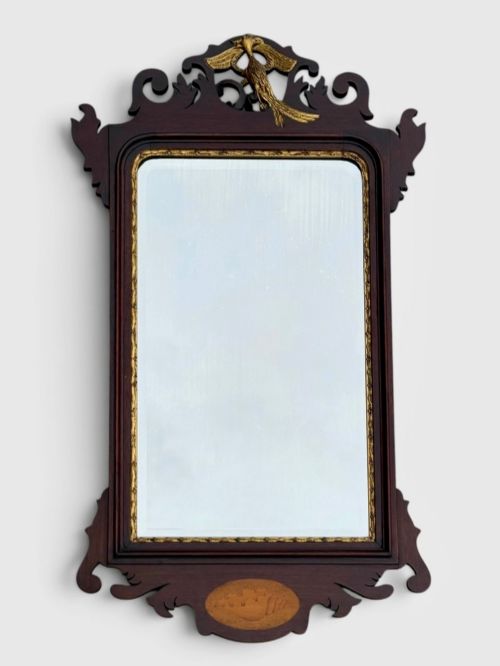
The selection ranges from mid-eighteenth-century examples through to late nineteenth-century interpretations in the Chippendale style. Many pieces feature carved architectural details, parcel-gilt highlights, and the characteristic silhouette of scrolled ears framing the mirror glass.
Materials and construction
Makers shaped these frames primarily from solid mahogany, often highlighting the timber's natural grain alongside secondary elements of giltwood, brass fittings, and mirror glass. Craftsmen utilised fretsaws to pierce intricate scrollwork and architectural outlines into the timber panels.
Gilding and parcel-gilt accents applied with gold leaf bring contrast to the deep red wood, while traditional joinery secures the frames around hand-bevelled or Vauxhall mirror plates.
Mahogany Scroll Mirror Retail Price Guide 2026
Typical asking prices for mahogany scroll mirror among the pieces listed under this phrase on Sellingantiques today, from the lower quarter to the upper quarter. They describe what is for sale here now, not the wider market.
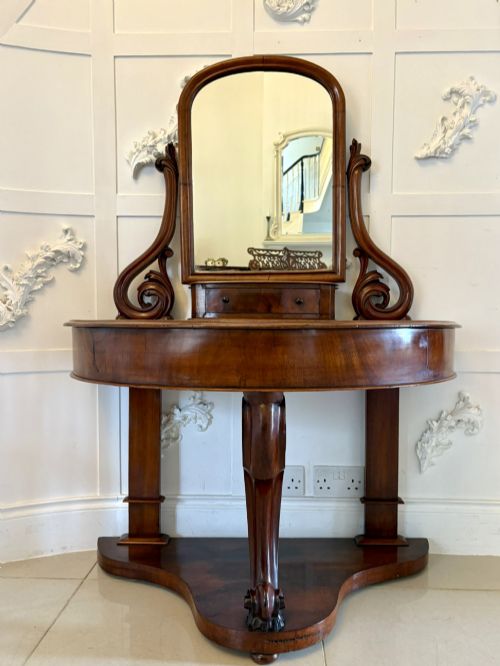
Listings feature mahogany, glass, giltwood, and brass across Georgian and Victorian periods, spanning wall mirrors, dressing tables, and console tables.
Gradations of quality
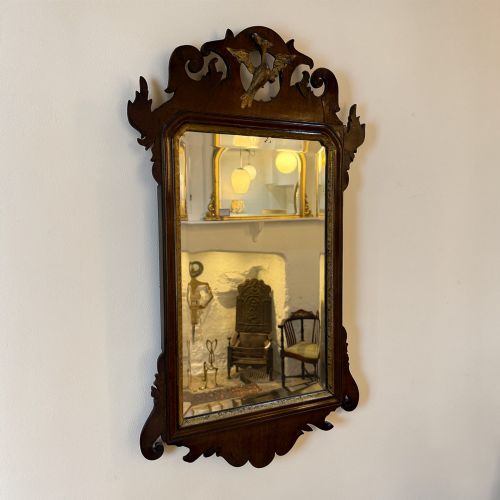
Distinctions in quality rest upon the crispness of the hand-carved fretwork and the depth of the mahogany timber. Finer examples display balanced scroll proportions and sharply defined motifs such as the iconic Ho-Ho bird.
The integrity of the original surface finish and the preservation of early mirror glass further separate standard production from exceptional craftsmanship.
The Mahogany Scroll Mirror Glossary
- Fretwork
- Openwork ornamentation cut with a fretsaw to create geometric or scroll patterns on the mirror frame. This technique defines the intricate borders seen on Chippendale style pieces.
- Parcel-gilt
- Partial gilding applied to specific carved details of the mahogany frame, usually using gold leaf to contrast with the dark wood. It highlights architectural elements like ears and crestings.
- Ho-Ho bird
- A stylized Chinese phoenix motif frequently carved into the crest of eighteenth-century and revival mirrors. The bird sits atop the scrollwork with spread wings and tail feathers.
- Cheval mirror
- A large, free-standing dressing mirror suspended on a vertical frame with pivoting side supports. These freestanding glasses allow a full-length view.
Mahogany Scroll Mirror: Frequently Asked Questions
How do I date a mahogany scroll mirror?
Dating relies on examining the construction methods of the wood frame, the backing boards, and the type of mirror glass utilised. Eighteenth-century examples display hand-cut joinery and older plate glass characteristics.
Revival pieces from the Victorian era often combine older Georgian design motifs with nineteenth-century hardware and secondary timbers. Comparing the carving depth and edge bevels helps clarify the period.
Where should I hang a wall mirror?
These mirrors suit principal reception rooms, hallways, and bedrooms where they can reflect natural light and anchor the wall space. Historically, wall mirrors were placed above console tables or mantelpieces to enhance the room's symmetry.
Ensure the wall fixings match the weight of the solid mahogany frame and hanging brackets. Placement opposite a window maximises the dispersion of daylight.
What is the difference between a pier mirror and a dressing mirror?
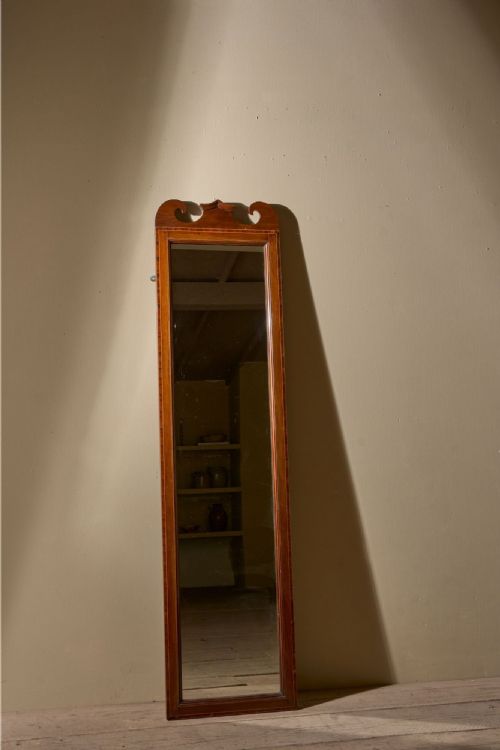
A pier mirror is typically a tall, narrow wall-mounted glass designed to fit the wall space between windows. These tall formats emphasise vertical room proportions.
A dressing mirror sits on a dressing table or operates as a freestanding cheval glass for personal grooming. Their scale and mounting hardware reflect their functional purpose in bedrooms.
Are the mirror plates original?
Original mirror glass often exhibits subtle foxing, minor speckling, and slight distortions due to early manufacturing techniques. These signs indicate age and untouched condition.
Replacement glass appears clearer and lacks the historical imperfections found in eighteenth and nineteenth-century plates. Inspecting the silvering from the reverse provides further clues.