

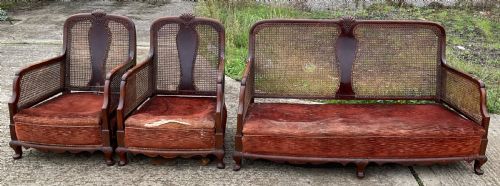
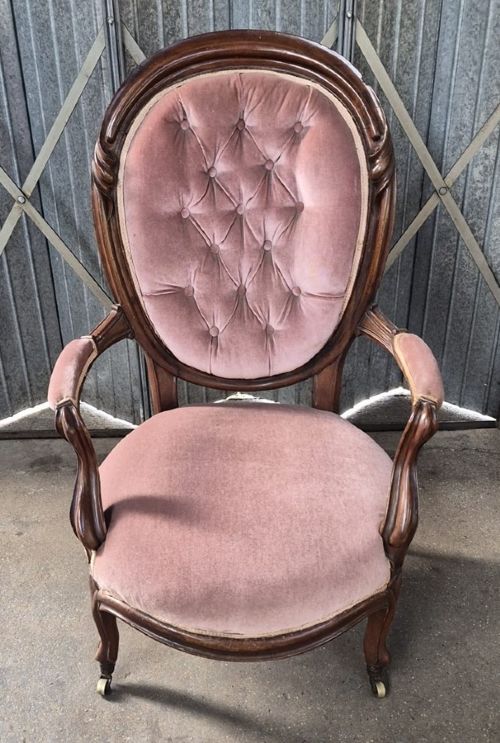
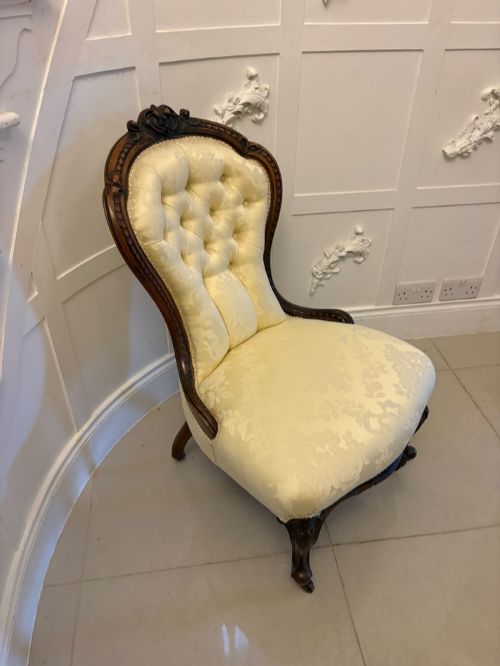
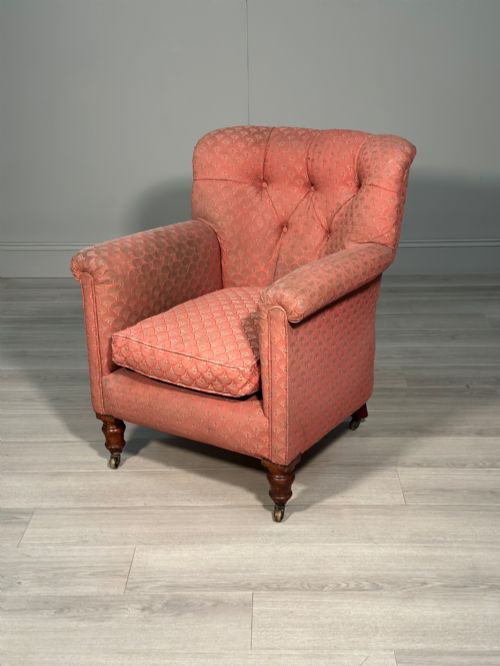
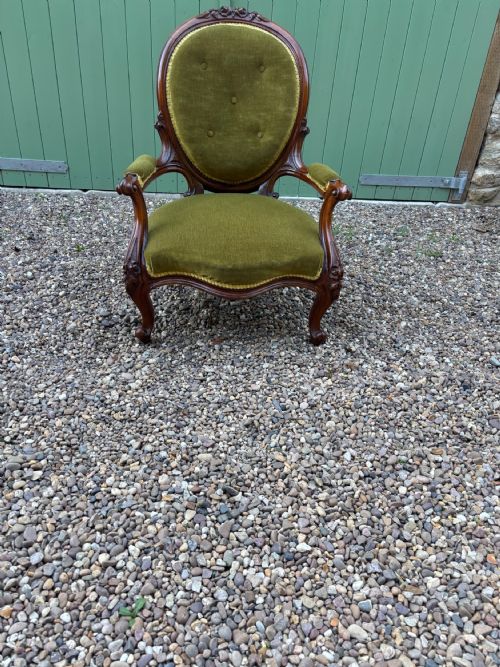
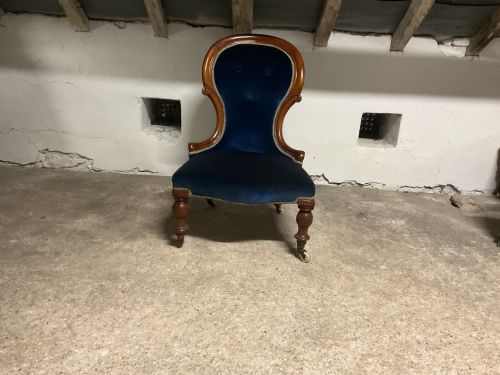
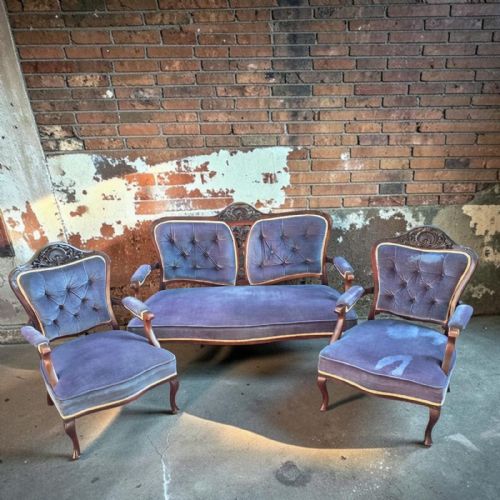
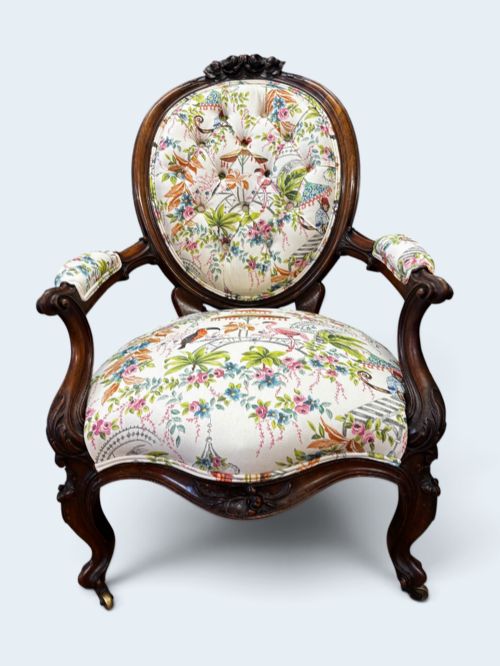

Mahogany Salon Armchair
When you search for a mahogany salon armchair, you step into a world of elegant Victorian and Edwardian seating designed for receiving guests.
Mahogany Salon Armchair
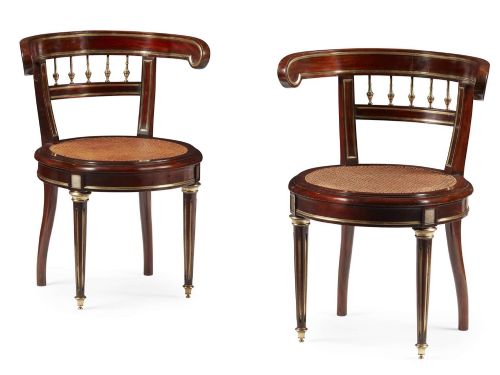
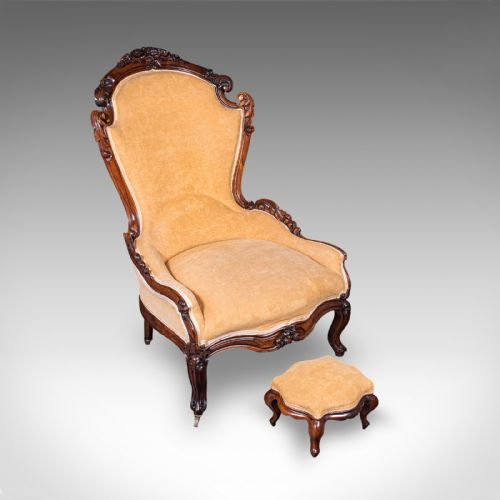
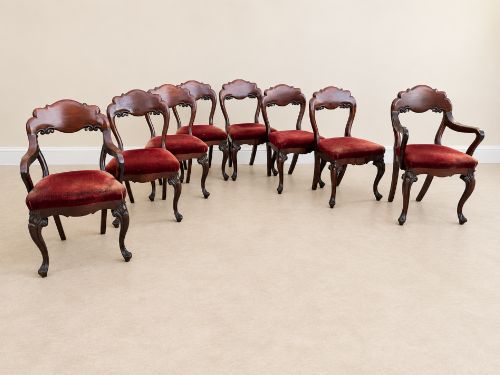
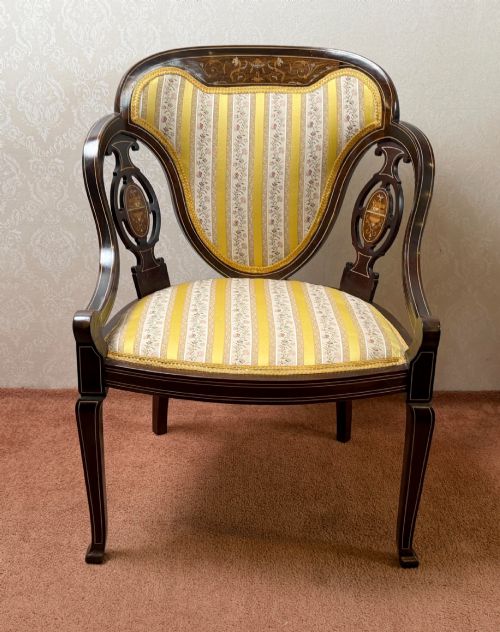
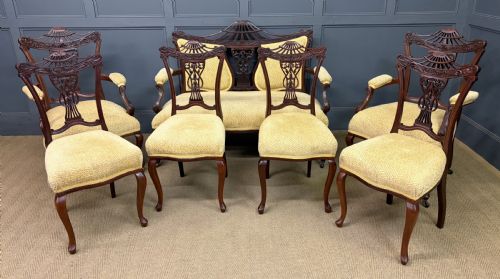
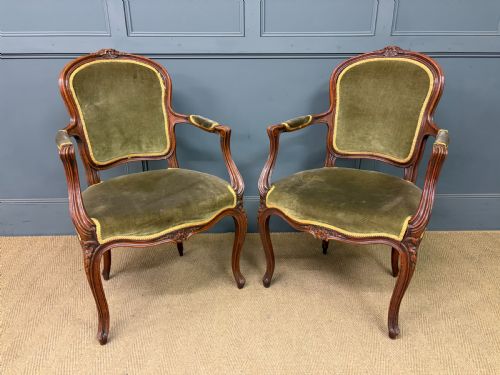
A mahogany salon armchair provides refined seating intended for formal reception rooms and parlours across the nineteenth and early twentieth centuries. These chairs range from compact nursing seats and tub forms to elaborate spoon-backed examples and inlaid Edwardian elbow carvers.
The pieces appearing on this page stretch from eighteenth-century Georgian Hepplewhite designs through robust Victorian show-frame constructions to lighter Edwardian inlaid suites. Buyers most frequently encounter Victorian balloon-backed variations and Edwardian satinwood-inlaid tub chairs.
Makers often conceived these seats as part of larger parlour suites or matched pairs intended for intimate conversation rather than heavy daily lounging. Their restrained scale and decorative woodwork distinguish them from larger library or fireside chairs.
How They Were Made
Cabinetmakers relied on dense, stable timber to achieve slender structural elements, frequently combining solid frames with decorative veneers like satinwood or delicate string inlay. Carved details such as cabriole legs, barley twists, or classical neoclassical motifs demonstrate the high level of joinery standard in the period.
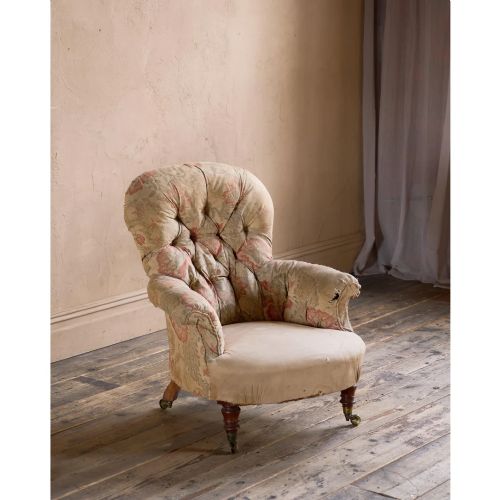
Upholstery techniques evolved from horsehair stuffing secured with traditional webbing to deep buttoning and sprung iron frames as the nineteenth century progressed. Original covering materials recorded in these workshops include rich velvet, damask, patterned upholstery fabric, and occasionally leather.
Mahogany Salon Armchair Retail Price Guide 2026
Typical asking prices for mahogany salon armchair among the pieces listed under this phrase on Sellingantiques today, from the lower quarter to the upper quarter. They describe what is for sale here now, not the wider market.
Some pairs are explicitly catalogued as his-and-hers seating suites, proving that nineteenth-century relaxation still required strict matching arrangements.
What Varies in Quality
Excellence in these chairs often rests upon the crispness of the timber carving and the subtlety of any inlaid marquetry rather than mere decorative heft. Superior examples display balanced proportions, tight joinery at the stress points, and timber selection with rich natural grain and deep colour.
The integrity of the show-frame and the retention of original structural elements separate exceptional period survivals from utilitarian seating. Workshop execution by documented makers or distinguished cabinet houses naturally elevates the standing of individual pieces.
Holland & Sons·C. Hindley & Sons·Henry Thomas Peters
The Mahogany Salon Armchair Glossary
- Spoon back
- A curved, ovoid chair back shaped to echo the contours of the human spine. This ergonomic form appears frequently on mid-Victorian parlor seating.
- Bergère
- An enclosed upholstered armchair with exposed wooden framing and cane or upholstered sides. Edwardian variations often integrate this French-influenced style.
- Cabriole leg
- A furniture leg that curves outward in a convex arc and then bends inward in a concave arc, terminating in a pad or foot. Cabinetmakers utilised this classical form extensively during the Victorian era.
- Marquetry
- Decorative patterns created by fitting together thin slices of various coloured woods onto a structural surface. Edwardian makers applied this technique liberally to salon furniture.
- Show-frame
- A wooden structural framework left exposed around the upholstered portions of a chair. This construction highlights the quality of the polished timber.
Mahogany Salon Armchair: Frequently Asked Questions
How do I date a salon armchair?
Dating relies on examining stylistic clues, such as the heavy moulded frames and deep buttoning typical of Victorian seating versus the lighter satinwood stringing characteristic of Edwardian pieces.
Structural evidence, including framing materials and upholstery methods underneath, also provides clear indicators of the era of manufacture.
Were these chairs used for daily sitting?
These seats were primarily created for formal entertaining, light conversation, and display within a parlor or drawing room rather than lounging.
Their relatively compact scale and upright posture reflect the social etiquette and interior arrangements of nineteenth-century homes.
How do I care for antique upholstery?
Preserving original fabric requires gentle vacuuming with a soft attachment and protecting the textile from direct sunlight to prevent fading and fibre degradation.
For pieces retaining historic stuffing, professional conservation rather than modern reupholstery helps maintain the historical integrity of the structure.