
Mahogany Rotating Bookcase
A mahogany rotating bookcase brings tactile convenience and classic timber warmth to a room, turning smoothly on a hidden mechanism to keep favourite volumes within arm's reach.
Mahogany Rotating Bookcase
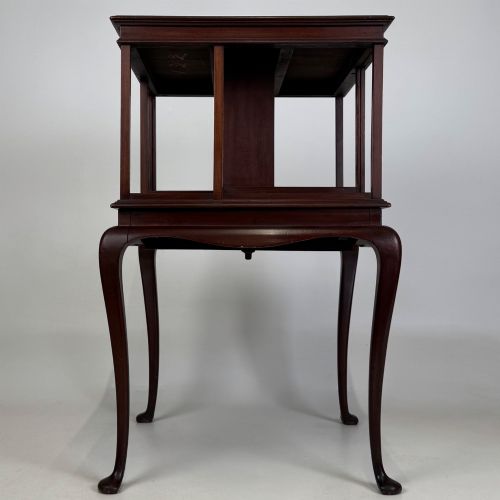
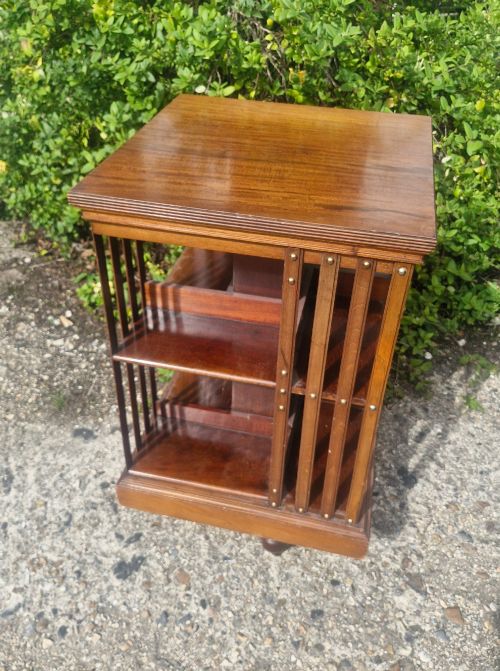
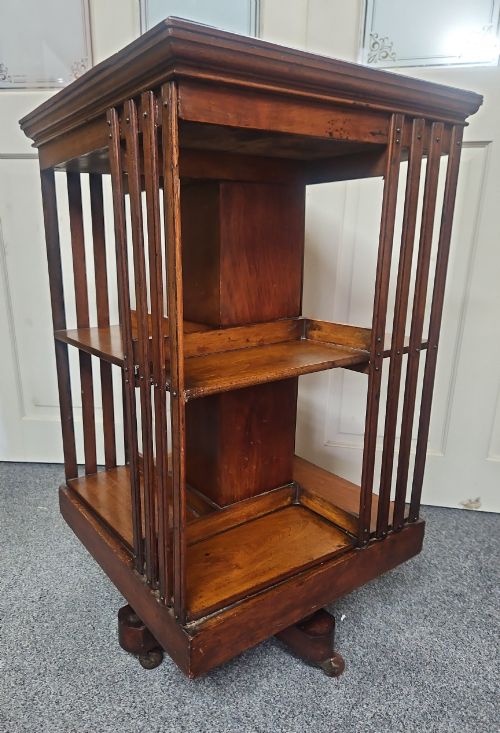
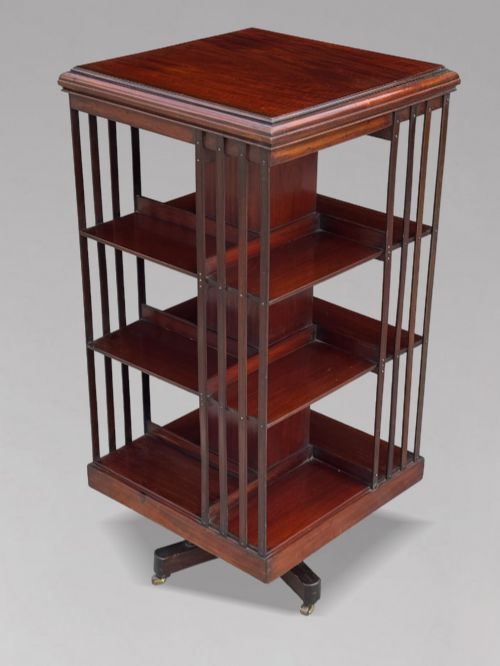
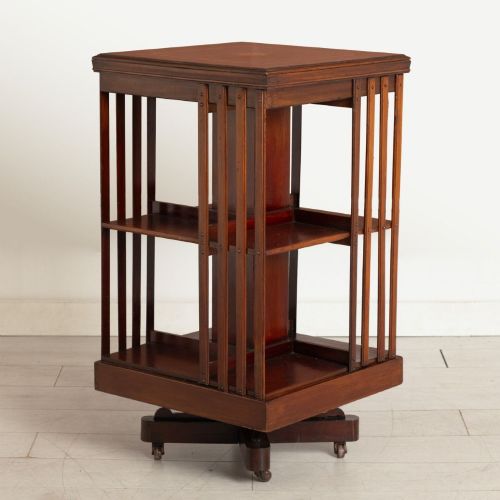
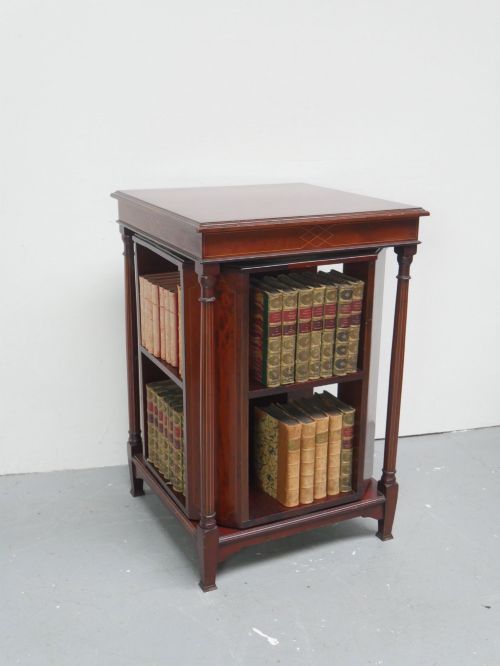
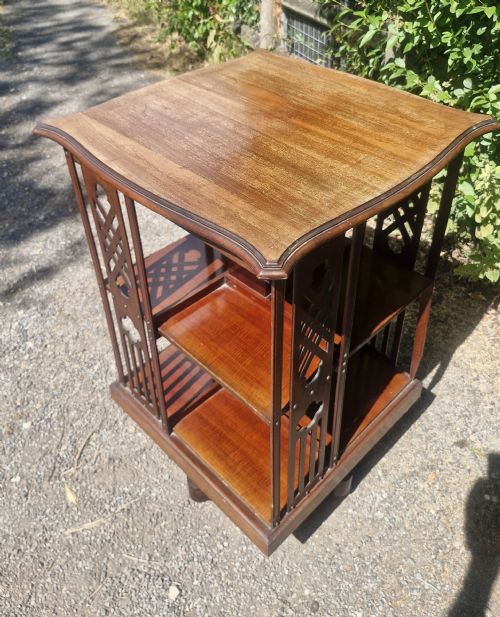
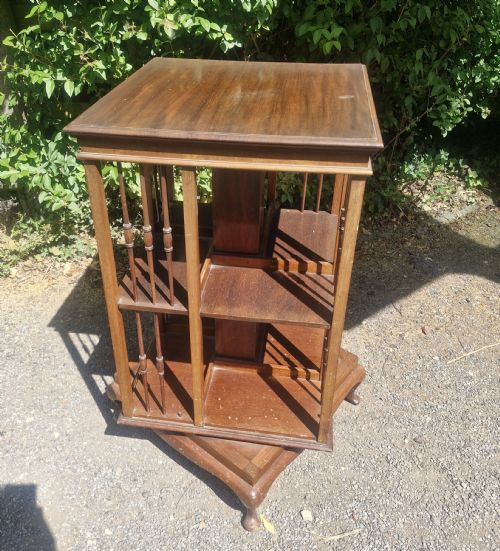
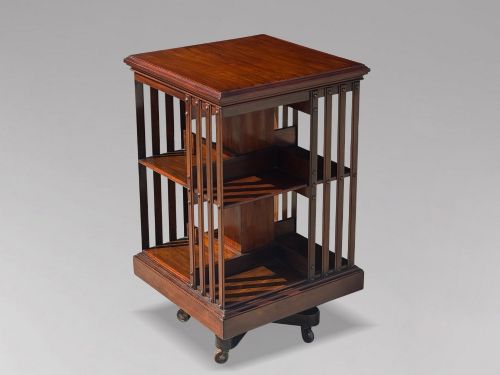
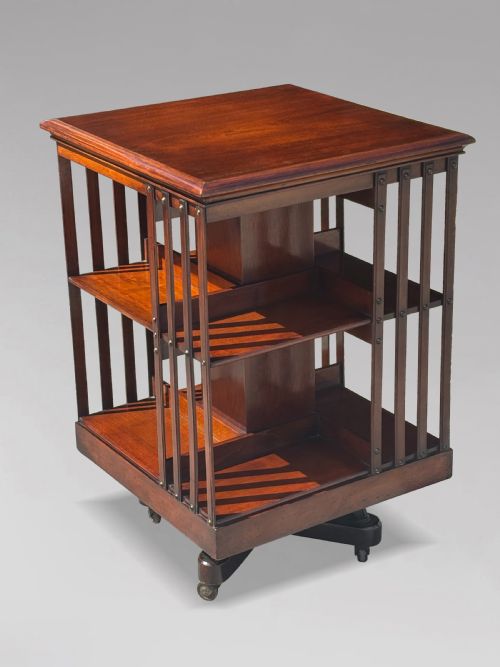
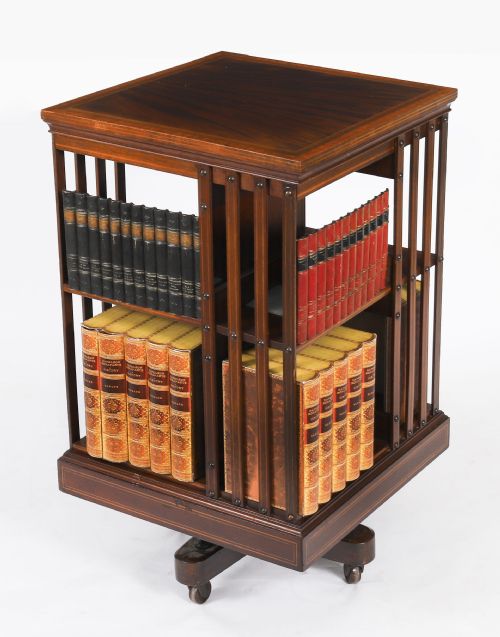
A mahogany rotating bookcase is a functional piece designed to spin on a central pivot, allowing multiple shelves of books to be accessed from a single stationary seating position. When exploring this selection, buyers frequently encounter pieces originating from the Victorian and Edwardian eras, spanning the late nineteenth century into the early decades of the twentieth century.
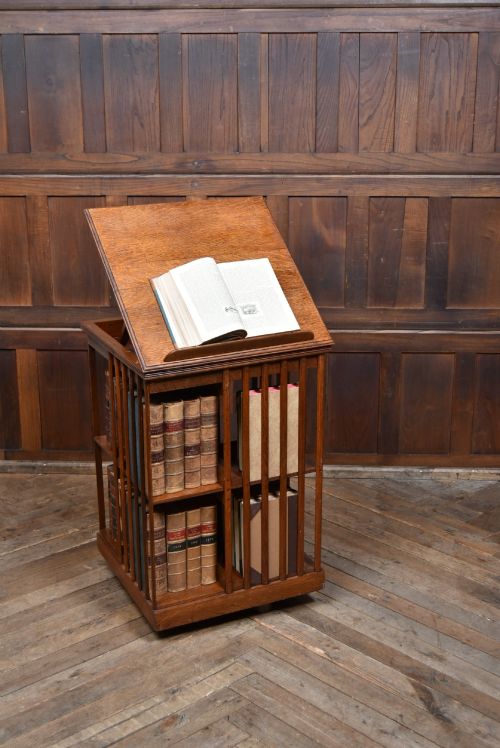
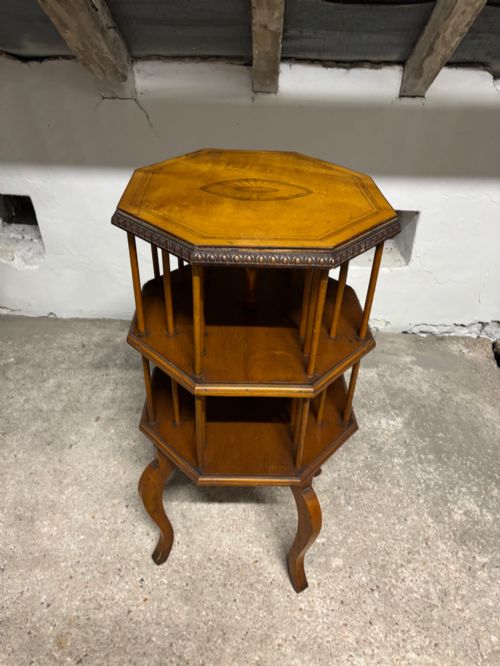
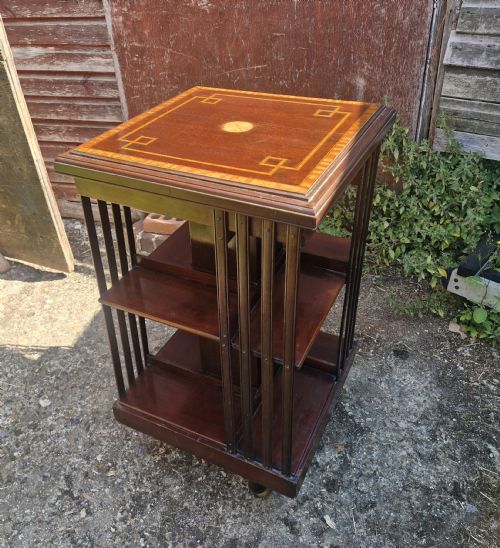
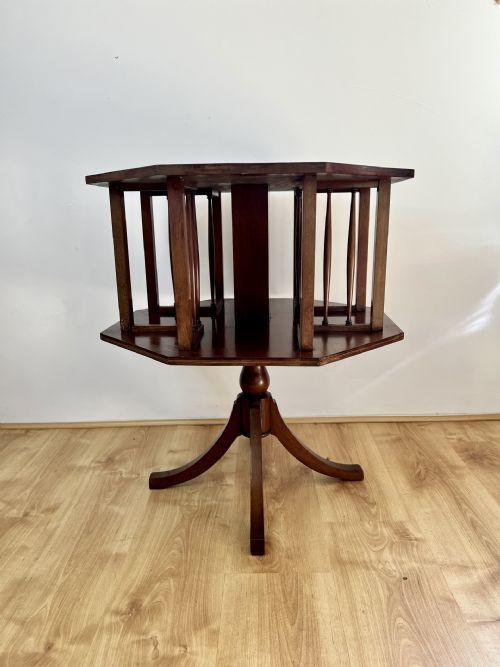
The prevailing form on this page is the freestanding floor model, though compact table top versions and book stands also appear. These items range from simple square tiers to larger structures featuring inlaid details and brass fittings.
Design influences vary across the inventory, incorporating styles such as Sheraton Revival, Queen Anne style, and Art Nouveau alongside traditional Victorian and Edwardian shapes.
Materials and construction
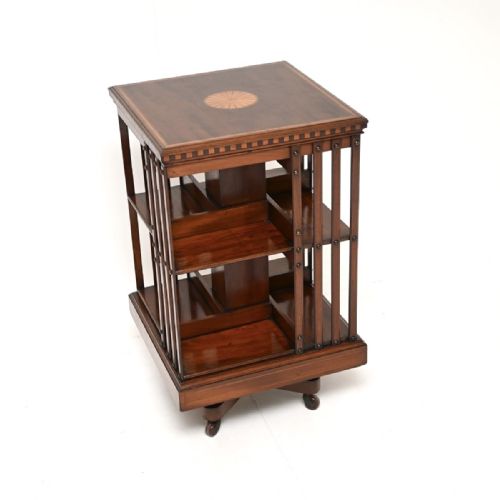
Makers utilised solid mahogany and flame mahogany veneers over secondary timbers, often embellished with delicate satinwood inlay to create decorative contrast on the tiered panels. The structural integrity relies upon internal timber framing joined to a concealed revolving mechanism, which frequently incorporates iron, cast iron, or brass components to ensure smooth rotation.
Surface decoration extends beyond timber veneers in select examples, occasionally combining brass inlay or even marble tops paired with timber book tables.
Some models double as miniature architecture, letting you spin an entire library while sitting in your slippers.
Distinguishing quality factors
The distinction between standard examples and the finest pieces rests upon the crispness of the cabinetwork and the selection of materials, such as highly figured flame mahogany or intricate satinwood inlay. Superior specimens display meticulous joinery and balanced proportions, ensuring the tiers spin silently and evenly without listing to one side.
The complexity of the design also elevates a piece, with Sheraton-style details, unusual proportions, or integrated elements like marble tops marking out the more ambitious workshops.
Maple and Co
The Mahogany Rotating Bookcase Glossary
- Flame mahogany
- A figure in mahogany timber resembling flickering flames, created by cutting across the branch junctions of the tree. This highly decorative veneer was favoured for prominent surfaces on finer Edwardian and Victorian furniture.
- Satinwood inlay
- Contrasting light-coloured timber inserted into recesses on the mahogany surface to form geometric or floral patterns. It defines the Sheraton Revival aesthetic popular in the late nineteenth and early twentieth centuries.
- Revolving mechanism
- The internal pivot system allowing the bookcase to turn 360 degrees on a base. Early versions relied on cast iron or brass hardware to reduce friction during rotation.
- Sheraton Revival
- A late nineteenth-century design movement inspired by the neoclassical furniture of George Sheraton. These pieces typically feature slender proportions and refined marquetry or inlay work.
- Book mill
- An alternative term for a revolving bookcase or reading table designed to hold a compact working library. These were popular desk or floor accessories for Victorian studies.
Mahogany Rotating Bookcase: Frequently Asked Questions
How do I maintain the rotating mechanism?
Keep the internal pivot clean and occasionally apply a light lubricant if the rotation becomes stiff over time. Avoid overloading individual tiers beyond their balanced capacity.
Regular care ensures the timber base and hidden iron or brass components continue to move smoothly without straining the joints.
Are these bookcases sturdy enough for heavy books?
Most floor-standing models are built from solid mahogany and robust secondary timbers designed to bear standard library volumes.
Distributing heavier folio editions evenly across the lower tiers helps maintain stability and prevents uneven wear on the central pivot.
How can I tell an Edwardian piece from a Victorian one?
Victorian examples tend to exhibit heavier proportions and darker finishes, often reflecting mid to late nineteenth-century tastes. Edwardian pieces frequently showcase lighter satinwood inlay and refined Sheraton Revival styling.
Examining the construction methods and secondary timbers often clarifies the transition between these two adjacent periods.
Where did people use these in the home?
These bookcases suited studies, libraries, and drawing rooms where quick access to reference volumes or novels was desirable near a reading chair. Table top versions were placed directly onto desks for everyday workspace convenience.
Their compact footprint allowed them to sit freely in corners or beside seating without dominating the floor space.