

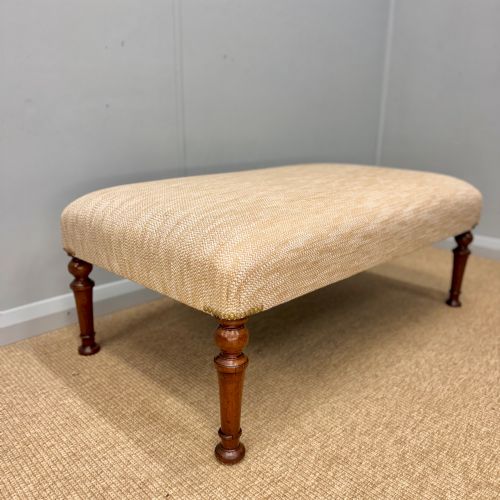
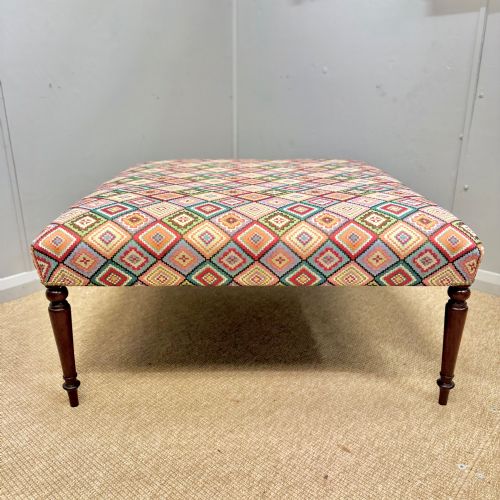
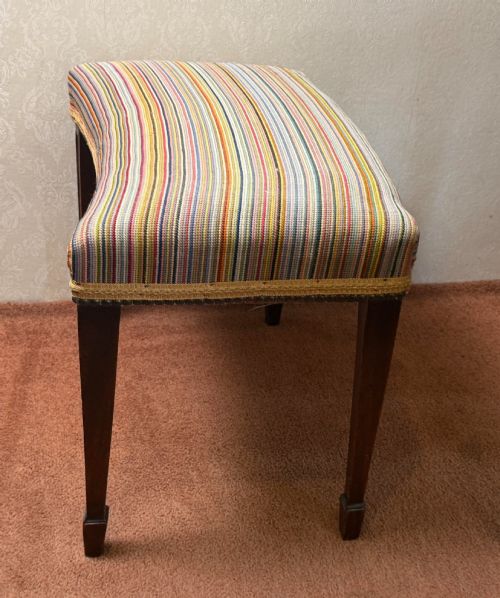


Mahogany Rectangular Stool
These mahogany rectangular stool examples are solid timber seating pieces built for utility and comfort, offering sturdy frames and varied textile tops.
Mahogany Rectangular Stool
A mahogany rectangular stool is a compact timber seating piece designed for domestic utility and foot support. The forms appearing on this page span the eighteenth and nineteenth centuries, taking shape through periods such as the Georgian, Regency, and Victorian eras.
Buyers meet various formats here, ranging from simple footstools with square tapering legs to large country house ottomans and buttoned leather examples. Many pieces arrive on brass castors or feature cane seats, while others display carved details rooted in George II or Chippendale revival styles.
Originating largely from English workshops, these items serve primarily as footstools and low seating units. The timber frame provides the structural base, while the top surface hosts a range of textiles from velvet and chenille to damask and buttoned leather.
How they were made
Makers constructed the primary frames of these pieces using solid mahogany, shaping the timber into straight legs or incorporating carved embellishments. Workshops occasionally integrated brass castors to ease movement across floor surfaces.
Upholstered variants relied on textile coverings such as chenille, velvet, woven fabric, and cream damask fixed over internal padding. Certain pieces utilised cane seating woven directly into the wooden frame structure.
Mahogany Rectangular Stool Retail Price Guide 2026
Typical asking prices for mahogany rectangular stool among the pieces listed under this phrase on Sellingantiques today, from the lower quarter to the upper quarter. They describe what is for sale here now, not the wider market.
Listings feature mahogany, brass, and velvet alongside woven fabrics like chenille and damask.
What varies in quality
The degree of craftsmanship in the timber framing marks the distinction between standard production and finer pieces. Sharply defined carving on the mahogany and robust joinery indicate higher workshop standards.
The selection and execution of the upholstery materials further separate examples. Original or high-grade textile applications, such as finely fitted damask or buttoned leather, reflect the initial cost and intended status of the stool.
Howard and Sons
The Mahogany Rectangular Stool Glossary
- Mahogany
- A dense tropical hardwood prized for its deep reddish-brown colour and durability. Cabinetmakers utilised it extensively for eighteenth and nineteenth century domestic furniture frames.
- Castor
- A small wheel attached to the base of furniture legs to allow easy rolling. Brass versions frequently appear on nineteenth century footstools.
- Chenille
- A fuzzy woven fabric frequently utilised for soft furnishings. It provides a tactile, textured surface for upholstered footstools.
- Damask
- A reversible figured fabric traditionally woven on a loom with patterns formed by contrasting warps and wefts. Cream damask appears on nineteenth century revival seating.
Mahogany Rectangular Stool: Frequently Asked Questions
What is a mahogany rectangular stool used for?
These low timber pieces served historically as footrests before armchairs or as supplementary seats in reception rooms. Their compact proportions allowed them to sit easily near firesides or beneath larger library tables when not in active use.
Today, owners utilise them primarily as footstools or as low coffee tables by placing a tray across the upholstered surface. They remain practical additions to living spaces where movable, solid wood seating is required.
How do I date a mahogany rectangular stool?
Dating relies on examining the leg shapes, timber finish, and upholstery methods visible on the piece. Eighteenth century examples often display restrained lines such as square tapering legs, whilst Victorian versions tend towards heavier frames, buttoned leather, or added brass castors.
Stylistic revivals during the nineteenth century frequently borrowed motifs from earlier Georgian and Regency periods. Comparing the joinery construction against known period standards helps clarify the exact decade of manufacture.
Are these stools comfortable for daily use?
The comfort level depends entirely on the internal padding and the textile used for the top surface. Many nineteenth century examples feature substantial buttoned leather or deep cushioning designed for resting feet over extended periods.
Reupholstered variants on this page often incorporate modern interior fillings beneath traditional fabrics like chenille or damask. This combination ensures adequate support for contemporary sitting habits while retaining the historic timber frame.
How do I care for the mahogany frame?
Maintaining the timber requires keeping the mahogany away from direct heat sources and sudden humidity shifts. Regular dusting with a dry cloth prevents particle buildup on the polished wood surfaces without stripping the original finish.
Applying a traditional beeswax polish occasionally helps nourish the wood and maintain its natural lustre. Avoid using harsh chemical sprays that might damage the historic polish or affect adjacent fabric elements.