


Mahogany Pull Out Table
A mahogany pull out table brings adaptable dining space and period craft into a room, offering clever extension mechanisms for everyday meals and large gatherings alike.
Mahogany Pull Out Table
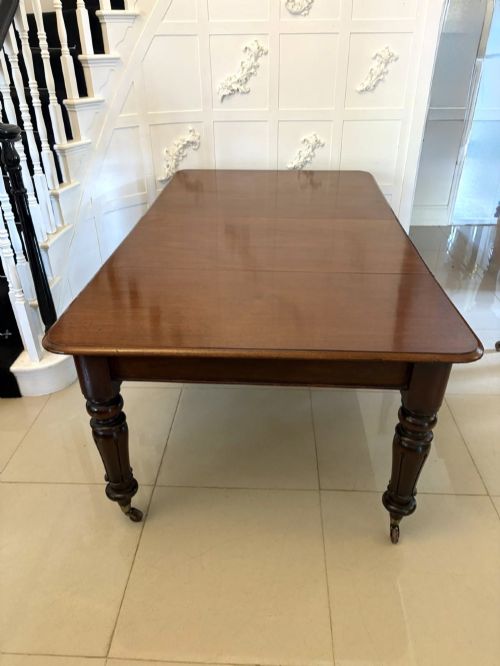
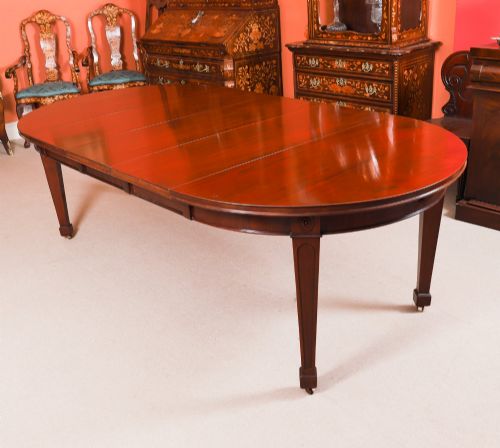
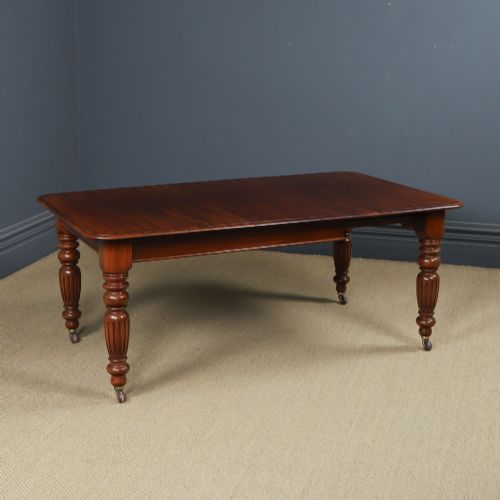
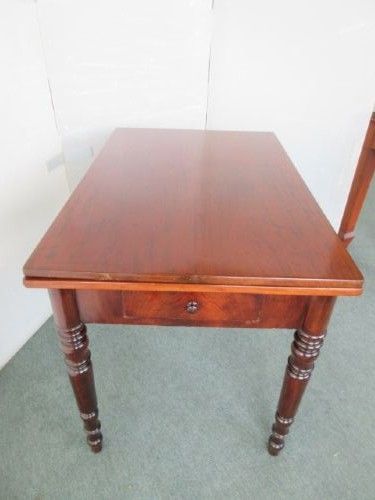
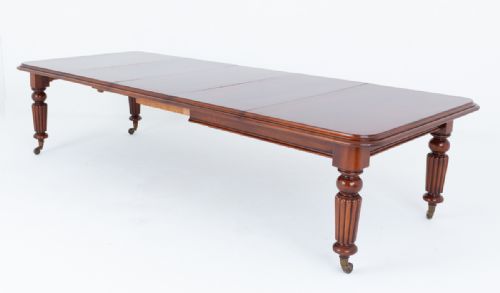
A mahogany pull out table primarily takes the form of a dining table engineered with leaves, draw mechanisms, or sliding sections to expand its surface area. The pieces seen across the records span the Georgian, Regency, William IV, and Victorian periods, reflecting shifting interior fashions from formal dining rooms to domestic libraries.
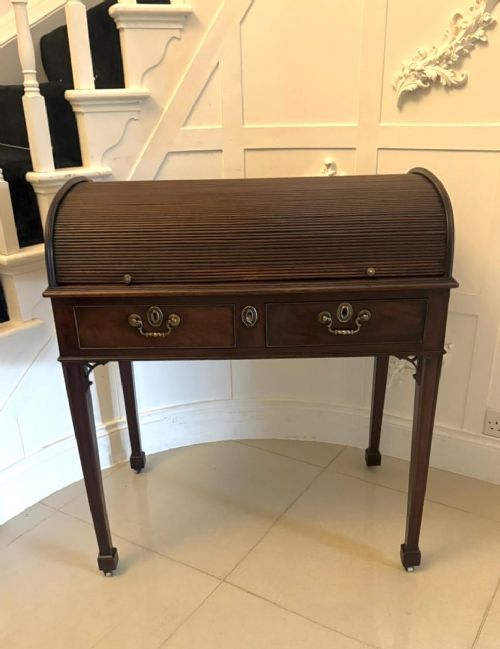
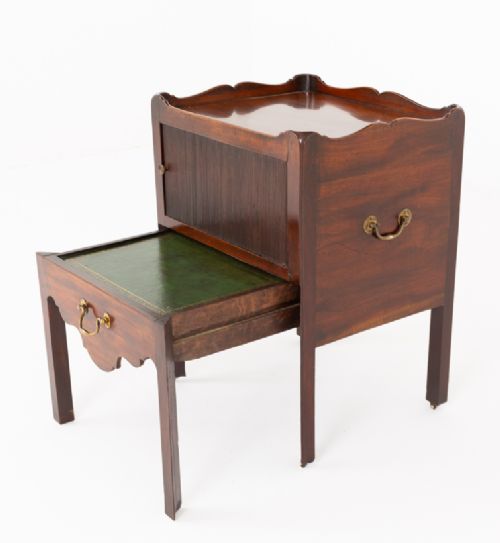
Beyond large dining furniture, the search phrase encompasses smaller domestic forms such as bedside cabinets with pull-out steps or slides, desks, and occasional tables. The dining tables themselves range from modest four-seat formats to grand versions capable of seating ten to fourteen guests using multiple insertable leaves.
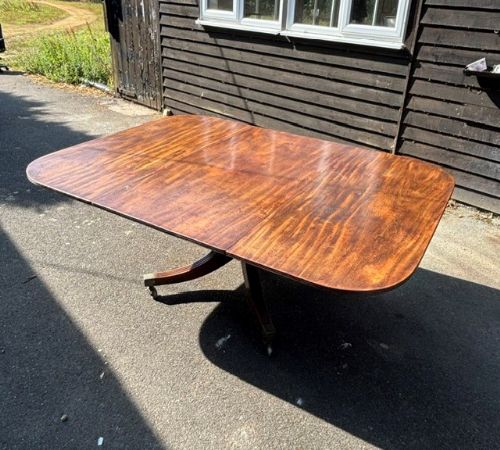
Dating ranges primarily from the eighteenth century through the late nineteenth century, with styles including George III, French Empire, and Late Regency. Buyers meet robust pedestal bases, turned legs on castors, and draw-leaf configurations among the surviving examples.
How they were made
Makers built these tables primarily using solid mahogany and dense Cuban mahogany veneers applied to secondary timbers, selected for deep colour and straight grain. Cabinetmakers integrated brass fittings, castors, and mechanical runners to ensure smooth extension when adding leaves.
Internal mechanisms utilised robust timber frames, sometimes paired with metal hardware such as Cope and Collinson brass components to support substantial extending frames. Secondary details frequently incorporate leather writing surfaces, ceramic castors, and ormolu mounts depending on the specific form and period style.
One extraordinary bedside cabinet hides a pull-out step, proving that Georgian mornings involved reaching high places before the first cup of tea.
What varies in quality
Quality rests heavily on the integrity of the extension mechanism and whether original leaves accompany the table. Examples retaining their matching timber leaves demonstrate superior workshop cohesion compared to those adapted later.
The choice of timber grain, particularly dense Cuban mahogany, and the refinement of turned legs, carved pedestals, or brass hardware distinguish standard production from exceptional cabinet work by makers such as Gillows.
Thomas Butler·Gillows
The Mahogany Pull Out Table Glossary
- Pull-out table
- A dining table or occasional piece featuring a mechanical action that expands the top to accommodate extra leaves. This design allows the footprint to adjust according to the number of diners.
- Draw-leaf
- An extension system where auxiliary leaves are stored directly beneath the main surface and pulled out from each end. This mechanism avoids the need to store separate loose leaves elsewhere.
- Cuban mahogany
- A dense, highly figured tropical hardwood prized for its rich patina and strength. Cabinetmakers favoured it for high-status furniture during the eighteenth and early nineteenth centuries.
- Quadrapartite base
- A heavy, four-way pedestal support often found on Regency and William IV dining tables. It typically stands on robust castors to facilitate movement.
- Castor
- A small wheel fitted to the base of table legs to aid mobility across carpets and flooring. They frequently incorporate brass sockets and ceramic or metal wheels.
Mahogany Pull Out Table: Frequently Asked Questions
How do I operate the pull out mechanism?
Most antique extending tables rely on wooden runners or internal slides that separate smoothly when pulled apart by hand. This action creates a central gap designed to receive one or more matching timber leaves.
Once the leaves are dropped into place, a wind-out handle or brass clips secure the closed top tightly together. Ensuring the runners remain lightly waxed prevents friction and keeps the extension action smooth.
How many people can these tables seat?
Seating capacity varies considerably depending on the length of the frame and the number of available leaves. Compact versions comfortably seat six individuals for standard daily dining.
Larger Georgian and Victorian examples equipped with multiple leaves easily accommodate ten to fourteen guests. Checking the unextended length alongside the total leaf count reveals the full seating potential.
How do I tell a Regency table from a Victorian one?
Regency and late Georgian tables typically display cleaner architectural lines, reeded edges, and elegant pedestal or pillar bases. Mahogany from this era often exhibits a deep, warm hue and heavy Cuban timber figures.
Victorian pieces generally introduce heavier turned legs, robust framework proportions, and more varied mechanical patents. Examining the leg profiles and underframe construction helps clarify the specific period of manufacture.
How do I care for a mahogany dining surface?
Protecting the timber requires avoiding direct sunlight and maintaining steady room humidity to prevent splitting or warping. Using mats beneath hot dishes and wiping spills immediately safeguards the French polished finish.
Occasional applications of high-quality beeswax nourish the grain and maintain the deep lustre without building up sticky residues. Regular gentle dusting with a soft, dry cloth preserves the historical surface.