

Mahogany Pot Commode
A mahogany pot commode is a practical bedside cupboard from the Georgian and Victorian eras designed to conceal chamber pots discreetly.
Mahogany Pot Commode
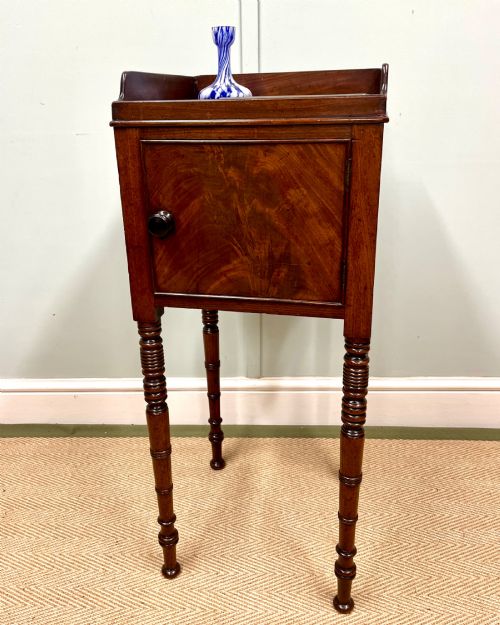
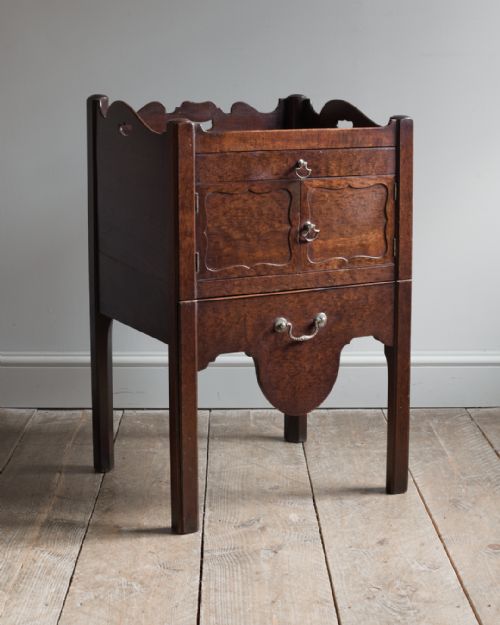
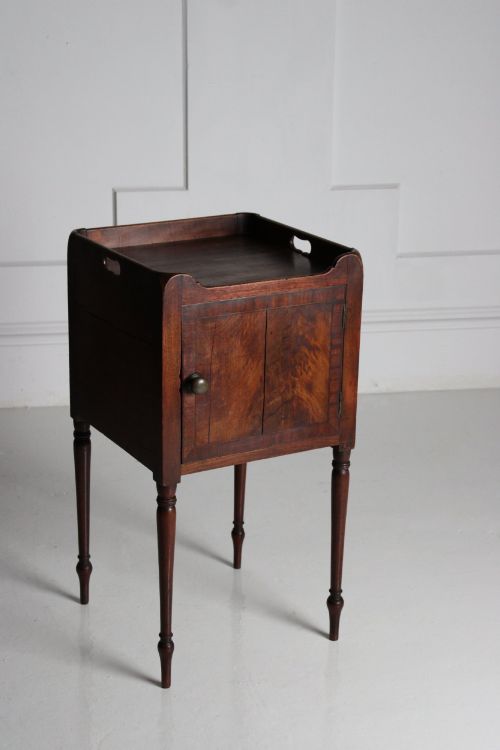
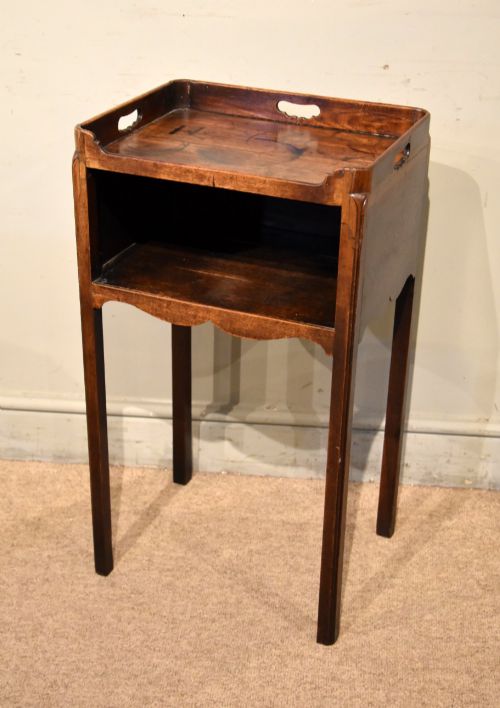
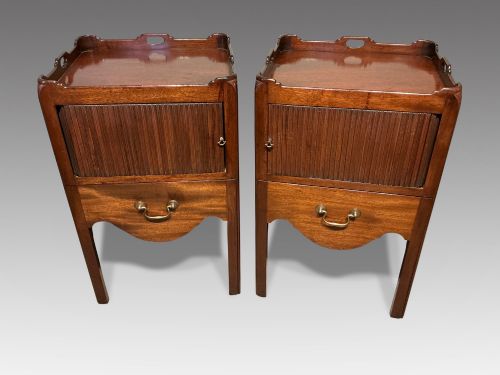
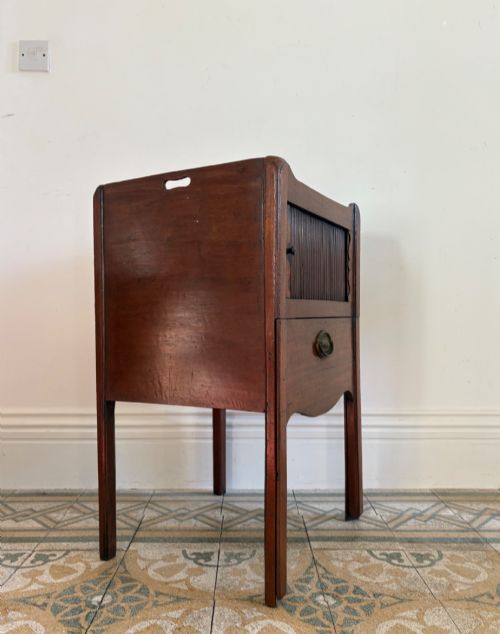
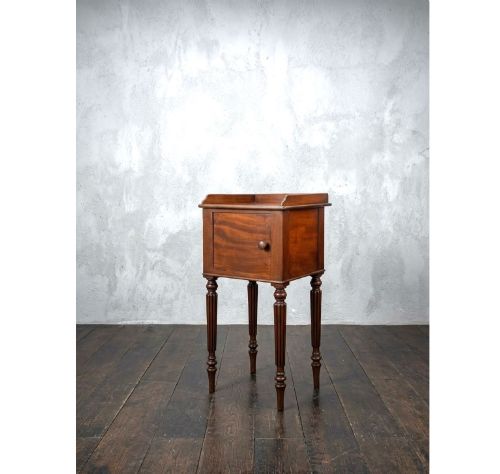
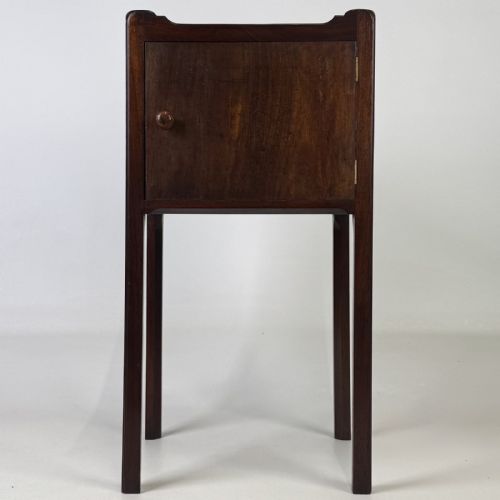
A mahogany pot commode is a compact bedside cabinet typically standing on short legs or a plinth, built to hold a chamber pot behind a cupboard door or beneath a lifting lid. When you search for this phrase, you find pieces originating from the eighteenth century, the Regency period, and the Victorian era.
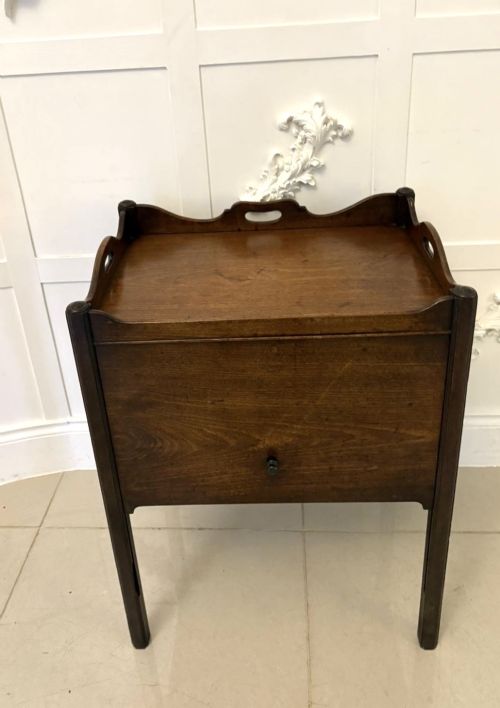
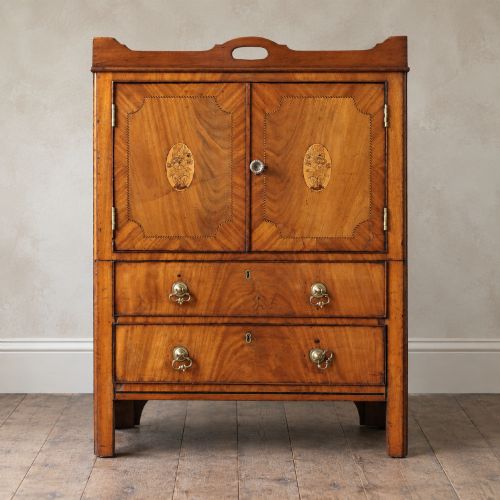
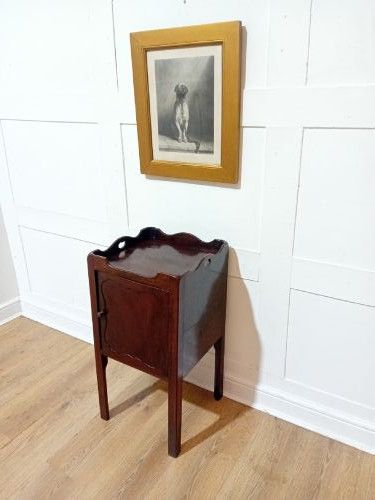
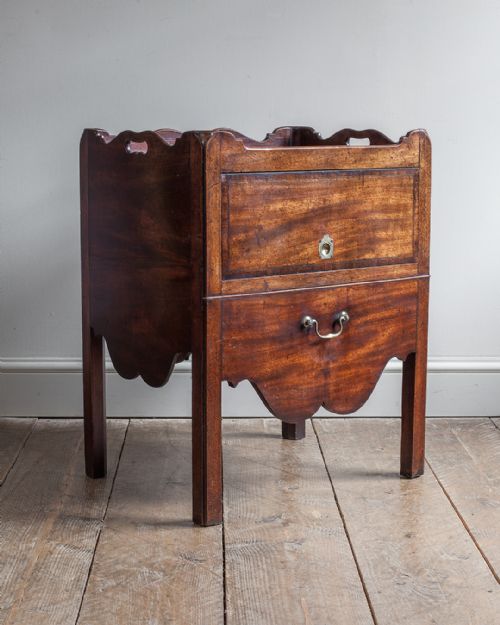
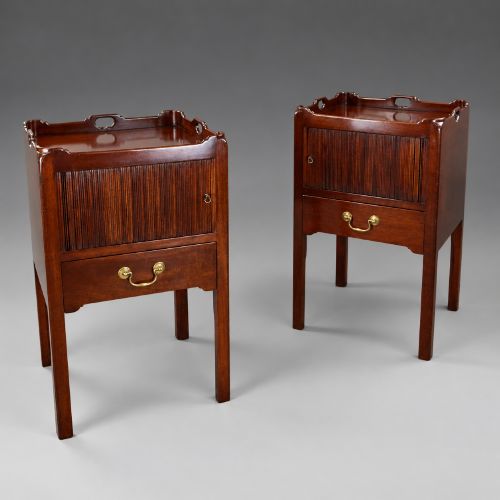
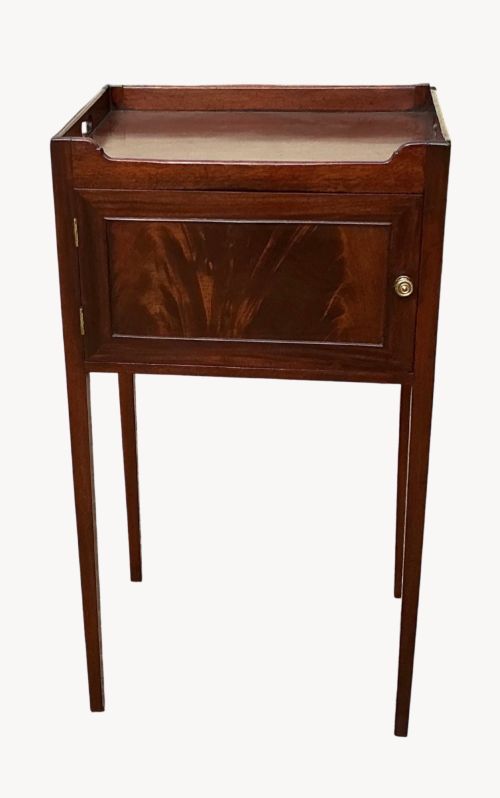
The most common form on this page is the tray top bedside cabinet from the Georgian period, often featuring shaped galleries designed to prevent water jugs or items from sliding off. These items double as nightstands and bedside tables, bridging the gap between domestic utility and refined cabinet making.
How they were made
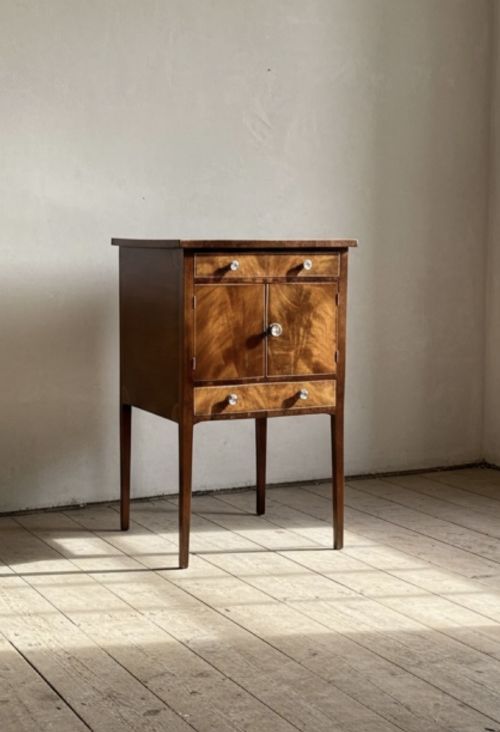
Cabinet makers utilised solid mahogany and flame-mahogany veneer over secondary structural timbers, constructing carcases designed to withstand daily bedroom use. Surfaces often display careful grain selection on the main cupboard doors and top panels.
Detailing on finer examples incorporates boxwood inlay, satinwood stringing, and marquetry, alongside cast brass handles or hinges. Tray tops are frequently shaped from solid timber with joined corners forming a secure gallery.
Mahogany Pot Commode Retail Price Guide 2026
Typical asking prices for mahogany pot commode among the pieces listed under this phrase on Sellingantiques today, from the lower quarter to the upper quarter. They describe what is for sale here now, not the wider market.
Many of these tidy bedside companions spent centuries concealing chamber pots before evolving into peaceful stands for modern reading lamps.
What varies in quality
Quality in a mahogany pot commode rests on the selection of timber veneers, such as richly figured flame mahogany, and the crispness of decorative elements like boxwood inlay or marquetry. Cabinets attributed to specific workshops or showing the manner of makers like Gillows demonstrate superior joinery and refined proportions.
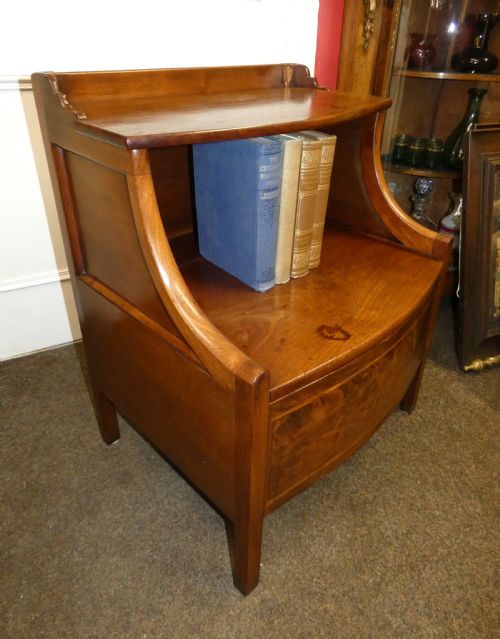
The sophistication of the top design also separates standard items from exceptional ones, with pierced lifting handles on tray tops or serpentine-front profiles indicating higher manufacturing ambition. Simple utilitarian cupboards contrast with those possessing deliberate stylistic flourishes aligned with Sheraton or George III tastes.
The Mahogany Pot Commode Glossary
- Tray top
- A raised gallery edge surrounding the top surface of a bedside cabinet, designed to stop items rolling off.
- Pot cupboard
- An alternative term for a bedside cabinet built with an internal compartment to house a chamber pot.
- Flame-mahogany veneer
- A thinly sliced wood layer displaying a distinct branching flame pattern derived from the fork of the mahogany tree.
- Marquetry
- Decorative patterns formed by fitting together small pieces of coloured wood veneers onto a structural surface.
- Serpentine-front
- A furniture front shaped with a central convex curve flanked by two concave curves.
Mahogany Pot Commode: Frequently Asked Questions
What is a pot commode?
A pot commode is a small enclosed bedside cupboard created to hide a chamber pot out of sight in the bedroom.
These pieces date primarily from the eighteenth and nineteenth centuries, serving both functional sanitation needs and acting as decorative bedside tables.
How do I tell Georgian from Victorian pieces?
Georgian pieces generally display lighter proportions, refined tray tops, and sometimes delicate stringing or boxwood inlay characteristic of the eighteenth century.
Victorian examples tend to be heavier in build, utilising simpler lines or robust mahogany construction without the specific classical detailing of earlier decades.
Were these used next to beds?
Yes, these cabinets were placed beside beds to hold night lights, books, and sanitary porcelain within easy reach.
Their enclosed lower cupboards kept chamber pots hidden away until morning service by domestic staff.
What is a tray top?
A tray top is a shaped wooden rim fixed to the upper surface of a bedside table to form a shallow shallow tray.
This feature stopped water jugs, candlesticks, and personal items from sliding off the edge onto the floor.