

Mahogany Pillar Dining Table
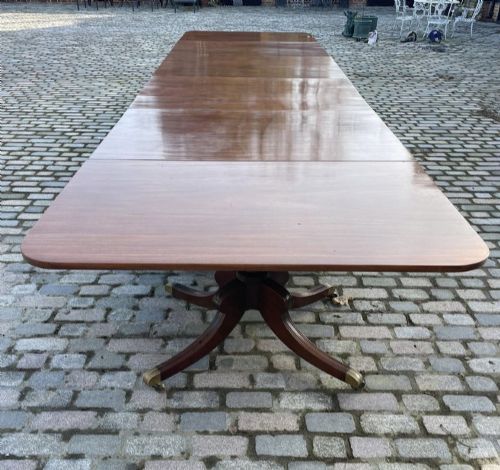
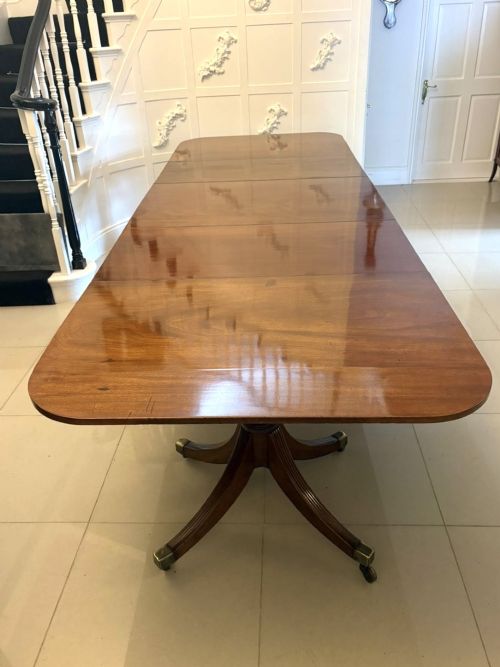
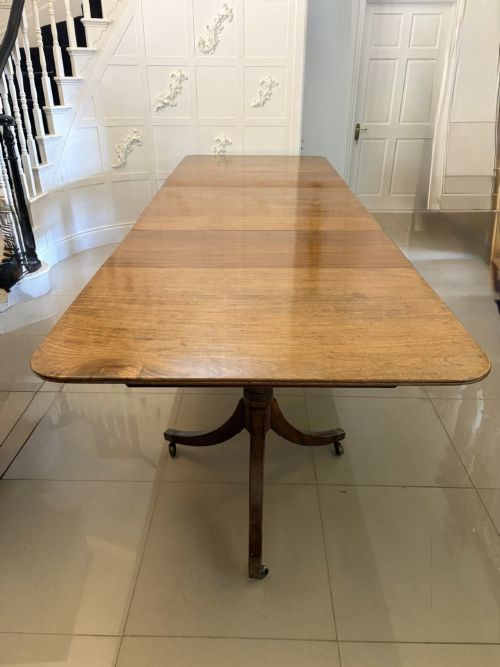
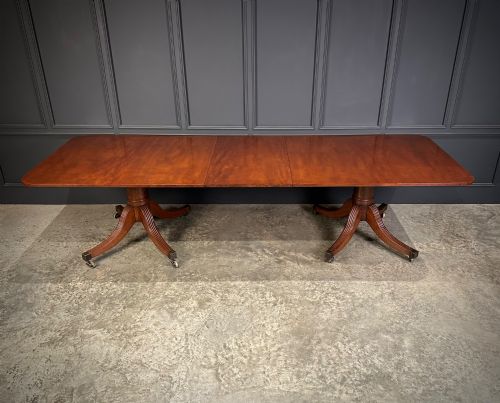
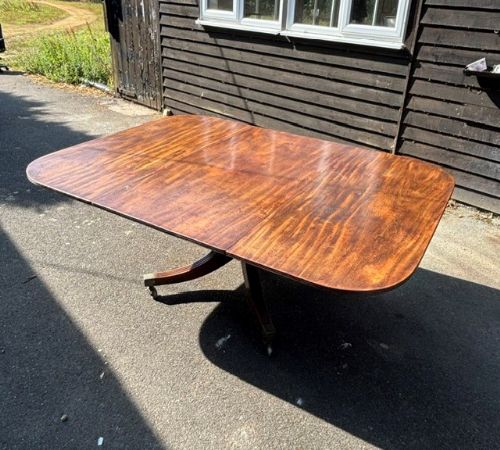
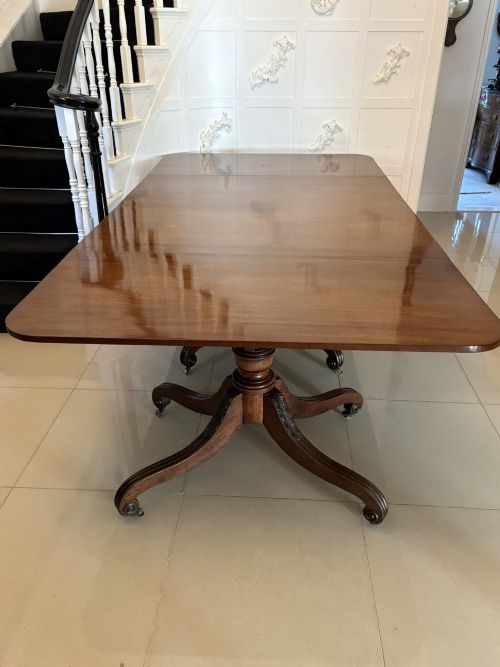
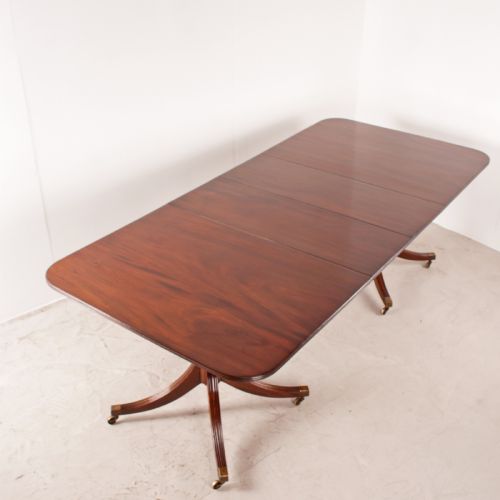
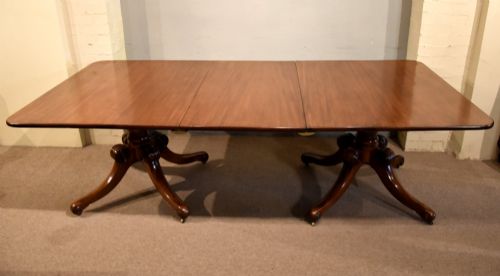
A mahogany pillar dining table offers an adaptable surface supported by pedestal columns, built to seat large companies.
Mahogany Pillar Dining Table
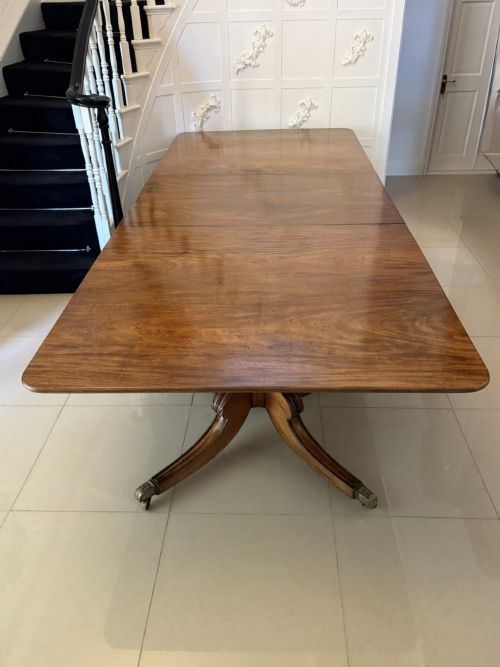
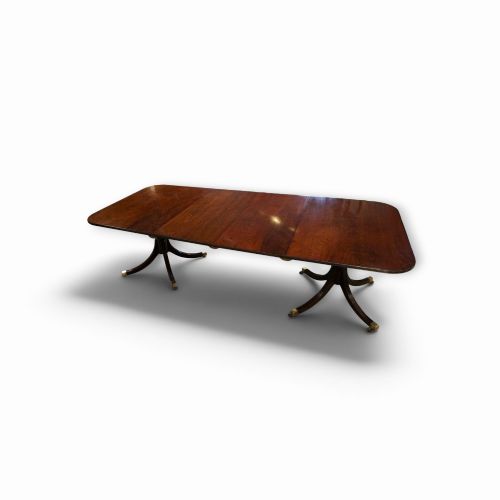
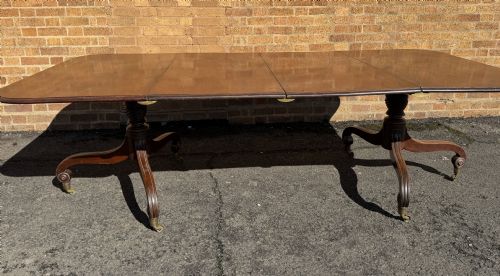
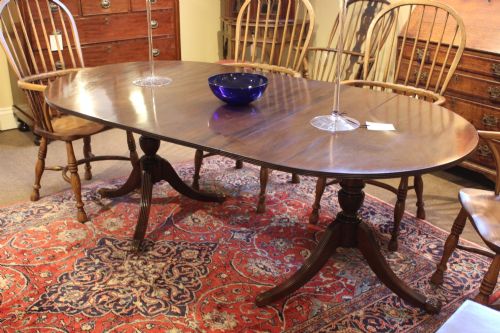
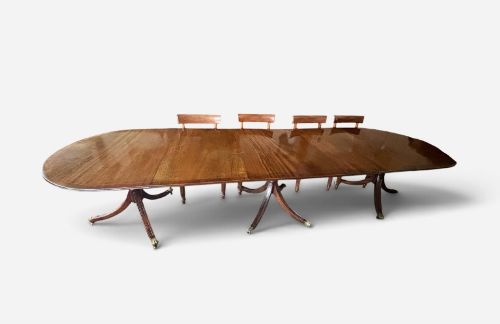
A mahogany pillar dining table consists of twin or triple pedestals supporting a long extending top designed for versatile seating arrangements. The pieces found here span from the George III and Regency periods through to later revival editions of the twentieth century.
Buyers encounter twin-pillar formats suited for moderate spaces alongside extensive triple-pillar versions capable of seating sixteen or more guests. Many examples incorporate removable leaves that allow the table length to alter according to requirements.
Materials and Construction
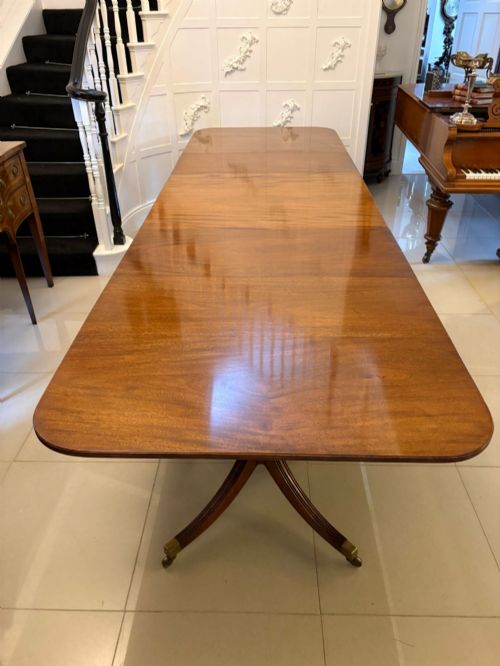
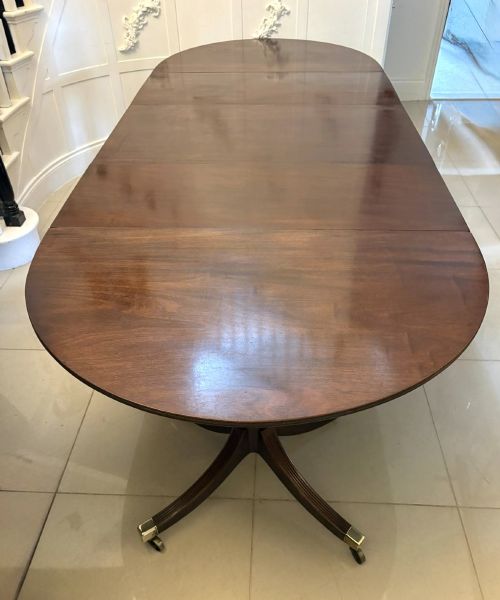
Cabinetmakers utilised solid mahogany and figured mahogany veneers over secondary timbers, selecting timber with strong grain patterns for the main top surfaces. Brass castors typically support the feet beneath the timber pillars, permitting the heavy sections to move smoothly.
Extending mechanisms rely on brass clips, pull-out rails and wooden channels hidden beneath the leaves to keep the separate sections aligned. Pedestal bases branch into carved or plain legs that anchor the central columns firmly to the floor.
Listings feature examples built across the Georgian, Regency and Victorian eras, alongside twentieth-century revival interpretations.
Distinctions in Quality
The choice of timber grain separates standard production from superior examples, with figured and flame mahogany surfaces showing greater depth and visual movement. Cabinetmaking skill shows in how seamlessly the separate leaves match the grain of the main tabletops when fully extended.
Proportion and stability dictate the usefulness of larger formats, where multiple pillars must distribute weight evenly without sagging along the joins. Finer executions display careful turning on the central pedestals and well-cast brass mounts on the feet.
Thomas Butler of London·Whytock & Reid
The Mahogany Pillar Dining Table Glossary
- Pillar
- A vertical wooden column supporting the tabletop. These pedestals replace traditional four-leg frames to allow greater legroom.
- Extension leaf
- A removable board inserted into the centre of the table. This addition increases the overall seating capacity.
- Twin-pillar
- A table configuration using two separate pedestals. This format suits medium-length dining spaces.
- Triple-pillar
- A table design utilising three pedestals beneath an extended top. These large formats accommodate substantial seating arrangements.
- Figured mahogany
- Timber selected for its decorative and undulating grain pattern. Cabinetmakers reserve these premium boards for prominent surfaces.
Mahogany Pillar Dining Table: Frequently Asked Questions
How many people do these tables seat?
Seating capacity depends on the length and the number of pedestals supporting the top. Twin-pillar variants generally accommodate smaller gatherings, while triple-pillar editions extend to seat sixteen or more guests.
Adding or removing leaves adjusts the length for daily use or larger dinner parties. The placement of the pedestal columns also allows diners to sit comfortably without legs obstructing their chairs.
How do twin-pillar and triple-pillar tables differ?
Twin-pillar tables use two central pedestals to support the top, making them suitable for moderate room dimensions. Triple-pillar versions add a third column to support much longer tops designed for extended seating.
Both types use similar extending mechanisms with removable leaves. The choice between them rests primarily on the length of the dining room.
How do I care for a mahogany surface?
Routine maintenance involves dusting with a soft cloth and avoiding excessive moisture on the polished wood. Placing heat mats beneath dishes protects the vintage finish from thermal marks.
Applying occasional wax preserves the sheen of the timber. Keeping the table away from direct sunlight prevents the mahogany from fading unevenly.
How are the leaves stored?
Removable leaves lift out from the centre of the table when the top sections are pulled apart. These boards require separate storage in a dry environment when not in use.
Keeping leaves in stable room conditions prevents the timber from warping. Proper storage ensures the grain and colour match the main table sections when reinserted.