
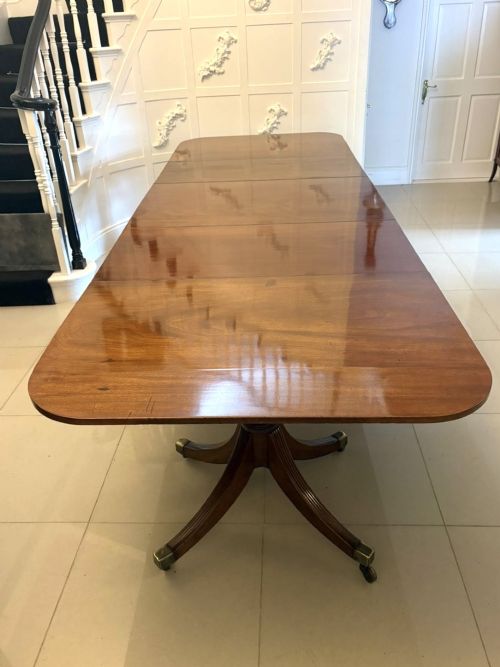
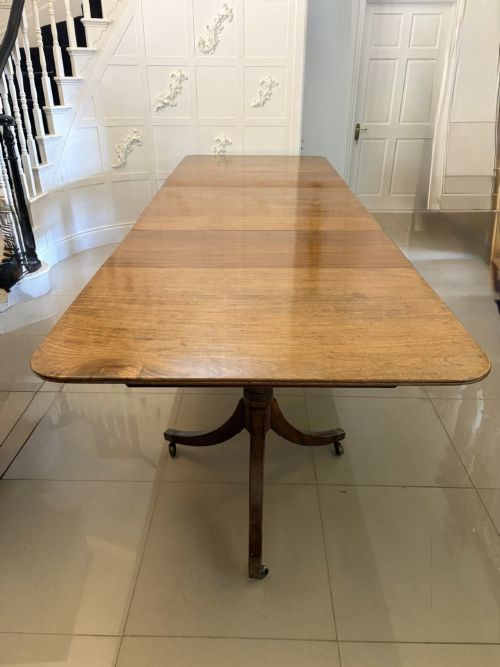

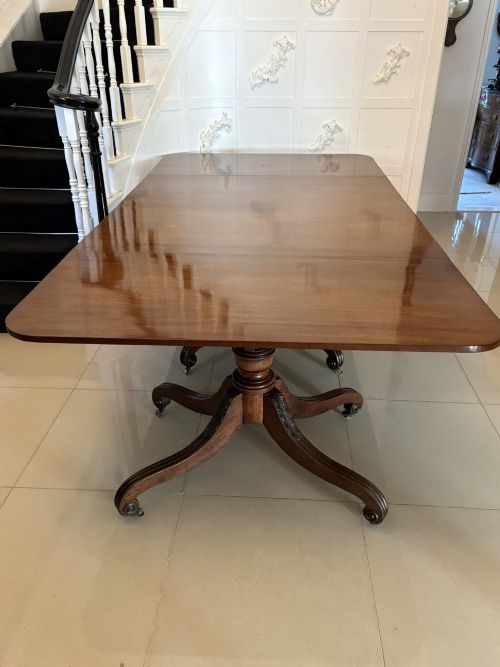
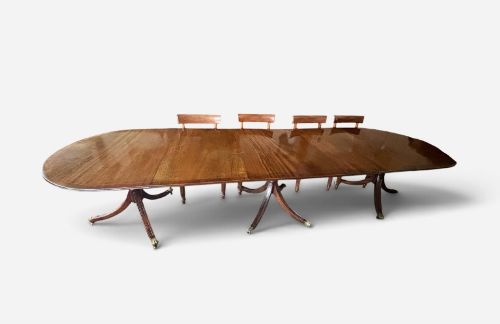
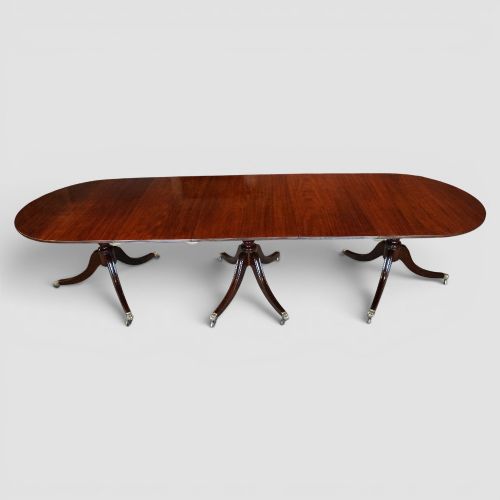
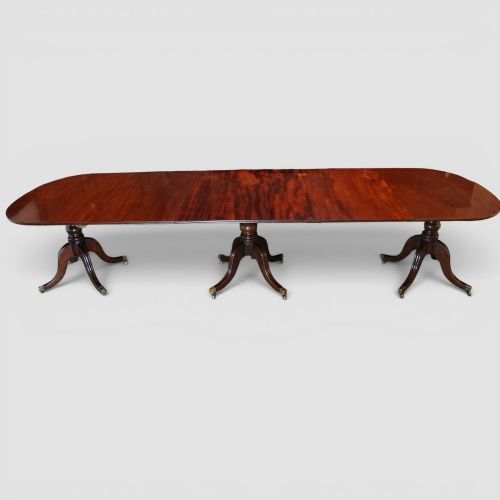
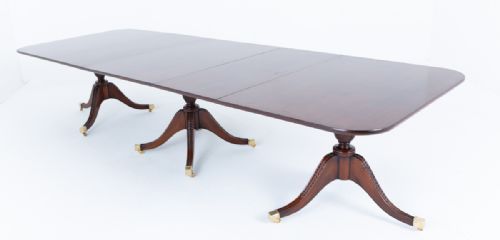


Regency Three Pedestal Dining Table
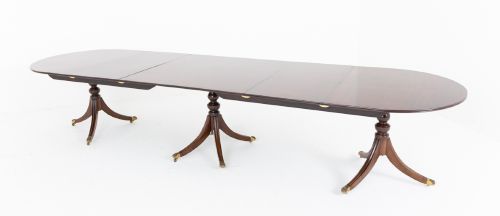
A regency three pedestal dining table is a grand extending board built for large rooms, offering a commanding presence and seating for twelve or more guests.
Regency Three Pedestal Dining Table
A regency three pedestal dining table is a substantial form designed for dining on a large scale, typically accommodating ten to eighteen guests. Most examples encountered on this page belong either to the authentic Regency period and the early nineteenth century or to later revival periods such as the Edwardian era and the nineteen-twenties.
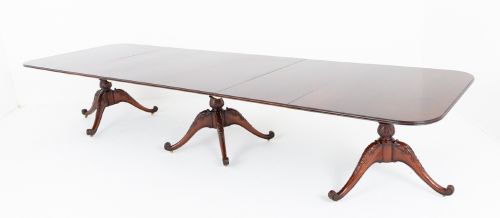
The layout relies on three distinct pillars or pedestals standing along a central axis to support long mahogany or rosewood boards. Many of these tables function as extending formats, using removable leaves to alter the overall length for different gatherings.
How They Were Made
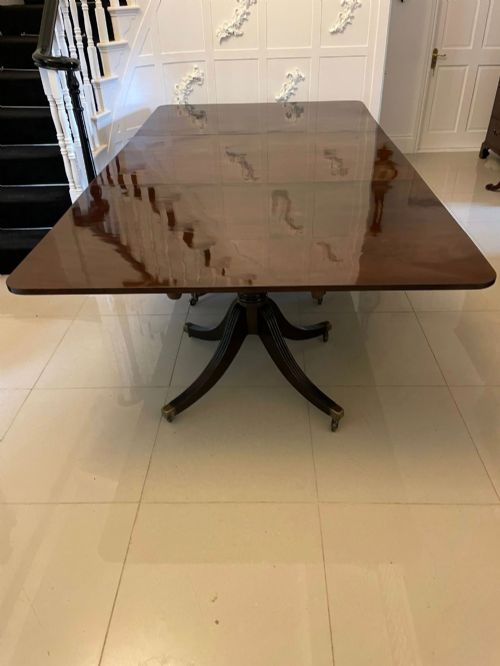
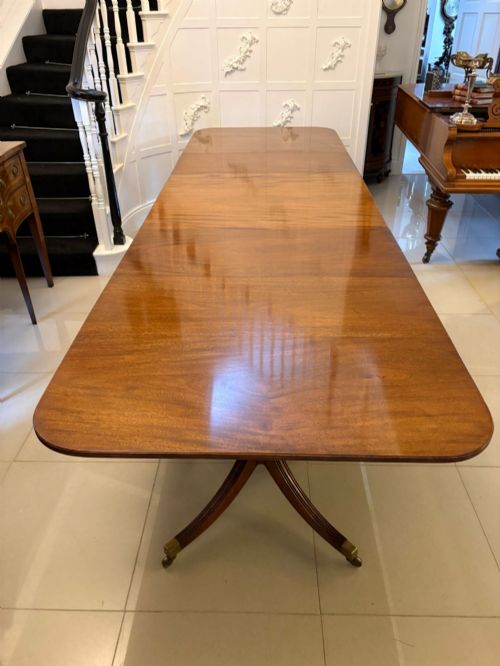
Cabinet makers constructed these pieces primarily from figured mahogany, occasionally utilising rosewood or fiddleback mahogany alongside brass details for castors and mounts. The timber surfaces display prominent grain patterns, polished to a deep lustre.
The structural design balances weight across three central pillars, each branching into multiple legs that terminate in brass castors for mobility. Extending mechanisms require precise carpentry so that additional leaves fit flush into the main surface.
Listings for a regency three pedestal dining table span multiple eras, including original nineteenth-century pieces alongside Edwardian and nineteen-twenties revivals.
What Varies in Quality
The standard of cabinet making shows most clearly in the selection of timber veneers and the crispness of the pedestal carvings. Superior tables employ highly figured mahogany with consistent grain matching across all three sections and the inserted leaves.
Engineering of the extending mechanism also separates standard production from finer work, as better tables maintain absolute rigidity and alignment when fully extended to seat large parties.
The Regency Three Pedestal Dining Table Glossary
- Pedestal
- A central columnar support resting on branching legs that holds the weight of the table top. These pillars allow maximum legroom for seated guests compared to traditional four-leg formats.
- Extension leaf
- A removable board inserted into the centre of the table to increase its overall length. These pieces enable the furniture to adapt for smaller or larger gatherings.
- Figured mahogany
- Timber selected for its decorative, undulating grain patterns rather than a plain surface. This wood was favoured by cabinet makers for top surfaces and drawer fronts.
- Castor
- A small wheel attached to the base of each leg to allow smooth movement across the floor. They are frequently cast from brass and sometimes retain their original fixing pins.
Regency Three Pedestal Dining Table: Frequently Asked Questions
How many people does a three pedestal table seat?
These large boards commonly seat between ten and eighteen guests depending on the length of the leaves in place. Some extended formats accommodate even larger parties.
The spacing of the three pedestals is engineered to ensure diners can sit comfortably along the sides without obstruction from the central supports.
What is a Regency revival table?
A revival piece is a later interpretation, often built during the Edwardian era or the nineteen-twenties, replicating the distinctive forms of the early nineteenth century.
These later tables utilise traditional timber species and classic design vocabulary while offering robust extending mechanisms suited to modern homes.
How do extension leaves work?
Extension leaves drop into the centre of the table when the pillars are pulled apart on internal runners. Secured with brass clips or wooden pins, they create a stable surface.
When fewer guests are present, the leaves are removed and stored separately, shortening the table to a more compact footprint.
What woods were used for these tables?
Mahogany is the primary material seen across these listings, valued for its strength and rich reddish-brown tone. Figured varieties and rosewood also appear on specific revival and period examples.
Brass hardware such as castors and inlay work frequently complement the dark tropical timbers.